Nana Wu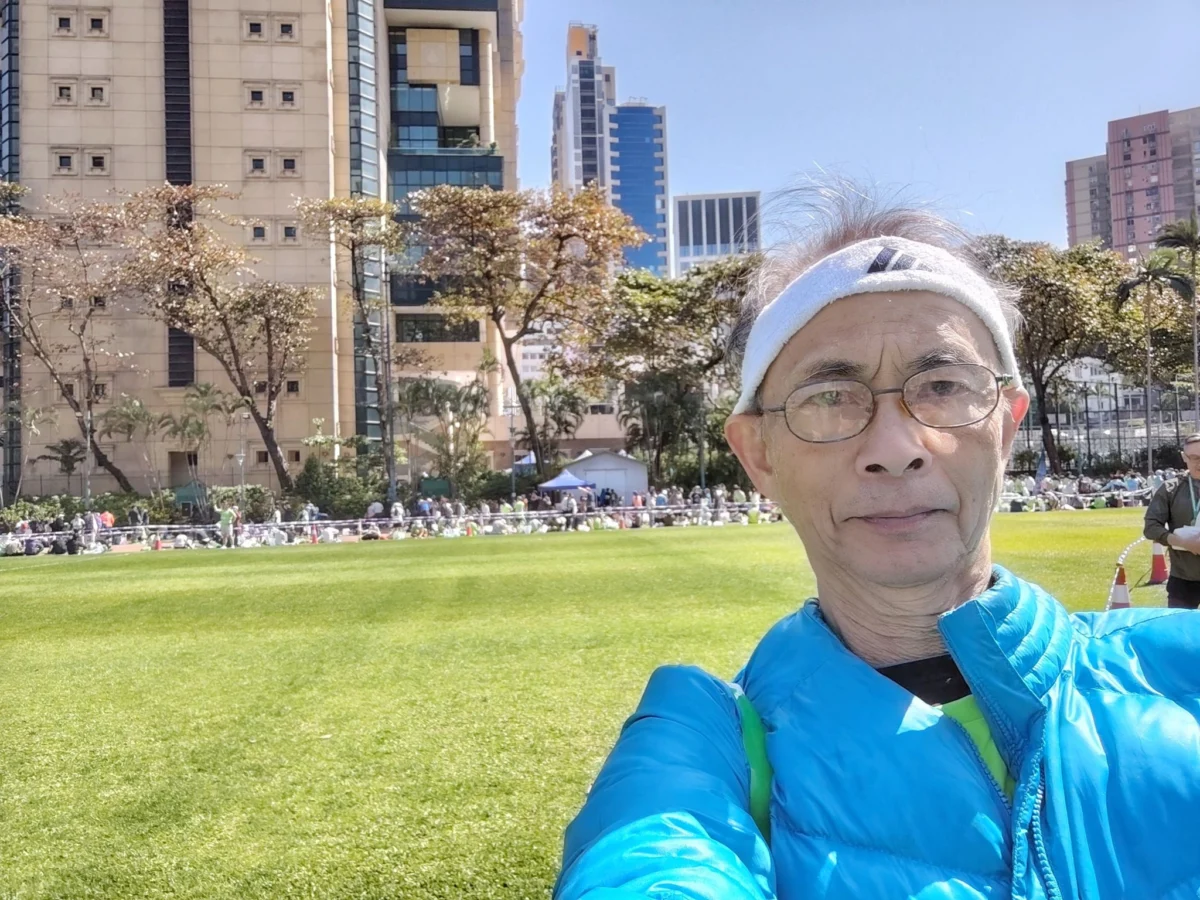
Wong Kwok-ngon, a political commentator widely known by his pen name Wong On-yin, asserted in the District Court that national security police failed to explicitly caution him about the confidentiality of details surrounding an ongoing investigation. This claim surfaced on the first day of his trial, where he faces charges of divulging information related to a national security probe, an offense stipulated under Hong Kong’s Safeguarding National Security Ordinance (SNSO), locally referred to as Article 23.
The 72-year-old, who is representing himself in court, has been in custody since his arrest in December of the previous year. His trial, which commenced on Friday, is slated to run for 13 days. The charges stem from an incident in December 2026, when Wong was detained by national security police on the same day he was scheduled to participate in a press conference concerning the fatal Wang Fuk Court fire. This blaze, which tragically occurred days earlier, had cast a shadow over the city, prompting widespread concern about building safety and construction practices.

The planned press conference aimed to address critical issues that came to light in the aftermath of the fire, including the practices surrounding building renovations and the tendering procedures for construction projects. The Wang Fuk Court itself was undergoing renovation at the time of the incident, and preliminary reports suggested that the use of non-fire-safe materials may have significantly contributed to the rapid and devastating spread of the blaze. Despite the gravity of the situation and the public’s desire for answers, the press conference was ultimately cancelled.
Following his detention, Wong detailed his encounter with the police in two live-streamed YouTube videos. It was shortly after these videos were broadcast that he was arrested. In addition to the charge related to divulging national security investigation details, Wong is also facing a charge of sedition, linked to 30 commentary videos he published on his YouTube channel between January and December of the preceding year.
Key Events Leading to the Trial
The legal proceedings against Wong On-yin are rooted in a series of events that began in late 2026.

- December 2026: A fatal fire breaks out at Wang Fuk Court, which was undergoing renovations. The incident raises serious questions about building safety and construction industry practices.
- December [Date of Arrest], 2026: Wong Kwok-ngon (Wong On-yin) is taken in by national security police. This coincides with his scheduled appearance at a press conference intended to discuss issues surrounding building renovations and tendering processes related to the Wang Fuk Court fire.
- Post-Detention: Wong posts two YouTube videos detailing his meeting with the national security police.
- Days Following Video Publication: Wong is arrested.
- Subsequent Charges: Wong is charged with divulging information related to a national security investigation under the Safeguarding National Security Ordinance (Article 23) and sedition, stemming from his YouTube commentary videos.
- Present: Wong stands trial at the District Court, having been remanded in custody since his arrest.
The Police Meeting and Confidentiality Claims
During the opening statements at the District Court, Senior Public Prosecutor Cherry Chong highlighted Wong’s significant online presence. She noted that Wong maintained a YouTube channel that he regularly updated, boasting approximately 90,000 subscribers as of December 6, 2025, the date of his arrest. The prosecution called two police officers who were present during Wong’s meeting with the National Security Department at Mong Kok Police Station.
Sergeant Wong Ping-kiu, from the National Security Department, testified that upon meeting Wong, another officer presented him with a declaration to sign. "With everyone whom the National Security Department meets, we remind them that the meeting involves an investigation, and that the contents of the meeting must be confidential," Sergeant Wong stated in Cantonese, according to local media reports.
Wong On-yin acknowledged signing the declaration but contended that he did not receive such a verbal warning during the meeting itself. This point of contention forms a crucial element of his defence, suggesting a potential lack of explicit communication regarding the gravity of confidentiality obligations.

The prosecution also presented a video-recorded interview with Wong conducted after his arrest. In this interview, played in court, Wong indicated that he "generally understood" the declaration but admitted he lacked the patience to read it thoroughly.
Sergeant Li Pak-him, also from the National Security Department, corroborated the account regarding the declaration. He testified that he handed the document to Wong during the meeting and explained its contents, emphasizing that the meeting and its details were confidential and could not be disclosed. Li further stated that Wong did not pose any questions about the declaration.
However, Wong On-yin countered this by asserting that Sergeant Li had only informed him that he could not disclose details of the meeting, but not that he was prohibited from even mentioning that such a meeting had taken place. Wong also claimed to have informed Sergeant Li at the time that news of the National Security Department summoning him for a meeting had already been widely reported in local media, implying that the element of secrecy had already been compromised.

Analysis of Sedition Charges and Commentary Content
The trial has also delved into the content of Wong’s YouTube videos, which form the basis of the sedition charge. Prosecutors have presented numerous videos, including those discussing his encounter with national security police in early December 2026. In these specific videos, Wong articulated his account of the police summons, which the prosecution argues constitutes a breach of confidentiality.
Beyond the immediate incident, the prosecution has highlighted what they describe as "seditious content" within Wong’s broader commentary. This includes his remarks that Hongkongers live in a "prison-like environment" and his suggestion that the "five demands" – the core grievances articulated during the 2019 pro-democracy protests – could be revisited should there be a "change in atmosphere" in the city. The "five demands" typically encompassed calls for an independent inquiry into alleged police brutality, the retraction of the "riot" characterization of the protests, amnesty for arrested protesters, protection for press freedom, and universal suffrage for both the Legislative Council and the Chief Executive.
On Tuesday, the prosecution played an additional six videos from Wong’s channel. These videos covered a range of topics, including the second national security charge faced by activist Joshua Wong, the high-profile trial of pro-democracy media mogul Jimmy Lai, and current affairs in US politics. In one particular video discussed in court, Wong commented on the Hong Kong Alliance in Support of Patriotic Democratic Movements of China, the organization responsible for the city’s annual Tiananmen Square vigil, which was awaiting trial at the time. Wong expressed his skepticism regarding the prosecution’s ability to build a case against the organization.

Broader Implications and the Context of National Security Legislation
The case against Wong Kwok-ngon unfolds against the backdrop of Hong Kong’s evolving legal landscape, particularly concerning national security. The Safeguarding National Security Ordinance (SNSO), enacted in March 2024, significantly expanded the government’s powers to combat perceived threats to national security. This legislation, which came into effect after the Beijing-imposed National Security Law of 2020, has been met with international concern regarding its potential impact on civil liberties and freedom of expression in the city.
The charge of divulging information related to a national security investigation underscores the stringent confidentiality measures associated with such probes under the new ordinance. Critics argue that such provisions could have a chilling effect on public discourse and investigative journalism, making individuals hesitant to discuss matters that might inadvertently touch upon ongoing investigations, even if their intentions are to raise legitimate public interest concerns.
The sedition charge, meanwhile, targets speech deemed to incite hatred or contempt against the government or to incite disaffection among the public. The interpretation and application of sedition laws in Hong Kong have become increasingly scrutinized in recent years, with concerns raised about their potential to curb legitimate criticism and dissent.

The trial’s duration of 13 days indicates the complexity of the evidence being presented, particularly the extensive body of video content. As the proceedings continue, the court’s findings will likely have significant implications for the interpretation and enforcement of Hong Kong’s national security laws, particularly concerning the boundaries of free speech, press freedom, and the rights of individuals interacting with law enforcement agencies. The outcome will be closely watched both within Hong Kong and internationally, as it relates to the ongoing debate surrounding the city’s autonomy and its commitment to fundamental freedoms.

 Raul Delapena Setiawan
 Neng Nana