Reynand Wu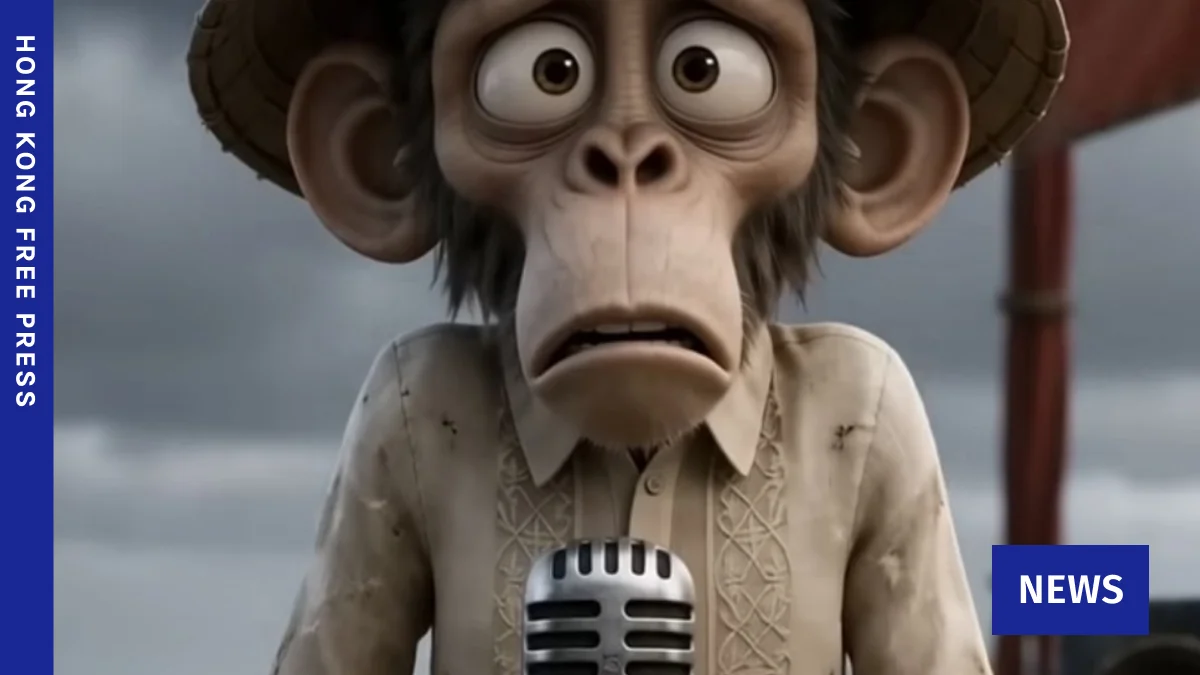
Manila has lodged a robust diplomatic protest with Beijing, condemning a "racist" video disseminated by Chinese state media that offensively portrays the Philippines as a cartoon monkey. This provocative content, published by China Daily, marks a new low in the increasingly strained relations between the two Asian neighbours, exacerbated by their protracted territorial dispute in the South China Sea. The incident underscores a deepening diplomatic rift, characterized by escalating rhetoric, confrontational maritime encounters, and a growing divergence in regional alliances.
The Provocative Video: A Dehumanizing Portrayal
The minute-long animated video, which appeared on the China Daily Facebook page, depicts a timid monkey wearing a traditional Filipino barong shirt. The narrative unfolds on a boat, where the monkey is initially pushed onto a karaoke stage. It begins to sing lyrics seemingly aligned with China’s expansive claims and positions on recent maritime delimitation talks between Manila and Tokyo. However, a disembodied voice abruptly intervenes, shouting "wrong song," and subsequently hands the monkey a sheet explicitly labeled "South China Sea Arbitration Award."
The video then escalates its offensive imagery, showing arms bearing the flags of the United States and Japan. These arms are used to place the monkey into a catapult, launching it into the path of a powerful water cannon. This visual directly references the aggressive tactics previously employed by the Chinese Coast Guard against Filipino vessels and fishermen in disputed waters, including incidents involving water cannon attacks on Philippine resupply missions to the BRP Sierra Madre at Ayungin Shoal (Second Thomas Shoal). The cartoon’s use of a monkey to represent the Philippines, combined with the portrayal of foreign powers manipulating its actions and the depiction of violence, has been widely condemned as deeply dehumanizing and racist.

Manila’s Swift Diplomatic Rebuttal
The Philippine government reacted swiftly and decisively to the offensive video. Foreign Undersecretary Leo Herrera-Lim formally conveyed Manila’s "firm objection to the offensive content" during a meeting held on Thursday with Chinese Ambassador to Manila Jing Quan. During this critical diplomatic exchange, Herrera-Lim unequivocally "demanded that the materials be taken down," emphasizing that "such content is inconsistent with the mutual respect expected between states and does no favours to the sound and stable management of bilateral relations."
Following this meeting, the Department of Foreign Affairs (DFA) issued a formal diplomatic protest, explicitly condemning the videos and cartoons. The DFA statement highlighted that China Daily’s publication transcended the boundaries of legitimate political discourse, instead resorting "to demeaning, dehumanizing and racist depictions of Filipinos." Concurrently, the Philippine embassy in Beijing also took direct action, sending a letter to the editor-in-chief of China Daily, reiterating the demand for the "immediate takedown of the offensive material." This coordinated diplomatic effort underscores the gravity with which the Philippines views the incident, perceiving it not merely as a media gaffe but as a deliberate act of state-sponsored denigration.
Deep Roots of Discord: The South China Sea Dispute
This latest diplomatic flare-up is an "offshoot" of the long-running and increasingly acrimonious dispute over the South China Sea. Both the Philippines and China, along with several other regional claimants including Vietnam, Malaysia, Brunei, and Taiwan, assert overlapping territorial and maritime claims in the strategically vital waterway. China’s claim, encapsulated by its expansive "Nine-Dash Line," covers approximately 90% of the South China Sea, including areas well within the exclusive economic zones (EEZs) of its Southeast Asian neighbors, as defined by the United Nations Convention on the Law of the Sea (UNCLOS).

The South China Sea is not only rich in fishing grounds but is also believed to hold significant reserves of oil and natural gas. Furthermore, it is one of the world’s busiest shipping lanes, with an estimated $3 trillion in annual trade passing through its waters. Control over these resources and maritime routes is a primary driver of the ongoing disputes. China’s assertive actions, including the construction and militarization of artificial islands, the deployment of coast guard and militia vessels, and harassment of foreign fishing boats and energy exploration activities, have consistently heightened tensions and drawn international concern.
The 2016 Arbitral Award: A Legal Cornerstone Ignored
A crucial element in the South China Sea dispute is the 2016 ruling by the Permanent Court of Arbitration (PCA) in The Hague. On July 12, 2016, an international tribunal, acting under UNCLOS, delivered a landmark judgment in a case brought by the Philippines against China. The tribunal unequivocally invalidated China’s sweeping "Nine-Dash Line" claims, concluding that they had no legal basis under international law. It also ruled that certain features claimed by China were not islands but rocks or low-tide elevations, and thus not entitled to their own EEZs. Crucially, the ruling affirmed the Philippines’ sovereign rights within its own EEZ, particularly concerning fishing and resource exploration.
Manila on Sunday marked the 10th anniversary of this pivotal international arbitration ruling. To commemorate the occasion and reinforce its stance, the Philippines issued a joint statement, co-signed by 13 other countries, including key allies such as Japan and the United States. This statement collectively affirmed the 2016 ruling as "legally binding" and a cornerstone of international law. Despite this widespread international endorsement, Beijing has consistently rejected the arbitral award, labeling it "null and void" and accusing the Philippines and its allies of "distorting facts" and attempting to "vilify China." This unwavering rejection of an international legal judgment underscores China’s unilateral approach to the dispute and its disregard for multilateral dispute resolution mechanisms.
Philippine Officials Condemn ‘Racist’ Propaganda

The condemnation from Philippine officials extended beyond the diplomatic channels, reaching high-ranking defense figures. Philippine Defence Secretary Gilberto Teodoro issued a strong statement late Thursday, asserting that "the video’s glorification of violence against the Filipino people and soldiers exposes the moral and intellectual bankruptcy of China’s propaganda machine." Teodoro further criticized the nature of the portrayal, adding that "this latest act of dehumanisation further reveals them as neither a secure and confident actor nor a trustworthy neighbour." His remarks highlight the perception within the Philippine defense establishment that such propaganda is not merely offensive but reflects a deeper lack of confidence and trustworthiness on China’s part.
The sentiment of outrage was echoed by other prominent figures. Commodore Jay Tarriela, a Philippine Coast Guard spokesman and a vocal critic of Chinese aggression in the South China Sea, shared a screenshot of the offending video on social media, describing it as "outright racism and an open mockery of international law." He explicitly pointed out the dual insult: "portraying the Philippines as a monkey and dismissing the Arbitral Award as nothing more than a script written by the US and Japan." Tarriela’s statement encapsulates the two core grievances: the racist depiction and the dismissal of a legally binding international decision.
Beijing’s Dismissive Stance on State Media Content
In response to the diplomatic protest and widespread condemnation, a spokesperson for China’s foreign ministry in Beijing offered a dismissive stance. The spokesperson stated that the ministry would not comment on the video, asserting that it "does not represent the official position" of the Chinese government. This oft-used deflection tactic by Beijing aims to distance the government from controversial content published by state-controlled media outlets, despite the clear links between such media and official state narratives. Critics argue that such disavowals are disingenuous, as state media in China operates under strict government control and censorship, making it highly improbable that such a politically charged and internationally sensitive video could be published without at least tacit approval, or indeed, direct instruction, from higher authorities. The content of the video, particularly its alignment with China’s long-standing positions on the South China Sea and its portrayal of the Philippines as a US/Japan puppet, strongly suggests it serves an official propaganda purpose.
A Pattern of Escalation: Sanctions and Counter-Protests

The incident of the "monkey video" is not isolated but fits into a broader pattern of escalating tensions and tit-for-tat actions between Manila and Beijing. Just last month, Beijing imposed sanctions on Defence Secretary Teodoro himself, barring him from visiting mainland China, Hong Kong, or Macau. This move came after Teodoro had publicly and sharply criticized China’s aggressive activities in the South China Sea, particularly its repeated harassment of Philippine vessels. Such sanctions are a rare and significant diplomatic tool, usually reserved for severe diplomatic disputes, indicating the depth of Beijing’s displeasure with Manila’s assertiveness under President Ferdinand Marcos Jr.’s administration.
In January, China had previously filed a diplomatic protest against the Philippines. This protest was in response to Commodore Jay Tarriela, the Philippine Coast Guard spokesman, posting a photograph of himself giving a speech with a compilation of comical images of Chinese President Xi Jinping displayed in the background. While Tarriela’s actions were seen by some as undiplomatic, they were largely viewed within the Philippines as a response to perceived Chinese provocations and an assertion of national pride. These exchanges highlight a cycle of reciprocal actions, where each side perceives the other’s actions as hostile and responds in kind, further entrenching the animosity.
Regional Stability and International Law at Stake
The escalating rhetoric and confrontational incidents in the South China Sea have significant implications for regional stability and the adherence to international law. The Philippines, under President Marcos Jr., has adopted a more robust and public stance against Chinese aggression compared to the previous Duterte administration, which pursued closer ties with Beijing. Marcos Jr. has actively sought to strengthen alliances with traditional partners, notably the United States and Japan, to bolster the Philippines’ maritime security capabilities and diplomatic leverage.
The United States, through its Mutual Defense Treaty with the Philippines, has repeatedly reaffirmed its commitment to come to Manila’s aid if its armed forces, public vessels, or aircraft are attacked in the Pacific, which includes the South China Sea. This alliance, along with enhanced security cooperation with Japan and Australia, is seen by Manila as a crucial deterrent against further Chinese assertiveness. However, Beijing views these strengthened alliances as an attempt by external powers to interfere in regional affairs and contain China’s rise. The "monkey video," by portraying the Philippines as a puppet of the US and Japan, directly reflects China’s narrative that Manila’s actions are not independent but orchestrated by outside forces.

The broader international community largely supports freedom of navigation and adherence to international law, including UNCLOS and the 2016 arbitral ruling. Many nations fear that allowing China to unilaterally assert its claims through force or intimidation could set a dangerous precedent, undermining the rules-based international order. The incident involving the racist video further complicates these dynamics, adding a layer of cultural and racial insensitivity to an already volatile geopolitical situation.
The Peril of Propaganda in International Relations
The use of dehumanizing and racist propaganda, as exemplified by the China Daily video, poses a severe threat to the already fragile diplomatic channels between nations. Such content not only inflames public sentiment and deepens nationalistic animosity but also makes de-escalation and constructive dialogue significantly more challenging. By resorting to racial caricatures, the Chinese state media outlet crossed a line, moving beyond political debate into the realm of personal and national insult.
In an era of pervasive digital media, such videos can rapidly spread, shaping perceptions and hardening attitudes both domestically and internationally. For the Philippines, the video is a profound insult to its national identity and sovereignty, reinforcing the perception of China as an aggressor unwilling to engage in respectful diplomatic discourse. For China, while perhaps intended to rally domestic support and dismiss international criticism, it risks alienating potential allies and confirming the suspicions of those who view Beijing’s rise with apprehension. The incident serves as a stark reminder of the corrosive power of state-sponsored propaganda, particularly when deployed with such blatant disregard for international norms of respect and dignity.
As the South China Sea continues to be a flashpoint, and as diplomatic and military encounters become more frequent, the incident of the "racist monkey video" adds a concerning dimension to the ongoing geopolitical rivalry. It underscores the urgent need for responsible communication and a commitment to international law, even as the path to resolution remains fraught with challenges.

 Sagoh
Sagoh
 Asro
Asro