Raul Delapena Setiawan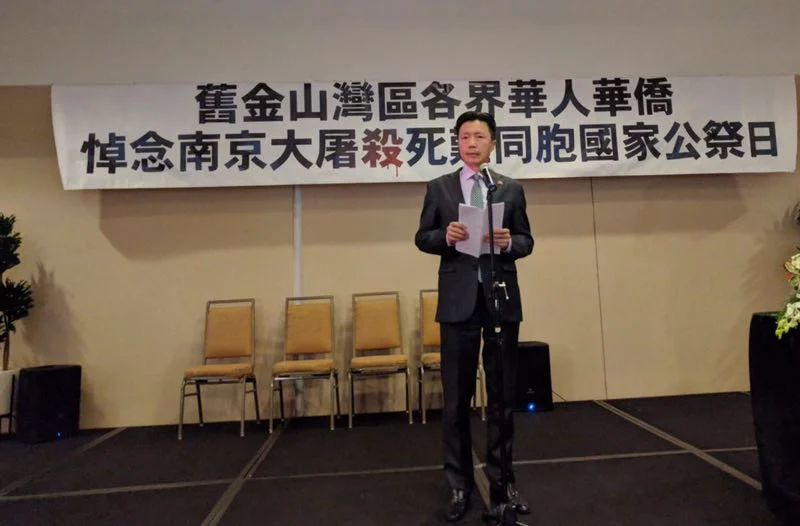
Hundreds of activists and members of the Chinese and other Asian communities convened in San Francisco on Sunday for a solemn memorial service, marking the 80th anniversary of the Nanjing Massacre, a horrific atrocity committed by the Japanese military during World War II. The annual event, now in its 20th year, serves as a critical platform for exposing the war crimes perpetrated by the Imperial Japanese Army and fostering a collective commitment to remembering this dark chapter of history. Organized by a coalition of prominent organizations, including the Rape of Nanking Redress Coalition, the Committee to Promote Reunification of China, the Alliance for Preserving the Truth of Sino-Japanese War, and the Comfort Women Justice Coalition, the memorial underscored the enduring importance of historical remembrance and the pursuit of justice.
Echoes of Atrocity: The Nanjing Massacre Remembered
The memorial service, held against the backdrop of a significant historical anniversary, aimed to ensure that the brutal events of 1937-1938 are not relegated to the annals of forgotten history. The scale of the tragedy, which saw the murder of an estimated 300,000 Chinese civilians and the destruction of a third of the city’s buildings, was a central theme of the commemorations. Zha Liyou, the acting Chinese consul general in San Francisco, delivered a poignant address, emphasizing the Japanese Army’s flagrant disregard for international conventions and the extreme cruelty inflicted upon the defenseless population of Nanjing.
The city of Nanjing, then the capital of China, fell to Japanese forces on December 13, 1937. What followed was a period of unspeakable brutality lasting over 40 days. Beyond the mass killings, the massacre was characterized by widespread rape and sexual violence, with tens of thousands of women subjected to the horrific fate of sexual slavery. This aspect of the massacre was powerfully articulated by Judith Mirkinson, president of the Comfort Women Justice Coalition. She drew a direct link between the experiences of women sexually enslaved by the Japanese Imperial Army during World War II and the broader atrocities of the Nanjing Massacre, stating that their fates were “part and parcel” of the same historical tragedy.
Mirkinson’s address highlighted a crucial dimension of historical reckoning: the necessity of truth for reconciliation. She characterized the 20th century as the most violent in human history and posited that achieving peace in the 21st century hinges on acknowledging past wrongs. She issued a direct call for the Japanese government to acknowledge its crimes and to provide justice for the surviving victims of the Nanjing Massacre and for the memory of those who perished.
A Legacy of Violence: Broader Context of Japanese Aggression
The Nanjing Massacre was not an isolated incident but rather a grim manifestation of a broader pattern of Japanese aggression that began with the invasion of Northeast China in September 1931. This was followed by a full-scale invasion on July 7, 1937, marking the commencement of the Second Sino-Japanese War, which would ultimately claim the lives and inflict injuries on an estimated 35 million Chinese soldiers and civilians before the war’s conclusion in 1945. This extensive period of occupation and conflict underscores the immense suffering endured by the Chinese population.
The annual commemoration in San Francisco is part of a global effort by the Chinese community to honor the victims and survivors of this devastating period. The Chinese government has officially designated this date as the National Memorial Day for Nanjing Massacre Victims, underscoring its significance as a moment of national remembrance and reflection.
The Imperative of Remembrance: Lessons for the Future
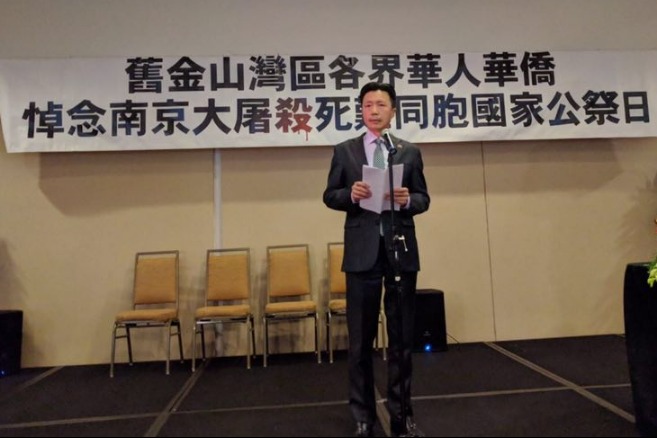
The underlying purpose of remembering the Nanjing Massacre, as articulated by Consul General Zha Liyou, is not to perpetuate animosity but to serve as a profound reminder of history’s lessons. The goal is to inspire a commitment to peace and to ensure that such atrocities are never repeated. He expressed hope that the enduring memory of the Nanjing Massacre, etched into the collective consciousness of the Chinese people and recognized within global civilization, offers some solace to the victims and those who made the ultimate sacrifice.
The historical significance and universal value of the documented heritage of the Nanjing Massacre were formally recognized in 2015 when it was inscribed on the UNESCO Memory of the World Register. This inclusion signifies its importance not only to China but to the entire world, serving as a testament to the need for global awareness and understanding of this tragic event.
Chronology of a Catastrophe
To fully grasp the gravity of the Nanjing Massacre, a chronological understanding of the events leading up to and during the atrocity is essential:
- September 18, 1931: Japan invades Manchuria (Northeast China), initiating a period of escalating aggression.
- July 7, 1937: The Marco Polo Bridge Incident marks the beginning of the full-scale Second Sino-Japanese War.
- August 1937: Japanese forces launch a major offensive towards Shanghai, leading to intense fighting and heavy casualties.
- November 1937: Shanghai falls to the Japanese, opening the path for the advance on Nanjing.
- December 13, 1937: Japanese troops capture Nanjing, the then-capital of China. This date marks the beginning of the notorious Nanjing Massacre.
- December 13, 1937 – January 1938 (approx. 40-45 days): A period of extreme brutality unfolds in Nanjing, characterized by mass killings, widespread rape, looting, and destruction. Estimates of civilian deaths range from 200,000 to over 300,000.
- March 1938: The International Committee for the Nanking Safety Zone ceases its operations as the immediate violence subsides, though ongoing suffering continues.
- 1945: World War II ends with Japan’s surrender, concluding its occupation of China.
- 2015: The Nanjing Massacre is inscribed on the UNESCO Memory of the World Register, recognizing its global historical significance.
- December 13 (annually): China observes National Memorial Day for Nanjing Massacre Victims, a day of remembrance and reflection.
- Sunday (prior to the article’s publication): Hundreds gather in San Francisco to commemorate the 80th anniversary of the Nanjing Massacre.
Supporting Data and Historical Context
The Nanjing Massacre represents one of the most brutal episodes of World War II, with figures that underscore the immense scale of human loss and suffering. Historical research and testimonies from survivors and witnesses have pieced together a grim picture of the events.
- Death Toll: While exact figures are impossible to ascertain definitively, the most widely accepted estimate for the number of Chinese civilians and disarmed soldiers murdered by the Japanese military during the six-week period following the capture of Nanjing is between 200,000 and 300,000. Some estimates range higher.
- Sexual Violence: The systematic rape of women and girls was a pervasive element of the massacre. Accounts detail horrific instances of gang rape, sexual slavery, and the targeting of women of all ages. Tens of thousands are believed to have been victims of sexual violence.
- Destruction: The city of Nanjing suffered extensive destruction. A significant portion of its buildings were looted and burned by the invading forces, leaving a landscape of devastation.
- International Outcry: Even during the war, reports of the atrocities reached the international community, eliciting shock and condemnation from various foreign observers and diplomatic representatives who remained in Nanjing to establish a Safety Zone for civilians.
The historical context of the Nanjing Massacre is deeply intertwined with Japan’s expansionist policies in Asia during the first half of the 20th century. Fueled by militarism and a desire for resources and regional dominance, Japan embarked on a path of conquest that brought immense suffering to numerous Asian nations. The invasion of China was a central pillar of this ambition, and the brutal methods employed in Nanjing were indicative of the ruthlessness with which Japanese forces pursued their objectives.
Official Responses and International Perspectives
The memorial service in San Francisco highlighted a persistent call for accountability and acknowledgment from the Japanese government. While Japan has offered apologies in the past, many victims and their advocates argue that these have been insufficient, often qualified, or lacking in genuine remorse.
- Chinese Government Stance: China consistently advocates for a full and sincere apology from Japan, coupled with concrete actions that demonstrate a genuine understanding of the historical wrongs committed. The designation of a National Memorial Day underscores China’s commitment to preserving the memory of the massacre.
- Japanese Government Statements: Over the years, various Japanese governments have issued statements expressing regret and apology for wartime actions. However, the nuances and sincerity of these statements remain a subject of contention. Debates within Japan regarding the interpretation of history and the extent of responsibility continue.
- International Recognition: The inscription of the Nanjing Massacre on the UNESCO Memory of the World Register signifies international acknowledgment of its historical importance and the need for its preservation. This recognition lends weight to the calls for remembrance and truth.
Broader Impact and Implications: The Pursuit of Peace Through Truth
The enduring significance of commemorating the Nanjing Massacre extends beyond historical record-keeping. It serves as a powerful reminder of the devastating consequences of unchecked militarism and the importance of international law and human rights. The pursuit of truth, as emphasized by speakers at the memorial, is presented as a crucial prerequisite for genuine reconciliation and lasting peace.
The continued efforts of organizations and individuals to raise awareness about the Nanjing Massacre underscore the belief that understanding historical injustices is vital for preventing their recurrence. By actively remembering and educating future generations about such atrocities, societies can cultivate a stronger commitment to peace, justice, and human dignity. The San Francisco gathering, therefore, represents more than just a commemoration; it is an active affirmation of the principle that remembrance is a powerful tool for building a more peaceful and just future. The voices raised on Sunday echoed a global sentiment: that the lessons of the past, however painful, must be learned and heeded to safeguard against the return of such darkness.


 Nana Wu
 Suro Senen