Muslim
The trial of Chen Shifeng, accused of the brutal murder of Chinese postgraduate student Jiang Ge, commenced in Tokyo with the defendant asserting his innocence in premeditated murder. The proceedings, which began on Monday, are slated to last seven days, with a verdict anticipated on December 20th. Jiang Ge, a 24-year-old student, was fatally stabbed outside her Tokyo apartment over a year ago in an incident that has garnered significant public attention, particularly in China, where her mother, Jiang Qiulian, has been a vocal advocate for justice.
Defense’s Contention: An Act of Impulse, Not Planning
Chen Shifeng, the alleged assailant, presented a defense that sought to distance his actions from intentional homicide. He claimed that Jiang Ge’s death was not the result of a meticulously planned murder but rather an escalation of events. Central to his defense is the assertion that Jiang Ge sustained fatal injuries from the initial stab, a claim directly contradicted by the autopsy report.
According to reports from ifeng.com, Chen stated during the trial that Liu Xin, Jiang Ge’s roommate, had passed a fruit knife to Jiang Ge from inside the apartment and then immediately shut the door. Chen alleged that Jiang Ge attempted to gain re-entry by ringing the doorbell with her elbow multiple times, but Liu Xin did not open the door.
Chen further contended that Jiang Ge succumbed to blood loss and that he did not possess any motive to kill her at the moment of the first stab. He went on to suggest that the subsequent nine stab wounds had no causal relationship with the initial injury. Throughout this testimony, Chen reportedly maintained a calm demeanor, a stark contrast to the emotional distress evident in other aspects of the trial.
Autopsy Report Undermines Defense Claims
The autopsy report for Jiang Ge presents a critical challenge to Chen’s narrative. It reveals that Jiang suffered between five and six defensive injuries prior to the fatal stab wound. This finding strongly suggests that Jiang was aware of the impending attack and attempted to protect herself, directly refuting Chen’s assertion that she fell and died from the first stab. Furthermore, the report details eleven or twelve stab injuries to Jiang’s neck, indicating a sustained and violent assault. These forensic findings are pivotal in the prosecution’s case, aiming to establish the premeditated nature of the attack and the brutality inflicted upon the victim.
A Mother’s Desperate Plea for Justice
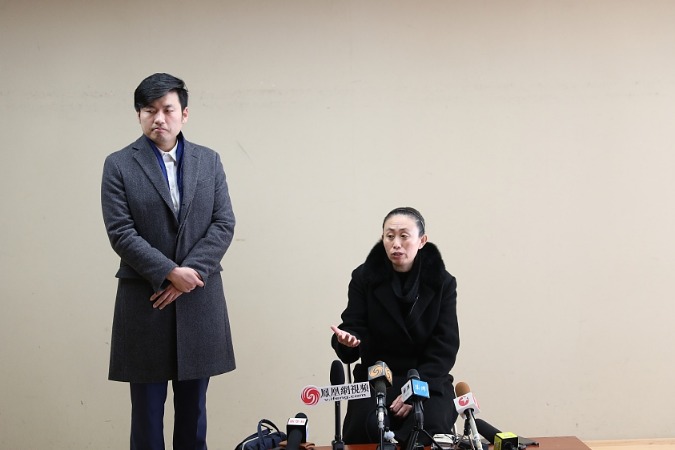
Jiang Qiulian, Jiang Ge’s mother, has been a prominent figure throughout the legal process, her presence at court often marked by profound grief. While reports indicate she did not attend the initial court hearing on Monday, her commitment to seeking the harshest possible penalty for the accused is unwavering. Jiang Qiulian has been in Japan for an extended period, reportedly 30 days, with the express purpose of petitioning for the death sentence for Chen Shifeng.
Her public appeals have not been solely directed at the judicial system. Jiang has also voiced strong criticism of Liu Xin, Jiang Ge’s roommate, accusing her of indifference to the sacrifice her daughter made. This accusation has ignited a significant and often heated debate online, particularly among Chinese netizens, highlighting the complex emotional and ethical dimensions of the case. Liu Xin is expected to appear in court as a witness, a role that will undoubtedly place her under intense scrutiny.
Timeline of the Tragic Events
The tragic events leading to Jiang Ge’s death unfolded over a year ago, on November 3, 2016. Jiang, a postgraduate student at Japan’s Daito Bunka University, was returning to her apartment in Suginami Ward, Tokyo. She was reportedly intercepted by Chen Shifeng outside her residence. While the precise circumstances remain contested, the prevailing narrative suggests that Jiang intervened in a dispute between Chen and his former girlfriend, Liu Xin, who was Jiang’s roommate. Chen allegedly attacked Jiang outside the apartment building.
- November 3, 2016: Jiang Ge is fatally stabbed outside her apartment in Tokyo.
- Post-Incident: Chen Shifeng is apprehended by authorities. Jiang Qiulian, Jiang’s mother, embarks on a campaign for justice, advocating for the death penalty for Chen.
- December 10, 2017: Jiang Qiulian meets the press in Tokyo, one day before the trial begins.
- December 11, 2017: The trial of Chen Shifeng commences in Tokyo.
- December 20, 2017: The verdict in the trial is expected.
Background Context: A Culture of Accusation and Vigilance
The case of Jiang Ge has resonated deeply within China, transcending a mere legal dispute to become a symbol of perceived injustice and societal failings. The intensity of public sentiment, particularly directed towards Liu Xin, underscores a broader cultural phenomenon of online vigilantism and the swift formation of public opinion, often before all facts are established. The accusation of indifference leveled against Liu Xin by Jiang’s mother speaks to a deep-seated expectation of loyalty and reciprocal sacrifice within social relationships, particularly in challenging circumstances. This expectation, amplified by social media, can create immense pressure on individuals caught in the vortex of public scrutiny.
The legal system in Japan, which Chen Shifeng is currently navigating, operates under a different framework than that of China. While the death penalty exists in Japan, its application is subject to stringent legal review and is reserved for the most heinous crimes. Jiang Qiulian’s persistent advocacy for this ultimate punishment reflects the profound despair and anger felt by a mother who has lost her child under tragic circumstances.
Broader Implications and Societal Impact
The trial of Chen Shifeng carries significant implications beyond the immediate legal outcome. It highlights the complexities of international legal proceedings involving citizens of different nations, the role of media in shaping public perception, and the profound emotional toll on families affected by violent crime. The case has also prompted discussions about the safety of international students abroad, the responsibilities of roommates and friends in crisis situations, and the ethical considerations surrounding public commentary on ongoing legal battles.
The stark contrast between the forensic evidence presented by the autopsy report and Chen’s defense strategy will be a central focus for the court. The prosecution will likely leverage the defensive wounds to demonstrate that Jiang was aware of the danger and fought back, suggesting a level of premeditation on the part of the attacker. Chen’s claim that subsequent stabs were unrelated to the first also presents a challenge for the defense, as the cumulative effect of multiple stab wounds is undeniable.
The participation of Liu Xin as a witness is a crucial element of the trial. Her testimony will likely shed light on the events leading up to the attack and the interaction between herself, Jiang Ge, and Chen Shifeng. Her role, whether perceived as passive or active, has been a subject of intense speculation and criticism, and her courtroom testimony will be closely examined by all parties involved.
As the trial progresses, the world watches to see how the Japanese legal system will weigh the evidence, the testimonies, and the passionate appeals for justice. The outcome will not only determine the fate of Chen Shifeng but will also undoubtedly leave a lasting impact on the lives of those involved and serve as a case study in the complexities of crime, justice, and public sentiment in the modern era. The unwavering resolve of Jiang Qiulian, however the verdict may fall, underscores the enduring power of maternal love and the relentless pursuit of accountability in the face of unimaginable loss.


 Nana Wu
 Suro Senen