Dwi Wanna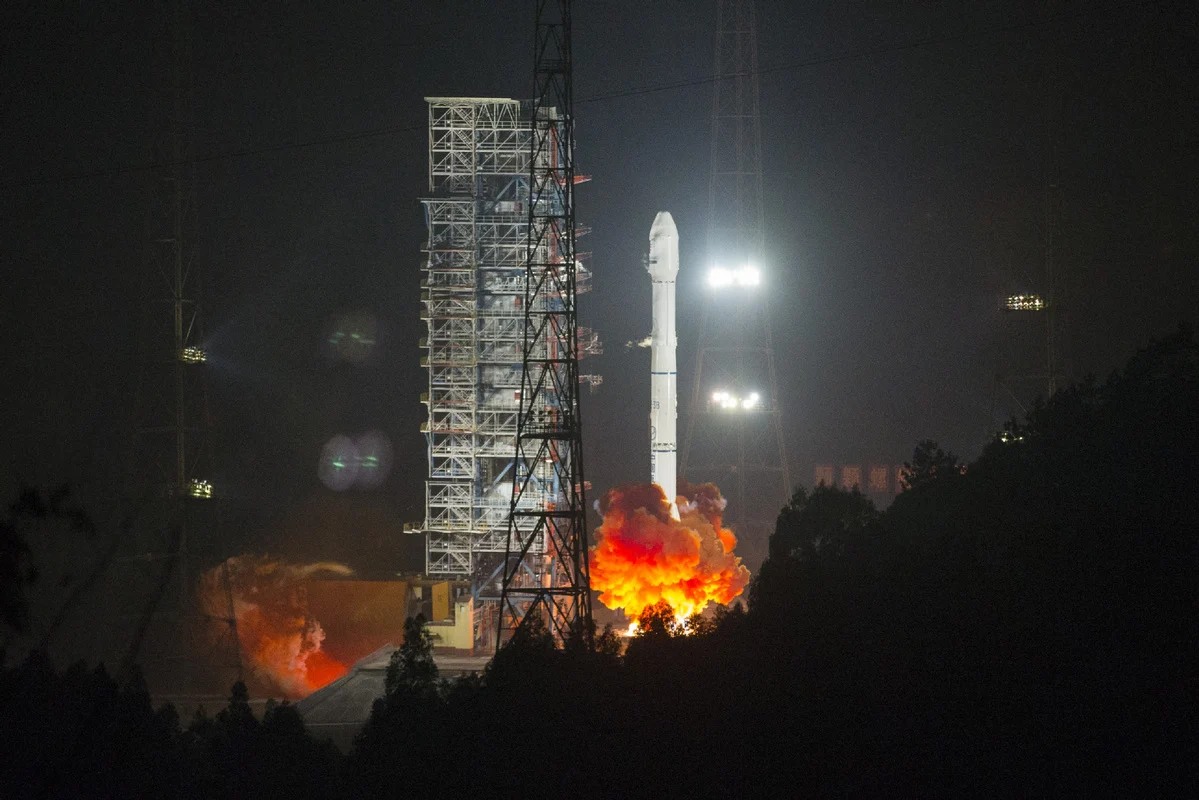
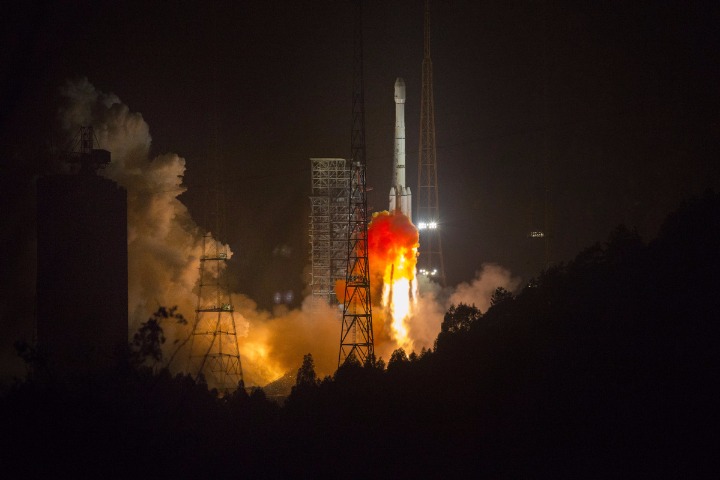
XICHANG, Sichuan Province – On December 11, 2017, at precisely 40 minutes past midnight, China’s Xichang Satellite Launch Center in the southwestern province of Sichuan achieved a significant milestone, successfully placing Algeria’s inaugural communication satellite, Alcomsat-1, into its designated orbit. This launch, conducted atop a Long March-3B carrier rocket, not only represented the 258th mission for China’s venerable Long March rocket family but also heralded a new era of collaborative endeavors in the aerospace sector between China and Algeria. The Alcomsat-1 satellite is poised to revolutionize communication and connectivity across Algeria, serving a broad spectrum of vital applications.
A New Dawn for Algerian Connectivity
The Alcomsat-1 satellite, a testament to the burgeoning partnership between China and Algeria, is set to play a pivotal role in enhancing the North African nation’s telecommunications infrastructure. Its deployment is expected to significantly bolster services in broadcast and television, ensuring wider reach and improved quality for Algerian citizens. Beyond entertainment, the satellite is engineered to provide robust support for emergency communication networks, a critical component for disaster response and public safety. Furthermore, Alcomsat-1 will be instrumental in expanding access to distance education programs, enabling learning opportunities to reach remote and underserved areas.
The satellite’s capabilities extend to bolstering e-governance initiatives, streamlining public services and enhancing administrative efficiency. Businesses will benefit from improved enterprise communication solutions, fostering economic growth and connectivity. A key objective is also the expansion of broadband internet access, bridging the digital divide and bringing high-speed internet to more Algerians. Finally, the satellite will contribute to satellite-based navigation systems, offering enhanced precision and reliability for transportation and logistics.
The Genesis of a Collaborative Space Venture
The successful launch of Alcomsat-1 is the culmination of extensive planning and execution, marking the first significant cooperative project in the aerospace industry between China and Algeria. This collaboration underscores China’s growing role as a provider of satellite technology and launch services on the international stage, particularly within the framework of the Belt and Road Initiative. The development of Alcomsat-1 involved a comprehensive process, from initial design and manufacturing to rigorous testing and integration, all undertaken with the aim of meeting Algeria’s specific communication needs.
A Look at the Launch Vehicle and Mission
The Long March-3B carrier rocket, a workhorse of China’s space program, provided the reliable propulsion needed to deliver Alcomsat-1 into its intended orbit. This particular launch was the 258th mission for the Long March rocket family, a testament to its proven track record and the accumulated expertise of China’s launch operations. The Long March-3B is a powerful, three-stage rocket designed for launching heavy payloads into geostationary transfer orbit and beyond. Its development and continued operation reflect China’s sustained commitment to advancing its indigenous launch capabilities. The precise timing of the launch, just after midnight, highlights the meticulous planning and operational efficiency of the Xichang Satellite Launch Center, a key facility for China’s geostationary satellite launches.
Algeria’s Strategic Vision for Space
For Algeria, the Alcomsat-1 mission represents a strategic leap forward in its national development agenda. The satellite’s deployment is not merely a technological upgrade but a foundational element for realizing ambitious goals in education, governance, and economic diversification. By investing in indigenous satellite capabilities, Algeria aims to reduce its reliance on foreign infrastructure and gain greater control over its telecommunications destiny. This move aligns with a broader trend among developing nations to leverage space technology for socio-economic advancement. The partnership with China offers a cost-effective and technologically advanced solution, enabling Algeria to accelerate its progress in critical sectors.
Broader Implications for Sino-Algerian Relations
The successful launch of Alcomsat-1 carries significant implications for the broader diplomatic and economic relationship between China and Algeria. It demonstrates a deepening of trust and mutual understanding, moving beyond traditional trade relationships into high-technology sectors. This collaboration in space exploration and application can serve as a model for future joint ventures, potentially encompassing other advanced fields such as renewable energy, artificial intelligence, and infrastructure development.
China’s willingness to share its expertise and technology with Algeria, particularly in a sensitive and advanced field like space, signals a commitment to fostering genuine partnerships rather than mere transactional engagements. For Algeria, this partnership provides access to cutting-edge technology and valuable know-how, contributing to the development of its own domestic expertise in the long run. This can foster a new generation of Algerian engineers and scientists skilled in aerospace technologies.
The Role of Xichang Satellite Launch Center
The Xichang Satellite Launch Center, situated in a remote mountainous region of Sichuan province, has been instrumental in China’s space endeavors since its establishment in 1970. Its location provides natural shielding and contributes to safety protocols during launches. Over the decades, Xichang has evolved into one of China’s primary launch sites, particularly for geostationary satellites, due to its geographical advantage for launching eastward into equatorial orbits. The successful execution of the Alcomsat-1 launch further solidifies Xichang’s reputation as a reliable and proficient launch facility capable of handling complex international missions. The center’s infrastructure and experienced personnel are crucial assets in ensuring the success of such high-stakes operations.
Global Context: China’s Expanding Space Footprint
The launch of Alcomsat-1 is part of a larger narrative of China’s expanding influence and capabilities in the global space arena. China has consistently increased its investment in space technology and exploration, aiming to become a leading space power by the mid-21st century. This ambition is reflected in its ambitious lunar and Martian exploration programs, the development of its own space station, and its growing commercial launch services.
For nations seeking reliable and affordable access to space, China has emerged as a significant alternative to established players. The Alcomsat-1 mission underscores this trend, demonstrating China’s capacity to not only develop its own advanced space assets but also to partner with other countries in achieving their space-related objectives. This approach can be particularly attractive to developing nations looking to build their capabilities without incurring the prohibitive costs associated with indigenous satellite development and launch infrastructure.
Anticipated Impact on Algerian Society and Economy
The immediate impact of Alcomsat-1 is expected to be felt across various sectors of Algerian society. The widespread availability of television and radio services will enhance cultural exchange and national cohesion. Emergency communication capabilities will be crucial in mitigating the impact of natural disasters, improving response times and saving lives. Distance education will democratize access to knowledge, empowering individuals regardless of their geographical location.
In the economic sphere, improved broadband access and enterprise communication will foster innovation and productivity. E-governance initiatives will streamline public services, making them more accessible and efficient for citizens and businesses alike. Satellite-based navigation will offer new possibilities for transportation, logistics, and resource management. The development and operation of these services will also likely create new job opportunities within Algeria, fostering a domestic space industry ecosystem.
A Glimpse into Future Collaborations
The successful deployment of Alcomsat-1 serves as a strong foundation for future collaborations between China and Algeria in the space domain and beyond. It opens avenues for joint research and development, capacity building, and the potential for Algeria to utilize Chinese launch capabilities for future satellite missions. As both nations continue to prioritize technological advancement and international cooperation, the partnership initiated by Alcomsat-1 is poised to yield further benefits, contributing to the progress and prosperity of both countries. The enduring success of this project will be measured not only by its immediate technical achievements but also by its long-term contribution to Algeria’s development and the strengthening of Sino-Algerian ties.


 Nana Wu
 Suro Senen