Asro
Asro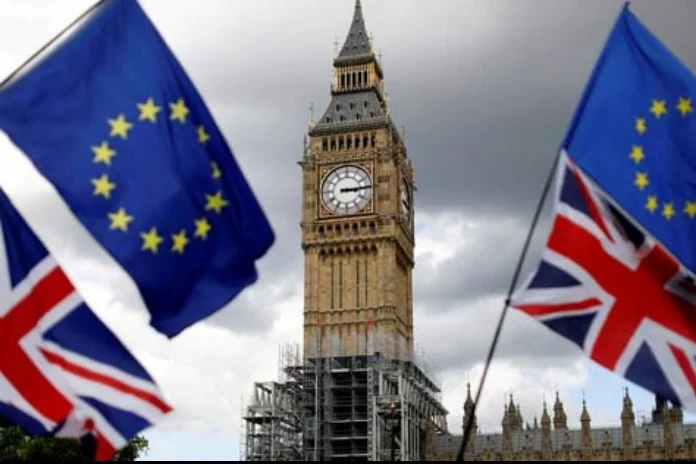
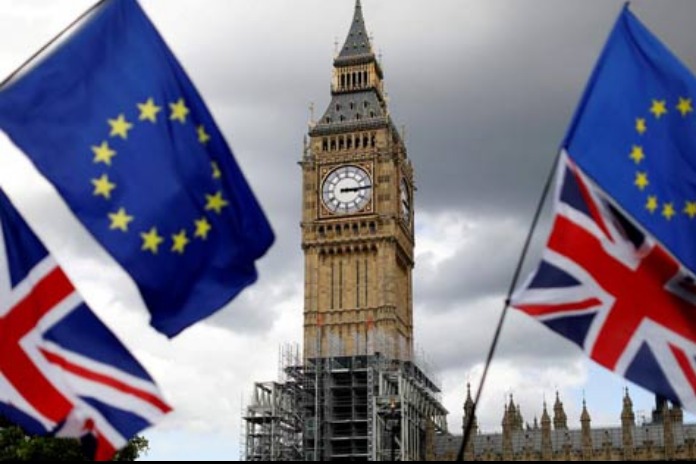
London, United Kingdom – The prospect of a no-deal Brexit has significantly receded, according to Britain’s Brexit Secretary David Davis, who expressed optimism on Sunday that a comprehensive trade agreement with the European Union could be reached within a year of the UK’s departure. This renewed confidence stems from the tentative agreement reached in Brussels on Friday, which has paved the way for crucial discussions on the future relationship between the UK and the EU.
The breakthrough, brokered by Prime Minister Theresa May, has been characterized by Davis as a vital “statement of intent” rather than a legally binding document. Its primary purpose, he explained in media interviews on Sunday, is to facilitate the progression to the next, more complex phase of negotiations. This pivotal step was contingent on the progress made in Brussels, which allowed European Commission President Jean-Claude Juncker to recommend to the European Council that talks on Britain’s post-Brexit relationship could indeed commence. This recommendation is seen as a critical enabler for the upcoming summit of EU leaders, where further discussions on the UK’s future integration with the bloc will be on the agenda.
The Vision for a "Canada Plus Plus Plus" Trade Deal
Central to the UK’s negotiating strategy is the aspiration for a free-trade agreement that eliminates tariffs entirely. Davis articulated this ambition by referencing a "Canada plus plus plus" model. This conceptual framework draws inspiration from the existing comprehensive free trade agreement between Canada and the EU. However, the UK’s vision extends beyond this, seeking to incorporate financial services within the tariff-free framework. This inclusion is considered paramount for safeguarding Britain’s lucrative financial sector, particularly the City of London, a global financial hub, and its substantial banking cluster. The economic significance of these sectors to the UK economy cannot be overstated, representing a substantial portion of its GDP and employment.
Davis further elaborated on his desire for a bespoke Brexit deal, suggesting a strategy of combining the best elements from existing trade agreements. "We’ll probably start with the best of Canada, and the best of Japan and the best of South Korea and then add to that the bits that are missing which is the services," he stated. This approach indicates a desire to leverage successful trade models while tailoring them to Britain’s specific economic strengths and priorities, with a particular emphasis on services, a sector where the UK holds a competitive advantage.
Timeline and the Path Forward
The timeline projected by Davis suggests that a substantive trade deal could be finalized within approximately twelve months following the UK’s official exit from the EU, currently scheduled for March 2019. This ambitious timeline underscores the government’s commitment to achieving a swift and comprehensive resolution to the trade negotiations.

The ongoing negotiations are also grappling with the complex issue of the border between Northern Ireland and the Republic of Ireland. Britain has reiterated its commitment to maintaining a frictionless and invisible border, a commitment that has been a significant point of contention in the withdrawal talks. Davis assured that a solution would be found to uphold this principle, even in the event of a "no-deal" scenario, suggesting that contingency plans are being developed to address this sensitive issue.
Opposition Party’s Perspective
The main opposition Labour Party, through its Brexit spokesman Keir Starmer, has also outlined its vision for the UK’s future relationship with the EU. Starmer emphasized the desire for a partnership that preserves the benefits derived from membership of the European single market and the customs union. This stance highlights a divergence in political priorities, with Labour advocating for closer economic ties than the current government’s trajectory suggests.
Financial Commitments and Future Negotiations
Prime Minister Theresa May is expected to convene a formal cabinet meeting in the coming days to deliberate on the progress of the Brexit negotiations. A key element of the withdrawal agreement, a divorce settlement of approximately 39 billion pounds (equivalent to 52.2 billion U.S. dollars), has been provisionally agreed upon. However, the final payment of this sum is contingent on the successful negotiation of a future trade deal between the UK and the EU. This linkage underscores the interconnectedness of the withdrawal process and the future economic relationship, making the trade talks critical for finalising the terms of departure.

Background and Context
The United Kingdom voted to leave the European Union in a referendum held on June 23, 2016, a decision that sent shockwaves across the political and economic landscape. The referendum, which saw 51.9% of voters opt for Brexit, triggered a period of intense political debate and negotiation. The formal process of withdrawal began on March 29, 2017, when the UK government invoked Article 50 of the Treaty on European Union, setting a two-year countdown to departure.
Since the referendum, negotiations have been characterized by a series of complex challenges, including citizens’ rights, the financial settlement, and the contentious issue of the Irish border. The agreement reached in Brussels on Friday marked a significant milestone, allowing the negotiations to move from the withdrawal phase to the future relationship phase. This transition is crucial for defining the long-term economic and political ties between the UK and the EU.
Supporting Data and Economic Implications
The economic implications of Brexit remain a subject of ongoing analysis and debate. Projections from various economic bodies have highlighted potential impacts on trade, investment, and GDP growth. For instance, the Bank of England has, at various points, forecast that Brexit could lead to a reduction in the UK’s potential growth rate. The specific terms of the future trade deal will play a pivotal role in shaping these outcomes.

The UK’s trade relationship with the EU is substantial, with the EU being the UK’s largest trading partner by a significant margin. In 2016, the UK exported goods and services worth over £230 billion to the EU, while importing goods and services valued at approximately £300 billion. Any disruption to this trade flow, particularly through tariffs or increased non-tariff barriers, could have considerable economic consequences.
The financial services sector, as mentioned, is a cornerstone of the UK economy. London’s position as a global financial centre is built on its access to the EU’s single market, which allows for the seamless provision of financial services across member states. Losing this access could lead to a relocation of some financial activities to other European cities, impacting jobs and tax revenues in the UK. The pursuit of a trade deal that safeguards this sector is therefore a high priority for the British government.
Broader Impact and International Reactions
The Brexit negotiations have not only dominated domestic political discourse but have also garnered significant international attention. Global markets have reacted to the developments, with currency fluctuations and stock market movements often mirroring the perceived progress or setbacks in the talks. International organizations, such as the International Monetary Fund (IMF) and the World Trade Organization (WTO), have offered analyses and advice on the potential economic consequences of different Brexit scenarios.

The EU’s unified stance throughout the negotiations has been a notable feature, with the bloc negotiating as a collective of 27 member states. This has presented a united front in discussions with the UK. The progress achieved in Brussels signifies a shared desire to move towards a more stable and predictable future relationship, acknowledging the economic interdependence between the UK and the EU.
The outcome of these negotiations will have far-reaching implications, not only for the UK and the EU but also for the broader global economic order. The establishment of a new trade framework will shape investment decisions, supply chains, and international cooperation for years to come. The ongoing dialogue and the commitment to finding mutually beneficial solutions will be crucial in navigating this complex transition. The optimistic outlook expressed by David Davis, if realized, could signal a more stable and prosperous future for both the United Kingdom and its European partners.


 Nana Wu
 Suro Senen