Asro
Asro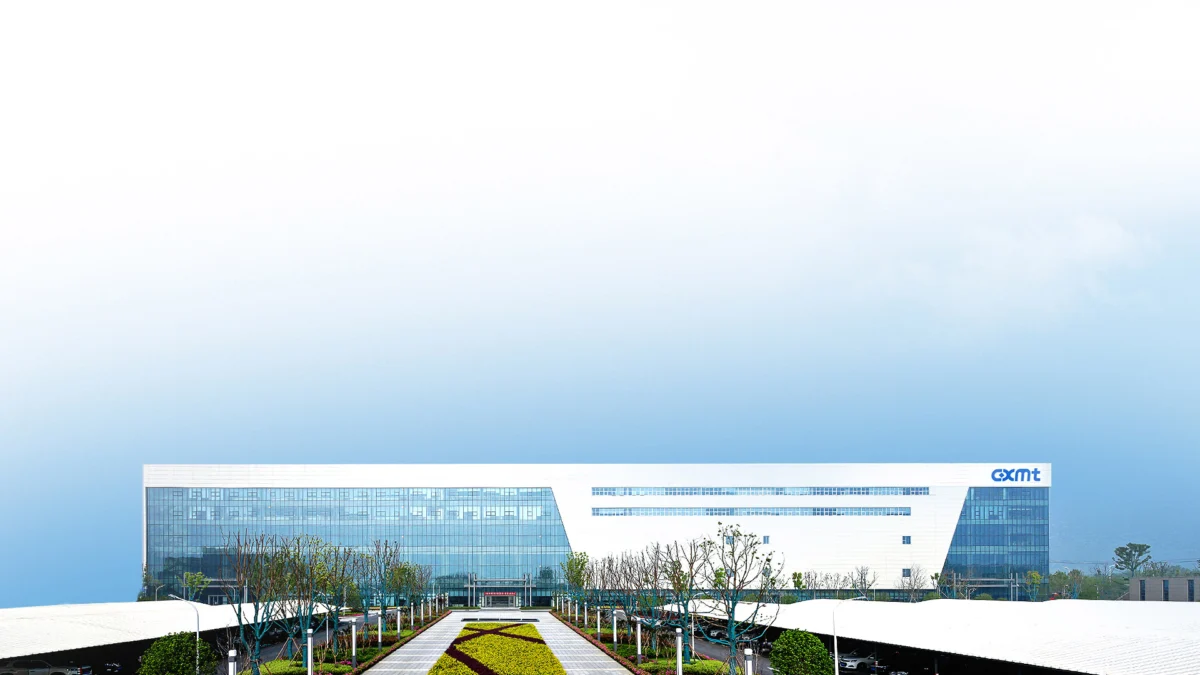
ChangXin Memory Technologies (CXMT), a pivotal player in China’s drive for semiconductor self-sufficiency, has seen its initial public offering (IPO) review status on the Shanghai Stock Exchange’s STAR Market advance to "inquiry," according to official information released by the exchange. This development marks a critical procedural milestone for the Chinese memory-chip maker, signifying its deeper engagement within the rigorous scrutiny process designed for high-tech enterprises seeking domestic public funding. The shift from an initial acceptance or review stage to "inquiry" indicates that the exchange’s listing committee has commenced a detailed examination of the company’s submitted documents, financial health, technological capabilities, corporate governance, and compliance with regulatory standards, often involving multiple rounds of questions and clarifications. It is crucial to underscore that while this represents significant progress, it is a procedural step and not an approval for listing, with further stages, including potential committee meetings and final registration approval from the China Securities Regulatory Commission (CSRC), still ahead. The journey through the STAR Market’s registration-based IPO system is designed to be transparent and market-oriented, providing a clear pathway for innovative companies like CXMT to tap into domestic capital markets.
Navigating the STAR Market: The IPO Process Explained
The Shanghai Stock Exchange Sci-Tech Innovation Board, widely known as the STAR Market, was inaugurated in July 2019 with a specific mandate: to support the growth of China’s strategic emerging industries, particularly in advanced technology, and to offer an alternative listing venue for innovative companies that might not meet traditional profitability requirements. It operates on a registration-based IPO system, a reform that streamlines the listing process compared to the older approval-based system. Under this model, the exchange primarily focuses on disclosure quality and compliance, while the CSRC’s role is more supervisory, ensuring fair procedures.
The typical STAR Market IPO process involves several key stages. Initially, a company submits its application, which, if complete, leads to "acceptance." Following this, the exchange’s review department conducts a preliminary examination, sometimes designated as "review" or "feedback." The "inquiry" stage, which CXMT has now entered, is arguably the most intensive phase. During this period, the exchange’s listing committee issues detailed inquiries to the applicant and its sponsors (underwriters) concerning various aspects of the business. These questions can cover anything from the specifics of their core technology, intellectual property rights, market competitiveness, operational risks, financial projections, and the legality of their corporate structure, to potential related-party transactions and the adequacy of their internal controls. Companies are expected to provide comprehensive and well-substantiated responses, often leading to multiple rounds of questions and answers. The process demands a high degree of transparency and meticulous preparation from the applicant. Once the listing committee is satisfied with the responses and the company meets the listing criteria, the application progresses to a committee meeting for deliberation. If approved by the committee, it is then submitted to the CSRC for final registration. The CSRC’s review is primarily focused on whether the exchange’s procedures were followed and if there are any major disclosure deficiencies or legal concerns. Only after the CSRC grants registration approval can the company proceed with its offering and eventual listing. This structured approach aims to ensure that only robust and compliant enterprises, aligned with China’s strategic industrial goals, gain access to public capital.
ChangXin Memory Technologies: A Pillar of China’s Memory Ambition
ChangXin Memory Technologies, headquartered in Hefei, Anhui Province, stands as a beacon of China’s ambition to achieve self-reliance in the critical semiconductor sector, particularly in Dynamic Random-Access Memory (DRAM). Established in 2016, CXMT emerged from the strategic imperative to reduce China’s heavy dependence on foreign suppliers for memory chips, a vulnerability that has been starkly highlighted by global supply chain disruptions and escalating geopolitical tensions. The company’s founding was backed by significant government and provincial investment, reflecting the national priority placed on developing indigenous semiconductor capabilities.
CXMT has rapidly ascended to become China’s leading, and indeed its only, major domestic manufacturer of DRAM chips. Its product portfolio includes a range of memory solutions for various applications, such as mobile devices (LPDDR4X), personal computers (DDR4, soon DDR5), and servers. The company has made substantial strides in process technology, moving from initial 19nm-class production to more advanced nodes, continuously working to narrow the technological gap with global industry leaders like Samsung, SK Hynix, and Micron Technology. This progress has been achieved through a combination of extensive R&D investment, strategic talent acquisition, and the development of proprietary intellectual property. While still a smaller player on the global stage, CXMT’s existence and growth are strategically vital for China, providing a domestic source for a fundamental component of modern electronics and computing infrastructure. Its success is not merely commercial but also a testament to China’s ability to cultivate advanced manufacturing capabilities in a highly complex and capital-intensive industry.
China’s Grand Semiconductor Strategy: A National Imperative
The push for domestic semiconductor development, epitomized by companies like CXMT, is deeply embedded within China’s overarching national strategies. Programs such as "Made in China 2025" explicitly outline goals for achieving significant domestic content ratios in critical high-tech sectors, with integrated circuits being a top priority. More recently, the "Dual Circulation" strategy, emphasizing domestic demand and technological self-sufficiency, further underscores the importance of indigenous innovation in semiconductors. The Chinese government has poured billions of dollars into the sector through various initiatives, most notably the China Integrated Circuit Industry Investment Fund, colloquially known as the "Big Fund." Established in 2014, with a second phase launched in 2019, this state-backed fund has channeled massive investments into chip manufacturing, design, equipment, and materials companies, including CXMT, to accelerate their growth and technological advancement.
The strategic importance of DRAM for China cannot be overstated. As a fundamental building block for virtually all electronic devices, from smartphones and laptops to data centers and artificial intelligence systems, a secure and independent supply of DRAM is seen as crucial for national economic security and technological sovereignty. The escalating tech rivalry with the United States, marked by export controls and restrictions on advanced technology access, has amplified China’s urgency to develop robust domestic alternatives. This geopolitical context has transformed CXMT from merely a commercial enterprise into a critical component of China’s national technological resilience strategy. Its successful development and scaling are viewed as essential steps in mitigating external vulnerabilities and fostering an ecosystem of domestic innovation.
A Detailed Timeline of CXMT’s Listing Journey
While the precise date of CXMT’s initial intent to list on the STAR Market is not publicly detailed in the same way as its official application, the company’s journey towards an IPO has been anticipated for some time, given its strategic importance and significant capital needs. Typically, high-tech firms of CXMT’s scale and national significance undergo a lengthy preparation phase involving financial restructuring, internal governance enhancements, and detailed prospectus drafting before formal submission.
- Initial Public Announcement/Rumors: Reports and industry speculation regarding CXMT’s potential IPO emerged as early as late 2022 or early 2023, signaling the company’s intent to seek public capital to fund its ambitious expansion plans and R&D.
- Formal Application Submission: ChangXin Memory Technologies formally submitted its application for an IPO on the Shanghai Stock Exchange’s STAR Market, a significant step that initiated the official review process. While the exact submission date is not provided in the snippet, it would have been publicly announced by the exchange upon acceptance.
- Application Acceptance: Following submission, the Shanghai Stock Exchange reviewed the completeness of CXMT’s application documents. Upon verification, the application was accepted, marking its formal entry into the STAR Market’s queue. This stage typically confirms that all necessary paperwork is in order.
- Review/Feedback Stage: Post-acceptance, the exchange’s review department commenced a preliminary examination of the prospectus and supporting documents. During this phase, the exchange often issues an initial round of feedback or questions to the company and its sponsors, requiring further clarification or supplementary information.
- Progression to "Inquiry" Status: The recent update confirms that CXMT’s status has now moved to "inquiry." This signifies that the listing committee has taken over the review, initiating a more detailed and intensive scrutiny. This stage is characterized by specific, often granular, questions posed to the company, requiring comprehensive written responses and potentially further disclosures. It represents a deeper dive into the company’s financials, technology, governance, and market position.
- Next Steps: Following the satisfactory resolution of all inquiries, CXMT’s application would then proceed to a listing committee meeting for deliberation and voting. If approved by the committee, the application package would be forwarded to the China Securities Regulatory Commission (CSRC) for final registration approval. Only after CSRC registration can the company proceed with book-building, pricing, and eventual listing. The entire process from initial acceptance to listing can take anywhere from several months to over a year, depending on the complexity of the company, the quality of its disclosures, and the regulatory workload.
Market Dynamics and Supporting Data: A Global Perspective
The global DRAM market is a multi-billion dollar industry, characterized by high capital expenditure, intense R&D, and cyclical demand. In 2023, the global semiconductor market, inclusive of memory, was estimated to be around $520-550 billion, with the memory segment, particularly DRAM, being a significant component, often accounting for 20-30% of the total. Major players like Samsung, SK Hynix, and Micron Technology collectively dominate over 95% of the global DRAM market, holding significant technological leads in process nodes and manufacturing scale. China, despite being the world’s largest consumer of semiconductors, historically imported the vast majority of its memory chips. This reliance underscores the strategic imperative behind CXMT’s development.
CXMT’s entry into the market, while still representing a smaller share compared to the giants, is critical for China. Industry analysts estimate that CXMT has achieved significant advancements, particularly in its 19nm-class and now 17nm DRAM process technology. While still a generation or two behind the absolute cutting edge (which is approaching 1alpha or 1beta nm), CXMT’s progress is notable for a relatively young company. Its potential IPO aims to raise substantial capital, reportedly in the range of tens of billions of RMB (several billion USD), which would be instrumental in funding further R&D, expanding production capacity, and attracting top-tier talent. This capital infusion is crucial for CXMT to continue its technological catch-up and achieve greater economies of scale. The company’s valuation, once listed, would likely reflect both its current operational capabilities and its strategic importance within China’s national technology agenda, potentially commanding a premium due to its role in national security and self-sufficiency.
Official and Industry Reactions: Views on the Milestone
While direct statements from CXMT or the Shanghai Stock Exchange regarding this specific procedural update are typically brief and formal, the progression to "inquiry" status elicits general reactions consistent with the STAR Market’s objectives and China’s semiconductor strategy.
- Shanghai Stock Exchange: The SSE would likely reiterate its commitment to a transparent, market-oriented, and registration-based IPO system. Their statements would emphasize the importance of rigorous due diligence to ensure that listed companies meet high standards of disclosure, corporate governance, and technological innovation, thereby protecting investor interests and fostering a healthy capital market for strategic industries.
- ChangXin Memory Technologies: CXMT’s management would likely express confidence in the ongoing review process, reiterating its commitment to providing comprehensive and accurate information to the exchange. They would underscore the strategic importance of the IPO in securing capital for future expansion, R&D, and talent development, all crucial for advancing China’s memory chip capabilities.
- Industry Analysts: Analysts closely monitoring the semiconductor sector and China’s tech ambitions would view this as a positive, albeit expected, step. They might highlight that the "inquiry" stage is a critical filter, and successful navigation signifies a company’s robust preparation. Their commentary would likely focus on the long-term implications of CXMT’s successful listing for increasing domestic competition, potentially impacting global pricing dynamics, and further solidifying China’s position in the global tech landscape. They would also acknowledge the challenges, such as the persistent technology gap and geopolitical pressures.
- Government Officials: Chinese government officials, while not directly commenting on specific company IPOs, would consistently underscore the importance of supporting domestic champions in strategic sectors like semiconductors. They would likely reiterate policy commitments to fostering an environment conducive to technological innovation and industrial self-reliance, with CXMT serving as a prime example of such national endeavors.
Broader Implications: Reshaping the Global Semiconductor Landscape
CXMT’s successful navigation of the IPO process and eventual listing would carry profound implications, not just for the company itself, but for China’s broader technological ambitions and the global semiconductor landscape.
- For CXMT: An IPO would provide a massive influx of capital, essential for the continuous, high-cost investment required in DRAM manufacturing. This funding would accelerate R&D into more advanced process nodes (e.g., beyond 17nm to 1znm-class), expand manufacturing capacity, and enhance its ability to attract and retain top engineering talent in a highly competitive global market. Public listing would also boost CXMT’s corporate profile and credibility, making it a more formidable competitor.
- For China’s Technological Independence: A strong, publicly traded CXMT would be a cornerstone of China’s drive for technological sovereignty. It would significantly reduce reliance on foreign memory chip suppliers, especially in a geopolitical climate where access to critical technologies can be weaponized. This domestic capability would enhance the resilience of China’s entire electronics manufacturing ecosystem, from consumer devices to critical infrastructure. It would also serve as a proof point for China’s industrial policies, encouraging further investment in other strategic high-tech areas.
- For the Global DRAM Market: CXMT’s growth and increased capacity could intensify competition in the global DRAM market. While the established giants hold significant advantages, a well-funded CXMT could exert downward pressure on prices in the long term, potentially affecting the profitability of international competitors. Its presence would also diversify the global supply chain, albeit with a strong nationalistic undertone, which could be seen as both a risk and an opportunity depending on geopolitical perspectives.
- Geopolitical Ramifications: The progress of CXMT’s IPO cannot be separated from the broader US-China tech rivalry. The success of Chinese domestic chipmakers is often viewed through the lens of national security and economic competition. A robust CXMT lessens the impact of potential future technology restrictions from the West, reinforcing China’s strategic autonomy. This could further motivate other nations to reconsider their own semiconductor supply chain vulnerabilities.
- Challenges Ahead: Despite the positive momentum, CXMT faces significant challenges. The technology gap with global leaders, while narrowing, still exists. Sustaining high yield rates at advanced nodes, managing intellectual property risks, and navigating the cyclical nature of the memory market will require continuous innovation and shrewd management. Furthermore, the global talent pool for advanced semiconductor manufacturing remains limited, and attracting and retaining experts will be crucial.
In conclusion, ChangXin Memory’s advancement to the "inquiry" stage on the STAR Market is more than a mere procedural update; it is a critical indicator of China’s determined march towards technological self-sufficiency in a vital industry. As CXMT navigates the remaining steps towards a public listing, its journey will continue to be watched closely, not just by investors, but by policymakers and industry leaders worldwide, as it represents a significant chapter in the evolving narrative of global semiconductor competition and national technological ambition.

 Ali Ikhwan
 Reynand Wu