Azzam Bilal Chamdy
The recent dispatch of the first liquefied natural gas (LNG) cargo from Russia’s Yamal project marks a pivotal moment for China’s energy security, promising increased supplies to alleviate a severe natural gas shortage, particularly in the northern regions of the country. This monumental achievement underscores the deepening energy cooperation between China and Russia and highlights China’s strategic efforts to diversify its energy sources and bolster its reserves.
Addressing China’s Energy Imperative
China’s rapid economic expansion and its aggressive push for cleaner energy have created an unprecedented surge in demand for natural gas. The "Blue Sky" campaign, initiated by Beijing to combat air pollution, has driven a nationwide transition from coal to natural gas for heating and industrial purposes. This ambitious policy, while critical for environmental improvement, has placed immense strain on the country’s gas supply infrastructure, leading to significant shortages, especially during peak winter demand.
In 2017, China surpassed South Korea to become the world’s second-largest importer of LNG, with imports rising by an estimated 46% year-on-year. The National Development and Reform Commission (NDRC) projected a 10% annual increase in natural gas consumption, reaching 300 billion cubic meters (bcm) by 2020. This escalating demand has rendered China increasingly reliant on imported gas, making stable, long-term supply agreements like Yamal crucial. The severe gas shortages experienced in northern China during recent winters, which led to temporary industrial shutdowns and disrupted residential heating, underscored the urgency of securing reliable foreign supplies.
The Yamal LNG Project: A Strategic Overview
The Yamal LNG project, located on the Yamal Peninsula in the Arctic region of Russia, is one of the world’s largest and most ambitious industrial undertakings in the high north. Developed by Novatek, Russia’s largest independent natural gas producer, in partnership with international stakeholders, the project taps into the vast South Tambey gas field, estimated to hold over 926 billion cubic meters of natural gas.
The project involves the construction of a natural gas liquefaction plant with a planned capacity of 16.5 million metric tons per annum (mtpa) across three liquefaction trains. Its remote Arctic location necessitates specialized infrastructure, including ice-class LNG carriers capable of navigating the challenging Arctic waters, a dedicated port, and extensive onshore facilities built on permafrost. The total investment for the project is estimated at $27 billion, reflecting the immense engineering and logistical challenges overcome in its development.
A Chronology of Collaboration and Development
The roots of China’s involvement in the Yamal LNG project trace back to the early 2010s, as both Russia and China sought to strengthen their strategic energy partnership.
- 2011-2012: Initial discussions between Novatek and potential international partners, including Chinese entities, began to materialize, exploring the feasibility of developing the vast Arctic gas reserves.
- September 2013: China National Petroleum Corp (CNPC), the country’s largest oil and gas producer by annual output, formalized its commitment by acquiring a 20% stake in Oao Novatek’s $27 billion Yamal project for $5.4 billion. This strategic investment not only provided crucial funding for the project but also solidified China’s long-term access to a significant portion of its output.
- December 2014: The Silk Road Fund, a Chinese state-owned investment fund, further deepened China’s financial commitment by acquiring a 9.9% stake in the project from Novatek, bringing China’s total indirect and direct ownership to nearly 30%. This move underscored Beijing’s strategic vision for the project as a cornerstone of its Belt and Road Initiative.
- 2015-2017: The construction phase saw intensive activity, involving thousands of workers and highly specialized equipment. Chinese enterprises played a substantial role, contributing significantly to module construction and logistics, leveraging their growing industrial capabilities. The harsh Arctic environment presented unique challenges, from extreme temperatures to permafrost foundations, requiring innovative engineering solutions.
- December 2017: The first liquefaction train became operational, a significant milestone marking the project’s readiness for production. Shortly thereafter, the first export cargo, consisting of 173,000 cubic meters of super-chilled LNG, was loaded onto the ice-class tanker Christophe de Margerie from the project’s Arctic terminal. This inaugural shipment, heralded as a triumph of international collaboration and Arctic engineering, paved the way for consistent deliveries.
- Future Phases: The second and third liquefaction trains are slated to come online in subsequent years, progressively increasing the project’s output. Once fully operational, China is expected to receive more than 4 million metric tons of LNG from Yamal annually, a substantial contribution to its national energy supply.
Economic and Technological Dividends for China
Beyond securing vital energy supplies, the Yamal LNG project has yielded significant economic and technological benefits for China. Jiang Qi, general manager of CNPC Russia, emphasized that the project has been instrumental in helping Chinese enterprises in the manufacturing sector gain invaluable experience and technology for operating in the challenging Arctic region.
Chinese involvement has been comprehensive:
- Module Construction: Chinese enterprises were responsible for 85% of the project’s module construction. These large, pre-fabricated components, built in shipyards in China and then transported to the Yamal Peninsula, significantly reduced the construction time and complexity in the remote Arctic environment. This involved developing specialized fabrication techniques suitable for extreme conditions.
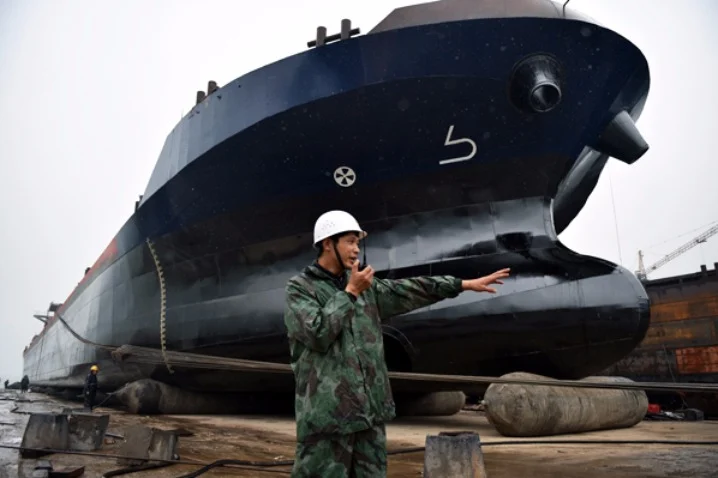
- Shipbuilding: Chinese shipyards have played a crucial role in building seven state-of-the-art ice-class LNG transport ships, essential for year-round navigation through the frozen Arctic seas. These vessels, designed to break through ice up to 2.1 meters thick, represent a leap forward in China’s shipbuilding capabilities and its ability to handle complex maritime engineering projects.
- Logistics and Operations: Chinese companies are also involved in the operation of 14 out of the 15 specialized LNG carriers that will transport the super-chilled fuel from Yamal to markets worldwide. This involvement provides critical operational experience in high-stakes, technically demanding logistics.
The financial scope of China’s direct contributions to the project’s infrastructure and logistics is substantial. The contract amount for the project’s construction totaled $7.8 billion, while the shipping contract amounted to an additional $8.5 billion. These figures highlight the scale of Chinese industrial participation and the transfer of advanced engineering and operational know-how. This hands-on experience in Arctic oil and gas exploration and transportation positions China as a more formidable player in future high-latitude resource development.
The Arctic Northeast Passage: A New Trade Artery
The Yamal LNG project is inextricably linked to the development of the Northeast Passage, also known as the Northern Sea Route (NSR), through the Arctic Ocean. This sea route directly links China and Europe, offering a potentially transformative alternative to traditional shipping lanes like the Suez Canal.
Jiang Qi noted that the project actively promotes the construction and utilization of this passage. As many as 54 freight vessels have already traversed the route, demonstrating its increasing viability. Once the Yamal project is fully expanded and more LNG is transported via this Arctic artery, it will significantly lower freight costs and transit times between China and Europe. A journey through the NSR can cut shipping time by up to 15-20 days compared to the Suez Canal route, offering substantial savings in fuel and operational costs. This strategic advantage aligns with China’s broader ambitions under the Belt and Road Initiative, seeking to diversify trade routes and enhance global logistical efficiency. The development of specialized icebreakers and ice-class vessels, partly facilitated by Chinese involvement in Yamal, is crucial for making the NSR a more reliable and frequently used commercial corridor.
Sino-Russian Energy Complementarity: A Deeper Dive
The Yamal LNG project is a testament to the "natural complementarities" that define China and Russia’s energy cooperation, as articulated by Jiang Qi. Russia, a vast energy producer with immense reserves of oil and natural gas, finds a ready and growing market in China, the world’s largest energy consumer.
This partnership extends beyond Yamal:
- Crude Oil Transmission: A long-term oil and gas cooperation framework has been established through the Sino-Russia crude oil transmission pipeline (Eastern Siberia-Pacific Ocean, ESPO pipeline), which has been operational for years, reliably supplying Russian crude to China.
- Natural Gas Pipelines: The Power of Siberia natural gas pipeline, currently under construction and partially operational, represents another massive undertaking designed to deliver pipeline gas from Eastern Siberia to China. Discussions for a second major pipeline, Power of Siberia 2 (or the Western Route), are also underway, aiming to connect Russia’s vast Western Siberian gas fields to China. These pipeline projects, alongside LNG imports from Yamal, form a multi-faceted energy artery linking the two nations.
This energy collaboration is underpinned by a broader strategic alignment. Both nations share a vision of a multipolar world order and frequently coordinate on international platforms. The energy relationship provides a tangible economic anchor for this strategic partnership, offering Russia a secure market for its resources and China a reliable source of energy for its burgeoning economy.
Broader Implications for Global Energy and Geopolitics
The successful execution and operationalization of the Yamal LNG project carry significant implications for global energy markets and geopolitics:
- Enhanced Energy Security for China: Yamal LNG significantly diversifies China’s gas supply portfolio. By tapping into Arctic resources, China reduces its reliance on traditional LNG suppliers from the Middle East and Australia, whose routes often traverse geopolitically sensitive chokepoints in the South China Sea and Indian Ocean. This diversification enhances China’s energy resilience against potential supply disruptions or geopolitical pressures.
- Strengthening Russia-China Axis: The project solidifies the strategic energy alliance between Russia and China. This partnership, built on long-term contracts and shared investments, contributes to a more robust economic and political alignment between the two powers, potentially influencing regional and global dynamics. For Russia, it reinforces its position as a major global energy supplier and strengthens its "pivot to Asia" strategy amidst complex relations with Western nations.
- Arctic Development and Governance: Yamal LNG is a pioneering project in the industrial development of the Arctic. Its success could pave the way for more extensive resource extraction and shipping activities in the region. This raises questions about Arctic governance, environmental protection, and the potential for increased international competition over the region’s vast untapped resources and strategic shipping lanes.
- Environmental Considerations: While natural gas is often touted as a cleaner-burning fossil fuel compared to coal, its production and transportation, particularly in the Arctic, are not without environmental concerns. The project’s massive carbon footprint, potential methane leakages, and the impact of increased shipping on fragile Arctic ecosystems are points of discussion for environmental advocates. However, from China’s perspective, replacing coal with natural gas represents a significant step towards improving air quality and reducing immediate particulate emissions.
Future Outlook and Continuing Strategies
Looking ahead, China’s demand for natural gas is projected to continue its upward trajectory. The country’s drive for cleaner energy, coupled with sustained economic growth, means that securing additional gas supplies remains a top priority. Qu Guangxue, a CNPC spokesman, confirmed that the company plans to continue negotiating with Central Asian nations for additional stocks to ensure adequate domestic natural gas supplies, signaling a multi-pronged approach to energy security.
The success of Yamal LNG may also spur further Arctic energy ventures. Novatek is already planning Arctic LNG 2, another massive project on the Gydan Peninsula, with potential for further Chinese investment and participation. These future projects underscore the long-term strategic vision shared by Beijing and Moscow for developing the Arctic as a crucial energy frontier.
In conclusion, the first shipment from the Yamal LNG project represents more than just a commercial transaction; it is a symbol of China’s proactive approach to energy security, its deepening strategic partnership with Russia, and its growing technological prowess in challenging environments. As China continues its transition to a cleaner energy mix, securing reliable, diversified, and long-term natural gas supplies from projects like Yamal will remain fundamental to its national development and environmental aspirations.

 Evan Lee Salim
 Suro Senen