 Basiran
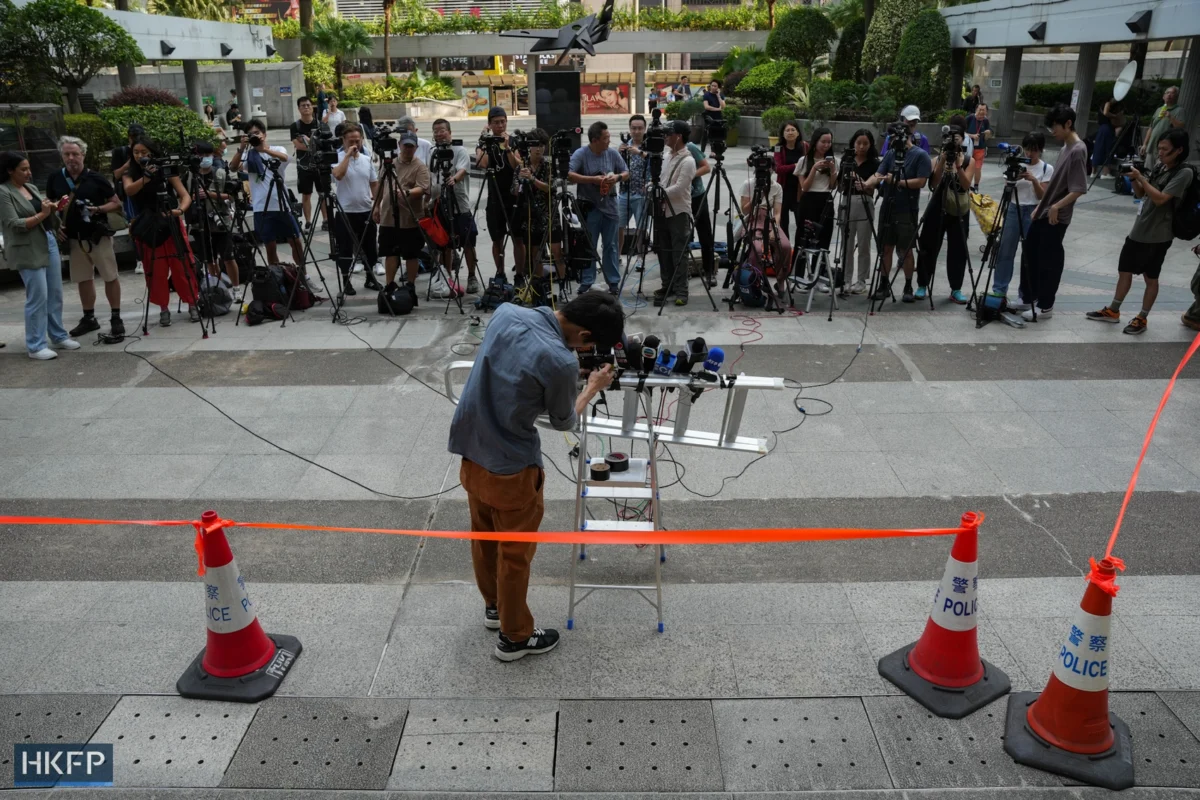
Hong Kong has been gripped by a series of unsettling incidents as a third media outlet, Orange News, reported receiving a suspicious letter containing an unknown powder, allegedly sent from the United Kingdom. This marks the second consecutive day of such occurrences, escalating anxieties surrounding the safety and operational integrity of journalists in the city. The letters, which have also targeted HK01 and Dot Dot News, are perceived as a deliberate attempt to intimidate and disrupt journalistic activities, prompting swift police investigation and condemnation from media advocacy groups.

Escalating Threat to Hong Kong Media
The latest incident unfolded on Thursday when Orange News, an online media outlet, disclosed on its Facebook page that its office had received a letter. The correspondence, presented as a tip-off from "overseas readers," contained a suspicious powder. Orange News staff promptly reported the matter to the police, ensuring that the incident did not impede their editorial operations. A photograph accompanying the outlet’s statement revealed a Royal Mail postmark on the letter, indicating its origin within the United Kingdom’s postal service. The news organization issued a strong condemnation, stating, "We strongly condemn any behaviour that interferes with journalistic work through abnormal means."
This event follows closely on the heels of similar incidents reported on Wednesday. Both HK01 and Dot Dot News, prominent media entities in Hong Kong, confirmed receiving analogous letters originating from the UK. Both outlets also alerted the police and assured the public that their operations remained unaffected. HK01 issued a stern statement, declaring, "We strongly condemn any despicable act that creates panic, intimidates journalists or interferes with editorial autonomy by sending dangerous materials or threatening letters." Dot Dot News echoed these sentiments, expressing its condemnation of the actions.

Police Response and Investigation
In response to each of these alarming discoveries, police bomb disposal teams were dispatched to the respective media offices. The presence of unknown powder in mail sent from abroad has triggered a heightened level of security and scrutiny. While the exact nature of the powder has not been publicly disclosed, its presence in threatening letters is a cause for significant concern. The Hong Kong Police Force has initiated investigations into these incidents, treating them as potential acts of intimidation or harassment directed at the media.
Media Landscape and Political Affiliation
The targeted media outlets represent a spectrum within Hong Kong’s media landscape. Orange News is operated by a subsidiary of the state-owned Sino United Publishing group and is considered a pro-establishment outlet. Similarly, Dot Dot News falls under the state-affiliated Ta Kung Wen Wei Media Group, also aligned with pro-establishment sentiments. HK01, founded in 2016 by pro-Beijing entrepreneur Yu Pun-hoi, also generally aligns with pro-establishment viewpoints.

The fact that these letters have been sent to outlets perceived as pro-establishment, alongside the broader context of media freedom in Hong Kong, raises complex questions about the motives and perpetrators behind these actions. While the letters might be interpreted as attempts to sow discord or exert pressure, their specific targets could also suggest a nuanced strategy by those wishing to influence or intimidate the media.
Precedent and Broader Context of Press Freedom Decline
These recent incidents are not isolated events. Last month, local outlet Sing Tao also reported receiving a threatening letter containing unidentified white powder. In that case, the police swiftly arrested a 24-year-old suspect, indicating a pattern of such deliveries. The Hong Kong Journalists Association (HKJA) at the time condemned the incident, highlighting its detrimental impact on press freedom in the city.

Hong Kong’s press freedom has experienced a significant and widely documented decline in recent years. International press freedom indices have consistently shown a downward trend for the city since the implementation of national security laws in 2020 and subsequent security legislation in 2024. Watchdog organizations point to a series of events, including the arrest and jailing of journalists, raids on newsrooms, and the closure of numerous media outlets such as Apple Daily, Stand News, and Citizen News, as evidence of this erosion. This crackdown has led to the displacement of over 1,000 journalists, with many opting to emigrate from the city.
Concurrently, the government-funded broadcaster RTHK has undergone substantial changes, including the adoption of new editorial guidelines that emphasize adherence to the constitution and warn staff against contact with foreign governments. The broadcaster has also purged its archives and axed various news and satirical shows, signaling a shift towards a more state-aligned narrative.

Official Stance and Media Autonomy
In 2022, Chief Executive John Lee stated that press freedom was "in the pocket" of Hongkongers but stressed that "nobody is above the law." While he has encouraged the press to "tell a good Hong Kong story," government departments have reportedly been reluctant to respond to story pitches, creating a challenging environment for journalistic inquiry. The tension between the government’s stated commitment to press freedom and the realities faced by journalists on the ground remains a significant concern.
The recent spate of suspicious letters, regardless of the ultimate perpetrator or motive, serves as a stark reminder of the pressures facing the media in Hong Kong. The incidents underscore the importance of robust investigations by law enforcement and the continued vigilance of journalistic organizations in defending press freedom and the autonomy of editorial operations. The international community and press freedom advocates will undoubtedly be closely monitoring the developments and the broader implications for the future of journalism in Hong Kong.

The nature of these letters, originating from the UK and targeting media outlets within Hong Kong, also raises questions about potential international dimensions or connections. While the immediate focus is on local law enforcement’s response, the broader geopolitical context cannot be entirely discounted as investigations unfold. The aim of such acts, whether to instill fear, disrupt reporting, or send a political message, remains a subject of intense speculation, but the impact on the journalistic community is undeniably palpable. The resolve of Hong Kong’s remaining media outlets to continue their work in the face of such intimidation will be a critical factor in preserving the city’s ability to foster independent and critical journalism.

 Reynand Wu
 Siti Muinah