 Reynand Wu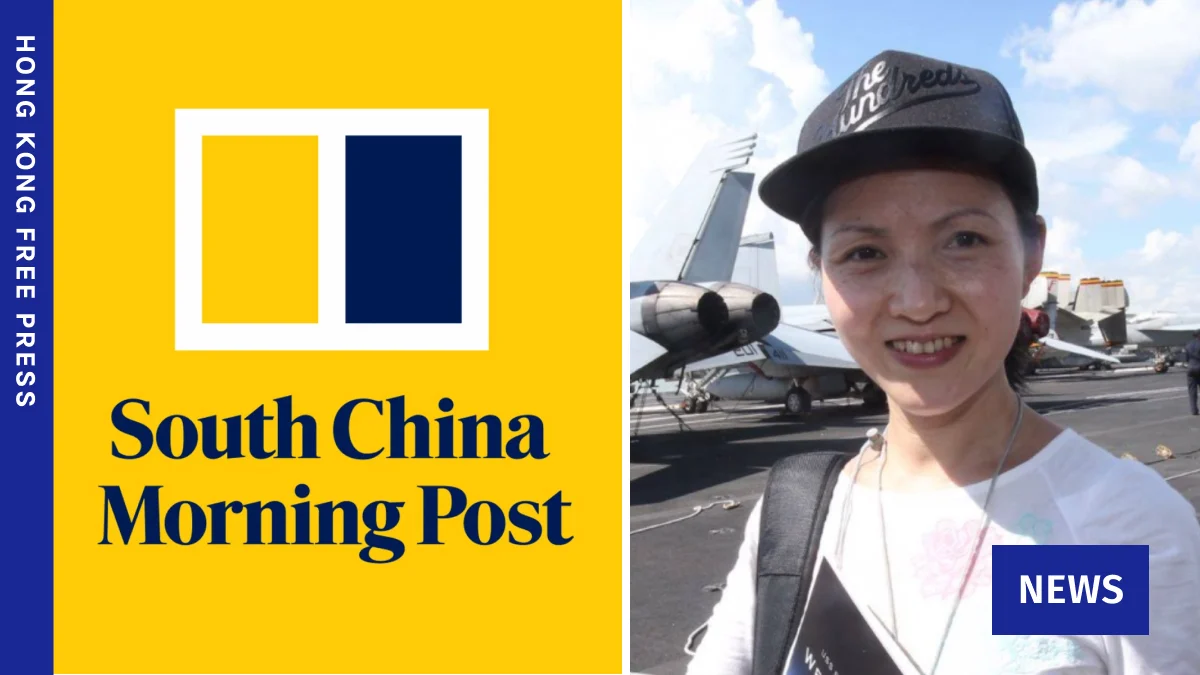
The international non-governmental organization Reporters Without Borders (RSF) has once again voiced profound concern over the apparent disappearance of South China Morning Post (SCMP) reporter Minnie Chan, a highly regarded defence correspondent, whose last known whereabouts date back to October 2023. This latest appeal from RSF underscores persistent anxieties within the global journalistic community regarding the fate of Chan, who vanished while covering the sensitive Xiangshan Forum in Beijing, an event typically drawing significant international attention to China’s defence and security policies. The lack of verifiable information surrounding her status nearly three years on has fueled speculation and deepened fears about the state of press freedom in mainland China and its implications for Hong Kong-based journalists.
A Sudden Vanishing Act: The Last Known Movements of Minnie Chan
Minnie Chan, celebrated for her in-depth reporting on defence and military affairs, particularly within China, was last heard from in October 2023. At the time, she was engaged in professional duties covering the Xiangshan Forum, a high-profile, three-day security conference held annually in Beijing. This forum, often dubbed China’s answer to the Shangri-La Dialogue, serves as a critical platform for senior military officials, defence ministers, and security experts from around the world to discuss regional security challenges and global strategic issues. For a journalist specializing in defence, attendance at such an event would be standard, offering invaluable insights and networking opportunities. Her reporting would have spanned a range of topics, from China’s military modernization and regional ambitions to its geopolitical relationships, all areas deemed highly sensitive by Beijing.

Since her participation in the forum, there has been an alarming silence regarding Chan’s whereabouts. Her absence from public view and professional circles has raised immediate red flags among her peers and international press freedom advocates. The initial lack of any official statement from Chinese authorities or her employer only served to amplify these concerns, leaving a vacuum filled with apprehension and unconfirmed reports.
Reporters Without Borders: Unveiling Unverified Allegations
In a recent press release, the Paris-headquartered RSF highlighted the disturbing vacuum of information surrounding Minnie Chan. The French NGO stated that its various sources within China indicate that Chan is believed to be held by the Chinese regime. These sources, according to RSF, suggest she is facing charges that have not been publicly disclosed but are "national-security-related," and that she could be facing a severe prison sentence of "at least 10 years." Crucially, RSF noted its inability to independently verify this information or find clear evidence of her detention, emphasizing the opaque nature of such cases within China’s judicial system.
Aleksandra Bielakowska, advocacy manager at RSF’s Asia-Pacific office, issued a poignant call to action. "Minnie Chan’s whereabouts must be made public, and the international community must do everything in its power to secure the release of this talented journalist, who does not belong in a Chinese prison," Bielakowska urged. Her statement underscores the urgency and the perceived injustice of Chan’s situation, framing it not just as a disappearance but as a potential arbitrary detention of a professional journalist. RSF’s consistent monitoring of press freedom violations globally positions its concerns as a significant barometer of the challenges faced by journalists operating in restrictive environments.

China’s Official Stance: A Familiar Denial
When questioned about Minnie Chan’s situation in 2023, China’s Foreign Ministry spokesperson Wang Wenbin offered a terse and familiar response: "I’m not aware of that [situation]." This standard denial or claim of ignorance is frequently deployed by Chinese officials when confronted with inquiries about sensitive human rights cases, particularly those involving alleged arbitrary detentions or disappearances. Such responses often serve to deflect international scrutiny and maintain a veil of secrecy around individuals perceived as threats to state security or stability. For observers, this non-committal reply provides little reassurance and only deepens suspicions that Chan’s disappearance is indeed linked to state actions.
The Chinese government’s consistent position that its legal system operates transparently and in accordance with the law stands in stark contrast to the experiences of journalists, activists, and dissidents who have been detained on vague "national security" charges. The absence of public trials, access to legal counsel of one’s choice, and communication with family or employers are common features in such cases, making independent verification of their status exceedingly difficult.
SCMP’s Calculated Silence: Navigating a Perilous Landscape

The South China Morning Post, Minnie Chan’s employer, has maintained a notable silence on the matter, a stance that has drawn criticism and concern from press freedom advocates. RSF explicitly stated that it had approached the SCMP "requesting information about Chan’s current employment status, confirmation of her detention and the nature of any charges, as well as information about what support is being provided to the journalist in the event she is detained." At the time of RSF’s publication, the SCMP had not provided a response.
This silence is not entirely unprecedented. In December 2023, following HKFP’s initial coverage of Chan’s apparent disappearance, the SCMP reportedly "threatened legal action" against HKFP, without explicitly disputing the core reporting of Chan’s missing status. At that time, the paper issued a general statement emphasizing that "the safety of journalists was of utmost importance" but declined to disclose further information. This cautious approach by the SCMP can be interpreted through several lenses. As a prominent English-language newspaper in Hong Kong, owned by Chinese tech giant Alibaba since 2016, the SCMP operates within a complex and increasingly restrictive media environment, particularly concerning reporting on mainland China. Hong Kong’s press freedom has significantly eroded in recent years, especially following the implementation of the National Security Law in June 2020. This law has been widely criticized for its broad scope and for being used to suppress dissent and curtail freedoms, including those of the press.
The SCMP’s reluctance to provide details, despite the gravity of the situation concerning one of its own award-winning journalists, may reflect a difficult balancing act. The newspaper likely faces immense pressure to navigate the political sensitivities of reporting on mainland China, particularly when state security issues are involved. Any public confirmation of detention or direct challenge to Beijing could have severe repercussions for the newspaper’s operations, its staff, and its ability to report from or about mainland China. Its general statement about journalist safety, while seemingly innocuous, could be a carefully worded attempt to acknowledge the situation without directly implicating any party or confirming details that might jeopardize Chan or the paper itself. However, for press freedom organizations, such silence is deeply troubling, as it can inadvertently normalize the disappearance of journalists and undermine efforts to advocate for their release.
The Broader Landscape: China as the World’s Largest Prison for Journalists

The case of Minnie Chan is not an isolated incident but rather fits into a broader, deeply concerning pattern of press freedom suppression in China. According to RSF, China holds the grim distinction of being the "world’s largest prison for journalists," with over 100 media professionals currently behind bars. The Chinese government frequently employs vaguely defined national security laws to target journalists, academics, human rights lawyers, and activists, often on charges such as "inciting subversion of state power," "espionage," or "illegally supplying state secrets abroad." These charges are often leveled without transparent legal processes, and those detained frequently face prolonged periods of isolation, denied access to family or independent legal representation.
Several high-profile cases illustrate this troubling trend:
- Haze Fan (Bloomberg News): A Chinese national working for Bloomberg News, Fan disappeared in December 2020 and was subsequently confirmed by Chinese authorities to be under investigation for "endangering national security." She was released on bail in 2022, but the specifics of her case and the conditions of her bail remain largely opaque.
- Cheng Lei (Australian journalist): An Australian citizen working for Chinese state media, Cheng Lei was detained in August 2020 on suspicion of "illegally supplying state secrets abroad." Her detention, which lasted over three years, severely strained diplomatic relations between Australia and China. She was eventually released and returned to Australia in October 2023, though the details of her conviction were never fully disclosed publicly.
- Gui Minhai (Hong Kong bookseller): In a particularly egregious case of extraterritorial abduction, Gui Minhai, a Swedish citizen and Hong Kong-based bookseller known for publishing critical books about Chinese leaders, disappeared from Thailand in 2015. He later reappeared in China, where he was imprisoned on charges of "illegally providing intelligence to overseas entities" and "illegal business operations." His case highlighted Beijing’s willingness to reach beyond its borders to silence critics and suppress information.
These cases, among many others, underscore the severe risks faced by journalists, both foreign and domestic, when reporting on sensitive topics in China. The lack of due process, the lengthy detentions, and the secrecy surrounding charges create a chilling effect, forcing journalists and news organizations to self-censor or severely limit their reporting from within China. The broad interpretation of national security laws allows authorities significant leeway to criminalize journalistic activities that would be considered legitimate in free societies.
Implications for Press Freedom and International Scrutiny

The ongoing disappearance of Minnie Chan carries significant implications for press freedom, both within China and globally. Firstly, it reinforces the perception that China remains one of the most dangerous places for journalists, particularly those delving into sensitive political, military, or security topics. The opacity surrounding Chan’s situation serves as a stark warning to other journalists operating in the region, fostering an environment of fear and uncertainty.
Secondly, the incident further highlights the erosion of media freedoms in Hong Kong. While Chan disappeared in mainland China, her affiliation with the SCMP, a pillar of Hong Kong’s media landscape, brings the issue closer to home for the city’s journalists. The SCMP’s constrained response reflects the broader pressures faced by media outlets in Hong Kong, which have seen their editorial independence curtailed and their ability to report freely diminished since the imposition of the National Security Law. This contributes to a "chilling effect" where self-censorship becomes a survival mechanism.
Thirdly, the international community faces a renewed challenge in holding China accountable for its human rights record and its treatment of journalists. RSF’s call for international intervention is a testament to the limited avenues available for advocacy within China itself. Diplomatic pressure, sanctions, and coordinated international efforts are often the only tools available to push for transparency and justice in such cases. However, the effectiveness of these measures can be limited, particularly when faced with a powerful state like China.
Ultimately, the case of Minnie Chan is more than just the disappearance of an individual journalist; it is a symbol of the broader struggle for truth and transparency in an authoritarian state. Her prolonged absence and the lack of official information underscore the critical need for continued vigilance and advocacy from international organizations, governments, and the public alike.

Conclusion: An Unanswered Plea for Justice and Transparency
The plight of Minnie Chan remains a stark reminder of the precarious position of journalists operating under authoritarian regimes. The renewed call from Reporters Without Borders for transparency regarding her whereabouts is not merely an act of advocacy but a desperate plea for fundamental human rights and press freedom. Until Beijing provides a clear, verifiable account of Minnie Chan’s status, the global journalistic community will continue to view her disappearance as a grave concern, emblematic of China’s systematic suppression of independent reporting. Her case will undoubtedly continue to serve as a litmus test for the international community’s commitment to safeguarding journalists and upholding the principles of a free press against the formidable challenges posed by state control and secrecy.

 Evan Lee Salim
 Muslim