 Azzam Bilal Chamdy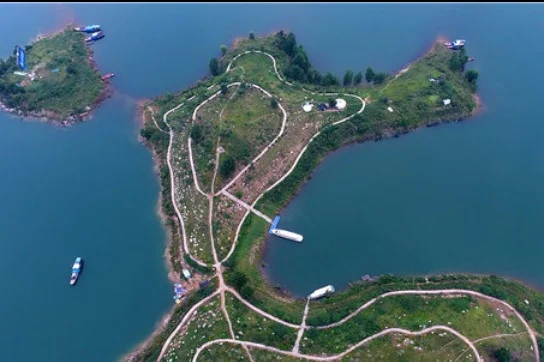
Tuesday, December 12, 2017, marked a significant milestone for China’s ambitious South-to-North Water Diversion Project (SNWDP), as its central route celebrated three years of continuous operation. This monumental infrastructure initiative, conceived to address the severe water scarcity in the arid northern regions of the country, has since its inception on December 12, 2014, successfully transported an astounding volume of water, fundamentally reshaping the ecological and socio-economic landscape of both its source and recipient areas. Over the past three years, the central route alone has delivered more than 10 billion cubic meters of vital water resources to North China, directly benefiting an estimated 53 million people across major cities and agricultural heartlands.
The Genesis and Grandeur of the South-to-North Water Diversion Project
The South-to-North Water Diversion Project is one of the largest engineering feats ever undertaken globally, designed to mitigate China’s profound geographical imbalance of water resources. The nation’s south is rich in water, primarily due to the Yangtze River and its tributaries, while the north, home to vast plains, burgeoning metropolises like Beijing and Tianjin, and significant agricultural production, suffers from chronic water shortages. This disparity has historically hampered economic development and environmental sustainability in the northern provinces.
The concept of diverting water from the south to the north was first envisioned by Chairman Mao Zedong in 1952, who famously stated, "The south has plenty of water, the north lacks it. If possible, borrow some water." Decades of planning, feasibility studies, and technological advancements followed, culminating in the formal launch of the project in 2002. The SNWDP comprises three distinct routes—eastern, central, and western—each designed to tap into different sections of the Yangtze River and transport water to various parts of North China.
The eastern route, largely utilizing and upgrading the ancient Grand Canal, began operations earlier, in 2013, primarily serving Shandong and Jiangsu provinces. The central route, the focus of this anniversary, draws water from the Danjiangkou Reservoir on the Han River, a major tributary of the Yangtze, and channels it northward through a vast network of canals, tunnels, and aqueducts, traversing Henan and Hebei provinces before reaching Beijing and Tianjin. The western route, still in its planning and conceptual stages, is intended to divert water from the upper reaches of the Yangtze and its tributaries to the Yellow River basin, addressing water scarcity in China’s arid northwestern regions. The total estimated cost of the entire project is colossal, exceeding $60 billion, making it one of the most expensive infrastructure projects in history.
Central Route’s Transformative Impact on North China
The central route’s operational success has been pivotal in addressing the acute water crisis gripping North China. Before its advent, cities like Beijing and Tianjin faced severe water stress, with per capita water resources significantly below international scarcity thresholds. Beijing, for instance, had a per capita water availability of less than 100 cubic meters, far below the internationally recognized water scarcity line of 1,000 cubic meters. The SNWDP has dramatically altered this reality.
Since December 2014, the central route has consistently supplied high-quality drinking water to millions. In Beijing, the project now accounts for a substantial portion of the city’s municipal water supply, significantly alleviating pressure on local groundwater reserves, which had been dangerously depleted. This influx of external water has not only secured drinking water for residents but also enabled the ecological restoration of several lakes and rivers in the capital region. Similarly, Tianjin, Hebei, and Henan provinces have experienced substantial improvements in their water security, supporting urban development, industrial needs, and agricultural irrigation.
The sustained water supply has had a direct positive impact on groundwater levels. In many areas, years of over-extraction had led to land subsidence and ecological degradation. With the diversion project providing an alternative source, efforts to reduce groundwater pumping have intensified, allowing aquifers to gradually recharge. This long-term environmental benefit is crucial for sustainable development in the region, safeguarding future water resources.
Ecological Revival and Green Economy in the Source Regions
Beyond its immediate impact on water supply in the north, the SNWDP has catalyzed significant environmental improvements and economic transformations in the water-supplying regions, particularly in Henan, Hubei, and Shaanxi provinces. These regions, critical for the central route’s water quality, have implemented stringent environmental protection measures, leading to a visible ecological renaissance. The principle guiding these efforts is "prioritizing protection over development" to ensure the pristine quality of water flowing northward.
In the Danjiangkou Reservoir area and along the Han River basin, local governments have invested heavily in pollution control, reforestation, and ecological restoration projects. Industries that posed a risk to water quality were either shut down or upgraded with advanced wastewater treatment technologies. Agricultural practices have shifted towards eco-friendly methods, reducing the use of chemical fertilizers and pesticides. These concerted efforts have resulted in remarkably cleaner environments, with improved air and water quality, and a noticeable resurgence of biodiversity.
This enhanced environmental quality has, in turn, become a powerful magnet for investment in "green industries." Ecotourism, sustainable agriculture, and ecological forestry have emerged as new pillars of economic growth, creating a virtuous cycle where environmental protection fuels economic prosperity. Picturesque landscapes, once overlooked, are now attracting tourists, generating revenue, and creating local employment opportunities. For instance, areas around Shiyan City in Hubei, near the Danjiangkou Reservoir, have seen a boom in ecological farms and nature resorts. The clean air and water, coupled with beautiful natural scenery, have become valuable assets, fostering a new model of sustainable development.
Xia Qinghua’s Story: A Testament to Reverse Migration and Renewed Hope
The human dimension of this transformation is perhaps best encapsulated by individuals like Xia Qinghua, a 43-year-old native of Chenjiawan village in Hubei’s Shiyan city. His story is a compelling illustration of the project’s broader socio-economic impact, particularly in fostering reverse migration and improving local livelihoods. For 12 years, Xia Qinghua worked in a small toy factory in Shenzhen, Guangdong province, a common trajectory for millions of rural Chinese seeking better economic prospects in the country’s booming coastal manufacturing hubs.
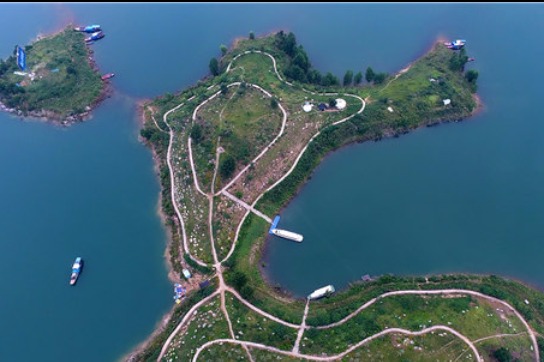
His return to Chenjiawan in June was not merely a personal choice but a reflection of a fundamental shift in his hometown’s economic viability. "I had long wanted to return, but was prevented by a shortage of jobs," Xia recounted. The situation, however, dramatically changed after 2014, precisely when the central route began operations and environmental protection efforts intensified. The cleaner environment became an irresistible draw for companies like Hubei Beidouxing Eco-agriculture and Forestry Co, which began investing in the area, recognizing the potential for sustainable business models.
Xia Qinghua vividly remembers the environmental degradation of his youth. "Great improvements have happened to the environment in my hometown. When I left at age 17, I had never seen an egret. Now, there are birds everywhere. They are beautiful," he remarked, highlighting the visible ecological recovery. This personal observation underscores the success of environmental policies implemented in the water source regions.
His journey to return home was fraught with challenges. Despite earning over 5,000 yuan ($756) a month in Shenzhen, a relatively good salary for a factory worker, Xia often worked until 11 pm, enduring loneliness and the emotional toll of being away from his family. "The salary was good, but I felt lonely and helpless because I had no family around me," he shared. An earlier attempt to return in 2011 proved unsuccessful due to the lack of economic opportunities in what was then a poverty-stricken area. He invested 50,000 yuan in a small truck for a transportation business, only to lose his investment and incur a 20,000 yuan debt within a year, forcing him back to Shenzhen.
The emotional burden of separation was immense. He recalled a particularly poignant farewell on the fifth day of the Lunar New Year in 2013: "I remember very clearly leaving home on the evening of the fifth day of the Lunar New Year in 2013. My wife, my daughter and I cried in each other’s arms. They all didn’t want me to go," he recounted, tears welling up in his eyes. For years, he could only return home once a year for the Spring Festival, making these departures agonizing for his family.
Now, Xia Qinghua works in the warehouse of a farm operated by Hubei Beidouxing, earning approximately 2,000 yuan a month. While this salary is less than what he made in Shenzhen, the intangible benefits far outweigh the financial difference. He is undeniably happier, living close to his family, providing care for his 70-year-old father who is unwell, and enjoying the improved quality of life in his ecologically revitalized hometown. His income is further supplemented by leasing 0.5 hectares of his farmland to Hubei Beidouxing, which brings in an additional 4,000 yuan annually, illustrating how the green economy provides diversified income streams for local residents.
Broader Socio-Economic Implications and Regional Development
Xia Qinghua’s narrative is not an isolated incident but represents a growing trend of "reverse migration" or "return migration" in areas benefiting from the SNWDP’s environmental protection policies. The project has not only brought water to the thirsty north but has also inadvertently fostered a new model of regional development in the south, one that prioritizes ecological sustainability alongside economic growth. This model helps address long-standing regional disparities and the social challenges associated with mass rural-to-urban migration, such as the "left-behind" children and elderly in rural areas.
The development of green industries, supported by government policies and private investment, creates a more balanced and resilient local economy. Eco-tourism, for example, generates income for local businesses, guides, and hospitality services. Ecological agriculture, focusing on organic and high-quality produce, commands premium prices, benefiting local farmers. These sectors offer job opportunities that are often less physically demanding than factory work, more aligned with local skills, and crucially, allow families to remain intact.
Furthermore, the project has spurred significant investment in local infrastructure in the source regions, including improved roads, communication networks, and public services, to support the burgeoning green economy and accommodate returning populations. This holistic development approach aims to create vibrant, sustainable communities that can thrive without compromising their vital role as custodians of China’s precious water resources.
Challenges and Future Outlook
While the central route’s third anniversary is a moment for celebration and reflection on its successes, the South-to-North Water Diversion Project continues to face challenges. Maintaining water quality along the entire route, especially with ongoing industrial and agricultural development, remains a paramount concern. The project’s immense scale requires constant vigilance and significant resources for maintenance, monitoring, and management. Climate change also poses potential threats, as altered rainfall patterns could affect water availability in the source regions or increase demand in the recipient areas.
Looking ahead, the SNWDP is not merely a water transfer project but a long-term strategy for China’s sustainable development. Future efforts will likely focus on optimizing water allocation, promoting water conservation across all sectors, and further enhancing the ecological benefits in both source and recipient regions. The lessons learned from the central route’s operation over the past three years will be invaluable for the ongoing development of the eastern route and the future planning of the western route. The project also serves as a model for other nations facing similar water resource challenges, demonstrating the feasibility of large-scale inter-basin water transfers when coupled with robust environmental protection and socio-economic development strategies.
Conclusion
The third anniversary of the central route of the South-to-North Water Diversion Project stands as a testament to China’s engineering prowess and its commitment to addressing critical environmental and developmental challenges. It has not only provided a lifeline to the parched north but has also fostered an ecological and economic renaissance in its source regions. The story of Xia Qinghua, returning home to a cleaner environment and a more fulfilling life with his family, symbolizes the profound and multifaceted positive impact of this colossal undertaking. As the project continues to evolve, its legacy will undoubtedly be defined by its dual success in securing water resources for a vast population and pioneering a sustainable path for regional development.


 Jia Lissa