Basiran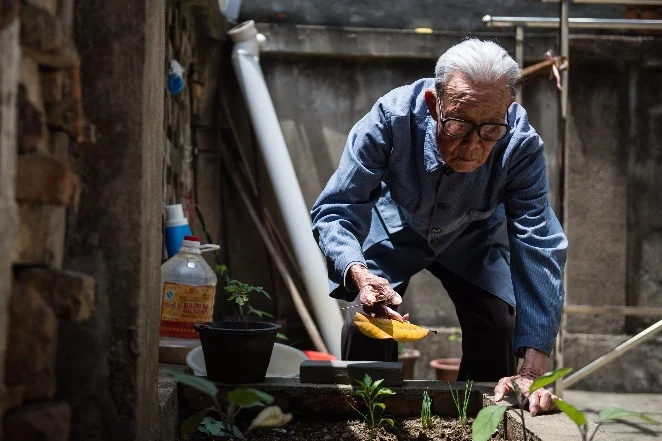
Nanjing, China – The oldest known survivor of the Nanjing Massacre, Guan Guangjing, passed away on Sunday at the venerable age of 100, leaving fewer than 100 eyewitnesses to one of the most horrific atrocities of the 20th century. His death, just three days before China observes its National Memorial Day for Nanjing Massacre Victims and the 80th anniversary of the tragedy, casts a somber shadow over the upcoming commemorations and intensifies the urgency of historical preservation efforts. State leaders are slated to attend a public memorial ceremony at the Memorial Hall of the Victims in the Nanjing Massacre by Japanese Invaders on Wednesday, December 13th, a date now imbued with even greater significance.
Guan Guangjing succumbed to multiple organ failure at his home, having been bedridden for six months due to heart disease, as confirmed by his 76-year-old son-in-law, who wished to be identified only by his surname, Liu. His passing marks another critical moment in the dwindling timeline of living memory, serving as a poignant reminder that the generation bearing direct witness to the atrocities committed by Japanese invaders in 1937 is rapidly fading. Each loss of a survivor is not merely the end of a life, but the silencing of an irreplaceable voice that has served as a bulwark against historical denial and revisionism.
A Life Etched in History: The Legacy of Guan Guangjing
Born in 1917, Guan Guangjing was a centenarian whose life spanned an era of profound transformation for China, bearing an indelible scar from its darkest period. His verbal testimony was a crucial contribution to "Irrefutable Evidences, A Memoir of the Lishui Bombing Caused by Japanese Invaders," a significant historical document published by Nanjing Press in November 2016. This book meticulously compiled 31 oral accounts from survivors describing the devastating bombing in Nanjing’s Lishui county on November 29, 1937, an event that claimed over 1,200 lives.
In his powerful account, Guan recounted the terror of the Lishui bombing, describing how he sought refuge under a large rock. From this precarious hiding spot, he bore witness to the indiscriminate slaughter of his neighbors, including the complete annihilation of a four-generation family surnamed Sun. Following this initial horror, Guan survived the subsequent massacre by meticulously hiding wherever he could as Japanese forces occupied Nanjing, then China’s capital, in December 1937. Officials from the Memorial Hall affirmed that Guan repeatedly narrated his direct observations of Japanese invaders perpetrating numerous killings, his memories forming a vital thread in the tapestry of historical truth.
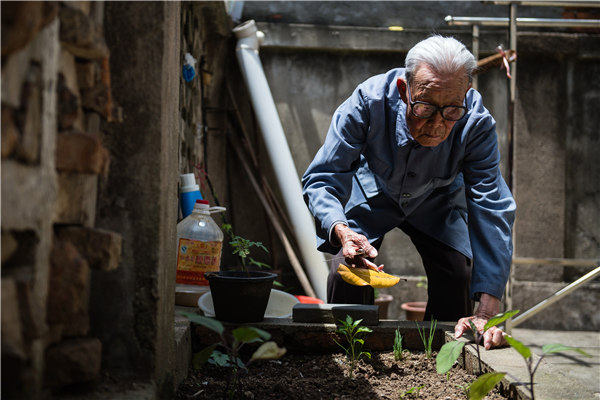
Before 1937, Guan Guangjing led a humble life as an orphan with no siblings. He later became a respected barrel maker in Lishui county, known for his frugal habits and unwavering willingness to help others, earning him high esteem within his local community. His wife passed away five years prior at the age of 84. In a gesture of profound historical significance, his family donated several of his personal articles, including a paper fan, a watch, and a teapot, to the Memorial Hall. These items, now artifacts of remembrance, will stand as silent testaments to a life lived through unimaginable suffering and resilience. The announcement of his death on Sina Weibo by the Memorial Hall prompted an outpouring of mourning from internet users across China, reflecting the deep national reverence for the survivors.
The Fading Echoes: The Dwindling Survivor Pool
Guan Guangjing’s passing underscores a critical demographic challenge for those committed to preserving the memory of the Nanjing Massacre. With his death, the number of documented survivors falls below 100, a stark contrast to the thousands who were alive in the immediate post-war period. In 1987, when the Memorial Hall of the Victims in the Nanjing Massacre was established, over 1,750 survivors were officially registered. By 2007, that number had fallen to just over 400. The rapid decline in recent years, as the youngest survivors approach their late 80s and early 90s, means that future generations will increasingly rely on recorded testimonies and historical scholarship rather than direct, living voices.
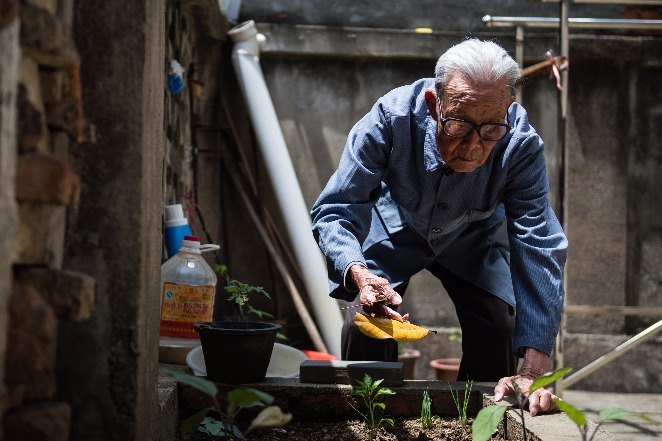
Zhang Sheng, a distinguished history professor at Nanjing University, highlighted the growing difficulty in collecting these crucial oral accounts. He noted that only approximately half of the remaining survivors, most of whom are over 85 years old, can express themselves clearly due to age-related health issues. This demographic reality places immense pressure on institutions and researchers to meticulously document every remaining testimony, employing advanced recording and archival techniques to capture these irreplaceable personal histories before they are lost forever.
A Dark Chapter Revisited: The Nanjing Massacre Context
The Nanjing Massacre, also known as the Rape of Nanjing, remains one of the most contentious and tragic events in modern East Asian history. It unfolded over six weeks following the Japanese Imperial Army’s capture of Nanjing on December 13, 1937, during the Second Sino-Japanese War (1937-1945). Nanjing, then the capital of the Republic of China, fell after fierce resistance, and what followed was an orgy of brutality unprecedented in its scale and depravity.
Historical records and international eyewitness accounts, including those from Westerners who established the Nanjing Safety Zone, paint a horrifying picture. Japanese soldiers engaged in widespread systematic murder, mass rape, looting, and arson. Estimates vary, but the generally accepted figure, confirmed by the Nanjing War Crimes Tribunal and the International Military Tribunal for the Far East, indicates that over 300,000 Chinese civilians and unarmed soldiers were killed. This included summary executions, beheadings, bayonet practice, and even horrific competitions such as "contests to kill 100 people with a sword." Tens of thousands of women were systematically raped, often brutally, before being killed. The city itself was extensively looted and burned, leaving a trail of devastation that shocked the world. The atrocities were documented by foreign journalists and missionaries, whose reports provided crucial evidence that exposed the horrors to an international audience, leading to widespread condemnation.
A Chronology of Remembrance and Pain
The timeline of the Nanjing Massacre and its remembrance is marked by significant events:
- December 13, 1937: Japanese Imperial Army captures Nanjing, marking the beginning of the massacre.
- Late 1937 – Early 1938: The six-week period of intense atrocities in Nanjing.
- 1946-1948: The Tokyo Trials (International Military Tribunal for the Far East) and the Nanjing War Crimes Tribunal prosecute Japanese war criminals, officially confirming the scale of the massacre and convicting key perpetrators.
- 1985: The Memorial Hall of the Victims in the Nanjing Massacre by Japanese Invaders is established in Nanjing, serving as a primary site of remembrance and education.
- 1987: The 50th anniversary of the massacre sees increased international attention and scholarly research.
- 2007: The 70th anniversary is marked by significant national and international commemorations, reiterating calls for historical acknowledgment.
- 2014: China’s top legislature designates December 13 as the National Memorial Day for Nanjing Massacre Victims, elevating the remembrance to a national level.
- 2015: Documents related to the Nanjing Massacre are officially inscribed on UNESCO’s Memory of the World Register, recognizing their global historical significance.
- November 2016: "Irrefutable Evidences, A Memoir of the Lishui Bombing Caused by Japanese Invaders," featuring Guan Guangjing’s testimony, is published.
- December 10, 2017: Guan Guangjing, the oldest survivor, passes away.
- December 13, 2017: The 80th anniversary of the Nanjing Massacre and the National Memorial Day are observed, with state leaders in attendance.
Preserving Memory: The Role of the Memorial Hall and Historians
The Memorial Hall of the Victims in the Nanjing Massacre plays a pivotal role in ensuring that the memory of the atrocity is never forgotten. Through its extensive collection of artifacts, photographs, documents, and survivor testimonies, it serves as a powerful educational institution, drawing millions of visitors annually. Its commitment extends beyond mere display; it actively engages in research, documentation, and educational programs to combat historical denial and promote peace.
Historians and researchers are at the forefront of this critical work. Wu Lisong, a history lecturer at Nanjing University, leads a dedicated project launched in September 2016 to collect oral accounts from the remaining survivors. His work illuminates the profound and lasting psychological trauma endured by these individuals. Wu notes that for many survivors, the pain of the massacre never truly fades; it is a wound that lasts a lifetime. "Some of them are stricken with fright when people wearing Japanese military uniforms appear on the TV screen, and some become irritable whenever people mention those years to them," he explained, underscoring the deep-seated psychological scars that persist decades after the physical wounds have healed. This ongoing trauma highlights the human cost of war and the enduring impact of unchecked brutality.
National Commemoration and Global Implications
The upcoming public memorial ceremony on December 13th, attended by state leaders, signifies the profound importance China places on remembering the Nanjing Massacre. This annual commemoration is not merely a historical observance; it is a cornerstone of China’s national identity and its approach to international relations, particularly with Japan. The presence of high-ranking officials underscores the Chinese government’s firm stance on historical issues, emphasizing that the sacrifices and suffering of the past must be acknowledged and never forgotten.
For Beijing, the remembrance of the Nanjing Massacre is integral to fostering patriotism and a sense of shared national history. It also serves as a moral imperative to educate younger generations about the brutal realities of war and the importance of peace. Globally, China consistently calls for Japan to confront its wartime past honestly and sincerely, viewing a full and unequivocal acknowledgment of its atrocities as a prerequisite for true reconciliation and stable regional relations. The UNESCO inscription of Nanjing Massacre documents further solidifies its status as a recognized international tragedy, placing pressure on all parties to uphold historical truth.
The Imperative of Acknowledgment and Reconciliation
The dwindling number of Nanjing Massacre survivors intensifies the moral and historical imperative for full acknowledgment and reconciliation. As Wu Lisong eloquently stated, "Neither an apology nor compensation can reverse the traumas to the victims and survivors, but we still must make clear the history, which may be a starting point of reconciliation." This sentiment encapsulates the core demand from China and the international community for Japan: a clear, unequivocal acceptance of historical facts, free from revisionism or equivocation.
While some Japanese officials have expressed remorse for wartime actions, consistent and comprehensive apologies, especially from the highest levels of government, have often been perceived as insufficient or lacking sincerity by China and other Asian nations that suffered under Japanese occupation. Historical revisionism, particularly within certain segments of Japanese society and politics, continues to be a point of friction, fueling distrust and hindering efforts towards genuine reconciliation. For many, true reconciliation can only begin with a shared understanding of history, where the perpetrators fully acknowledge their crimes and the victims’ suffering is unconditionally recognized.
The passing of Guan Guangjing serves as a poignant reminder that the window for direct testimony is closing rapidly. His life, and the lives of all survivors, represent an enduring testament to human resilience in the face of unspeakable cruelty. As China prepares to mark the 80th anniversary of the Nanjing Massacre, the legacy of individuals like Guan Guangjing will continue to resonate, urging the world to remember, to learn, and to strive for a future where such atrocities are never repeated. The imperative to preserve these stories, to educate, and to pursue historical truth remains as urgent today as it was 80 years ago.


 Asep Darmawan
 Neng Nana