Evan Lee Salim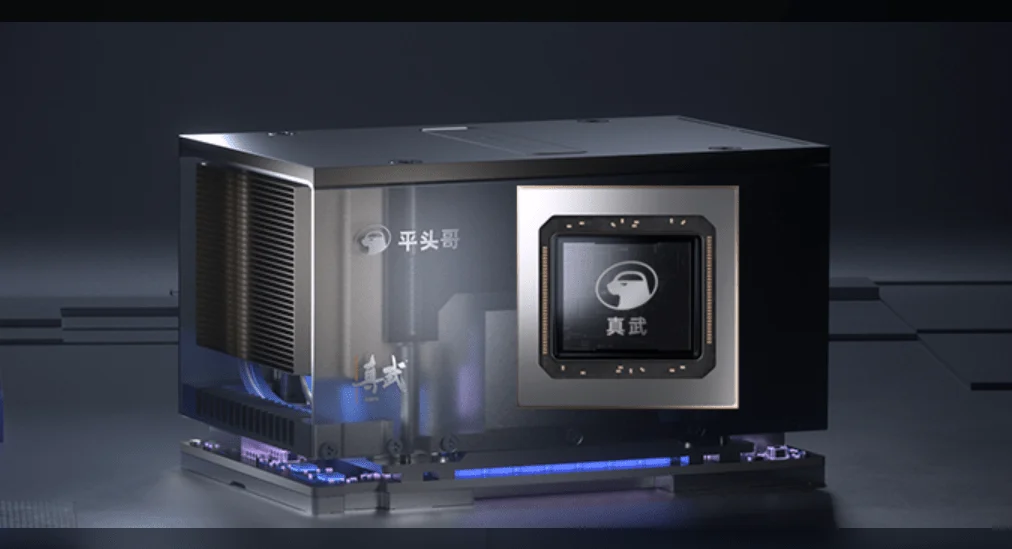
Alibaba Group, the Chinese e-commerce and technology conglomerate, is poised to significantly strengthen its position in the burgeoning artificial intelligence (AI) hardware landscape with the anticipated tape-out and production of its second-generation T-Head chip in the latter half of this year. This strategic development, announced by Alibaba CEO Eddie Wu on August 20, underscores the company’s deepening commitment to proprietary semiconductor technology, particularly in the critical domain of large-model AI training workloads. The forthcoming chip is designed to deliver substantially enhanced computing performance and interconnect bandwidth, crucial capabilities for the intensive demands of modern AI development.
This announcement follows considerable progress already made by Alibaba’s T-Head (Pingtouge Semiconductor Co., Ltd.) unit, which has successfully developed a comprehensive, full-stack chip portfolio encompassing Graphics Processing Units (GPUs), Central Processing Units (CPUs), and advanced networking chips. Demonstrating tangible market traction, an Alibaba Cloud supernode, powered by the Zhenwu M890 chip – an existing offering from the T-Head line – has already entered scaled sales. By early August, the Zhenwu product line alone had garnered more than 650 customers, signaling strong adoption within enterprise and research sectors for its specialized computing solutions. This latest generation of T-Head chips is expected to further solidify Alibaba’s competitive edge in cloud computing and AI services, both domestically and internationally.
The Strategic Imperative: Alibaba’s Deep Dive into Semiconductor Innovation
Alibaba’s sustained investment in chip development is a multi-faceted strategic play, driven by the escalating demands of its vast cloud computing operations, the explosive growth of artificial intelligence, and a broader national imperative for technological self-sufficiency. As one of the world’s leading cloud service providers through Alibaba Cloud, the company faces immense pressure to optimize performance, cost-efficiency, and energy consumption within its data centers. Proprietary chips offer a distinct advantage, allowing Alibaba to tailor hardware specifically to its software stack and diverse customer workloads, leading to superior integration and efficiency compared to relying solely on off-the-shelf solutions.
The recent surge in generative AI and large language models (LLMs) has amplified the demand for specialized AI accelerators. Training these colossal models requires unprecedented computational power, high-speed memory, and robust inter-processor communication. Global leaders in AI hardware, most notably NVIDIA, have seen their market valuations soar due to the critical role their GPUs play in this new era of AI. However, hyperscale cloud providers like Google (with its Tensor Processing Units, TPUs) and Amazon Web Services (with Inferentia and Trainium chips) have also embarked on ambitious internal chip development programs to reduce dependency on external suppliers, control costs, and differentiate their cloud offerings. Alibaba’s T-Head unit is firmly positioned within this trend, aiming to create a vertically integrated AI infrastructure that offers optimized performance and cost benefits to its cloud clientele.
Furthermore, the geopolitical landscape, characterized by increasing technological competition and export controls, particularly between the United States and China, has underscored the strategic importance of domestic semiconductor capabilities. For Chinese technology giants like Alibaba, developing proprietary chips is not merely a business advantage but also a critical step towards ensuring supply chain resilience and contributing to China’s broader goals of technological independence in key strategic sectors. This long-term vision positions Alibaba as a pivotal player in fostering an indigenous semiconductor ecosystem.
A Chronology of Alibaba’s Semiconductor Journey
Alibaba’s journey into semiconductor design began in earnest with the establishment of its DAMO Academy in 2017, a global research institute focused on cutting-edge technologies. Building on this foundation, Pingtouge Semiconductor Co., Ltd., more commonly known as T-Head, was officially launched in September 2018. The creation of T-Head consolidated Alibaba’s existing chip development efforts, bringing together expertise from various internal teams to accelerate the creation of custom silicon for cloud, AI, and IoT applications.
One of T-Head’s earliest successes was the development of the XuanTie series of processors, based on the open-source RISC-V architecture. These chips were initially designed for IoT devices, edge computing, and embedded systems, showcasing Alibaba’s foundational capabilities in processor design.
A significant milestone came in 2019 with the unveiling of the Hanguang 800, Alibaba’s first dedicated AI inference chip. The Hanguang 800 demonstrated remarkable performance in real-world AI applications, such as product search and recommendation engines within Alibaba’s vast e-commerce platforms. At the time of its release, Alibaba claimed the Hanguang 800 could process image recognition tasks significantly faster and more efficiently than conventional GPUs, highlighting the potential of custom silicon for specific AI workloads.
In 2021, T-Head expanded its portfolio into server CPUs with the introduction of the Yitian 710. This processor, based on the Arm architecture, was designed specifically for Alibaba Cloud’s data centers, offering high performance and energy efficiency for general-purpose cloud computing. The Yitian 710 represented a bold move into the highly competitive server CPU market, challenging established players and further deepening Alibaba’s vertical integration strategy for its cloud infrastructure.
The Zhenwu M890, which has now entered scaled sales, represents the latest iteration of Alibaba’s AI compute capabilities, likely building upon the foundation laid by the Hanguang series. While specific architectural details of the Zhenwu M890 are proprietary, its deployment in Alibaba Cloud supernodes and its adoption by over 650 customers by early August underscore its effectiveness in real-world scenarios requiring substantial AI processing power. The progression from IoT chips to AI inference, then to server CPUs, and now to a second-generation chip specifically for large-model AI training, illustrates a deliberate and comprehensive strategy to cover the entire spectrum of cloud and AI computing needs.
T-Head’s Comprehensive Portfolio: CPUs, GPUs, and Networking
The T-Head unit’s achievement in developing a "full-stack chip portfolio" is particularly noteworthy, as it signifies a holistic approach to data center infrastructure. This portfolio includes:
-
CPUs (Central Processing Units): The Yitian 710 is a prime example. As the "brains" of servers, CPUs handle general computing tasks, operating systems, and orchestrate workloads. By designing its own CPUs, Alibaba can optimize instruction sets, memory access, and power consumption for its specific cloud environments, leading to improved overall system performance and reduced operational costs for its extensive network of data centers. This move also reduces reliance on external CPU vendors, offering greater control over its technological roadmap.
-
GPUs (Graphics Processing Units) and AI Accelerators: While traditionally associated with graphics rendering, GPUs have become the workhorses of AI, particularly for training deep neural networks due to their parallel processing capabilities. The Hanguang 800 was an early foray into AI inference, and the upcoming second-generation T-Head chip is specifically targeting large-model training. This represents a significant step, as AI training demands even greater computational intensity, memory bandwidth, and interconnectivity than inference. Developing a dedicated training chip positions Alibaba to handle the next generation of AI models, which are growing exponentially in size and complexity. These custom GPUs/accelerators allow Alibaba to differentiate its AI cloud services, offering potentially superior performance-to-cost ratios for its customers’ AI development projects.
-
Networking Chips: Often overlooked but critically important in modern data centers, networking chips facilitate high-speed communication between servers, storage units, and accelerators. For distributed AI training, where massive models are split across hundreds or even thousands of chips, the efficiency of interconnect bandwidth is paramount. Bottlenecks in networking can severely cripple the performance gains offered by powerful CPUs and GPUs. Alibaba’s development of networking chips ensures that its custom computing elements can communicate seamlessly and at extreme speeds, forming a highly integrated and optimized computing fabric within its supernodes, vital for scalable AI training.
The synergy between these three components – custom CPUs for general tasks, powerful AI accelerators for complex computations, and high-speed networking for seamless data flow – creates a highly efficient and integrated computing architecture. This vertical integration allows Alibaba Cloud to offer differentiated services that are finely tuned for specific customer needs, particularly those involving demanding AI and high-performance computing workloads.
The Global AI Chip Landscape and Alibaba’s Position
The global market for AI chips is experiencing unprecedented growth, projected to reach hundreds of billions of dollars within the next few years. This surge is primarily driven by the proliferation of AI applications across industries, from autonomous vehicles and medical diagnostics to natural language processing and generative content creation. NVIDIA currently dominates the market for high-end AI training GPUs, with its CUDA platform forming a powerful software ecosystem that has become a de facto standard for AI development.
However, the immense capital expenditure and operational costs associated with deploying and scaling AI infrastructure have spurred major tech companies to invest heavily in custom silicon. Google’s TPUs have demonstrated the potential of purpose-built ASICs (Application-Specific Integrated Circuits) to outperform general-purpose GPUs for specific AI workloads. Amazon’s Inferentia and Trainium chips serve similar strategic goals for AWS. Alibaba’s T-Head chips, including the Hanguang 800, Yitian 710, Zhenwu M890, and the upcoming second-generation T-Head for training, place it firmly in this elite group of hyperscalers developing their own advanced silicon.
For Alibaba, this strategy is not about directly competing with NVIDIA in the open market for discrete GPUs, but rather about creating an optimized, integrated hardware-software stack for its own cloud infrastructure and customer base. By controlling the entire stack, from silicon design to cloud services, Alibaba can offer greater efficiency, security, and specialized features. The success of the Zhenwu M890 with over 650 customers attests to the market’s appetite for these tailored solutions, especially from a cloud provider that can integrate them seamlessly into its platform.
The unique challenge for a Chinese tech giant like Alibaba, however, lies in navigating the complex geopolitical environment. Access to advanced semiconductor manufacturing processes (fabs), which are largely dominated by companies outside mainland China, remains a critical bottleneck. While Alibaba excels in chip design, the ability to produce these chips at the most advanced nodes (e.g., 5nm or 3nm) can be constrained by international regulations and supply chain limitations. This reality underscores the broader strategic importance of domestic chip development within China, aiming to reduce reliance on external supply chains for critical components.
Implications for Alibaba Cloud and the Broader Ecosystem
The tape-out and subsequent production of Alibaba’s second-generation T-Head chip for large-model training carries significant implications for Alibaba Cloud and the broader AI ecosystem.
For Alibaba Cloud, this represents a substantial enhancement of its core capabilities. With proprietary chips optimized for AI training, Alibaba Cloud can:
- Offer Differentiated Services: Provide customers with unique performance and cost advantages for their demanding AI training workloads, potentially attracting more enterprise clients, AI startups, and research institutions.
- Improve Cost-Effectiveness: Reduce reliance on external, often expensive, third-party AI accelerators, thereby improving its own profit margins and allowing for more competitive pricing for its cloud services.
- Boost Performance and Efficiency: Tailor hardware to software, leading to superior integration, lower latency, higher throughput, and better energy efficiency within its data centers, which translates directly into faster training times and lower operational costs for users.
- Enhance Security and Customization: Greater control over the hardware stack allows for enhanced security features and the ability to rapidly iterate and customize chip designs to meet evolving AI demands.
For the Chinese Domestic Semiconductor Industry, Alibaba’s advancements serve as a vital proof point and catalyst. It demonstrates China’s growing capabilities in advanced chip design, especially in complex areas like AI accelerators. This contributes to the national goal of building a robust and resilient domestic semiconductor supply chain, fostering innovation, and developing critical talent within the country. While manufacturing remains a challenge, design prowess is a crucial step towards overall technological independence.
Beyond Alibaba’s direct operations, the availability of these advanced AI training capabilities on Alibaba Cloud could accelerate the development and deployment of large AI models across various industries within China. This could foster a more vibrant AI ecosystem, enabling smaller companies and researchers to access cutting-edge hardware without the prohibitive costs of building their own infrastructure.
Technical Deep Dive: What "Large-Model Training" Entails
The term "large-model training workloads" refers to the highly compute-intensive process of teaching deep neural networks, particularly those with billions or even trillions of parameters (like LLMs), to perform complex tasks. This process involves:
- Massive Data Sets: Training requires feeding the model vast quantities of data (text, images, video) to learn patterns and relationships.
- Iterative Calculations: The model’s parameters are adjusted iteratively through a process called backpropagation, requiring trillions of floating-point operations.
- High-Bandwidth Memory: To keep the processing units fed with data, extremely fast and high-capacity memory (e.g., HBM – High Bandwidth Memory) is essential.
- Efficient Interconnects: When a large model is distributed across multiple chips and servers, high-speed, low-latency interconnects (like NVLink for NVIDIA or custom inter-chip links) are crucial to ensure efficient communication and data synchronization between processing units. Without these, the entire training process can slow down dramatically.
The second-generation T-Head chip’s focus on "stronger computing performance and interconnect bandwidth" directly addresses these critical requirements. Enhanced computing performance means more operations per second, while improved interconnect bandwidth ensures that data can move quickly and efficiently between the chip’s internal components and across multiple chips in a distributed training setup.
"Tape-out" is a significant milestone in chip development. It refers to the final stage of the design process where the completed integrated circuit layout is sent to the semiconductor foundry for manufacturing. It signifies that the design is finalized and ready for physical production. The expectation of tape-out and production in the second half of this year indicates that the chip is nearing completion and will soon be ready for deployment.
The Road Ahead: Challenges and Opportunities
While Alibaba’s progress in chip development is impressive, significant challenges remain. The most prominent is access to advanced fabrication technologies. Manufacturing cutting-edge chips at scale requires state-of-the-art foundries, which are primarily concentrated in Taiwan (TSMC) and South Korea (Samsung). Geopolitical tensions and export controls could impact access to these advanced manufacturing capabilities, forcing Chinese companies to rely on less advanced domestic fabs, which might affect performance or cost efficiency for the most sophisticated chips.
Another challenge lies in building a robust software ecosystem around its custom hardware. NVIDIA’s CUDA platform benefits from years of developer adoption and a vast library of optimized software tools. Alibaba’s T-Head will need to continue investing in its own software development kits, compilers, and libraries to make its chips easily programmable and attractive to AI developers.
Despite these hurdles, the opportunities are immense. Alibaba’s strategic investment in core technology positions it for long-term growth and resilience. By developing an integrated hardware-software AI stack, Alibaba can create highly optimized solutions for its vast ecosystem, spanning e-commerce, cloud computing, logistics, and fintech. This vertical integration not only provides a competitive advantage but also fosters an innovation cycle that could lead to breakthroughs in AI efficiency and capability.
In conclusion, Alibaba’s unveiling of its second-generation T-Head chip for large-model training marks a pivotal moment in its ambitious journey to become a self-reliant and leading force in the global AI and cloud computing landscape. This development is a testament to the company’s strategic foresight and unwavering commitment to technological innovation, promising to bolster its cloud infrastructure and significantly contribute to China’s ongoing drive for semiconductor prowess. The impact of these proprietary chips will likely resonate across Alibaba’s diverse business units and beyond, shaping the future of AI development and deployment.


 Azzam Bilal Chamdy
 Siti Muinah