Basiran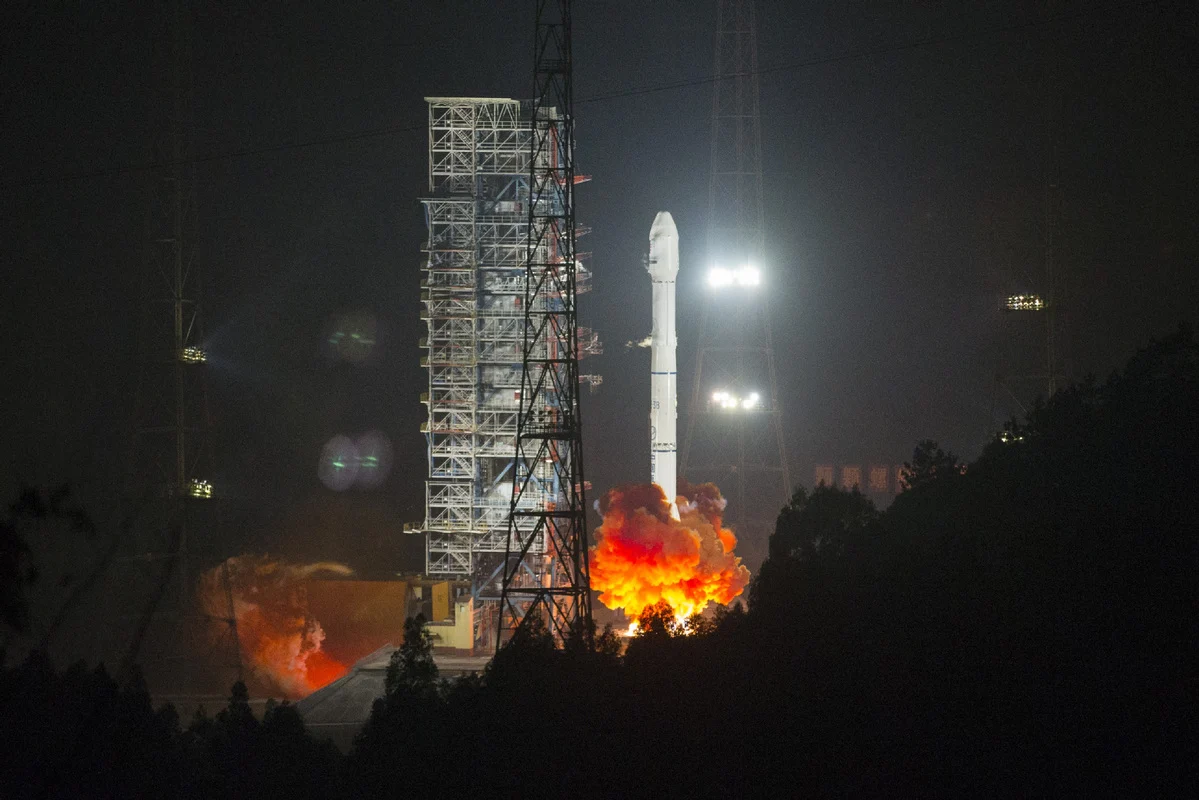
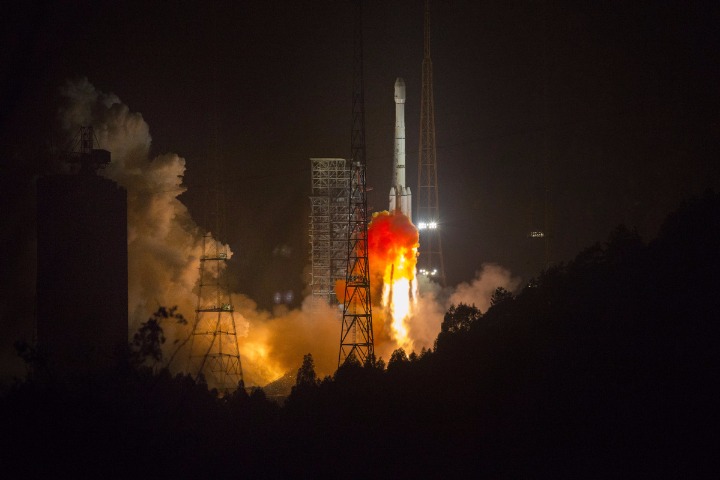
The successful launch of Algeria’s first communication satellite, Alcomsat-1, from the Xichang Satellite Launch Center in China’s southwestern Sichuan province on early Monday, December 11, 2017, heralds a new era of technological partnership between China and Algeria. This historic mission, executed flawlessly by a Long March-3B carrier rocket, represents a significant achievement in the burgeoning space cooperation between the two nations and underscores China’s growing prowess in the global satellite manufacturing and launch services market.
A New Era of Connectivity for Algeria
Alcomsat-1, a testament to collaborative engineering and shared ambition, is poised to revolutionize communication infrastructure across Algeria. The satellite’s deployment into a preset orbit signifies a critical step towards enhancing the North African nation’s access to vital digital services. Its operational capabilities are designed to cater to a wide spectrum of needs, including robust broadcast and television services, ensuring wider reach and improved quality for media consumption. Furthermore, the satellite will bolster emergency communication networks, providing a crucial lifeline during natural disasters and other unforeseen events.
Beyond immediate communication needs, Alcomsat-1 is set to drive significant advancements in education and governance. The satellite will facilitate distance education programs, breaking down geographical barriers and offering educational opportunities to remote and underserved populations. Its role in e-governance will empower the Algerian government to deliver essential public services more efficiently and inclusively, fostering greater citizen engagement and administrative transparency. Enterprise communication will also see a substantial uplift, enabling businesses to operate more effectively and expand their reach. Finally, the satellite’s contribution to broadband access will bridge the digital divide, bringing high-speed internet to more Algerian citizens and businesses, and its satellite-based navigation capabilities will further enhance transportation and logistics efficiency.
A Collaborative Journey: From Concept to Orbit
The development and launch of Alcomsat-1 represent the culmination of a meticulously planned and executed cooperative project. This endeavor marks the first major collaboration between China and Algeria in the aerospace industry, highlighting a deepening strategic partnership that extends beyond traditional diplomatic and economic ties. The project involved extensive consultation, design, manufacturing, and testing processes, with both Algerian and Chinese teams working in close concert.
The satellite itself was developed and manufactured by the China Academy of Space Technology (CAST), a subsidiary of the China Aerospace Science and Technology Corporation (CASC). This underscores China’s advanced capabilities in satellite design and production, capable of meeting the stringent requirements of international clients. The Alcomsat-1 project is built upon a foundation of trust and mutual respect, showcasing China’s commitment to sharing its technological expertise and contributing to the development of partner nations.
The Launch: A Testament to Chinese Aerospace Prowess
The launch vehicle for this historic mission was the Long March-3B carrier rocket, a powerful and reliable workhorse of China’s space program. The launch occurred at precisely 40 minutes past midnight on December 11, 2017, from the Xichang Satellite Launch Center. This facility, located in the Liangshan Yi Autonomous Prefecture of Sichuan province, is one of China’s primary satellite launch sites, known for its suitability for geostationary orbit launches due to its lower latitude.
This particular launch marked the 258th mission for the Long March rocket family, a significant milestone that speaks volumes about the program’s maturity and operational success. The Long March series has been instrumental in China’s space exploration efforts, from launching scientific satellites and manned spacecraft to deploying commercial payloads. The reliable performance of the Long March-3B on this occasion further solidifies its reputation as a dependable launch platform for critical national and international missions. The precise insertion of Alcomsat-1 into its designated orbit is a testament to the accuracy and expertise of the launch team and the sophisticated guidance systems employed.
Background Context: China’s Ascending Role in Global Space Economy
The launch of Alcomsat-1 is not an isolated event but rather a significant illustration of China’s rapidly expanding influence in the global space sector. Over the past two decades, China has transformed from a participant to a leading player, investing heavily in its indigenous space capabilities. This investment has not only fueled ambitious domestic programs like the BeiDou navigation system and its own crewed space station but has also positioned China as a competitive provider of launch services and satellite technology for international clients.
China’s "Belt and Road Initiative" (BRI), a sprawling infrastructure development strategy, has played a crucial role in fostering space cooperation with participating countries. The Alcomsat-1 project can be viewed as a tangible outcome of this initiative, demonstrating how infrastructure development extends into the digital and technological realms. By offering cost-effective and reliable launch services, along with advanced satellite manufacturing, China is actively seeking to build strategic partnerships and expand its technological footprint globally. This approach benefits partner nations by providing them with access to cutting-edge space technology, often at more competitive prices than traditional Western providers.
Algeria, as a key nation in North Africa with a strategic geographical location and a growing economy, represents a valuable partner for China’s space ambitions. This successful launch is likely to pave the way for future collaborations, potentially in areas such as remote sensing, Earth observation, and even deep space exploration.
Supporting Data and Technical Specifications
While specific technical details of Alcomsat-1 beyond its primary functions are not extensively detailed in the initial report, it is understood to be a geostationary communication satellite. Geostationary orbit (GSO) is a specific type of geosynchronous orbit, where the satellite’s orbital period matches the Earth’s rotation period. This means that a satellite in GSO appears stationary in the sky from a fixed point on Earth, making it ideal for continuous communication services like broadcasting and telecommunications.
The operational life of such satellites typically ranges from 15 to 20 years, depending on the fuel reserves for orbital maneuvering and the reliability of its components. Alcomsat-1’s payload would likely include advanced transponders designed to handle a wide range of frequencies, enabling high-capacity data transmission for television, internet, and voice communications. The development and manufacturing process would have involved rigorous testing to ensure resilience against the harsh space environment, including radiation, extreme temperatures, and micrometeoroid impacts.
The Long March-3B rocket itself is a powerful three-stage launch vehicle. Its capacity to place significant payloads into geostationary transfer orbit (GTO) makes it a suitable choice for launching communication satellites of this nature. The success rate of the Long March series, particularly for missions involving geostationary satellites, has been a key factor in attracting international customers.
Official Responses and Future Implications
While direct quotes from Algerian or Chinese officials are not included in the initial brief, it is logical to infer enthusiastic responses from both sides. For Algeria, the successful launch represents a significant leap forward in its national development strategy, empowering its citizens and economy with modern communication tools. This achievement would undoubtedly be hailed as a moment of national pride and a testament to effective international cooperation.
On the Chinese side, the successful launch would be celebrated as another validation of its growing space capabilities and its commitment to fostering international partnerships under initiatives like the BRI. Officials from the China National Space Administration (CNSA) and CASC would likely express pride in their team’s performance and reiterate their dedication to supporting the space ambitions of their global partners.
The broader implications of this launch are substantial. For Algeria, it signifies enhanced digital sovereignty and the potential for significant economic growth driven by improved connectivity. For China, it reinforces its position as a major global player in the space industry, capable of delivering comprehensive satellite solutions from manufacturing to launch. This success is likely to attract further interest from other nations seeking to develop their own satellite capabilities, further expanding China’s reach in the international space market. The collaborative nature of the project also sets a precedent for future joint ventures, potentially leading to more ambitious space exploration and scientific endeavors. The long-term impact will be a more interconnected Algeria and a strengthened global space ecosystem, with China playing an increasingly pivotal role.


 Nana Wu
 Suro Senen