Basiran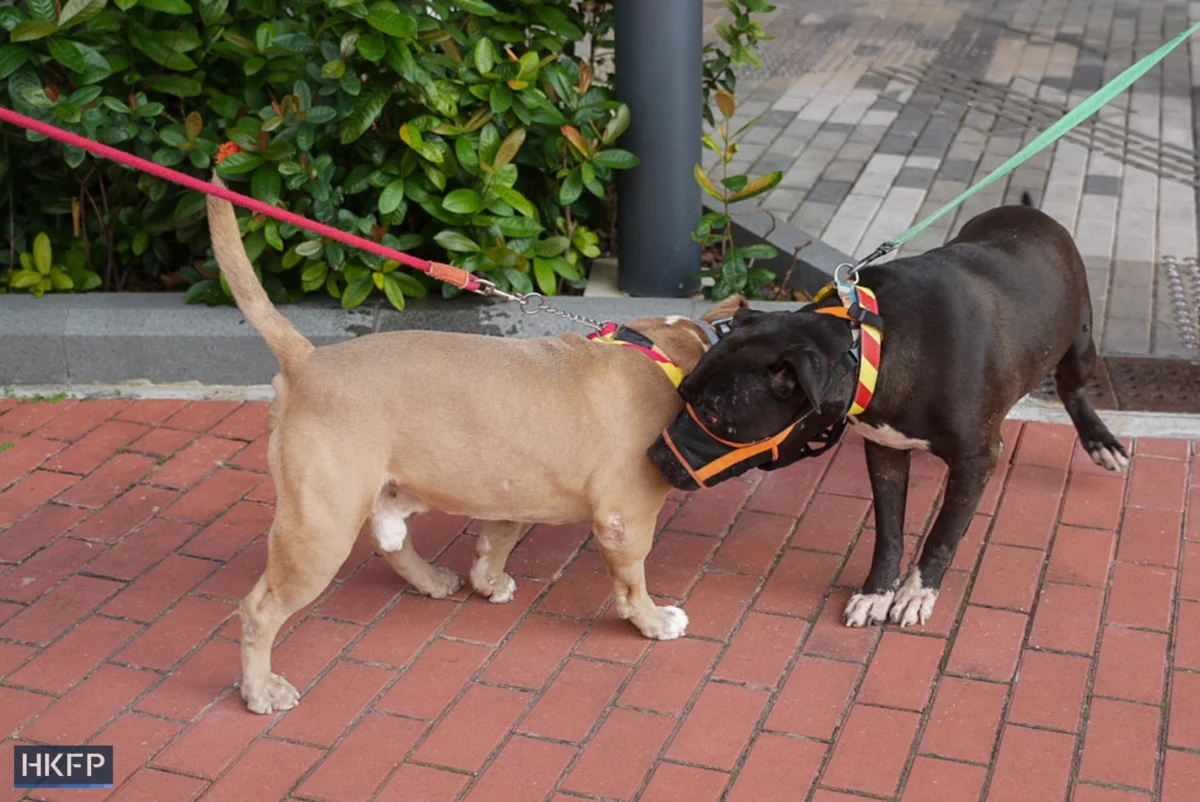
Three dog owners have seen their appeals against the government’s decision to classify their pets as "fighting dogs" rejected. The rulings come as authorities have intensified regulations in response to a series of fatal dog attacks that occurred in August. The Dogs and Cats Classification Board, an advisory body to the Agriculture, Fisheries and Conservation Department (AFCD), presided over the three back-to-back appeal hearings at the Kowloon Animal Management Centre. Following the proceedings, owners were reportedly handed documents confirming the board’s decision, which designates their pets under stricter controls.
The AFCD had previously announced that as of August 20, a total of seven dogs had been identified as "fighting dogs." This classification imposes significant restrictions, including the mandatory wearing of muzzles in public and prohibitions on entering establishments such as dog-friendly restaurants. The recent appeals highlight the growing tension and concern among dog owners regarding the government’s approach to canine safety and breed-specific legislation.

Background to the Heightened Regulations
The stringent measures implemented by the AFCD are a direct consequence of a tragic series of events that unfolded in August. These incidents, which included fatal dog attacks, prompted a swift review of existing laws and a hardening of enforcement.
On August 18, a large dog, reportedly a Spanish Mastiff, was involved in two separate incidents in Yuen Long, resulting in the deaths of two smaller dogs. This incident alone underscored the potential for severe harm when larger, powerful breeds are involved in altercations. The gravity of the situation was further amplified just days later, on August 21, when a 33-year-old woman working at a licensed animal shelter in Ta Kwu Ling was killed by a dog. The AFCD subsequently identified this animal as a "fighting dog," intensifying public and governmental scrutiny on breeds perceived as inherently dangerous.

In the aftermath of these fatalities, authorities initiated an operation in Yuen Long, capturing eight stray dogs. Of these, three were found to be microchipped, but their licenses had expired, raising questions about responsible pet ownership and adherence to regulations. The AFCD has defended its policies, emphasizing the perceived risks associated with certain breeds.
The Appeal Process and Owner Concerns
For the three owners whose appeals were heard this week, the outcome has been deeply disappointing. Mr. Ho, owner of a dog named Bao Bao, expressed his lack of optimism prior to the hearing. "I did not have much hope for the appeal result, but decided to try anyway," he told HKFP. Bao Bao, previously licensed as a Staffordshire Bull Terrier, was taken by AFCD officers last month at a café in Stanley. The department subsequently reclassified Bao Bao as a Pit Bull Terrier, one of the four breeds officially categorized as "fighting dogs" in Hong Kong. The other breeds on this list are Dogo Argentinos, Japanese Tosas, and Fila Brasileiros. The AFCD maintains that Staffordshire Bull Terriers fall under the broader Pit Bull Terrier classification.

During the hearing, Mr. Ho presented evidence of community support, including messages from Stanley residents who attested to Bao Bao’s friendly and gentle nature. Despite these testimonials, the appeal was unsuccessful. "I feel helpless. There was no point to this hearing," Mr. Ho stated in Cantonese, adding that he felt the board members did not adequately address his concerns.
Jacqueline Cheung, founder of the non-profit Love Adopt Animal Society, represented Bowie, a dog whose previous owner relinquished her following Bowie’s designation as a fighting dog. Bowie was brought to an AFCD center for a routine vaccine appointment, where the classification was made. Her license previously listed her as a Sharpei. Cheung argued that Bowie exhibited clear Sharpei characteristics, such as her distinctive bristly fur and the breed’s characteristic "meat mouth" – a fleshy muzzle.
The appeal hearing for Bowie reportedly lasted only about 20 minutes. Cheung described the process as unscientific and lacking credibility. "The entire process is unscientific. It lacks credibility, and it’s mind-boggling," she stated. Comparing the severity of the designation, she added, "It’s like she’s been identified as a murderer, like Yip Kai-foon," referencing an infamous Hong Kong gangster known for violent crimes. Bowie is currently being cared for by Cheung’s organization at a dog hotel, with concerns that her "fighting dog" status will make it difficult for her to be adopted in the future.

Mrs. Lai, another dog owner who attended the hearing with her husband and a lawyer, had her dog, Baku, classified as a fighting dog. Baku, an eight-year-old dog licensed as a mongrel, was adopted by Mrs. Lai approximately four years ago. The dog was confiscated from their home in late August following a report of a "suspected unregistered fighting dog." The board ultimately upheld the initial decision to classify Baku as a fighting dog.
The "Fighting Dog" Classification: Criteria and Regulations
The AFCD’s designation of "fighting dogs" is based on specific breeds and their perceived inherent traits. The four breeds explicitly named are Pit Bull Terriers, Dogo Argentinos, Japanese Tosas, and Fila Brasileiros. The department’s rationale, as communicated to HKFP last month, centers on the characteristics that can lead to sudden attacks and more severe injuries.

"Fighting dogs may attack suddenly without warning due to their characteristics," the AFCD stated. "Their well-developed musculature and powerful jaws, coupled with a tenacious biting tendency, often result in more severe injuries when attacks occur." This stance emphasizes breed-specific attributes rather than individual dog behavior.
Veterinarians and animal welfare advocates have raised concerns about this breed-centric approach, advocating for a focus on "deed, not breed." They argue that an individual dog’s temperament, training, and socialization are more accurate indicators of potential danger than its breed alone. However, the AFCD maintains that its policies are necessary for public safety.
The appeal process allows dog owners to challenge a "fighting dog" designation within 14 days of the initial ruling. The composition of the Dogs and Cats Classification Board is intended to bring diverse expertise to these decisions. It includes veterinarians, experienced dog breeders, academics, and representatives from animal welfare organizations, as outlined by the AFCD. Despite this multi-disciplinary approach, the appeals heard this week suggest that the board’s conclusions have not satisfied the affected owners.

Broader Implications and Future Outlook
The recent wave of fatal dog attacks and the subsequent tightening of regulations have ignited a broader debate about canine management in Hong Kong. The government’s reliance on breed-specific classifications, while intended to enhance public safety, has drawn criticism for potentially stigmatizing entire breeds and overlooking individual animal behavior.
The implications of these designations extend beyond the immediate restrictions on the dogs. For owners, it means increased scrutiny, potential financial burdens for specialized care or housing, and emotional distress. For dogs like Bowie, the classification could significantly impede their chances of finding a permanent home, as potential adopters may be deterred by the "fighting dog" label.

The AFCD’s stance, however, appears firm, driven by a perceived need to address public safety concerns following the August incidents. The department’s emphasis on the physical characteristics and inherent tendencies of designated breeds suggests a continued commitment to this regulatory framework.
Looking ahead, the outcomes of these appeals may influence future challenges and the ongoing dialogue between animal welfare advocates and the government. The core of the debate remains the balance between public safety and the welfare of individual animals, and whether a breed-specific approach is the most effective and equitable means to achieve that balance. As the city navigates these complex issues, the experiences of owners like Mr. Ho, Ms. Cheung, and Mrs. Lai highlight the profound impact of these regulations on the lives of both pets and their human companions. The AFCD has also stated that it is continuously reviewing its policies and will take into account any new scientific findings or evidence that may emerge regarding canine behavior and safety.



 Lina Hope