Ammar Sabilarrohman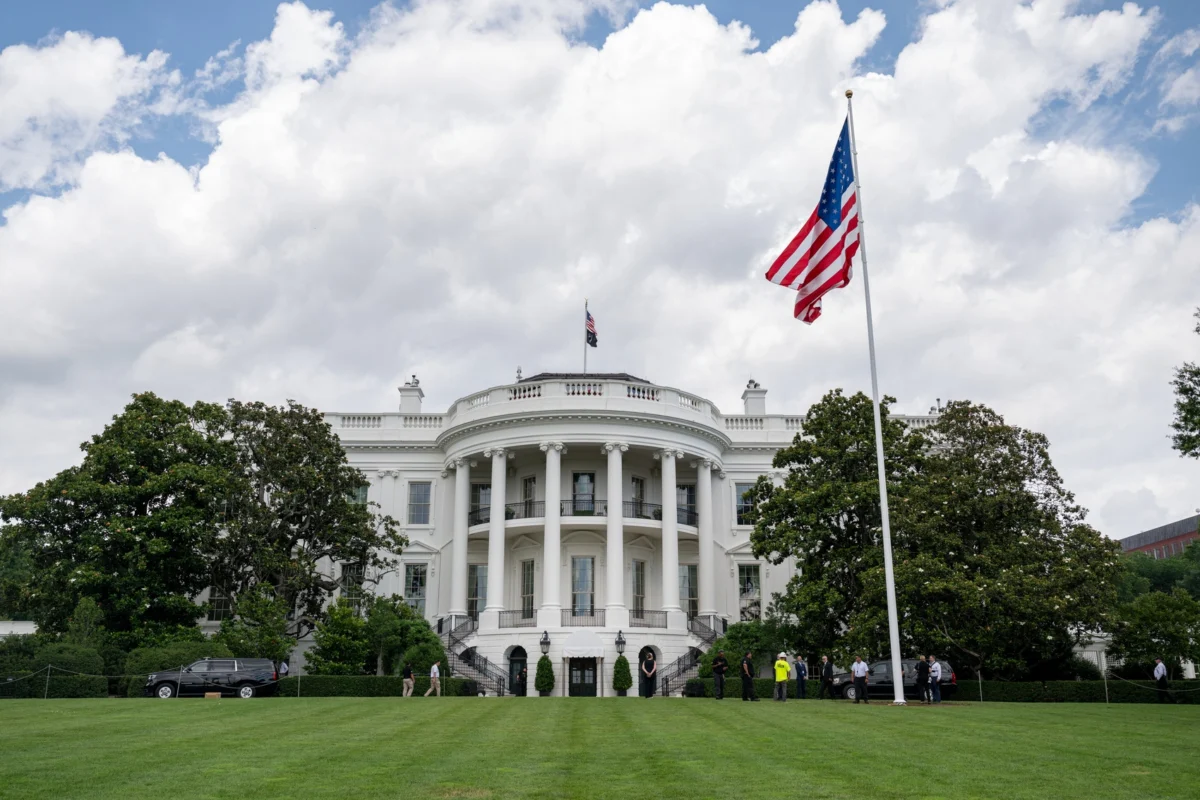
Washington has officially decided not to renew the state of emergency that was imposed in July 2020, citing threats to national security posed by Beijing’s stringent national security law in Hong Kong. This decision, confirmed by US officials on Friday, marks a significant shift in US policy towards the former British colony, though the full economic implications, particularly regarding preferential trade treatment, remain uncertain.
The move has been met with a cautiously positive response from China. The Ministry of Commerce in Beijing described the US decision as "an important step in implementing the consensus reached during economic and trade talks between both sides." This suggests that the termination of the emergency declaration might be viewed by China as a signal of thawing relations and a potential precursor to restoring economic ties.

A Shift from Trump-Era Policy
The national emergency declaration was initially put in place by then-President Donald Trump in July 2020. At the time, the White House framed China’s actions to dismantle Hong Kong’s autonomy as an "unusual and extraordinary threat" to US national security. This declaration accompanied the stripping of Hong Kong’s preferential trade treatment, a status it had enjoyed for decades and which was a cornerstone of its economic success as a global financial hub. The order had been extended annually by successive administrations until this latest decision.
Sources within the US government have indicated that the decision to let the emergency order expire was communicated to Beijing recently. However, the situation is nuanced. A spokesperson for the US State Department clarified that while the national emergency itself is ending, the underlying executive order that led to the suspension of preferential treatment "otherwise remains in effect." This means that the determination that Hong Kong is no longer "sufficiently autonomous to justify differential treatment in relation to the PRC" under specific US laws and provisions, as stated in the original order, continues to hold. This indicates that the US still views Hong Kong’s autonomy as diminished, despite ending the formal emergency.

The US Treasury Department further elaborated on the impact of this decision. A spokesperson noted that out of 48 individuals who were subject to sanctions under the emergency order, 39 will continue to face restrictions, but under a different legislative framework. This points to a strategic recalibration of sanctions, aiming to avoid duplication and streamline existing measures. The Treasury official described the non-renewal as "consistent with sanctions modernization efforts," suggesting a move towards more targeted and efficient sanctioning mechanisms.
The Erosion of Hong Kong’s Autonomy: A Timeline of Events
The roots of this US action trace back to the political landscape of Hong Kong and its subsequent impact on international relations. Following the 1997 handover from British to Chinese rule, Hong Kong operated under the "one country, two systems" principle, which guaranteed a high degree of autonomy and freedoms distinct from mainland China. This autonomy was enshrined in its Basic Law and was instrumental in its development as a vibrant global financial center.

The city experienced a surge of large-scale, and at times volatile, pro-democracy protests in 2019. These demonstrations, fueled by concerns over perceived encroachments on freedoms and autonomy by Beijing, prompted a strong reaction from the Chinese government. In June 2020, Beijing unilaterally imposed a sweeping national security law on Hong Kong. This law criminalizes acts of secession, subversion, terrorism, and collusion with foreign forces, significantly curtailing political dissent and freedom of expression in the city.
The imposition of the national security law was met with widespread international condemnation. Many governments, including the United States, viewed it as a direct violation of China’s commitments under the Sino-British Joint Declaration and a severe blow to Hong Kong’s promised autonomy. The US response, culminating in the national emergency declaration and the removal of preferential trade status, was a direct consequence of these events.
Economic Implications and Future Outlook

The suspension of Hong Kong’s preferential trade treatment in 2020 had significant economic repercussions. This status had allowed the city to be treated separately from mainland China for purposes of US export controls, tariffs, and other trade regulations. Its removal meant that Hong Kong goods and services were subject to the same, or similar, conditions as those from mainland China, impacting trade flows and investment.
The termination of the national emergency order, while not immediately restoring this preferential status, has opened the door for potential discussions and adjustments. A spokesperson for the Hong Kong government acknowledged the "positive shift" in US policy and expressed anticipation for the resumption of "normal economic and trade exchanges" between the two sides. This sentiment underscores Hong Kong’s desire to regain its economic footing and reaffirm its role as a global business hub.
However, the US State Department’s statement that Hong Kong’s autonomy is still not sufficient for differential treatment leaves a crucial question unanswered: when, and under what conditions, might preferential trade status be reinstated? The US approach appears to be one of cautious engagement, signaling a willingness to recalibrate its policies while maintaining its stance on Hong Kong’s diminished autonomy.

Broader Geopolitical Context
The US decision also occurs within a broader geopolitical context of escalating competition between the United States and China. The issue of Hong Kong has been a significant point of contention, symbolizing the broader debate over human rights, democracy, and international law in the face of China’s growing global influence.
The termination of the emergency declaration could be interpreted in several ways. It might reflect a strategic decision by the Biden administration to de-escalate certain tensions with Beijing, particularly in areas where economic cooperation remains vital. It could also be an acknowledgment that the initial emergency declaration, while a strong symbolic statement, has not fundamentally altered Beijing’s trajectory in Hong Kong and that a more nuanced approach is required.

Furthermore, the "sanctions modernization efforts" mentioned by the Treasury Department suggest a broader review of US foreign policy tools. As the US seeks to counter China’s influence, it is likely re-evaluating the effectiveness and efficiency of its sanctioning regimes, aiming for greater precision and impact.
The coming months will be critical in observing how this policy shift unfolds. The international business community, closely watching developments in Hong Kong, will be particularly interested in any signs of a potential restoration of the city’s preferential trade status. For now, while the formal emergency has ended, the underlying concerns about Hong Kong’s autonomy and its future as a distinct economic and political entity remain at the forefront of US-China relations. The future of these exchanges will undoubtedly depend on further actions by both Beijing and Washington, as well as the evolving political landscape within Hong Kong itself.

 Reynand Wu
 Siti Muinah