Nana Wu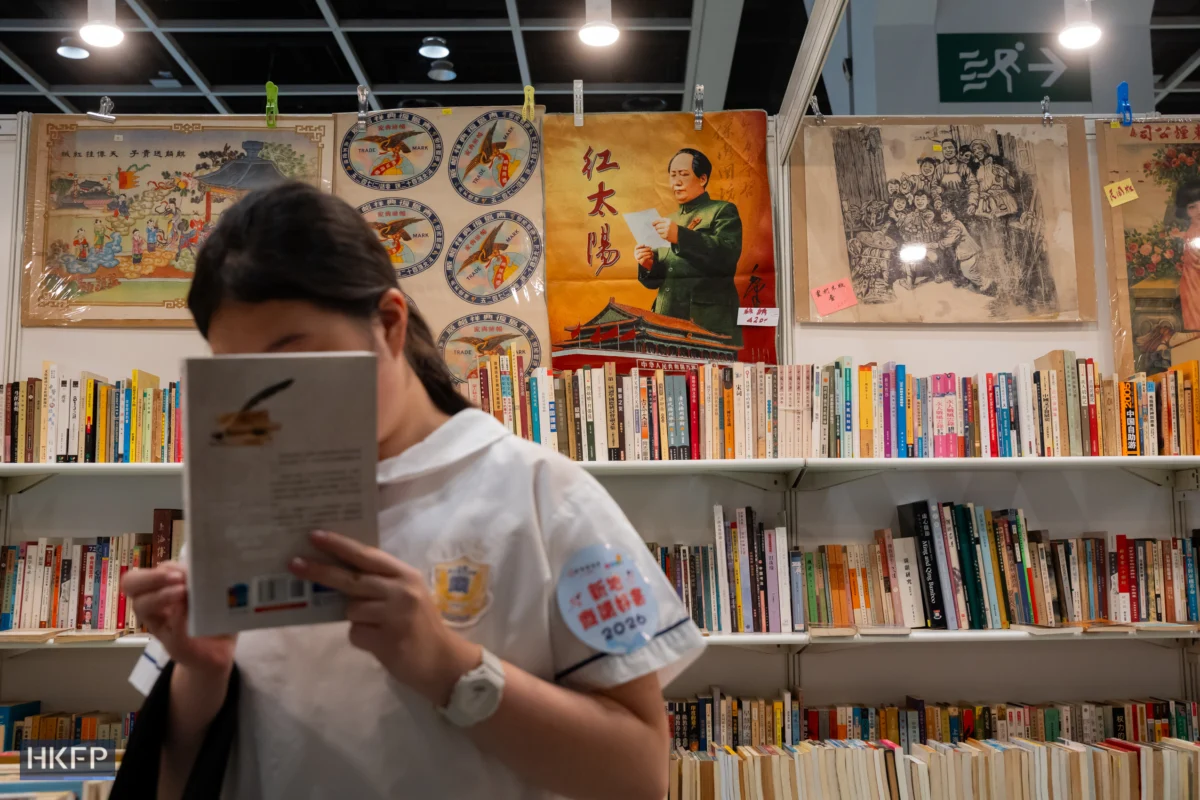
The annual Hong Kong Book Fair, a cultural cornerstone for the city’s bibliophiles, has officially opened its doors, drawing crowds to the Hong Kong Convention and Exhibition Centre. However, this year’s event is significantly overshadowed by recent national security law enforcement actions, including police raids on independent bookstores and the alleged banning of others from participating. The juxtaposition of a vibrant literary celebration with the chilling effect of intensified security measures has cast a somber mood over the fair, prompting concerns about freedom of expression and the future of independent publishing in the city.

The Hong Kong Trade Development Council (HKTDC), the government-established statutory body responsible for organizing the fair, is hosting the event. This year, the fair runs until next Tuesday, July 21, 2026, featuring a vast array of literary offerings from local and international publishers. Despite the festive atmosphere among attendees browsing shelves and attending author events, the backdrop of arrests and book bans has become an unavoidable talking point.

Crackdown on Independent Bookstores Precedes Fair
The unsettling atmosphere was amplified just days before the fair’s commencement. On Wednesday, July 15, 2026, police conducted searches at two independent bookstores, Have a Nice Stay and Greenfield. The operation resulted in the arrest of five individuals, reportedly on suspicion of sedition. This action sent ripples through the literary community, highlighting the heightened scrutiny under which books and their purveyors now operate in Hong Kong.

Further compounding the concerns, two long-standing independent bookstores, Elmbook and Luck Win, were reportedly barred from participating in the fair. Local media reports from earlier in July indicated that both bookstores, which had been regular exhibitors for years, had their participation permits revoked despite having secured prior approval. While both Elmbook and Luck Win declined to comment on the matter, the HKTDC stated its policy of not discussing individual cases, according to media reports.

The exclusion of these established independent voices has had a tangible impact. Elmbook, a store with a 29-year history in Mong Kok, announced it would be closing its physical premises following the ban, initiating a clearance sale. Their statement expressed anticipation for welcoming book lovers for a "treasure hunt," but the underlying sentiment was one of forced contraction. In a poignant shift, the spaces previously allocated to Elmbook and Luck Win at the Convention and Exhibition Centre have been repurposed into designated reading areas, a symbolic change that underscores the diminished presence of independent booksellers.

Banned Titles and Shifting Content Landscape
The impact of tightened regulations extends beyond bookstore participation to the very content available at the fair. Ming Pao reported that several titles have been prohibited from sale. Among these are a poetry collection by acclaimed Hong Kong writer Tang Siu-wa and a fiction work by John Chan. The specific reasons for these bans have not been officially detailed, but they are widely understood to be a consequence of the stricter interpretation of laws governing publications, particularly in light of national security concerns.

This selective removal of literary works raises significant questions about censorship and the boundaries of permissible expression within Hong Kong’s cultural landscape. The curated nature of what can be displayed and sold at a prominent public event like the book fair signals a deliberate shaping of the intellectual discourse available to the public.

Official Presence and Contrasting Purchases
Amidst these developments, the presence of government officials at the fair has drawn attention. Security Minister Chris Tang visited the book fair on Wednesday, July 17, 2026, purchasing several books. His social media posts revealed his selections included two titles by Chinese leader Xi Jinping, a book about the popular character Labubu, and another on Hong Kong cuisine. The minister’s choices, particularly his acquisition of Xi Jinping’s works, highlight a deliberate engagement with official narratives and state-sanctioned literature. This contrasts sharply with the suppressed narratives of independent voices and the concerns raised by the book bans.

The fair itself, beyond the controversies, offers a rich tapestry of literary genres. Visitors can explore a wide range of books, from popular fiction and children’s literature to academic texts and historical accounts. The inclusion of technology such as virtual reality headsets for immersive reading experiences points to the fair’s efforts to adapt and innovate, seeking to maintain its appeal to a diverse audience. Booths showcasing works on Chinese history, political thought, and the development of the Greater Bay Area are also prominently featured, reflecting the evolving emphasis within the city’s cultural and political discourse.

Historical Context and Evolving Freedoms
The Hong Kong Book Fair has traditionally been a vibrant marketplace of ideas, a space where diverse voices could converge and engage. For decades, it served as a critical platform for local authors, publishers, and readers to explore a wide spectrum of thought, including critical and dissenting viewpoints. The fair’s evolution reflects the broader changes in Hong Kong’s socio-political environment.

The imposition of the National Security Law in 2020 marked a significant turning point, leading to a palpable shift in the city’s media and cultural landscape. This law, enacted by Beijing, has been used to prosecute numerous pro-democracy activists, journalists, and critics, often for offenses related to speech and expression. The recent actions against bookstores and the bans on specific titles at the book fair are seen by many as a direct consequence of this intensified security apparatus.

Broader Implications for Hong Kong’s Identity
The events surrounding the 2026 Hong Kong Book Fair carry profound implications for the city’s identity and its status as a global hub for free expression and intellectual exchange. The shrinking space for independent voices and the increased self-censorship among publishers and authors contribute to a gradual erosion of the city’s unique cultural character.

The HKTDC, as the organizer, faces the delicate task of balancing its mandate to promote Hong Kong as a cultural and commercial center with the prevailing security environment. The decision to create reading areas in place of independent bookstores, while perhaps intended to maintain an appearance of inclusivity, is viewed by many as a symbolic concession to broader political pressures.

As the book fair continues, attendees and observers alike are left to contemplate the future of literary freedom in Hong Kong. The event, once a beacon of open discourse, now operates under a shadow, prompting a critical re-evaluation of what it means to be a reader, a writer, and a publisher in a city undergoing profound transformation. The choices made by the HKTDC and the authorities in the coming years will undoubtedly shape the intellectual and cultural trajectory of Hong Kong for generations to come. The question remains whether the city can retain its vibrant spirit of inquiry and expression amidst an increasingly restrictive climate.

 Reynand Wu
 Siti Muinah