Evan Lee Salim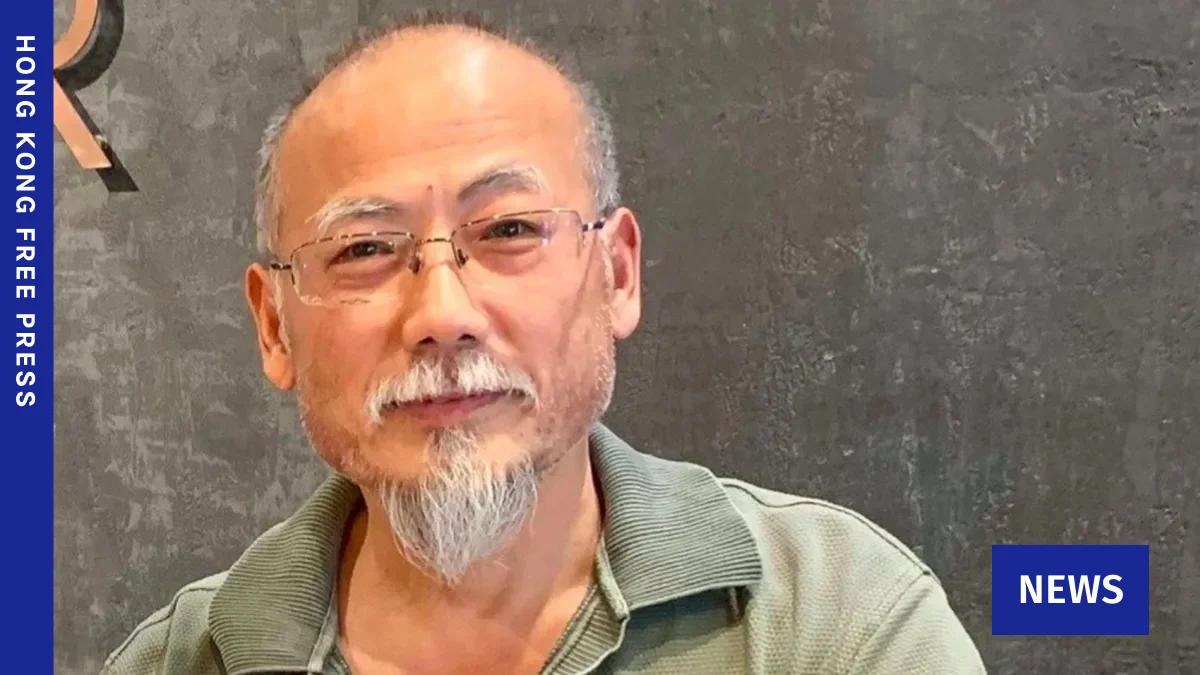
Chinese dissident Dong Guangping, a steadfast critic of Beijing who embarked on a perilous journey across the Yellow Sea in an inflatable rubber boat last month, has successfully arrived in Canada, marking the culmination of a decades-long struggle for freedom and a series of dramatic escape attempts. The 68-year-old former policeman, who has endured multiple prison stints for his advocacy of political reform and human rights in China, shared his relief and joy with The New York Times on Saturday following his arrival in Toronto. This arduous voyage, which saw him navigating treacherous waters and facing mechanical failures, underscores the extreme lengths to which Chinese dissidents are compelled to go in their quest for safety and liberty.
The Audacious Yellow Sea Crossing
Dong Guangping’s latest escape began from the Chinese coastal city of Weihai, where he launched his 3.3-meter (11-foot) inflatable rubber boat, powered by a 9.9-horsepower engine, into the vast expanse of the Yellow Sea. His initial ambition was to reach Japan, a journey of significant nautical challenge. However, the unforgiving conditions of the open sea quickly proved overwhelming. Dong recounted losing his bearings amidst the boundless horizon, where "the sea and sky are just a vast expanse of white, and you can’t tell which way is which." The rudimentary navigation tools at his disposal were no match for the elements; his cell phone, a vital link to the outside world, soon died, and the boat’s small engine began to falter.

Facing the grim prospect of being lost at sea, Dong made a critical decision to alter his course, aiming instead for the closer shores of South Korea. After an unspecified duration adrift, his harrowing journey came to an end when a South Korean fisherman spotted him and provided rescue. Upon reaching South Korean territory, Dong was briefly detained by authorities, a standard procedure for undocumented arrivals. However, in a move that drew international attention and likely involved careful diplomatic consideration, South Korean authorities ultimately allowed him to leave the country. The specifics of how he secured his release were not immediately clear, but such decisions often reflect a delicate balance between a nation’s immigration laws, humanitarian obligations, and the complexities of its relationship with China. South Korea, a key economic partner of China, often navigates a fine line when dealing with Chinese dissidents, aiming to avoid overt political confrontation while upholding international norms.
A New Chapter in Canada
Dong’s arrival in Toronto late Friday was met with profound relief. "I’m very happy," he told The New York Times, adding, "Sitting here now, it feels like I’ve come home." This sentiment encapsulates the deep longing for a place where he can finally live without the constant fear of persecution. His successful relocation to Canada was swiftly confirmed by Chinese-Canadian journalist and human rights activist Sheng Xue, who posted on X (formerly Twitter) that Dong was "walking around the neighborhood, so excited that he took a photo with the Canadian flag." The image, depicting a visibly relieved Dong with the national emblem, quickly circulated, symbolizing a victory for human rights and individual determination against state repression.
Canada has long been recognized as a significant destination for refugees and asylum seekers, including those fleeing political persecution. Its robust refugee protection system and commitment to human rights have made it a safe haven for individuals like Dong Guangping, offering them the chance to rebuild their lives in safety and freedom. The Canadian government’s decision to accept Dong aligns with its foreign policy stance, which often emphasizes democratic values and the protection of fundamental freedoms, even when it means navigating sensitive diplomatic waters with powerful nations like China.

A Decades-Long Battle Against Authoritarianism
Dong Guangping’s journey to Canada is not merely an escape; it is the latest chapter in a long and arduous battle against the Chinese Communist Party’s authoritarian rule. His activism began decades ago, rooted in the aftermath of the brutal 1989 Tiananmen Square crackdown. According to the US-based advocacy group Human Rights in China, Dong, then a policeman, was dismissed from his work after signing a petition a decade after the massacre, a brave act of defiance that set him on a collision course with the state.
His unwavering commitment to political reform and human rights made him a perennial "thorn in Beijing’s side." In 2001, he was imprisoned for approximately three years on charges of "inciting subversion of state power," a common accusation used by Chinese authorities to silence dissent. United Nations experts have highlighted this charge as emblematic of the severe restrictions on freedom of expression in China. His activism continued even after his release; in 2014, he was again detained for activities related to the Tiananmen Square anniversary, demonstrating his steadfast refusal to be intimidated into silence.
A History of Failed Escapes and Rendition

The recent successful escape to Canada was not Dong’s first attempt to flee China. His desperate search for freedom has involved a series of high-stakes, often perilous, and ultimately unsuccessful efforts, each one highlighting the immense risks faced by Chinese dissidents.
In 2015, Dong fled to Thailand with his family. There, he was granted UN-recognized refugee status, a critical international protection status that should have shielded him from forced return. However, in a controversial move that drew widespread condemnation from human rights organizations, Thai authorities handed him over to Chinese police. This rendition was a stark violation of the principle of non-refoulement, a cornerstone of international refugee law, which prohibits the return of refugees to a country where they face persecution. His family, however, eventually managed to resettle in Canada as refugees, offering a glimmer of hope that he might one day join them.
Undeterred by his previous capture, Dong continued his attempts to escape the suffocating grip of the Chinese state. In 2019, he undertook another daring effort, attempting to swim to Kinmen, a Taiwanese-controlled island located just off the coast of mainland China. This perilous swim, across a heavily monitored strait, ended in failure. A year later, in 2020, during a trip to Vietnam, he was again detained by local police, a testament to China’s pervasive influence and its efforts to track down and repatriate dissidents even when they are abroad. Each of these attempts underscores the immense personal sacrifice and the profound sense of urgency that drives individuals like Dong Guangping to seek freedom at any cost.
The Broader Landscape of Human Rights in China

Dong Guangping’s story is emblematic of the broader human rights situation in China, particularly under the leadership of President Xi Jinping. The Chinese Communist Party maintains a tight grip on all aspects of society, severely restricting fundamental freedoms such such as freedom of speech, assembly, association, and religion. Dissidents, human rights lawyers, journalists, academics, and ethnic and religious minorities face pervasive surveillance, harassment, detention, and imprisonment.
The charge of "inciting subversion of state power" or "picking quarrels and provoking trouble" is frequently used against those who challenge the party line. Independent media is non-existent, and the internet is heavily censored through the "Great Firewall." Reports from organizations like Amnesty International, Human Rights Watch, and the UN Human Rights Office consistently detail systemic abuses, including arbitrary detention, torture, enforced disappearances, and unfair trials. The government’s actions against Uyghurs in Xinjiang, the crackdown on pro-democracy activists in Hong Kong, and the suppression of religious groups further illustrate the escalating repression.
The international community has repeatedly expressed concern over China’s human rights record, yet concrete action often remains limited due to China’s economic and geopolitical power. The rendition of dissidents from third countries, as seen in Dong’s case from Thailand, highlights Beijing’s extraterritorial reach and its disregard for international law when pursuing individuals it deems a threat.
Implications and Future Outlook

Dong Guangping’s successful arrival in Canada carries several important implications. For Dong himself, it signifies the end of a long nightmare and the beginning of a new life free from persecution. He can now potentially reunite with his family who resettled in Canada earlier, a powerful personal victory after years of separation and hardship. From Canadian soil, he may continue his advocacy, lending his voice to the international chorus calling for human rights and democracy in China, though likely with a renewed sense of security.
For other Chinese dissidents, Dong’s journey serves as both an inspiration and a sobering reminder of the extreme lengths required to escape. His success, against formidable odds, could embolden others to seek similar avenues for freedom, while also highlighting the immense personal risks involved in challenging one of the world’s most powerful authoritarian states.
Diplomatically, Canada’s acceptance of Dong Guangping reinforces its image as a defender of human rights and a destination for those seeking asylum. While Beijing is likely to remain silent or perhaps issue a pro-forma condemnation of "illegal immigration" without directly addressing Dong, his case subtly adds to the ongoing tensions between China and Western democracies over human rights issues. For South Korea, its decision to allow Dong to leave, rather than repatriate him, demonstrates a careful navigation of its humanitarian obligations while seeking to avoid a full-blown diplomatic crisis with its powerful neighbor.
Ultimately, Dong Guangping’s perilous escape and his safe arrival in Canada stand as a testament to the indomitable human spirit in the face of tyranny. It is a story of resilience, courage, and the universal yearning for freedom that continues to drive individuals to risk everything for a life of dignity and self-determination, even if it means crossing vast, dangerous seas in a small rubber boat. His new life in Canada offers a beacon of hope for countless others who continue to struggle for basic human rights within China.

 Sagoh
Sagoh
 Asro
Asro