Nila Kartika Wati
Despite the transformative impact of robust online buying in recent years, the in-store shopping experience retains its paramount position within the retail sector, demonstrating a compelling capacity for coexistence and cooperation with its digital counterpart, according to a leading figure in property development. This strategic perspective, articulated by Victor Cha, Managing Director and Deputy Chairman of HKR International Ltd., underscores a fundamental shift in retail paradigms, where physical spaces are evolving beyond mere transactional points into comprehensive lifestyle and social destinations.
The Enduring Power of Physical Retail Amidst Digital Disruption
The narrative of retail in the mid-2010s was largely dominated by the rapid ascent of e-commerce, which profoundly reshaped consumer habits and challenged traditional brick-and-mortar models globally. In China, this digital revolution was particularly pronounced, driven by platforms like Alibaba and JD.com, which offered unparalleled convenience, vast product selections, and competitive pricing. Many analysts predicted a terminal decline for physical stores, envisioning a future where online channels would universally supersede their tangible predecessors.
However, as Cha asserted, "E-commerce indeed has made its strong impact towards physical retail, but brick-and-mortar stores are irreplaceable and continuing taking the lion’s share of retail sector." This statement, made in late 2017, reflected a growing industry consensus that while online sales were expanding at an impressive rate, they represented only a segment of the broader consumer market. Data from China’s Ministry of Commerce indicated that in 2016, online retail sales of physical goods reached 4.19 trillion yuan ($633.5 billion), marking a substantial 25.6 percent year-on-year increase. Yet, crucially, this still constituted only 12.6 percent of the total retail value of all consumer goods purchased, highlighting the overwhelming dominance of offline channels.
Further supporting this observation, a survey by financial research firm Gordon Haskett revealed that consumers maintained a strong preference for in-store purchases across numerous categories. While digital platforms thrived for products like music, books, movies, and small appliances, physical stores remained the preferred choice for "experience-based" goods and services. This included essential sectors such as groceries, household items, health and beauty products, pet supplies, and automotive products, where tactile interaction, immediate gratification, or personalized advice played a significant role in the purchasing decision. This distinction began to clarify the strategic imperative for physical retail: to leverage its inherent strengths in areas where online platforms struggled to replicate the full sensory and social experience.
HKRI Taikoo Hui: A Blueprint for Experiential Retail
In response to these evolving market dynamics, forward-thinking developers like HKR International recognized the need to reimagine the role of shopping malls. "Shopping malls are no longer a place purely for shopping, but a one-stop experience provider for shopping, lifestyle and social," Cha explained. This philosophy guided the development of HKRI Taikoo Hui, a colossal 322,000-square-meter commercial complex designed explicitly to captivate consumers with its bespoke design, premium quality, and curated experiences.
Opened officially in early November 2017, HKRI Taikoo Hui emerged as a landmark development on Shanghai’s bustling West Nanjing Road, a prestigious commercial artery renowned for its high-end retail and vibrant urban atmosphere. Representing an investment of up to 18 billion yuan, the sprawling complex was not merely a shopping mall but an integrated urban ecosystem. It featured a multi-story retail center, two luxury hotels (The Sukhothai Shanghai and The Middle House), a serviced apartment building, and two Grade-A office towers. This mixed-use approach was central to its design, aiming to create a self-contained destination that encouraged longer visits and repeat engagement by catering to diverse needs—work, leisure, hospitality, and residence—all within a single precinct. HKRI anticipated that this ambitious project would generate revenue equivalent to two-thirds of its 11 total projects of similar size in 2018, a testament to its projected impact and strategic significance.
Curated Curation and Differentiation in a Homogenous Market
A critical component of HKRI Taikoo Hui’s strategy was its meticulous approach to brand selection. Recognizing the prevalent "high homogeneity" of shopping mall brands in major Chinese cities, where many developments featured an identical roster of top luxury labels, HKRI Taikoo Hui deliberately eschewed the predictable. Instead of focusing solely on global titans like Louis Vuitton or Gucci, the mall pursued a more differentiated and innovative tenant mix.
According to Cha, among approximately 250 diversified brands housed within the mall, a significant proportion were unique offerings: eight brands made their China debut at HKRI Taikoo Hui, 22 were opening their first outlet in Shanghai, and 15 were special concept stores designed to offer novel retail experiences. This strategy aimed to provide consumers with compelling reasons to visit, offering exclusivity and discovery rather than merely another iteration of familiar brands.
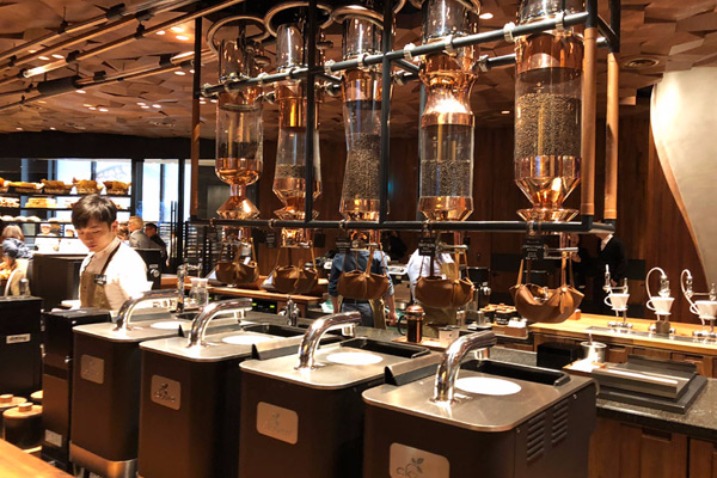
A prime example of this experiential focus was the inclusion of the Starbucks Reserve Roastery. Opened shortly after the mall’s debut, this monumental coffee emporium was China’s first and, at the time, only such Starbucks establishment outside of Seattle, the company’s global headquarters. The Roastery was not just a coffee shop; it was an immersive theater of coffee, featuring on-site roasting, elaborate brewing methods, interactive displays, and unique merchandise. It transformed the act of buying coffee into an engaging, educational, and social event, drawing significant foot traffic and media attention, and perfectly embodying the "experience provider" ethos.
Qi Xiaozhai, head of the Shanghai Society of Commercial Economy, underscored the importance of such differentiation, stating, "On average, more than 70 percent of the brands in Shanghai’s department stores and shopping malls are the same, so what brands the developer chooses will decide how successful it is." This insight highlights the competitive landscape in Shanghai, where developers must innovate beyond conventional approaches to secure market share and consumer loyalty.
Technological Integration and the Rise of "New Retail"
The conversation around the future of retail in 2017 was incomplete without acknowledging the burgeoning concept of "New Retail," primarily championed by Alibaba Group. This paradigm envisioned a seamless integration of online, offline, logistics, and data across a single value chain. It posited that rather than being separate entities, online and offline retail should converge, leveraging the strengths of each to create a superior, personalized consumer journey.
As internet retailers like Alibaba and JD.com began to move offline, opening physical stores and investing in traditional retail chains, they brought with them formidable advantages in capital, technology, and, crucially, big data resources. This convergence challenged traditional retail operators to adapt rapidly. Cha affirmed this, noting that traditional players "should adopt state-of-the-art technologies to become competitive."
For HKRI Taikoo Hui, this meant more than just having an attractive physical space. It involved the strategic application of big data analytics to understand the preferences and habits of its target customers. By analyzing consumer demographics, shopping patterns, and engagement metrics, the mall could continually refine its tenant mix, personalize marketing campaigns, and optimize the overall visitor experience. This data-driven approach, combined with interactive digital elements within the physical space, allowed HKRI Taikoo Hui to bridge the gap between the digital convenience of e-commerce and the immersive appeal of brick-and-mortar, positioning it at the forefront of the "New Retail" movement.
HKR International’s Enduring Commitment to Mainland China
HKR International’s investment in HKRI Taikoo Hui was part of a broader, long-term strategic commitment to the Chinese mainland market. Over the 15 years preceding the article’s publication, HKR International had invested approximately 20 billion yuan into the Chinese mainland, representing nearly half of the company’s total investment during that period. This substantial commitment reflected a deep-seated belief in the long-term growth potential of China’s economy and its consumer market.
Victor Cha articulated this enduring vision: "Our weighing in the Chinese mainland, especially in the Yangtze River Delta region, will continue to grow, as we are a Chinese company, and we will continuously look for real estate investment opportunities both in residential and commercial sectors, in line with the central government’s policies and strategies." This statement underscores HKR International’s strategy of aligning its business objectives with national development plans, particularly in dynamic economic hubs like the Yangtze River Delta.
Furthermore, Cha highlighted the robust demand within the residential sector, fueled by the rising affluence of the Chinese population. "The Chinese people in the past two decades have generated abundant wealth; in regards to their strong attachment in buying property, high-quality residential property will continue to be sought after by the expanding middle class, and that is what we were doing for the past four decades and will continue to do in the coming four decades." This dual focus on both high-quality commercial and residential developments positions HKR International to capitalize on China’s ongoing urbanization and the aspirations of its burgeoning middle class, ensuring sustained growth across multiple real estate segments.
Broader Implications and the Future Landscape of Retail
The success of projects like HKRI Taikoo Hui provides a compelling case study for the evolving role of physical retail in a digitally saturated world. The implications extend beyond individual developments to shape urban planning, consumer behavior, and the strategies of global brands.
- Urban Regeneration and Mixed-Use Developments: The integrated nature of HKRI Taikoo Hui exemplifies a trend towards mixed-use developments that create vibrant urban hubs. These projects contribute to urban regeneration by providing not just shopping opportunities but also living, working, and leisure spaces, fostering community and enhancing cityscapes.
- The Primacy of Experience: The focus on curated brands, unique concepts, and immersive environments like the Starbucks Roastery underscores that consumers are increasingly seeking experiences over mere transactions. Retailers and developers must prioritize storytelling, sensory engagement, and personalized service to draw and retain customers.
- Omnichannel Imperative: The discussion around "New Retail" solidifies the idea that the future of retail is not about online versus offline, but online and offline working in concert. Successful retailers will be those that seamlessly integrate their digital and physical channels, allowing customers to move effortlessly between browsing online, trying products in-store, and purchasing through their preferred method.
- Data-Driven Decision Making: The application of big data to understand customer preferences is no longer an option but a necessity. Retailers must leverage analytics to personalize offerings, optimize store layouts, manage inventory, and deliver targeted marketing, ensuring that every interaction is relevant and engaging.
- Sustainability and Community: As consumers become more socially conscious, retail spaces may also evolve to incorporate elements of sustainability, local community engagement, and ethical consumption, further enriching the "experience" beyond commercial transactions.
In conclusion, the narrative of brick-and-mortar retail is far from over. Instead, it is undergoing a profound metamorphosis, adapting to the digital age by embracing innovation, experience, and integration. Projects like HKRI Taikoo Hui stand as powerful exemplars of this transformation, demonstrating that with strategic vision, thoughtful curation, and a commitment to understanding the modern consumer, physical retail not only endures but thrives, carving out an indispensable role in the vibrant tapestry of global commerce. The symbiotic relationship between online convenience and offline immersion promises a dynamic and resilient future for the retail sector, where the physical and digital realms converge to create unparalleled consumer journeys.

 Evan Lee Salim
 Suro Senen