Nila Kartika Wati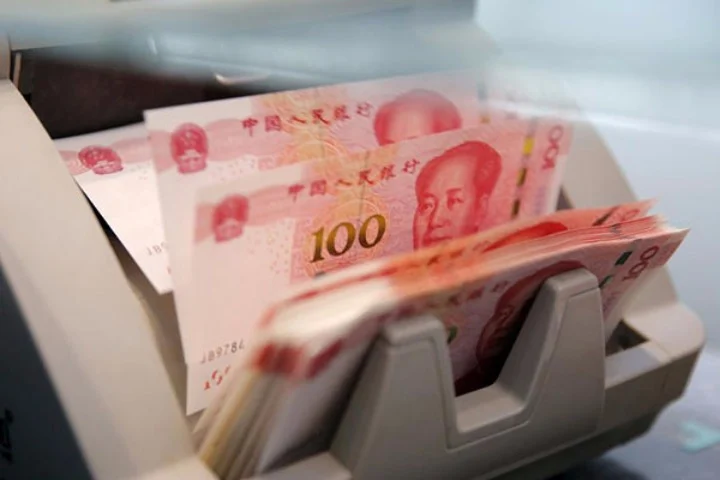
China’s financial landscape in November witnessed a significant acceleration in money supply growth and yuan-denominated lending, signalling a concerted effort to bolster economic expansion. This surge, however, was accompanied by a clear reiteration from the nation’s monetary authority that the prevention of financial risks remains a paramount policy priority. The delicate balance between stimulating growth and safeguarding systemic stability continues to define Beijing’s economic strategy. The People’s Bank of China (PBOC), the central bank, released data on Monday indicating that M2, a broad measure of money supply, expanded by 9.1 percent year-on-year last month. This figure represents an uptick from the 8.8 percent recorded in October, although it remained 2.3 percentage points lower than the growth rate observed a year earlier. Concurrently, new yuan-denominated loans issued by banks soared to 1.12 trillion yuan ($169.69 billion) in November, nearly doubling October’s total of 663.2 billion yuan and significantly surpassing market expectations of approximately 800 billion yuan. This substantial increase in lending activity underscores the government’s push to inject liquidity into the economy, even as it navigates the complex terrain of financial deleveraging.
China’s Balancing Act: Growth Imperatives Amidst Deleveraging Efforts
The persistent emphasis on both economic growth and financial risk prevention reflects a crucial phase in China’s economic development. For years, the nation has grappled with the twin challenges of maintaining robust GDP expansion while reining in an escalating debt burden across various sectors, particularly within corporate and local government financing. Following the global financial crisis of 2008, China unleashed massive stimulus packages, which, while successful in averting a severe downturn, also contributed to a significant build-up of leverage. This historical context forms the backdrop for the current regulatory posture. Policymakers are acutely aware of the potential for uncontrolled credit expansion to generate asset bubbles, particularly in the real estate sector, and to exacerbate the risks associated with non-performing loans and shadow banking activities. The recent uptick in M2 and new loans suggests a tactical easing of credit conditions, possibly in response to specific economic headwinds or to ensure that targeted growth objectives are met as the year draws to a close. However, this easing is evidently calibrated with a strong underlying commitment to structural reforms aimed at fostering sustainable, high-quality growth rather than relying solely on debt-fueled expansion.
Detailed Analysis of November’s Financial Data
The granular data for November offers a clearer picture of the financial dynamics at play. The M2 money supply’s 9.1 percent year-on-year growth, while an acceleration from the previous month, signals a controlled expansion rather than an unbridled surge. The central bank’s management of M2 is a critical tool for influencing inflation, interest rates, and overall economic activity. A moderate increase in M2 can support economic growth without immediately triggering inflationary pressures, especially if output gaps exist or if the velocity of money remains stable.
The surge in new yuan loans to 1.12 trillion yuan in November represents a substantial injection of capital into the economy. This figure is particularly noteworthy when compared to October’s 663.2 billion yuan, almost a 70 percent increase, and significantly above the market’s consensus forecast of around 800 billion yuan. While it did not reach September’s peak of 1.27 trillion yuan, November’s lending volume suggests a strong demand for credit, likely from both corporate and household sectors. The cumulative effect of this lending activity is evident in the total outstanding yuan loans, which had increased by 13.3 percent from a year earlier by the end of November. Furthermore, the new loans issued in the first 11 months of the year reached an impressive 12.94 trillion yuan, already surpassing the full-year record of 2016 by 290 billion yuan. This indicates that despite the broader deleveraging narrative, the actual volume of credit being extended remains substantial, underscoring the ongoing need for financing to sustain China’s vast economic engine.
Beyond traditional bank lending, China’s total social financing (TSF) provides a more comprehensive measure of credit and liquidity in the economy, encompassing off-balance sheet financing channels that are often associated with shadow banking. In November, TSF increased to 1.6 trillion yuan, up from 1.04 trillion yuan a month earlier. This rise in TSF, mirroring the increase in yuan loans, suggests that both traditional and non-traditional financing avenues contributed to the overall liquidity expansion. The PBOC monitors TSF closely as it offers insights into the broader financial health and potential vulnerabilities within the system, especially from less regulated segments. The concurrent increase in both M2 and TSF highlights the complexity of managing China’s financial system, where regulatory tightening in one area might see financing shift to another, necessitating a holistic approach to risk prevention.
Official Directives and Regulatory Responses
PBOC Governor Zhou Xiaochuan’s statements at an internal meeting on Monday served as a powerful reinforcement of the central bank’s commitment to financial stability. His directive that "financial regulators need to prevent financial risks more proactively and effectively, to balance with economic growth" encapsulates the dual mandate currently guiding China’s economic policy. The phrase "proactively and effectively" suggests a move beyond reactive measures, emphasizing foresight and robust implementation in identifying and mitigating potential threats. This approach is critical in a financial system as complex and rapidly evolving as China’s, where new forms of financing and digital innovations can quickly introduce unforeseen risks.
Zhou further elaborated, stating that "The next step is to identify the key targets of financial reform, opening-up and innovative development." This indicates a strategic shift towards more targeted and nuanced reforms rather than broad-brush tightening. Identifying "key targets" implies a precise focus on specific sectors, financial products, or institutions deemed most vulnerable or systemically important. This could involve reforming state-owned enterprise (SOE) debt, restructuring local government financing vehicles (LGFVs), or further regulating online lending platforms. "Opening-up" suggests a continued push for financial liberalization, cautiously allowing greater foreign participation and competition, which can enhance efficiency and introduce international best practices, while "innovative development" acknowledges the need to foster financial technology and new services within a controlled regulatory framework.
Indeed, China’s top financial regulators have been actively engaged in cooling money supply growth and issuing new regulations aimed at clamping down on high-risk lending, particularly within the "shadow banking" sector. Shadow banking refers to financial activities conducted outside the traditional banking system, often involving less regulation and higher risk. These activities, which include wealth management products (WMPs), trust loans, and entrusted loans, have grown significantly in recent years, raising concerns about transparency, interconnectedness, and potential systemic contagion. The PBOC, along with other regulatory bodies like the China Banking Regulatory Commission (CBRC) and the China Securities Regulatory Commission (CSRC), has introduced a series of measures to curb these activities, including tighter capital requirements, restrictions on interbank lending, and increased scrutiny of off-balance sheet assets. These actions are designed to channel credit back into the formal banking system and ensure that financial risks are transparently managed and adequately provisioned.
Expert Outlook and Future Implications
Analysts concur that the emphasis on risk prevention will remain a defining feature of China’s economic policy. Louis Kuijs, head of Asia Economics at Oxford Economics, articulated this sentiment clearly: "In 2018, we expect policymakers to remain focused on reducing financial risks and deleveraging parts of the financial system deemed particularly risky, foreseeing regulatory tightening with respect to interbank market activity and shadow banking." This projection highlights the continued commitment to addressing structural vulnerabilities within the financial system. Interbank market activity, crucial for liquidity management among financial institutions, has been a particular focus of regulatory scrutiny due to its potential for rapid contagion in times of stress. Tightening in this area aims to reduce excessive leverage and interconnectedness.
Kuijs also anticipates a gradual slowdown of credit growth in the coming year. He projects credit growth to ease further to around 13 percent in 2018, after likely slightly exceeding the 13.8 percent target for 2017. This managed deceleration of credit expansion is a strategic move to prevent the accumulation of further debt while still providing sufficient liquidity to support a healthy, albeit slightly slower, pace of economic growth. The challenge for policymakers lies in engineering this slowdown without triggering a sharp economic contraction or a liquidity crunch that could destabilize markets. The inferred market sentiment suggests that financial institutions are adapting to this new regulatory environment, with a shift towards more conservative lending practices and greater adherence to compliance frameworks. Corporations, particularly those with higher leverage, are expected to explore alternative financing strategies or prioritize deleveraging efforts themselves.
Chronology of Deleveraging Efforts and Policy Milestones
China’s deleveraging campaign did not emerge suddenly but has been a gradual, evolving process marked by key policy shifts. The intensified focus on financial risks truly gained momentum in late 2016, following several years of rapid credit expansion post-2008.
- Late 2016: The Central Economic Work Conference, a key annual meeting, signaled a shift in priority from growth at all costs to containing financial risks and structural deleveraging. This marked the official beginning of the intensified campaign.
- Early 2017: Regulatory bodies began issuing a flurry of new rules targeting specific areas. The China Banking Regulatory Commission (CBRC) intensified scrutiny of interbank lending, off-balance sheet wealth management products, and illicit fund flows. The goal was to curb regulatory arbitrage and reduce hidden risks within the banking system.
- Mid-2017: A significant institutional development occurred with the establishment of the Financial Stability and Development Committee (FSDC) under the State Council. This body was created to enhance coordination among the various financial regulators (PBOC, CBRC, CSRC, CIRC) and provide a unified approach to addressing systemic risks, overcoming previous challenges posed by fragmented oversight.
- Late 2017: Further regulations were rolled out, specifically targeting asset management products (AMPs), which are often associated with shadow banking. Draft rules aimed at unifying regulations across different types of AMPs, reducing leverage, and addressing maturity mismatches were introduced, signaling a comprehensive crackdown on these complex financial instruments. The goal was to ensure that all financial products, regardless of their issuer, faced similar regulatory scrutiny.
This chronology illustrates a consistent and escalating commitment from Beijing to reform its financial sector, moving from general calls for deleveraging to specific, coordinated regulatory actions across the entire financial ecosystem.
Broader Economic Implications and Global Context
The ramifications of China’s sustained deleveraging and risk prevention efforts extend far beyond its financial institutions. Various sectors of the economy are directly impacted. The property market, historically reliant on easy credit, is facing tighter financing conditions, which could moderate price growth and cool speculative activity. Infrastructure projects, often funded by local government debt, are also under increased scrutiny, potentially leading to a more rational allocation of capital and a reduction in white elephant projects.
Corporate debt levels, particularly among state-owned enterprises (SOEs), remain a significant concern. The deleveraging drive is compelling these entities to improve their balance sheets, divest non-core assets, and enhance operational efficiency. This structural adjustment is vital for improving the overall quality of China’s economic growth, shifting away from quantity-driven expansion to one focused on innovation, sustainability, and higher value-added industries. For households, while the direct impact of corporate deleveraging might be less immediate, a more stable financial system ultimately benefits consumers by reducing the risk of systemic crises and protecting their savings.
In a global context, China’s financial stability is paramount. As the world’s second-largest economy, any significant financial upheaval in China would send shockwaves across international markets. The deliberate and measured approach to deleveraging, therefore, offers a degree of reassurance to global investors, indicating that Beijing is committed to preventing a hard landing. While tighter credit conditions in China might temper demand for certain commodities or goods in the short term, the long-term benefits of a more resilient and transparent Chinese financial system contribute to greater global economic stability. This transition towards higher-quality growth, even if it means slightly slower headline GDP figures, is ultimately seen as a positive development for both China and the world economy.
In conclusion, November’s financial data from China paints a nuanced picture of an economy carefully balancing the imperatives of growth support with an unwavering commitment to financial risk prevention. The acceleration in money supply and lending underscores efforts to maintain economic momentum, while the consistent messaging from top financial regulators, particularly PBOC Governor Zhou Xiaochuan, reinforces the strategic priority of proactive and effective risk mitigation. The ongoing deleveraging campaign, supported by a clear chronology of regulatory actions and the establishment of dedicated oversight bodies, signals a profound structural transformation within China’s financial system. This intricate dance between stimulation and stabilization will continue to define China’s economic narrative, with significant implications for its domestic development and its role in the global economy.


 Evan Lee Salim
 Suro Senen