Muslim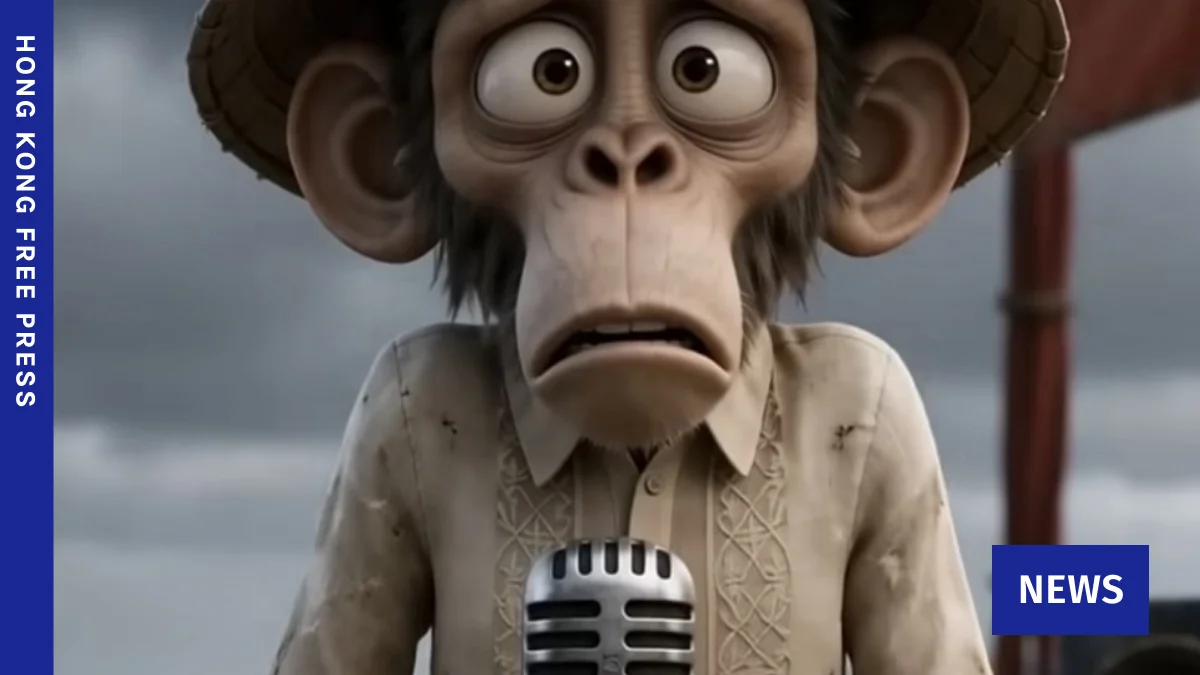
Manila officially lodged a diplomatic protest with Beijing on Friday, vehemently condemning a "racist" video disseminated by Chinese state media that offensively portrayed the Philippines as a cartoon monkey. This provocative animated content, published by China Daily, marks a significant escalation in the already fraught relationship between the two Asian neighbours, primarily fueled by their entrenched and overlapping claims in the strategically vital South China Sea.
The diplomatic démarche was initiated following a robust meeting on Thursday, where Foreign Undersecretary Leo Herrera-Lim conveyed the Philippines’ "firm objection to the offensive content" directly to Chinese Ambassador to Manila Jing Quan. A statement from the Philippine foreign department elaborated on the meeting, stating that Herrera-Lim "demanded that the materials be taken down, stressing that such content is inconsistent with the mutual respect expected between states and does no favours to the sound and stable management of bilateral relations." This initial strong verbal condemnation was swiftly followed by a formal diplomatic protest, which explicitly "condemned the videos and cartoons, noting that China Daily went beyond legitimate political debate by resorting to demeaning, dehumanizing and racist depictions of Filipinos." Further amplifying Manila’s unified stance, the Philippine embassy in Beijing also dispatched a formal letter to China Daily’s editor-in-chief, reiterating the demand for the "immediate takedown of the offensive material."
The Offensive Content in Detail: A Dehumanizing Portrayal

The minute-long animated video, widely circulated on the China Daily Facebook page, features a timid cartoon monkey, conspicuously clad in a traditional Filipino Barong Tagalog shirt. The narrative unfolds with the monkey being unceremoniously pushed onto a karaoke stage aboard a boat. Initially, the monkey attempts to sing lyrics that appear to align with China’s assertions regarding recent maritime delimitation talks between Manila and Tokyo. However, a disembodied voice abruptly interrupts, shouting "wrong song," and then hands the monkey a sheet explicitly labelled "South China Sea Arbitration Award." The video culminates in a disturbing sequence where arms, adorned with US and Japanese flags, place the monkey into a catapult, launching it directly into a torrent from a water cannon. This imagery is particularly resonant and inflammatory, as Chinese coast guard vessels have repeatedly employed water cannons against Filipino sailors and fishermen in contested waters, leading to significant damage and injuries.
Commodore Jay Tarriela, a prominent spokesperson for the Philippine Coast Guard, publicly decried the video on social media, labelling it "outright racism and an open mockery of international law." His post underscored the dual insult of the cartoon’s dehumanizing portrayal and its blatant dismissal of the Arbitral Award, which it mockingly suggests is merely "a script written by the US and Japan." Philippine Defence Secretary Gilberto Teodoro issued an equally scathing statement late Thursday, asserting that "the video’s glorification of violence against the Filipino people and soldiers exposes the moral and intellectual bankruptcy of China’s propaganda machine." Teodoro further emphasized, "This latest act of dehumanisation further reveals them as neither a secure and confident actor nor a trustworthy neighbour."
A Deepening Rift: The South China Sea Dispute
The recent diplomatic row is deeply embedded in the long-running and increasingly contentious dispute over sovereignty in the South China Sea. This vast maritime region, rich in natural resources and crisscrossed by vital international shipping lanes, is claimed in whole or in part by China, the Philippines, Vietnam, Malaysia, Brunei, and Taiwan. China’s expansive "nine-dash line" claim, which encompasses over 80% of the South China Sea, including areas well within the exclusive economic zones (EEZs) of other littoral states, is the primary source of tension. The Philippines refers to the parts of the South China Sea within its EEZ as the West Philippine Sea. The strategic importance of the South China Sea cannot be overstated; it is estimated to hold vast reserves of oil and natural gas, boasts some of the world’s most lucrative fishing grounds, and serves as a critical conduit for an estimated one-third of global maritime trade, valued at trillions of dollars annually.

The 2016 Arbitral Ruling and its Aftermath
A pivotal moment in the dispute occurred in July 2016 when the Permanent Court of Arbitration (PCA) in The Hague delivered a landmark ruling in a case brought by the Philippines. The court unequivocally sided with Manila, concluding that China’s nine-dash line had no legal basis under the 1982 United Nations Convention on the Law of the Sea (UNCLOS). The ruling also found that China had violated the Philippines’ sovereign rights in its EEZ by interfering with fishing and petroleum exploration, building artificial islands, and failing to prevent Chinese fishermen from operating in the area. Crucially, the tribunal determined that none of the features in the Spratly Islands, including those occupied by China, are capable of generating an EEZ, thereby undermining the foundation of China’s expansive claims.
Despite the international legal community’s endorsement of the ruling, Beijing has steadfastly rejected it as "null and void" and without any binding force, refusing to participate in the arbitration and dismissing its outcome. The 10th anniversary of this landmark ruling was observed just days prior to the video’s condemnation, with Manila issuing a powerful joint statement on Sunday. This statement, co-signed by 13 other nations including key allies like Japan and the United States, unequivocally reaffirmed the ruling as "legally binding" and a cornerstone of international law. Beijing, in response, dismissed the weekend statement as a "distortion of the facts" aimed at "vilifying China," further highlighting the chasm between their respective positions on international law and regional sovereignty.
Recent Maritime Incidents and Philippine Response

The "racist" video emerges amidst a backdrop of intensifying maritime confrontations. Over the past year, incidents involving Chinese coast guard vessels and Filipino boats have become more frequent and aggressive. These include instances where Chinese ships have used water cannons to disrupt Philippine resupply missions to the BRP Sierra Madre outpost at Second Thomas Shoal (Ayungin Shoal), ramming incidents, and the persistent harassment of Filipino fishermen. These actions have drawn international condemnation and significantly hardened Manila’s stance under President Ferdinand Marcos Jr.’s administration, which has adopted a more assertive approach compared to its predecessor. The Philippines has been actively strengthening its defense alliances, particularly with the United States and Japan, conducting joint military exercises and enhancing maritime security cooperation to counter China’s growing assertiveness.
Broader Diplomatic Spats and Tit-for-Tat
The current video incident is not an isolated event but part of a pattern of diplomatic friction and tit-for-tat exchanges. Just last month, Beijing sanctioned Philippine Defence Secretary Teodoro, barring him from visiting mainland China, Hong Kong, or Macau, after he publicly criticized China’s activities in the South China Sea. This move was widely seen as an attempt to silence critical voices within the Philippine government. Conversely, in January, China itself filed a diplomatic protest against Manila after Commodore Jay Tarriela, the same Philippine coast guard spokesman who condemned the monkey video, posted a photo of himself delivering a speech with a compilation of comical images of Chinese President Xi Jinping in the background. These incidents underscore a broader trend of increasingly personal and retaliatory diplomatic exchanges between the two nations, moving beyond conventional state-to-state disagreements.
China’s Official Stance and Interpretation

In response to inquiries regarding the controversial video, a spokesperson for China’s foreign ministry in Beijing stated that they would not comment on the content, claiming it "does not represent the official position." This response is characteristic of China’s approach to potentially inflammatory content published by state-affiliated media outlets. While China Daily is a state-owned English-language newspaper often used to convey official narratives and influence international opinion, the foreign ministry’s disclaimer allows Beijing a degree of plausible deniability. It enables them to distance the government from direct responsibility for content that might be deemed overly aggressive or offensive internationally, while still allowing the message to be circulated to a target audience, particularly domestic citizens and nationalist elements. However, critics argue that in an authoritarian state where media is tightly controlled, such content would not be published without at least tacit approval, making the "not official position" claim difficult to accept at face value.
Analysis: The Impact of Dehumanizing Propaganda
The deployment of dehumanizing propaganda, such as the cartoon monkey video, carries significant implications for bilateral relations and regional stability. Firstly, it fundamentally undermines any efforts towards constructive dialogue and diplomatic resolution. By portraying Filipinos as subservient, manipulated, and even subhuman, the video poisons the well of mutual respect necessary for any meaningful engagement. It fosters resentment and distrust, making it exceedingly difficult for leaders to bridge divides.
Secondly, the "glorification of violence" highlighted by Secretary Teodoro is particularly alarming. The depiction of the Philippines being catapulted into a water cannon, a tool of coercion frequently used by China, normalizes and even celebrates aggressive actions. This not only incites nationalist sentiment within China but also sends a chilling message to the Philippines and its allies about China’s willingness to use force or intimidation.

Thirdly, the video exemplifies a trend often described as "Wolf Warrior" diplomacy, where Chinese diplomats and state media adopt an aggressive, confrontational, and often nationalistic tone to defend China’s interests. While intended to project strength and resolve, such tactics frequently backfire, alienating international partners and reinforcing negative perceptions of China’s global role.
Finally, the incident highlights a deeper struggle over narratives and international norms. By dismissing the Arbitral Award as a "script written by the US and Japan," China attempts to delegitimize international law and portray the Philippines as a mere proxy in a broader geopolitical struggle. This challenges the rules-based international order and sets a dangerous precedent for how territorial disputes are managed globally. Such propaganda exacerbates regional tensions, making de-escalation more challenging and increasing the risk of miscalculation or accidental conflict in one of the world’s most critical geopolitical hotspots.
In conclusion, Manila’s diplomatic protest over the "racist" cartoon monkey video is far more than a condemnation of offensive imagery; it is a clear rejection of dehumanizing propaganda that seeks to undermine Philippine sovereignty, dismiss international law, and legitimize aggressive actions in the South China Sea. As tensions continue to simmer and maritime incidents persist, the deployment of such inflammatory content by state-affiliated media channels further complicates an already delicate geopolitical landscape, casting a long shadow over the prospects for peace and stable relations in the Indo-Pacific.

 Sagoh
Sagoh
 Asro
Asro