Asep Darmawan
The Asian Development Bank (ADB) has unveiled an ambitious plan to invest a total of $6.17 billion in 31 projects across China from 2018 to 2020, signaling a significant strategic shift towards supporting the nation’s high-quality, sustainable growth agenda. Approximately $2 billion of this substantial commitment is earmarked for 2018 alone, reinforcing the Manila-based institution’s evolving partnership with China. This new lending program underscores a decisive move away from traditional large-scale infrastructure financing towards initiatives focused on environmental protection, social sector development, and fostering innovation.
ADB’s Strategic Pivot Towards Quality Growth
For decades, the ADB has been a cornerstone in financing China’s rapid economic expansion, particularly in critical infrastructure. However, as China transitions from a growth model driven by sheer volume to one prioritizing quality, sustainability, and inclusiveness, the ADB’s investment strategy is adapting in lockstep. Indu Bhushan, Director General of ADB’s East Asia Department, affirmed this shift, stating, "ADB aims to increase its sovereign lending to China in line with the expansion of the bank’s total lending capacity. The 2017 sovereign lending will reach $1.98 billion." This indicates a consistent and growing financial commitment, but with a redefined thematic focus.
The core of this strategic pivot lies in the explicit mandate that all new projects in China will incorporate innovation elements. Beyond mere financial injection, the ADB is placing immense emphasis on "knowledge solutions." These solutions, encompassing technical assistance, policy advice, and capacity building, are considered powerful catalysts for propelling development. The creation, management, and sharing of knowledge form an important pillar of ADB’s operations in China, reflecting a partnership that extends beyond monetary transactions to intellectual collaboration. This evolution positions the ADB as a crucial partner in China’s pursuit of advanced, knowledge-based development models.
A History of Partnership: China and the ADB
China’s relationship with the Asian Development Bank began in 1986 when it officially joined the multilateral development institution. Since then, the partnership has been instrumental in supporting China’s modernization efforts. From its entry through September 30, 2017, the ADB had approved a total of $37.7 billion in loans to China. This comprised $33.9 billion for sovereign operations, directly involving government entities, and $3.9 billion for private sector operations, aimed at fostering market-driven development.
Historically, the distribution of this assistance mirrored China’s developmental priorities. Half of the total assistance, approximately 50%, was channeled into the transport sector, reflecting the nation’s urgent need for modern roads, railways, ports, and airports to facilitate economic activity and connect vast regions. The energy sector received 16% of the funding, crucial for powering industrial growth and urban expansion. Water and other urban infrastructure and services accounted for 15%, addressing the challenges of rapid urbanization. Agriculture, natural resources, and rural development received 13%, underpinning food security and rural livelihoods.
This historical data provides a stark contrast to the announced shift, underscoring how China’s development needs have evolved. From building foundational infrastructure, the focus has matured to optimizing the quality and environmental impact of existing and future development, a testament to China’s remarkable economic progress and its increasing awareness of sustainable growth imperatives.
The $6.17 Billion Investment Plan (2018-2020): Details and Distribution
The newly proposed sovereign lending program outlines a robust pipeline of 31 projects, representing a total value of $6.17 billion over a three-year period. This includes a significant allocation of approximately $2 billion for 2018, which aligns closely with the $1.98 billion sovereign lending reached in 2017. The consistency in annual funding, coupled with the thematic reorientation, highlights a deliberate and sustained effort by the ADB to align with China’s 13th Five-Year Plan (2016-2020) and its broader strategic objectives.
The current portfolio of the ADB in China is extensive, with 90 ongoing projects amounting to $12.3 billion. In the two years preceding this announcement, the bank approved new projects worth more than $1.7 billion annually. This sustained level of engagement demonstrates the depth and breadth of the partnership, which is now poised to enter a new phase defined by strategic refinement rather than mere expansion. The focus on innovation in all new projects means that ADB-supported initiatives will not only aim to solve existing problems but also introduce cutting-edge technologies and approaches, particularly in environmental management and social services.
Emphasis on Private Sector and Non-Sovereign Operations
A crucial element of the ADB’s future engagement in China, explicitly requested by China’s Ministry of Finance, is the expansion of private sector and non-sovereign operations. This signifies a recognition by both parties of the private sector’s increasing role in driving sustainable development and innovation. The ADB aims to significantly boost its engagement with private enterprises, financial institutions, and public-private partnerships (PPPs).
The focus for these expanded private sector operations will be on "inclusive environmental projects" across key sectors:
- Infrastructure: Moving beyond traditional state-led infrastructure to incorporate private capital and expertise in environmentally sustainable projects, such as green transportation, renewable energy, and smart urban infrastructure.
- Agribusiness: Investing in private sector initiatives that promote sustainable agriculture, food security, and rural development, often with a focus on climate resilience and eco-friendly practices.
- Financial Institutions: Working with Chinese financial institutions to develop green finance products, promote environmental risk management, and facilitate lending to environmentally sustainable projects.
Indu Bhushan also highlighted the exploration of "public-private partnership opportunities with new concession scope, such as water, energy and food security nexus, cross-jurisdiction along the Belt and Road Initiative." This indicates a readiness to engage with complex, multi-sectoral projects that require innovative financing and operational models, often spanning national borders, aligning with China’s broader regional connectivity goals. The inclusion of the "Belt and Road Initiative" in this context signifies the ADB’s willingness to integrate its private sector expertise into major Chinese-led international development frameworks.
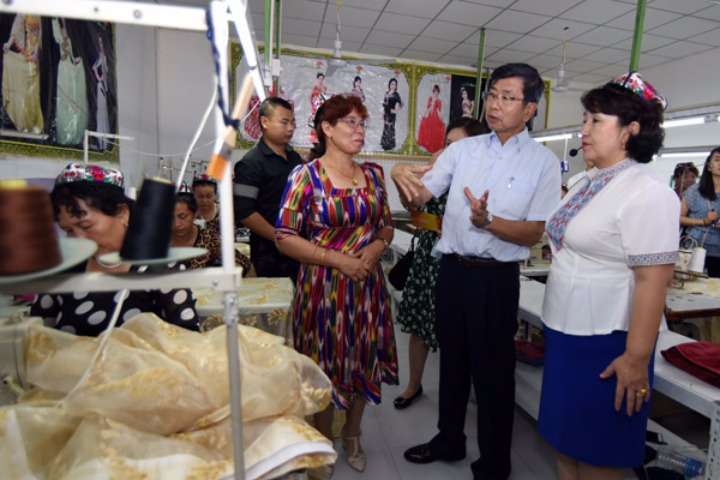
In 2017 alone, the bank’s private sector operations department financed seven projects totaling $790 million. This figure excludes loans offered by commercial banks that were facilitated by ADB credit guarantees, underscoring the catalytic role the ADB plays in mobilizing broader financial resources for development. This growth in private sector engagement is a clear indicator of the evolving nature of China’s economy and its financial markets, where private capital is increasingly being sought for strategic development objectives.
Key Investment Pillars of the Country Partnership Strategy (2016-2020)
The ADB’s Country Partnership Strategy for China, spanning 2016-2020, serves as the overarching framework guiding these investments. It identifies several major areas that will receive targeted support, reflecting both China’s domestic priorities and its regional and global commitments:
-
Managing Climate Change and the Environment: This is arguably the most prominent theme, directly addressing China’s pressing environmental challenges. It encompasses two flagship programs:
- Beijing-Tianjin-Hebei Air Pollution Control: A multi-year initiative aimed at improving air quality in one of China’s most industrialized and populated regions. ADB support includes financing for cleaner energy, industrial upgrading, and environmental monitoring.
- Yangtze River Economic Belt Development: Focused on ecological protection and green development along China’s longest river, promoting sustainable resource management, pollution control, and integrated river basin planning.
- Beyond these flagship programs, support extends to sustainable urbanization initiatives, green manufacturing, and other environment-related programs designed to mitigate climate change impacts and enhance ecological resilience.
-
Promoting Regional Cooperation and Integration: This theme acknowledges China’s growing role in regional development and its commitment to fostering connectivity and shared prosperity. ADB support will facilitate Chinese provinces’ participation in its established sub-regional programs, such as:
- Central Asia Regional Economic Cooperation (CAREC): Enhancing connectivity, trade, and energy links between China and Central Asian nations.
- Greater Mekong Subregion (GMS): Promoting economic cooperation and sustainable development among countries sharing the Mekong River.
- Crucially, this theme also explicitly covers collaboration with the Belt and Road Initiative (BRI) and other regional initiatives, signaling ADB’s willingness to synergize its efforts with China’s flagship global infrastructure and connectivity strategy.
-
Supporting Inclusive Growth: As China addresses widening income disparities and social challenges arising from rapid development, inclusive growth remains a critical priority. ADB interventions under this theme include:
- Rural Transformation: Supporting modern agriculture, rural infrastructure development, and poverty reduction programs to uplift rural communities.
- Revitalization of Northeast China: Addressing economic stagnation and industrial restructuring in this traditional heavy industry base, focusing on new growth drivers and environmental remediation.
- Demographic Transition: Initiatives related to managing an aging population, improving education quality, and enhancing social safety nets.
- Other social inclusion programs aimed at reducing inequalities and ensuring that the benefits of growth are widely shared across society.
-
Advancing Institutional and Governance Reform: Strong institutions and good governance are foundational for sustainable development. This theme covers crucial areas such as:
- Public Sector Management: Supporting reforms in public finance, decentralization (central-local fiscal relations), and the implementation of public-private partnerships (PPPs) with robust regulatory frameworks.
- Eco-compensation Mechanisms: Developing and strengthening policies that reward environmental protection and sustainable resource management.
- Financial Sector Reform: Enhancing financial market stability, developing green finance, and improving access to finance for small and medium-sized enterprises (SMEs).
- Other institution-building activities, including legal and judicial reform, to create a more transparent and efficient governance environment.
Collaborating for Regional Development: BRI, AIIB, and NDB
The ADB’s updated strategy explicitly states its intention to collaborate closely with the China-led Belt and Road Initiative (BRI) and other significant development partners. This includes the Asian Infrastructure Investment Bank (AIIB) and the New Development Bank (NDB). This collaborative approach is designed to promote regional connectivity, boost trade and investment, and provide regional public goods more effectively.
The emergence of the AIIB and NDB, both with significant Chinese backing, has reshaped the landscape of development finance. Rather than viewing these new institutions as competitors, the ADB emphasizes partnership. Such collaboration can lead to co-financing arrangements, shared knowledge, and harmonized standards, maximizing the impact of development investments across Asia and beyond. This cooperative framework is particularly relevant for large-scale, cross-border projects under the BRI, where multiple institutions can pool resources and expertise to address complex development challenges.
Implications for China’s Sustainable Development Agenda
The ADB’s evolving partnership with China has profound implications for the nation’s sustainable development agenda. By aligning its investments with China’s pivot towards "quality growth," the ADB is supporting a model that seeks to balance economic prosperity with environmental protection and social equity. This shift is crucial for China as it navigates complex challenges such as climate change, urbanization pressures, and regional disparities.
The emphasis on innovation and knowledge solutions will help China leapfrog traditional development hurdles, adopting cutting-edge technologies and best practices in areas like renewable energy, smart cities, and sustainable agriculture. The expanded focus on private sector engagement will also mobilize substantial additional capital, expertise, and efficiency, complementing public investments and fostering a more dynamic and diversified economy.
Furthermore, the ADB’s role in promoting regional cooperation and integration, particularly its collaboration with the BRI, reinforces China’s ambition to be a responsible and influential global development actor. By ensuring that development projects meet high environmental and social standards, and by sharing knowledge across borders, the ADB helps to embed principles of sustainability into regional connectivity initiatives.
In conclusion, the Asian Development Bank’s $6.17 billion investment plan for China represents more than just financial aid; it symbolizes a deepening and maturing partnership. As China continues its journey towards becoming a high-income, sustainable, and inclusive society, the ADB stands as a key ally, providing not only capital but also critical knowledge, technical expertise, and a platform for regional cooperation, ensuring that China’s growth trajectory benefits both its own citizens and the broader Asian region.

 Evan Lee Salim
 Suro Senen