Lina Irawan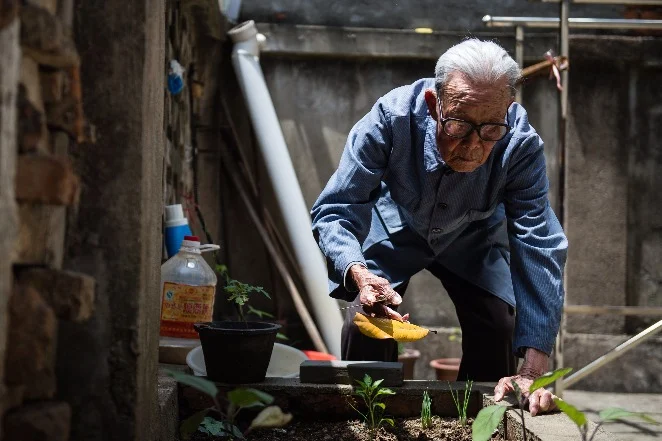
Nanjing, China – Guan Guangjing, who held the distinction of being the oldest known survivor of the Nanjing Massacre, passed away on Sunday at the age of 100, just three days before China’s solemn National Memorial Day for Nanjing Massacre Victims. His death leaves fewer than 100 registered survivors remaining, intensifying calls for accelerated efforts to document their invaluable testimonies before they are lost to history. The Memorial Hall of the Victims in the Nanjing Massacre by Japanese Invaders announced Guan’s passing on Monday, highlighting the profound significance of his century-long life as a witness to one of the darkest chapters of World War II.
Guan Guangjing had been bedridden for six months due to heart disease and ultimately succumbed to multiple organ failure at his home, according to his 76-year-old son-in-law, who wished to be identified only by his surname, Liu. His passing on December 10, 2017, occurred just ahead of the 80th anniversary of the Nanjing Massacre, an event commemorated annually on December 13, a day when state leaders gather at the Memorial Hall to pay respects and reaffirm the nation’s commitment to historical remembrance.
A Century of Witness: Guan Guangjing’s Enduring Legacy
Guan Guangjing’s life spanned a century marked by profound historical upheaval, with his early years forever scarred by the atrocities committed during the Japanese invasion of Nanjing. Born in Lishui county, a suburb of Nanjing, Guan was an orphan even before the horrific events of 1937. His personal narrative, meticulously documented and preserved, forms a crucial piece of the historical mosaic of the massacre.
His testimony was a significant contribution to "Irrefutable Evidences, A Memoir of the Lishui Bombing Caused by Japanese Invaders," a poignant collection published by Nanjing Press in November 2016. This book compiles the oral accounts of 31 survivors, focusing on the brutal bombing of Lishui county on November 29, 1937, an attack that claimed more than 1,200 lives. Guan recounted vividly hiding under a large rock during the aerial assault, a desperate act of survival that allowed him to witness the indiscriminate slaughter of his neighbors, including four generations of a single family surnamed Sun.
Throughout the subsequent six weeks of the Nanjing Massacre, Guan Guangjing managed to evade capture and death by constantly hiding, moving from one precarious refuge to another. Officials from the Memorial Hall affirmed that Guan had repeatedly narrated his harrowing experiences of witnessing Japanese invaders perpetrating killings. Beyond his survival, Guan was remembered in his community as a respected figure. He had worked as a barrel maker in Lishui county, leading a frugal life, yet always willing to extend help to others. His generosity and strong moral character earned him high esteem among his neighbors.
In a poignant gesture reflecting the deep personal connection to history, Guan’s family donated several of his personal articles to the Memorial Hall, including a paper fan, a watch, and a teapot. These items, seemingly mundane, become tangible links to a past generation, embodying the everyday lives shattered and forever altered by the violence of the massacre. His wife, who passed away five years prior at the age of 84, had also shared a life shaped by the lingering shadows of those traumatic events.
The Shrinking Circle of Memory: The Urgency of Oral History
Guan Guangjing’s passing serves as a stark reminder of the dwindling number of survivors of the Nanjing Massacre. With fewer than 100 individuals now remaining, the window for collecting direct, firsthand accounts is rapidly closing. This demographic reality places immense pressure on historians, researchers, and memorial institutions to accelerate their efforts in documenting these irreplaceable oral histories.
Professor Zhang Sheng, a history professor at Nanjing University, underscored this challenge, noting that only about half of the surviving witnesses can express themselves clearly, primarily due to their advanced age, with most being over 85. The fragility of these memories, coupled with the physical and cognitive decline associated with extreme old age, makes every recorded testimony increasingly precious.
Wu Lisong, a history lecturer also at Nanjing University, leads a dedicated project launched in September 2016 to collect oral accounts from survivors. He emphasizes the profound and enduring nature of the trauma endured by these individuals. "The public used to believe that the survivor’s pain would pass but have come to realize that it lasts a lifetime," Wu observed. He recounted instances where survivors are still "stricken with fright when people wearing Japanese military uniforms appear on the TV screen," or "become irritable whenever people mention those years to them." This psychological burden highlights the deep, indelible scars left by the massacre, underscoring that the passage of time does not erase the lived horror.
The urgency is not merely academic; it is existential. Each survivor’s story is a unique thread in the tapestry of collective memory, offering an unfiltered, human perspective on historical events that are otherwise often presented through statistics and official documents. These personal narratives provide irrefutable evidence against historical revisionism and denial, ensuring that the human cost of the atrocities is never forgotten.
The Nanjing Massacre: A Scar on History
The Nanjing Massacre, also known as the Rape of Nanjing, remains one of the most brutal and systematically documented atrocities of the 20th century. It occurred during the Second Sino-Japanese War, a major military conflict between the Republic of China and the Empire of Japan. In the autumn of 1937, as Japanese forces advanced rapidly into Chinese territory, their objective was Nanjing, then the capital of Nationalist China.
On December 13, 1937, Japanese Imperial Army troops, under the command of General Iwane Matsui, captured Nanjing. What followed was a six-week reign of terror that shocked the world. Over the subsequent weeks, Japanese soldiers engaged in widespread mass murder, systematic rape, looting, and arson. Chinese civilians and disarmed soldiers were indiscriminately targeted. Estimates from the International Military Tribunal for the Far East (IMTFE) and the Nanjing War Crimes Tribunal, among others, place the death toll at over 300,000 Chinese lives. This figure is based on various sources, including burial records and contemporary eyewitness accounts.
The atrocities included mass executions by machine gun, bayoneting, and burning, often carried out in public spaces. Women of all ages were subjected to brutal sexual violence, with estimates suggesting tens of thousands of rapes occurred. The city’s infrastructure was devastated, and vast areas were set ablaze. Foreign residents, including missionaries and businessmen like John Rabe (dubbed the "Oskar Schindler of China"), established an International Safety Zone, providing refuge for approximately 200,000 Chinese civilians and documenting the atrocities they witnessed, providing crucial evidence to the outside world. Their efforts, however, could only protect a fraction of the population.
The Nanjing Massacre stands as a profound symbol of the barbarity of war and the extreme suffering inflicted upon civilians. Its historical significance continues to resonate, not only in China but also in the broader context of international human rights and the laws of armed conflict.
National Memorial Day and Collective Remembrance
China formally established December 13 as the National Memorial Day for Nanjing Massacre Victims in 2014, when the nation’s top legislature passed the decision. This designation cemented the date as a day of national mourning and remembrance, elevating the massacre to a significant event in China’s collective memory. The primary objectives of this annual observance are multi-faceted: to mourn the victims, expose the war crimes committed by Japanese invaders, and underscore China’s unwavering commitment to safeguarding world peace.
Each year, a solemn public memorial ceremony is held at the Memorial Hall of the Victims in the Nanjing Massacre by Japanese Invaders. This institution, established in 1985 on the site where thousands of victims were buried, serves as a powerful repository of evidence, testimonies, and artifacts related to the massacre. It stands as a physical manifestation of remembrance, educating both domestic and international visitors about the historical truth. The attendance of state leaders at these ceremonies, as will be the case for the 80th anniversary this year, signals the profound national importance attributed to remembering the massacre and reflecting on its lessons.
The Memorial Hall plays a pivotal role in ensuring that the stories of survivors, like Guan Guangjing, are preserved for future generations. It systematically collects personal accounts, historical documents, and physical evidence, transforming them into educational exhibits and archival resources. These efforts are crucial in countering historical revisionism and ensuring that the factual narrative of the massacre remains accessible and undeniable.
The Enduring Trauma: Psychological Impact on Survivors
The observations made by Wu Lisong regarding the lifelong pain of survivors are critical to understanding the true cost of the Nanjing Massacre. For many, the horrors of 1937 did not end when the Japanese forces eventually withdrew or when the war concluded. The psychological scars remained, manifesting in various forms of post-traumatic stress. The fright triggered by images of Japanese military uniforms, the irritability when confronted with discussions of the past, and the general reluctance to speak about their experiences are all common symptoms of deep-seated trauma.
This trauma extends beyond the individual, often impacting families and subsequent generations. While not directly experiencing the events, children and grandchildren of survivors may carry the burden of their ancestors’ suffering, a phenomenon known as intergenerational trauma. This can influence family dynamics, emotional resilience, and even cultural identity. The difficulty many survivors face in articulating their experiences, whether due to age or the sheer weight of their memories, further complicates the process of healing and documentation. Their stories are not just historical data; they are deeply personal narratives of pain, resilience, and survival against unimaginable odds.
Preserving the Unvarnished Truth: Academic and Archival Initiatives
The diminishing number of survivors has spurred intensified academic and archival initiatives aimed at comprehensively documenting their stories. Institutions like Nanjing University and the Memorial Hall are at the forefront of these efforts. Oral history projects, such as the one led by Wu Lisong, are crucial for capturing the nuances and personal dimensions of the massacre that official records might miss. These projects involve trained researchers conducting in-depth interviews, often over multiple sessions, to record testimonies in audio and video formats.
The compilation of works like "Irrefutable Evidences, A Memoir of the Lishui Bombing Caused by Japanese Invaders" demonstrates the dedication to preserving these narratives in published form. Such books serve as accessible records, allowing a wider audience to connect with the human experiences of the massacre. Furthermore, the systematic registration of survivors and the ongoing collection of their personal articles, as seen with Guan Guangjing’s donations, are vital for enriching the historical archives. These efforts ensure that the memory of the Nanjing Massacre is not merely an abstract historical event but a collection of individual human experiences, each bearing witness to the profound impact of war.
Implications for Sino-Japanese Relations and Global Peace
The historical memory of the Nanjing Massacre remains a persistent and often contentious issue in Sino-Japanese relations. China consistently calls for a clear and unequivocal apology from Japan for its wartime atrocities, along with appropriate compensation for victims. While some Japanese leaders have expressed remorse, a full and official apology, coupled with acceptance of historical responsibility in a manner satisfactory to China, has yet to materialize. This ongoing dispute underscores the complex interplay between historical memory, national identity, and international diplomacy.
Wu Lisong’s poignant observation that "Neither an apology nor compensation can reverse the traumas to the victims and survivors, but we still must make clear the history, which may be a starting point of reconciliation," encapsulates a profound truth. While material and symbolic gestures can offer some measure of closure, the deep-seated pain and historical injustices are not easily erased. However, a clear and honest acknowledgment of history is seen by many as a fundamental prerequisite for genuine reconciliation and the fostering of stable, forward-looking relations between the two nations.
Beyond the bilateral context, the Nanjing Massacre serves as a universal warning about the perils of unchecked aggression, racial hatred, and the dehumanization of "the other." Its remembrance contributes to a broader global discourse on human rights, war crimes, and the imperative of peace. The efforts to preserve the testimonies of survivors like Guan Guangjing are thus not just about China’s past; they are about humanity’s future, a testament to the enduring power of memory as a safeguard against the recurrence of such atrocities.
Conclusion: A Legacy of Witness and Warning
The death of Guan Guangjing, the oldest Nanjing Massacre survivor, at 100 years old, resonates deeply as China approaches the 80th anniversary of the tragedy. His passing underscores the profound significance of each remaining survivor’s testimony and the critical urgency of preserving these firsthand accounts. As the ranks of direct witnesses inevitably thin, the responsibility to safeguard and propagate their stories falls ever more heavily on institutions, academics, and society at large. Guan Guangjing’s life, marked by unimaginable trauma and quiet resilience, stands as a powerful testament to the human cost of war and a solemn warning that the lessons of history must never be forgotten. His legacy, and that of all survivors, will continue to echo through the halls of the Memorial, reminding future generations of the importance of peace and remembrance.

 Sagoh
Sagoh
 Asro
Asro