Nana Muazin
Liang Wenfeng, the visionary founder of DeepSeek, has seen his estimated net worth skyrocket to an astonishing $36 billion, more than doubling his previous estimate of $16.7 billion, according to the latest assessment by the Bloomberg Billionaires Index. This monumental increase firmly establishes Liang as the wealthiest entrepreneur among companies whose primary business revolves around the development and deployment of artificial intelligence models. His meteoric rise now places him above other prominent figures in the AI space, including Anthropic co-founder Dario Amodei and OpenAI co-founder Greg Brockman, highlighting the rapid and immense wealth creation occurring at the forefront of the AI revolution.
The Bloomberg Billionaires Index, a daily ranking of the world’s richest people, meticulously calculates net worths based on market and economic changes, as well as Bloomberg’s proprietary reporting. For private companies like DeepSeek, valuations are typically derived from the latest funding rounds, comparable public company multiples, or revenue projections, providing a dynamic yet robust estimate of an owner’s stake. The specific criteria for this particular comparison by Bloomberg are crucial to understanding Liang’s achievement: the focus is exclusively on companies whose primary business and the majority of their revenue are directly generated from AI models. This targeted approach deliberately excludes diversified technology conglomerates such as Alibaba and Tencent, whose vast empires encompass numerous sectors beyond core AI model development, as well as companies primarily involved elsewhere in the extensive AI supply chain, such as chip manufacturers, cloud providers, or data infrastructure firms. This precise definition underscores the significance of Liang’s accumulation of wealth within the highly specialized and competitive field of foundational AI model innovation.
The Genesis of DeepSeek and Liang Wenfeng’s Vision
Liang Wenfeng’s journey to becoming a titan of the AI industry is rooted in a distinctive blend of financial acumen and technological foresight. Before founding DeepSeek in 2023, Liang had already established a formidable reputation in the financial sector as the architect behind High-Flyer, a highly successful quantitative investment firm. This background in quantitative finance, which heavily relies on sophisticated algorithms and data analysis, provided Liang with invaluable experience in building complex systems, managing vast datasets, and extracting actionable insights – skills that proved eminently transferable to the burgeoning field of artificial intelligence.
The decision to pivot from a lucrative career in quantitative finance to the intensely competitive world of AI model development in 2023 was a bold one, indicative of Liang’s conviction in the transformative power of generative AI. DeepSeek was founded with a clear mission: to push the boundaries of AI research and develop state-of-the-art large language models (LLMs) and other advanced AI systems. The company rapidly assembled a team of top-tier AI researchers, engineers, and scientists, leveraging Liang’s ability to attract talent and secure significant early-stage funding. DeepSeek’s focus has been on developing highly performant, scalable, and ethically robust AI models, aiming to offer solutions that cater to a wide range of enterprise and developer needs. From its inception, the company has emphasized innovation in model architecture, training efficiency, and the responsible deployment of AI technologies, quickly positioning itself as a key player in the global AI landscape.
Understanding DeepSeek’s Rapid Valuation Growth
DeepSeek’s swift ascent in valuation, culminating in the significant increase in Liang Wenfeng’s net worth, is a testament to several converging factors within the current AI ecosystem. The period following late 2022, marked by the public launch of OpenAI’s ChatGPT, ignited a global frenzy around generative AI. This watershed moment catalyzed unprecedented investment and innovation in the sector, creating an environment where companies demonstrating cutting-edge capabilities and clear market potential could achieve unicorn status and beyond with remarkable speed.
DeepSeek’s valuation growth is largely attributed to:
- Technological Prowess: The company’s models have reportedly shown competitive performance in various benchmarks, attracting attention from potential clients and partners. Innovation in areas like model efficiency, contextual understanding, and multimodal capabilities contributes significantly to perceived value.
- Strategic Investment: While specific details of all DeepSeek’s funding rounds may not be publicly disclosed, the rapid growth of AI startups typically involves substantial investments from venture capital firms, corporate strategic investors, and private equity groups eager to capitalize on the AI boom. These funding rounds, often conducted at increasingly higher valuations, directly contribute to the estimated worth of the company and its founders.
- Market Adoption Potential: DeepSeek’s ability to secure partnerships, pilot programs, or early commercial contracts for its models signals strong market validation and future revenue potential. As businesses across industries seek to integrate AI into their operations, foundational model providers become critical enablers.
- Talent Acquisition and Retention: The "AI talent war" is intense, and a company’s ability to attract and retain leading researchers and engineers is a strong indicator of its potential. DeepSeek’s growth suggests it has successfully built a robust team capable of delivering on its ambitious technological roadmap.
- Competitive Differentiation: In a crowded market, DeepSeek’s ability to differentiate its offerings, whether through specialized models, superior performance, or unique deployment strategies, plays a crucial role in its valuation.
The Competitive Landscape: A Glance at Other AI Founders
Liang Wenfeng’s new status as the wealthiest AI model founder places him squarely above some of the most recognized names in the industry. Understanding the context of his ascent requires a brief look at the profiles of those he has surpassed, as defined by Bloomberg’s specific criteria.
Dario Amodei (Anthropic): Co-founder and CEO of Anthropic, Dario Amodei is a prominent figure known for his deep commitment to AI safety and responsible development. Anthropic was founded in 2021 by a group of former OpenAI researchers, including Amodei, who departed due to philosophical differences regarding AI safety and commercialization. The company is renowned for its "Constitutional AI" approach, which aims to imbue AI models with a set of guiding principles to ensure their behavior aligns with human values and safety. Anthropic’s flagship models, the Claude series, are highly regarded for their conversational abilities, safety features, and enterprise-grade performance. The company has attracted significant investments from tech giants like Google and Amazon, valuing it in the tens of billions of dollars. Amodei’s wealth is largely tied to his stake in this highly valued, safety-focused AI firm.
Greg Brockman (OpenAI): As a co-founder and former President of OpenAI, Greg Brockman played a pivotal role in the company’s journey from a non-profit research lab to a global leader in generative AI. OpenAI, founded in 2015 with a mission to ensure artificial general intelligence benefits all of humanity, revolutionized the AI landscape with breakthroughs like GPT-3, DALL-E, and the widely adopted ChatGPT. Brockman was instrumental in the technical development and strategic direction of the company, working closely with CEO Sam Altman. While OpenAI’s valuation is immense, largely due to Microsoft’s multi-billion dollar investment and its unique "capped-profit" structure, the precise net worth of its founders can be complex to calculate. The structure involves a non-profit parent overseeing a for-profit subsidiary, with investors receiving a capped return. This, combined with potential vesting schedules and founder equity distributions, means that while Brockman is undoubtedly wealthy, his specific stake, under Bloomberg’s criteria, falls below Liang’s current estimate.
It is also pertinent to acknowledge other influential figures in the broader AI ecosystem, even if their primary companies do not fit Bloomberg’s specific "AI model-centric" definition for this comparison. Figures like Sam Altman (OpenAI CEO, whose wealth might be more tied to investments outside OpenAI or options rather than direct equity in the core model business under the strict definition), Demis Hassabis (co-founder of DeepMind, now part of Google), and Yann LeCun (Meta’s Chief AI Scientist) are undeniably titans of AI. However, their wealth might be structured differently (e.g., as part of larger conglomerates or through different equity arrangements) or their primary business focus might be considered broader than just "AI models" by Bloomberg’s stringent criteria, thus differentiating Liang Wenfeng’s current leading position in this specific category.
The Exploding AI Market and Its Broader Implications
Liang Wenfeng’s unprecedented wealth accumulation is a powerful microcosm of the broader economic shifts catalyzed by the generative AI boom. The global AI market, already experiencing robust growth, has accelerated dramatically. Industry reports project the AI market to expand from hundreds of billions of dollars to several trillion dollars within the next decade. For instance, some analyses suggest the global generative AI market alone could reach over $1.3 trillion by 2032, growing at a compound annual growth rate (CAGR) exceeding 40%. This exponential growth is fueled by massive investments in R&D, infrastructure, and talent, as well as an insatiable demand from enterprises across sectors to leverage AI for efficiency, innovation, and competitive advantage.
The implications of this rapid wealth creation and technological advancement are profound:
- Intensified Competition: Liang’s success will undoubtedly spur further investment and competition in the foundational AI model space. Startups will strive to replicate DeepSeek’s trajectory, while established tech giants will double down on their AI efforts, leading to an even faster pace of innovation.
- Talent Scramble: The demand for top AI talent – researchers, engineers, and ethicists – will continue to escalate, driving up salaries and benefits, and potentially leading to a global redistribution of skilled professionals.
- Economic Transformation: AI models are not just technologies; they are becoming foundational infrastructure for the digital economy. Their widespread adoption will reshape industries from healthcare and finance to manufacturing and creative arts, leading to significant productivity gains but also raising questions about job displacement and the future of work.
- Ethical and Regulatory Scrutiny: The immense power and value concentrated in AI companies inevitably bring increased scrutiny from policymakers and the public regarding ethics, safety, bias, data privacy, and potential misuse. The rapid accumulation of wealth highlights the need for robust governance frameworks to ensure AI’s development aligns with societal well-being.
- Geopolitical Ramifications: AI leadership is increasingly viewed as a critical component of national power. The rise of companies like DeepSeek underscores the global nature of AI innovation and the ongoing competition among nations to lead in this transformative field.
While DeepSeek has not issued a direct statement specifically addressing Mr. Liang’s personal net worth, the company consistently emphasizes its commitment to advancing AI research and delivering impactful solutions. Industry analysts suggest that this surge in founder wealth underscores the immense market confidence in companies that can develop and commercialize leading-edge AI models. It serves as a powerful signal to investors and entrepreneurs alike: the frontier of artificial intelligence is not just a technological battleground but also an unparalleled arena for economic opportunity.
Liang Wenfeng’s emergence as the wealthiest AI model founder marks a significant milestone in the ongoing AI revolution. It reflects not only his individual entrepreneurial success but also the collective belief in the transformative potential of artificial intelligence to reshape industries, generate unprecedented value, and fundamentally alter the global economic landscape for decades to come. As DeepSeek continues its trajectory, the eyes of the world will remain fixed on its innovations and the evolving dynamics of the AI industry it helps to define.


 Ali Ikhwan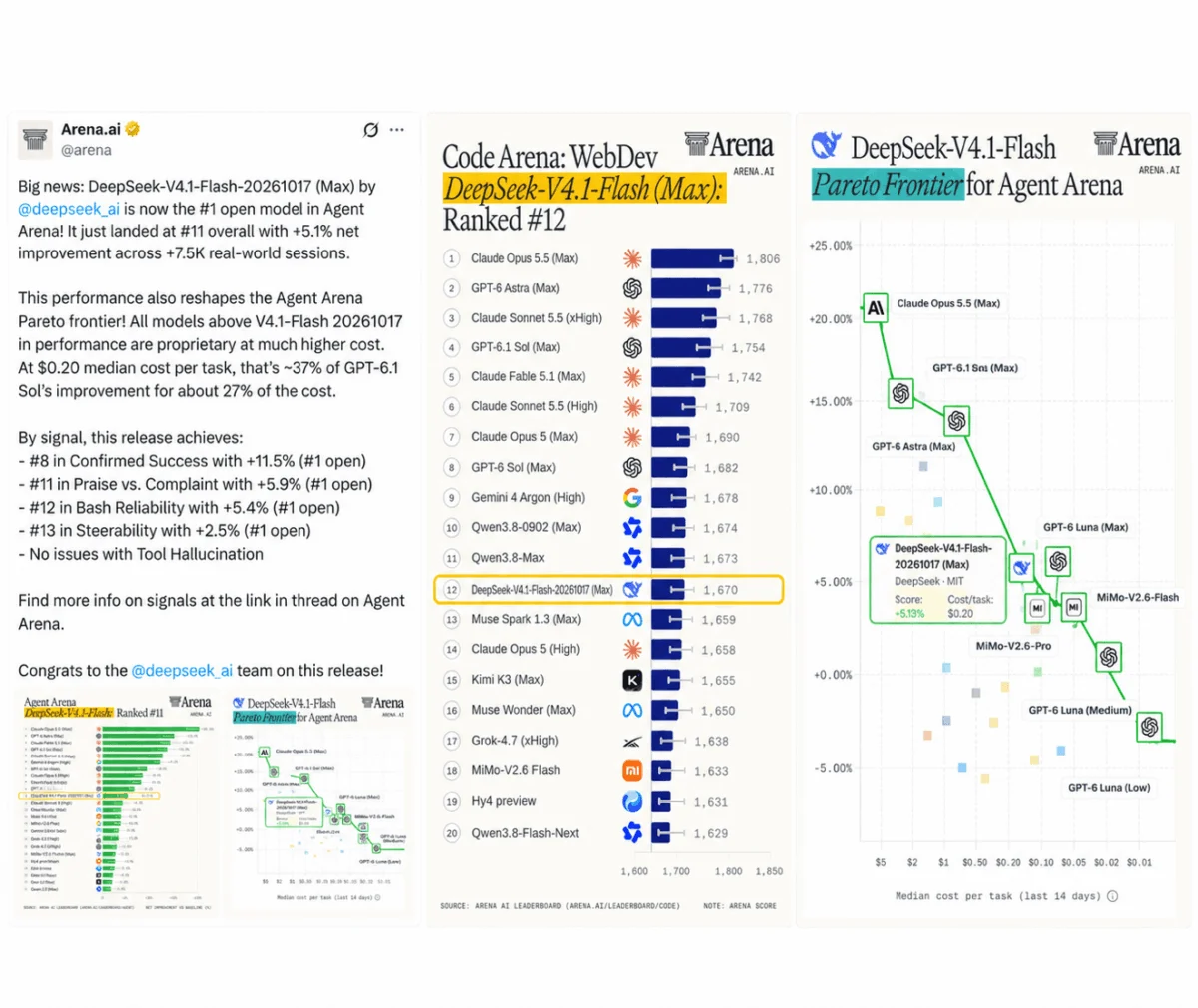
 Reynand Wu