Sagoh
Sagoh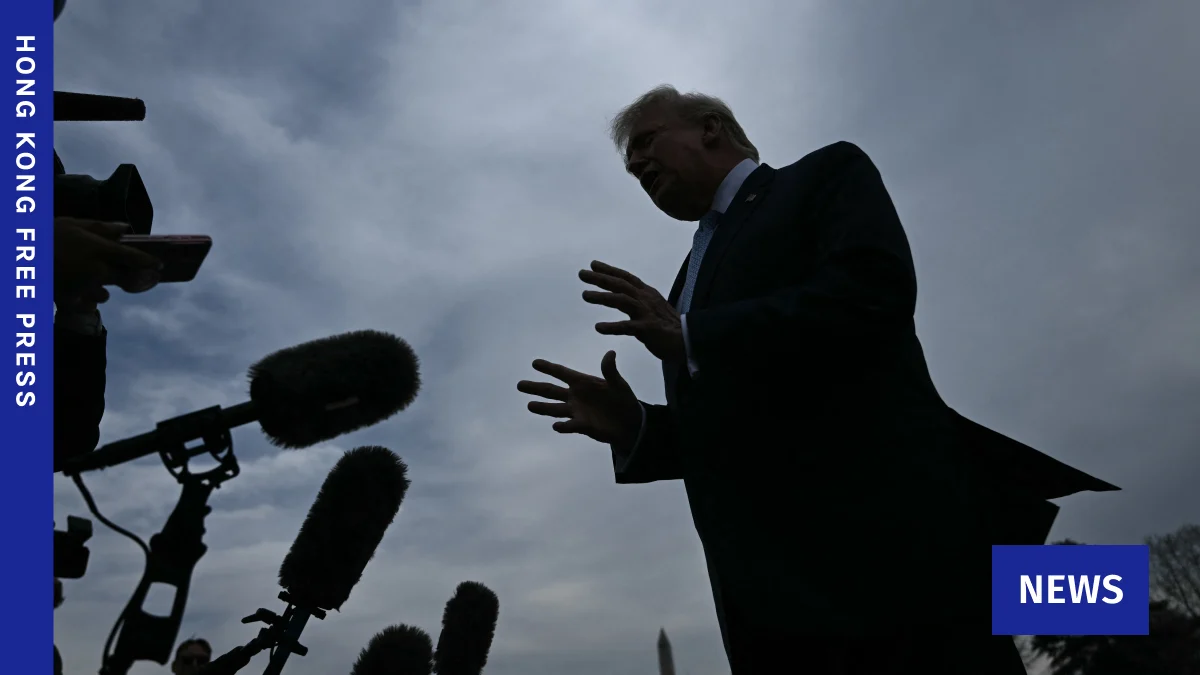
China has issued a stern warning of potential "countermeasures" following the finalization of new U.S. rules that significantly shorten the permissible stay for foreign journalists within the United States, with Chinese nationals facing the most stringent limitations. The move, spearheaded by the Department of Homeland Security, signals a further escalation in the ongoing tensions between Washington and Beijing regarding media access and information flow.
New Visa Regulations and Their Impact
The revised regulations, slated for implementation as early as September, propose a drastic reduction in the visa duration for foreign correspondents. Under the new framework, journalists will generally be limited to stays of 240 days, approximately eight months, with the possibility of applying for extensions of a similar length. However, for journalists holding Chinese passports, the restrictions are considerably tighter, mandating initial stays of just 90 days, with extensions also capped at 90 days.

This policy shift is viewed by Beijing as a clear instance of "discriminatory actions targeting specific countries," according to a spokesperson for China’s Ministry of Foreign Affairs. Lin Jian, speaking at a regular press briefing, articulated China’s firm opposition to the measures, stating, "China demands the United States immediately undo its discriminatory policies against Chinese journalists." He further asserted that "China reserves the right to take reciprocal countermeasures," though he declined to elaborate on the specific nature of these potential retaliatory actions.
Background and Context: A Growing Trend of Restrictions
The new U.S. visa rules are not an isolated development but rather appear to be part of a broader immigration and national security agenda that has been a hallmark of the current U.S. administration. President Donald Trump has consistently prioritized stricter immigration enforcement, which has encompassed aggressive operations within major cities and the implementation of new limitations on various legal pathways to immigration and residency.
This move also follows a pattern of increased scrutiny and pressure on foreign media outlets operating within both the United States and China. In recent years, both countries have engaged in reciprocal actions concerning journalists, with each government accusing the other of obstructing the work of their respective national media. China has previously expelled American journalists and tightened restrictions on foreign news organizations, citing concerns over perceived bias and interference. Conversely, the U.S. has also imposed limits on Chinese state-affiliated media, designating some as foreign missions and curtailing their operational scope.

The U.S. Department of Homeland Security has not yet provided extensive public justification for the specific duration limits or the differential treatment of journalists based on nationality. However, such policies are often framed within the context of national security and reciprocal treatment of foreign nationals. The stringent limitations on Chinese journalists suggest a concern on the part of U.S. authorities regarding the activities or affiliations of journalists from the People’s Republic of China, potentially linked to broader geopolitical considerations.
Reactions from Media Rights Groups and International Organizations
The announcement has drawn sharp criticism from international media rights organizations. Reporters Without Borders (RSF) expressed its outrage over the new regulations, calling them a significant blow to press freedom. An RSF spokesperson, speaking to Agence France-Presse (AFP), described the limitations as "outraged" and detrimental to the free flow of information. These groups argue that such measures hinder the ability of journalists to report comprehensively and independently on events within the United States, potentially leading to a less informed public discourse.
The Committee to Protect Journalists (CPJ) has also voiced concerns, emphasizing the importance of unhindered access for foreign correspondents. A spokesperson for CPJ noted that these restrictions could create a chilling effect on reporting and increase the challenges faced by journalists seeking to cover critical issues. The organization advocates for policies that uphold journalistic independence and facilitate the vital role of a free press in democratic societies.

The Review Process and Potential Implications
The new visa rules are currently subject to review by the Republican-led Congress. This legislative oversight period will determine the final shape and implementation of the regulations. Lawmakers may opt to amend the proposed rules or approve them as is. The outcome of this review will be closely watched by international media organizations and governments worldwide.
The implications of these tightened visa restrictions extend beyond the immediate impact on individual journalists. For U.S. media organizations that rely on foreign correspondents, particularly those with bureaus in China, the move could lead to reciprocal actions from Beijing, further complicating their reporting operations. It also raises concerns about the broader environment for international journalism and the potential for a tit-for-tat escalation of restrictions on media personnel.
Historical Precedents and Reciprocity
The current situation can be viewed through the lens of diplomatic reciprocity, a long-standing principle in international relations. When one nation imposes certain conditions or restrictions on the citizens or entities of another, the latter often considers similar measures in response. China’s warning of "reciprocal countermeasures" suggests a readiness to mirror the U.S. actions should they be fully enacted.

Historically, periods of heightened geopolitical tension between the U.S. and China have often seen repercussions for journalists. For instance, in 2020, the U.S. designated several Chinese state-affiliated media organizations as "foreign missions," leading to the expulsion of a significant number of Chinese journalists working for those outlets in the U.S. Beijing subsequently retaliated by expelling American journalists from U.S. news organizations operating in China.
The proposed 240-day limit for most foreign journalists, with stricter 90-day caps for Chinese nationals, represents a significant departure from previous visa arrangements. While specific visa durations have always been subject to U.S. immigration law, this targeted and significantly reduced timeframe for journalists from a specific nation signals a deliberate policy choice.
Analysis of Geopolitical and Media Freedom Ramifications
The U.S. decision to impose stricter visa limits on foreign journalists, particularly those from China, is likely to be interpreted by Beijing as a hostile act, further straining an already complex bilateral relationship. This move could embolden China to implement more stringent measures against American journalists and media organizations operating within its borders, potentially leading to a further contraction of journalistic space for both sides.

From a media freedom perspective, such actions undermine the principle of a free and independent press, which is crucial for informed global discourse and accountability. The ability of journalists to move freely and report without undue restriction is a cornerstone of democratic societies. When governments impose barriers to this movement, it can lead to information vacuums, increased propaganda, and a diminished capacity for the international community to understand complex global issues.
The review process by Congress will be a critical juncture. Should the rules be enacted as proposed, the ensuing diplomatic fallout and potential for reciprocal actions could have long-lasting consequences for international journalism and the broader relationship between the United States and China. The world will be watching to see if a diplomatic resolution can be found to de-escalate this concerning trend.

 Siti Muinah
 Lina Irawan