Neng Nana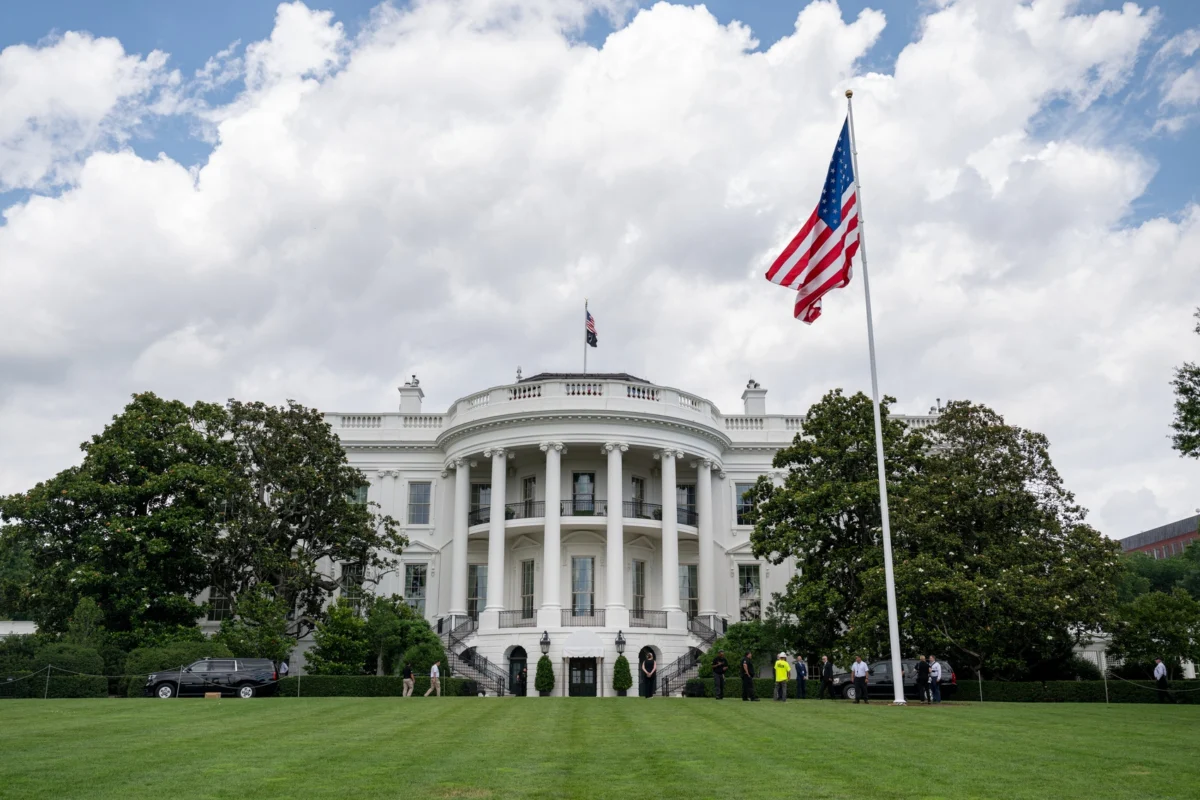
Beijing vehemently accused former US President Donald Trump of disseminating "pure fabrications and malicious smears" on Friday, following his assertion that China had illicitly interfered with American election data. Trump’s claims, which included the allegation that China had acquired 220 million US voter files, mark a resurgence of his long-standing, unsubstantiated narratives of voter fraud, casting a shadow over the upcoming midterm elections that many anticipate he may once again dispute. The diplomatic exchange highlights escalating tensions between the two global powers and further polarizes the already contentious debate surrounding election integrity within the United States.
Trump’s Renewed Allegations and Call for Electoral Reforms
In a televised address from the White House on Thursday, President Trump articulated a grave assessment of the perceived vulnerabilities within the American electoral system. He contended that the system had been "dangerously exposed" to foreign manipulation, specifically citing China as a primary culprit. The core of his accusation revolved around the staggering figure of 220 million voter files purportedly acquired by Chinese entities. While he did not provide immediate evidence to support this claim during his address, Trump pledged to declassify intelligence that he stated would corroborate these allegations.

Beyond the accusations of foreign interference, Trump used the platform to advocate for sweeping new restrictions on voting processes across the nation. He urged lawmakers to implement stricter measures, ostensibly to safeguard the integrity of future elections. These proposed changes often include demands for universal voter ID laws, limitations on mail-in voting, and enhanced scrutiny of voter registration databases. However, within his own Republican Party, there has been a noticeable lack of broad enthusiasm or legislative momentum for such drastic electoral overhauls, signaling a divide even among his political allies on the necessity and scope of these reforms. The proposals echo many of the arguments made by Trump and his supporters following the 2020 presidential election, which he continues to maintain was compromised.
Beijing’s Vehement Denial and Counter-Accusation
China’s Ministry of Foreign Affairs swiftly and unequivocally rejected Trump’s allegations. During a regular press conference on Friday, spokesperson Lin Jian dismissed the claims as utterly baseless. "The relevant claims made by the US side are pure fabrications and malicious smears that have long since been proven to be groundless statements," Lin stated, responding directly to inquiries about Trump’s assertions. He emphasized China’s consistent stance of non-interference in the internal affairs of other sovereign nations, including electoral processes. "China has no interest in the US election and has never interfered in it," Lin affirmed, reiterating a long-held diplomatic position.
Furthermore, Lin Jian turned the accusation back on the United States, asserting that "The international community sees very clearly who it is that habitually interferes in the internal affairs of other countries." This counter-narrative is a familiar refrain from Beijing, which frequently criticizes Washington for perceived interventions in global politics, ranging from democracy promotion to alleged cyber espionage. Lin concluded his remarks by urging the US to introspect: "We urge the US side to reflect on its own actions, stop baselessly smearing China, refrain from making an issue of China in its elections, and do more to benefit China-US relations." The sharp rebuke underscores the deep distrust and adversarial nature that currently characterize the bilateral relationship.

The Precedent: Trump’s History of Disputing Election Outcomes
The latest claims of election interference by China are not isolated incidents but rather form part of a recurring pattern in Donald Trump’s political career. His assertion that the 2020 presidential election was "rigged" and marred by widespread fraud has been a cornerstone of his post-presidency narrative. This claim, however, has never been substantiated by credible evidence. Following the 2020 election, a comprehensive array of investigations, recounts, and audits were conducted across multiple states, all of which affirmed the integrity of the results.
More than 60 lawsuits filed by Trump’s campaign and its allies alleging electoral irregularities were rejected by various courts, including the Supreme Court, often citing a lack of evidence. Even his own Justice Department, then led by Attorney General William Barr, found no evidence of widespread fraud that would have altered the outcome of the election. Barr famously stated in December 2020 that the Justice Department had "not seen fraud on a scale that could have effected a different outcome in the election." Independent election security experts, state election officials from both parties, and even many Republican lawmakers have consistently refuted the notion of a stolen election. Trump’s continued propagation of these unsubstantiated claims has significantly eroded public trust in democratic institutions among a segment of the American populace and has become a defining feature of his political movement.
Understanding US Voter Data and Security

To fully grasp the implications of Trump’s claim regarding China’s alleged acquisition of 220 million voter files, it is crucial to understand how voter data is managed in the United States. Voter registration data, while often publicly accessible in varying degrees, is primarily managed at the state and local levels. Each state maintains its own voter registration database, containing information such as names, addresses, party affiliation, and voting history. Much of this information is considered public record, accessible to political campaigns, researchers, and the general public, albeit sometimes with restrictions on how it can be used or with fees attached.
The sheer volume of 220 million voter files is significant, representing a substantial portion of the estimated 250-260 million eligible voters in the United States. While campaigns and political organizations routinely purchase or access this public data for their operations, the critical distinction in Trump’s claim is the implication of illicit acquisition and meddling. If a foreign entity were to acquire such a massive dataset through unauthorized means, it would represent a significant cyber espionage coup. However, the mere acquisition of publicly available voter data, while a concern for privacy, does not inherently constitute "election meddling" in the sense of altering votes or outcomes. Meddling typically refers to actions designed to influence voter behavior, sow discord, or directly interfere with voting infrastructure.
US election security infrastructure has been significantly bolstered since 2016, with increased federal funding and coordination between federal agencies like the Department of Homeland Security (DHS), the Cybersecurity and Infrastructure Security Agency (CISA), and state election officials. These efforts focus on protecting voting machines, voter registration databases, and election result reporting systems from cyber threats, both domestic and foreign. While vulnerabilities always exist, officials have consistently stated that there is no evidence of widespread compromise of these systems that would change election results.
Expert Perspectives on Election Integrity and Foreign Interference

Election security experts and intelligence community analysts have weighed in on the nature of foreign interference in US elections. The consensus among US intelligence agencies, as detailed in reports from the Office of the Director of National Intelligence (ODNI), has been that foreign adversaries such as Russia, China, and Iran have indeed sought to influence US elections. However, these efforts have largely focused on influence operations – disseminating disinformation, amplifying divisive narratives, and attempting to sway public opinion – rather than directly manipulating voter registration databases or vote tallies.
Regarding China specifically, US intelligence reports have often characterized Beijing’s efforts as aiming to shape the policy environment in the US and to counter perceived anti-China sentiment, rather than overtly interfering in the mechanics of elections. While China is a sophisticated cyber actor, there has been no public evidence or intelligence assessment that has corroborated large-scale, illicit acquisition of US voter files by China with the intent or capability to alter election outcomes. Experts caution that while voter data can be used for targeted disinformation campaigns, directly changing votes via a stolen voter file database is a different, and far more complex, challenge that has not been demonstrated.
Political Landscape and Midterm Implications
Trump’s latest allegations emerge at a politically charged moment, just weeks before crucial midterm elections that will determine control of the US Congress. His statements are widely seen as an attempt to mobilize his base, reinforce his narrative of a vulnerable electoral system, and pre-emptively cast doubt on any unfavorable outcomes in the upcoming polls. By raising the specter of foreign interference, particularly from China, he appeals to national security concerns and a segment of the electorate that is already skeptical of election processes.

The implications for American democracy are significant. Continual questioning of election legitimacy by prominent political figures can erode public trust in democratic institutions, potentially leading to decreased voter participation, increased political polarization, and even civil unrest. For the Republican Party, Trump’s persistent claims present a dilemma: embrace his narrative and risk alienating moderate voters, or distance themselves and risk alienating his loyal base. The lack of "scant appetite" for new voting restrictions within his own party, as noted in the original article, suggests a growing divergence on this issue.
Broader US-China Relations Context
The renewed accusations against China are not isolated from the broader, increasingly fraught relationship between Washington and Beijing. Relations have been strained for years over a multitude of issues, including trade imbalances, human rights, intellectual property theft, Taiwan’s sovereignty, and cyber espionage. Accusations of cyber theft and state-sponsored hacking are frequent points of contention, with both sides often pointing fingers at the other.
Trump’s specific claim of China acquiring 220 million voter files fits into this narrative of a hostile cyber landscape. If he proceeds with his vow to declassify intelligence purportedly showing this, it would undoubtedly escalate tensions further. While the US has previously sanctioned Chinese entities for cyber activities, presenting concrete evidence of such a large-scale election-related data breach would mark a significant new chapter in the cyber cold war between the two nations, potentially triggering a stronger diplomatic and perhaps even economic response from Washington. Conversely, if the declassified intelligence proves to be inconclusive or open to interpretation, it could further undermine the credibility of such claims and exacerbate domestic political divisions.

The Call for Declassification and Its Potential Impact
Trump’s promise to declassify intelligence related to China’s alleged acquisition of voter files adds another layer of complexity to the situation. Declassification of intelligence is a powerful tool, but one that carries significant risks and implications. When intelligence is declassified, it is typically done to inform the public, build consensus for policy actions, or deter adversarial behavior. However, it can also reveal sources and methods, potentially compromising ongoing intelligence operations.
The nature and specificity of the intelligence Trump claims to possess will be critical. For his claims to gain widespread acceptance beyond his base, the declassified information would need to present compelling and verifiable evidence of not just data acquisition, but also its illicit nature and its link to an intent to "meddle" in US elections. Without such clear and irrefutable proof, the declassification could be perceived as a political maneuver, further politicizing the intelligence community and intensifying partisan battles over election integrity. The history of declassifying intelligence for political purposes is fraught with controversy, and any such move would be scrutinized intensely by intelligence experts, political opponents, and the international community.
In conclusion, Donald Trump’s re-emergence with claims of Chinese election interference and calls for voting restrictions has ignited a fresh diplomatic row with Beijing and reignited a contentious domestic debate over election integrity. While Beijing dismisses the allegations as "fabrications," and numerous investigations have debunked previous claims of widespread fraud, the specter of foreign meddling continues to be a potent force in American politics. As the midterm elections loom, these claims underscore the persistent challenges to democratic trust and the complex geopolitical landscape that defines the relationship between the US and China. The potential declassification of intelligence remains a pivotal point, holding the key to either substantiating these grave claims or further fueling the ongoing political polarization.

 Sagoh
Sagoh
 Asro
Asro