Suro Senen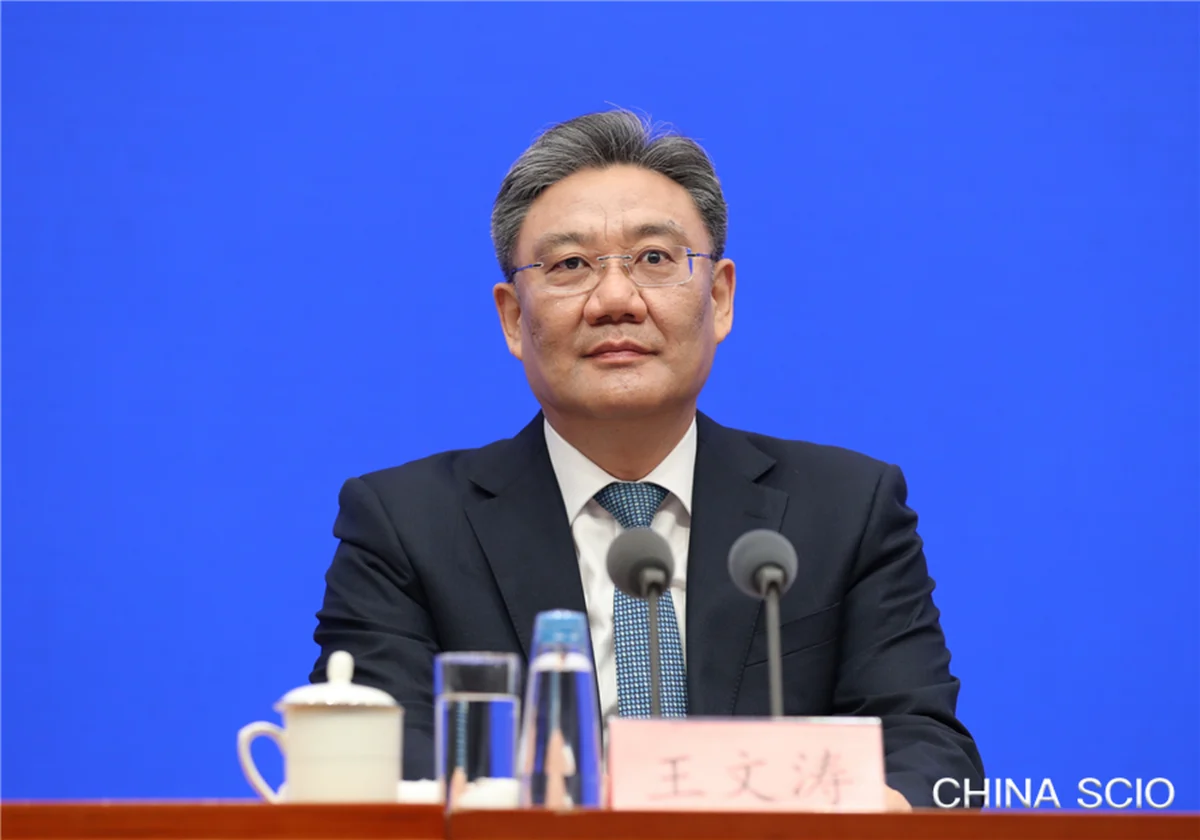
Beijing asserted on Tuesday that it is not the fundamental cause of the economic challenges currently confronting the European Union, a declaration made following high-stakes discussions in Brussels aimed at averting a potentially damaging trade conflict. The statement from China’s foreign ministry underscores a deepening divide between the two major economic blocs, as Europe increasingly vocalizes concerns over a widening trade deficit and alleged unfair competition practices by Chinese firms.
The dialogue, which saw Chinese Commerce Minister Wang Wentao engage with EU trade commissioner Maros Sefcovic, highlighted the palpable tension. Sefcovic’s unequivocal message that "the status quo is not an option" reflects the growing frustration within the 27-nation bloc regarding China’s substantial and expanding trade surplus. This surplus, perceived by many European policymakers and industry leaders as unsustainable, is exerting immense pressure on Brussels to implement measures designed to safeguard local industries from what they describe as a flood of inexpensive Chinese goods.
Deepening Trade Frictions: The EU’s Perspective
The European Union’s concerns are multifaceted, extending beyond the sheer volume of Chinese imports. At the heart of the dispute lies the contention that Chinese companies benefit from massive state subsidies, creating an uneven playing field that disadvantages European manufacturers. This issue is particularly acute in burgeoning sectors crucial for Europe’s green transition, such as electric vehicles (EVs), solar panels, and wind turbines. European officials argue that these subsidies enable Chinese firms to offer products at prices that domestic European producers simply cannot match without incurring significant losses, thereby threatening the viability of entire industries.
The Growing Imbalance and Industrial Vulnerability

The trade imbalance has been a persistent feature of EU-China economic relations for several years, but it has escalated dramatically in recent times. In 2022, the EU recorded a record trade deficit with China, reaching approximately €396 billion, a stark increase from previous years. This deficit is not merely a statistical anomaly; it represents a tangible shift in industrial capacity and employment opportunities from Europe to China. Sectors like steel, chemicals, and textiles have long felt the pressure, but the current wave of concern focuses on high-tech and future-oriented industries where Europe aims to maintain a competitive edge and strategic autonomy.
For instance, the European Commission launched an anti-subsidy investigation into Chinese electric vehicle imports in September 2023, signaling a more aggressive stance. EU Commission President Ursula von der Leyen has frequently articulated the need for Europe to defend its industrial base against unfair trade practices, emphasizing that while competition is welcome, it must be fair. She has pointed out that China’s industrial policy explicitly favors domestic companies, often at the expense of foreign competitors, through a combination of direct subsidies, preferential lending, and other forms of state support.
Calls for a Level Playing Field
EU officials, including Executive Vice-President Valdis Dombrovskis, have repeatedly stressed the importance of a "level playing field." This concept implies that both European and Chinese companies should operate under similar regulatory and competitive conditions, without one side benefiting from government intervention that distorts markets. European industries, from automotive to solar manufacturing, have voiced increasingly urgent calls for protection, citing job losses, factory closures, and a diminishing capacity to innovate if the influx of subsidized Chinese goods continues unchecked. They argue that without decisive action, Europe risks becoming overly reliant on Chinese imports for critical goods, undermining its economic resilience and strategic independence.
Beijing’s Counter-Narrative: Partners, Not Rivals
In response to these European grievances, China has consistently pushed back, asserting its role as an economic partner rather than a rival. Foreign ministry spokesman Guo Jiakun reiterated this stance during a regular news conference on Tuesday, stating, "China and the European Union are partners, not rivals." He further elaborated that "the root causes of the issues facing the European Union do not lie with China." This perspective suggests that Beijing views Europe’s economic difficulties as primarily internal, stemming from structural issues within the EU’s own economy, rather than being a direct consequence of China’s trade policies or economic prowess.

Internal European Challenges vs. External Factors
From Beijing’s viewpoint, Europe’s economic slowdown, inflation, energy crises exacerbated by geopolitical events, and the challenges of post-pandemic recovery are significant internal drivers of its economic struggles. China often highlights that its competitive advantage is a result of market efficiency, robust supply chains, and large-scale manufacturing capabilities, rather than illicit state support. Chinese officials imply that blaming China distracts from the need for Europe to undertake its own domestic economic reforms and enhance its competitiveness.
A Call for Constructive Dialogue
Guo Jiakun underscored that "the key to resolving economic and trade issues between the two sides lies in deepening cooperation and achieving common development." This statement reflects China’s preference for engagement and collaboration over confrontation, positioning itself as a willing partner in resolving trade differences. He added that China was prepared to "strengthen communication and consultation with the EU side [and] properly handle trade differences in a constructive manner." This diplomatic overture, while firm in its denial of blame, signals China’s desire to prevent the current tensions from escalating into a full-blown trade war, which would undoubtedly harm both economies.
Key Issues Beyond the Surplus
While the trade deficit and alleged subsidies dominate the discourse, other critical issues further complicate the EU-China economic relationship. One significant point of contention is China’s use of stringent export controls on rare earth elements.

Strategic Resources and Export Controls
Introduced last year, these controls have raised alarm bells in Europe. Rare earth elements are a group of 17 chemically similar metallic elements that are vital components in a vast array of modern technologies, including electric vehicles, wind turbines, smartphones, advanced weaponry, and medical devices. China currently dominates the global supply chain for these critical minerals, controlling a significant portion of their mining, processing, and refining. By restricting their export, Beijing gains considerable leverage over industries worldwide that depend on these materials. European industries are particularly vulnerable, as they are heavily reliant on Chinese rare earths for their high-tech manufacturing sectors, including the very green technologies that the EU is keen to develop domestically. The EU views these controls as a potential weapon in economic disputes, capable of disrupting crucial supply chains and hindering its strategic autonomy.
Broader Market Access Concerns
Beyond rare earths, European businesses frequently report difficulties in accessing the Chinese market compared to the ease with which Chinese firms operate in Europe. Issues such as forced technology transfer, intellectual property theft, non-tariff barriers, and opaque regulatory environments continue to be points of friction. These practices, European companies argue, create an asymmetrical market relationship that further disadvantages them.
A Timeline of Mounting Tensions
The current tensions are not isolated but are part of an evolving dynamic.

- Early 2020s: Post-pandemic, the EU begins to reassess its supply chain dependencies, leading to early discussions on "strategic autonomy" and reducing reliance on single suppliers, particularly China.
- 2021: The EU-China Comprehensive Agreement on Investment (CAI) ratification is frozen by the European Parliament amid human rights concerns and tit-for-tat sanctions, signaling a cooling in relations.
- 2022: The EU’s trade deficit with China reaches a record high, intensifying calls from European industries for stronger trade defense measures.
- March 2023: EU Commission President Ursula von der Leyen delivers a speech outlining a "de-risking" strategy towards China, emphasizing reducing dependencies without full "decoupling."
- September 2023: The European Commission launches an anti-subsidy investigation into imports of battery electric vehicles from China, a move seen as a significant escalation.
- October 2023: EU-China High-Level Economic and Trade Dialogue takes place, with both sides acknowledging serious differences but agreeing to further talks.
- Late 2023: China implements new export controls on certain rare earth elements and graphite, citing national security, further exacerbating EU concerns about critical raw material access.
- Early 2024: The EU launches investigations into Chinese wind turbine suppliers and other green technology sectors, widening the scope of its trade defense actions.
- Monday’s Talks: Chinese Commerce Minister Wang Wentao meets EU Trade Commissioner Maros Sefcovic in Brussels, leading to Sefcovic’s "status quo is not an option" remark.
- Tuesday’s Response: China’s foreign ministry states China is not the "root cause" of EU economic issues, calling for cooperation.
- October (Planned): Sefcovic and Wang are scheduled to meet again in China for further discussions.
Economic Data Underpinning the Dispute
The figures illustrate the scale of the challenge. In 2023, preliminary data indicated that the EU’s trade deficit with China, while slightly narrowing from the 2022 peak, remained substantial, hovering around €291 billion. This imbalance is driven by a surge in Chinese exports, particularly in machinery, electronics, and increasingly, vehicles, while EU exports to China have grown at a slower pace. For example, Chinese-made electric vehicles have seen a dramatic increase in market share in Europe, fueled by competitive pricing. Analysts estimate that Chinese EV brands could capture up to 15-20% of the European EV market by the mid-2020s if current trends continue, posing an existential threat to legacy European automakers.
Furthermore, China’s market share in solar panel manufacturing is overwhelming, exceeding 80% globally, with a significant portion of these panels being imported into the EU. This dominance, coupled with allegations of massive state subsidies in production, has led to calls for the EU to rebuild its own solar manufacturing capacity, even if it means implementing protective tariffs.
The De-risking Dilemma: EU’s Evolving Strategy
The current trade friction is inextricably linked to the EU’s broader "de-risking" strategy towards China. Unlike "decoupling," which implies a complete separation of economies, "de-risking" aims to reduce critical dependencies and vulnerabilities, particularly in sensitive sectors, while maintaining broad economic engagement. The strategy acknowledges China’s importance as a trading partner and a global actor but seeks to rebalance the relationship to make it more equitable and less susceptible to economic coercion.
Navigating Geopolitical Complexities

The EU’s position is delicate. It seeks to avoid alienating China entirely, recognizing its pivotal role in global challenges like climate change and its vast market potential. However, it also faces pressure from member states, industries, and the United States to adopt a firmer stance against what are perceived as unfair trade practices and geopolitical assertiveness. The "de-risking" strategy is an attempt to thread this needle, allowing for continued trade and cooperation where interests align, while robustly defending European economic security and values where they diverge. This involves diversifying supply chains, strengthening domestic industrial capabilities, and employing trade defense instruments more readily.
Implications of a Potential Trade War
The prospect of a full-scale trade war between the EU and China carries significant risks for both economies and the global trading system. For the EU, retaliatory tariffs from China could harm its export-oriented industries, particularly in luxury goods, automotive, and specialized machinery, which rely heavily on the Chinese market. It could also lead to higher costs for consumers if Chinese imports become more expensive or less available.
For China, a trade war with the EU, one of its largest trading partners, would further complicate its already slowing economic growth. It could disrupt its export-led growth model and make it harder to achieve its development goals. Furthermore, it could accelerate the "de-risking" efforts of other nations, potentially leading to a fragmentation of global supply chains and a less interconnected world economy.
Impact on Global Supply Chains and Innovation
Beyond direct economic costs, a trade war could have broader implications for global supply chains, leading to increased inefficiencies, higher prices, and reduced innovation as companies are forced to prioritize political considerations over economic efficiency. It could also undermine multilateral trade institutions like the World Trade Organization (WTO), further weakening the rules-based international trading system.

The Path Forward: Dialogue Amidst Divergence
Despite the sharp rhetoric and escalating tensions, both sides have indicated a willingness to continue dialogue. The planned meeting between Sefcovic and Wang in October in China suggests that direct engagement remains the preferred mechanism for resolving differences. However, the success of these future talks will depend on a fundamental shift in approach from both parties. Europe will likely push for concrete commitments from China to address issues such as subsidies, market access barriers, and export controls. China, in turn, will likely continue to argue that its practices are legitimate and that Europe should focus on its own internal economic reforms.
The Role of WTO and International Norms
The dispute also highlights the limitations and challenges facing the World Trade Organization. Many of the issues, particularly concerning state subsidies and non-market economies, are difficult to adjudicate under existing WTO rules, which were largely designed for traditional market economies. This prompts calls for reforms to the WTO and for the development of new international norms to address the complexities of modern global trade.
In conclusion, the current economic dialogue between the European Union and China is at a critical juncture. While China seeks to deflect blame for Europe’s economic challenges and emphasizes cooperation, the EU is increasingly determined to protect its industries from what it perceives as unfair competition. The upcoming discussions in October will be crucial in determining whether these two economic giants can find common ground to manage their growing differences constructively, or if the path towards a more confrontational trade relationship becomes inevitable. The stakes are high, not just for Beijing and Brussels, but for the stability and prosperity of the global economy.

 Sagoh
Sagoh
 Asro
Asro