Nana Wu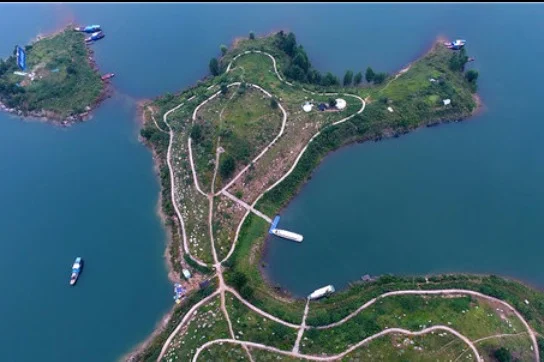
Tuesday marked the third anniversary of the commencement of operations for the central route of China’s monumental South-to-North Water Diversion Project, a colossal infrastructure undertaking designed to alleviate acute water scarcity in the arid northern regions by redirecting water from the more abundant south. This strategic national initiative, comprising three distinct channels, has demonstrated significant success in its primary objective while concurrently fostering profound environmental and economic transformations in its source areas.
Since its inauguration, the central route alone has successfully transported over 10 billion cubic meters of vital water resources to North China, directly benefiting an estimated 53 million people across major urban centers and agricultural plains. Beyond its immediate hydrological impact, the project has spurred substantial environmental protection efforts in the water-supplying provinces of Henan, Hubei, and Shaanxi. These concerted conservation initiatives have, in turn, catalyzed investment and generated new employment opportunities within burgeoning green industries, notably eco-tourism and ecological agriculture, thereby creating a sustainable economic model for the communities integral to the water transfer system.
Addressing China’s Water Imbalance: A Historical Imperative
China has historically grappled with a severe geographical mismatch between its water resources and its population and agricultural needs. Approximately 80 percent of the nation’s water reserves are concentrated in the southern regions, particularly along the Yangtze River basin, while the more arid northern plains, home to nearly half of China’s population and a significant portion of its arable land, face chronic water deficits. This imbalance has led to severe consequences in the north, including widespread groundwater over-extraction, depletion of aquifers, desertification, ecological degradation, and significant impediments to industrial and agricultural development.
The concept of diverting southern waters to the north is not new; it has been a vision for decades, with historical records indicating discussions about such a grand scheme as early as the 1950s. Chairman Mao Zedong famously articulated the challenge, stating, "There is plenty of water in the south, but not much in the north; if possible, lend some water." Decades of research, planning, and feasibility studies followed, culminating in the formal approval of the South-to-North Water Diversion Project, a multi-decade, multi-billion-dollar endeavor aimed at redrawing China’s hydrological map to support its burgeoning economy and population.
The Comprehensive South-to-North Water Diversion Project
The overarching South-to-North Water Diversion Project is divided into three main routes: the Eastern, Central, and Western routes, each designed to address specific regional water needs and challenges.
-
The Eastern Route: Utilizing the historic Grand Canal, this route begins at the Yangtze River in Jiangsu province, pumps water northward through Shandong, and ultimately reaches Tianjin. Its primary function is to supply water for industrial and agricultural use in eastern China, supplementing existing water sources. Construction began in 2002, with Phase I largely operational.
-
The Central Route (Focus of this Report): This route is arguably the most strategically vital, designed to deliver high-quality drinking water to the capital Beijing, the mega-city of Tianjin, and other major urban centers along its path. It originates from the Danjiangkou Reservoir, situated at the confluence of the Han River (a major tributary of the Yangtze) and the Dan River, on the border of Hubei and Henan provinces. The water flows northward primarily through gravity-fed canals, traversing Henan and Hebei provinces before reaching Beijing and Tianjin.
-
The Western Route: This route, still in the planning and preliminary research stages, is envisioned to transfer water from the upper reaches of the Yangtze River’s tributaries (such as the Dadu, Yalong, and Jinsha rivers) to the Yellow River basin, addressing water scarcity in China’s arid northwestern regions. Its construction presents significant engineering challenges due to the rugged terrain of the Tibetan Plateau.
The Central Route, with its sophisticated network of canals, tunnels, aqueducts, and siphons, represents a triumph of modern engineering. It spans approximately 1,432 kilometers from the Danjiangkou Reservoir to Beijing, designed with an annual water transfer capacity of 9.5 billion cubic meters. The total investment for the Central Route alone exceeded 200 billion yuan (approximately $30 billion), reflecting the immense scale and complexity of the undertaking.
A Detailed Timeline of the Central Route’s Journey
The development of the Central Route involved meticulous planning and phased construction over many years:
- Early 2000s: Initial feasibility studies and environmental impact assessments intensified following the project’s formal approval by the State Council.
- December 2003: Construction officially commenced on the central route. This involved massive civil engineering works, including the raising of the Danjiangkou Dam to increase its storage capacity, the excavation of thousands of kilometers of canals, and the construction of numerous bridges and tunnels to traverse rivers and mountains.
- Late 2000s – Early 2010s: Key segments of the canal system and associated infrastructure, such as the Yellow River crossing project (one of the most complex engineering feats, involving siphons under the riverbed), were completed.
- December 12, 2014: The central route officially began its full operational transfer of water, marking a historic moment for China’s water security. The first deliveries reached Beijing and Tianjin shortly thereafter.
- 2015-Present: Continuous operation, monitoring, and ongoing environmental protection efforts in the source regions, alongside the gradual expansion of the water supply network to additional beneficiary areas.
Transforming Northern China: A Lifeline for Millions
The impact of the Central Route on northern China has been transformative, particularly for the mega-cities it serves. Beijing, Tianjin, and provincial capitals like Shijiazhuang (Hebei) and Zhengzhou (Henan) have seen a significant enhancement in their water security.
Prior to the project, Beijing relied heavily on local surface water sources and, critically, on rapidly depleting groundwater reserves, leading to severe land subsidence and ecological stress. With the central route, Beijing now receives a substantial portion of its municipal water supply from the south, significantly reducing its dependence on groundwater. This has allowed for the gradual recovery of groundwater levels in certain areas, contributing to ecological restoration efforts. For example, by 2017, Beijing had received over 2.7 billion cubic meters of water from the central route, meeting over two-thirds of its urban water demand and allowing for the closure of hundreds of groundwater wells.
Similarly, Tianjin, a major port city, and numerous other cities along the route have experienced improved water quality and reliability. The enhanced water supply supports continued urban development, industrial expansion, and agricultural production, underpinning the economic vitality of these regions. Officials in Beijing have lauded the project as a critical component of the city’s sustainable development strategy, ensuring not only drinking water for its vast population but also water for environmental restoration, such as recharging rivers and lakes.
The Green Economy Dividend: A Model for Source Regions
The benefits of the South-to-North Water Diversion Project extend beyond the recipient regions. The provinces of Henan, Hubei, and Shaanxi, which serve as the project’s source, have witnessed a remarkable shift towards a "green economy," driven by stringent environmental protection measures mandated to ensure the pristine quality of the transferred water.
To safeguard water quality in the Danjiangkou Reservoir and its tributaries, local governments implemented comprehensive policies. These included the closure or relocation of polluting industries, strict controls on agricultural runoff, reforestation programs, and the promotion of sustainable land use practices. While initially challenging for some communities reliant on traditional industries, these measures have created an unexpected economic dividend.
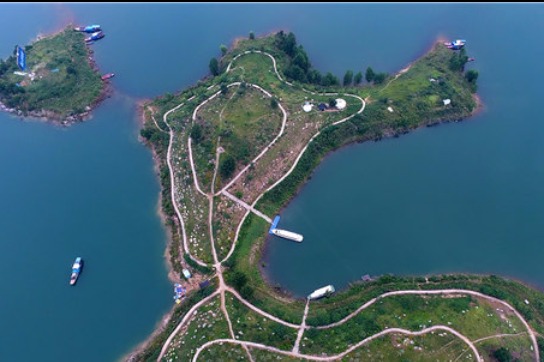
The cleaner environment has attracted investment in industries that are compatible with ecological preservation, such as eco-tourism, organic agriculture, and sustainable forestry. This strategic pivot has generated new job opportunities and diversified local economies. In the Danjiangkou Reservoir area, for instance, formerly industrial zones have been revitalized into scenic tourist destinations, attracting visitors drawn to the improved natural beauty and clean environment. Ecological agriculture, focusing on high-value, organic produce, has flourished, providing sustainable livelihoods for local farmers.
Xia Qinghua, a 43-year-old resident of Chenjiawan, a village in Hubei’s Shiyan city, embodies this transformative shift. For 12 years, Xia worked in a small toy factory in Shenzhen, Guangdong province, earning more than 5,000 yuan ($756) a month. His life in the bustling manufacturing hub was characterized by long working hours, often extending until 11 pm, and a profound sense of isolation. "The salary was good, but I felt lonely and helpless because I had no family around me," he recounted, reflecting on the emotional toll of being away from his loved ones.
His desire to return home was constant, yet a severe shortage of local employment opportunities had previously prevented him. In 2011, he made an unsuccessful attempt to resettle, investing 50,000 yuan in a small truck to start a transportation business. However, the lack of economic vitality in what he described as a "poverty-stricken area" led to the loss of his investment and 20,000 yuan in debt within a year, forcing a reluctant return to Shenzhen. For years, his family reunions were limited to the Spring Festival holiday, each departure a tearful affair. He vividly recalled a particularly poignant farewell on the fifth day of the Lunar New Year in 2013, when he, his wife, and daughter wept in each other’s arms, desperate not to part.
The situation dramatically improved after 2014, when Hubei Beidouxing Eco-agriculture and Forestry Co began investing in the region. The company was explicitly "lured by the cleaner environment" resulting from the water diversion project’s protection efforts. "Great improvements have happened to the environment in my hometown," Xia observed, his eyes glinting with emotion. "When I left at age 17, I had never seen an egret. Now, there are birds everywhere. They are beautiful."
Xia Qinghua returned to Chenjiawan in June and now works in the warehouse of a farm operated by Hubei Beidouxing. While his current monthly income of approximately 2,000 yuan is significantly less than what he earned in Shenzhen, his quality of life has dramatically improved. He is closer to his family and able to care for his 70-year-old father, who is unwell. To supplement his income, he leases 0.5 hectares of his farmland to Hubei Beidouxing, generating an additional 4,000 yuan annually. Xia’s story is a powerful testament to how environmental protection, driven by national infrastructure, can foster local economic resilience and enhance individual well-being.
Broader Implications and Future Outlook
The South-to-North Water Diversion Project, particularly its central route, stands as a testament to China’s capacity for large-scale strategic planning and execution. It has undeniably mitigated severe water stress in the north, contributing to food security, economic stability, and ecological improvements. However, such a monumental undertaking also presents ongoing challenges and demands continuous vigilance.
Experts emphasize the need for sustainable management of the transferred water, ensuring efficient usage in recipient areas to avoid complacency and prevent new forms of water waste. The long-term ecological impact on the source regions, particularly the Danjiangkou Reservoir’s water levels and the Han River’s ecosystem, requires careful monitoring and adaptive management strategies. Balancing the water needs of both upstream and downstream communities within the source provinces remains a critical aspect of regional cooperation.
Furthermore, the project’s long-term viability must consider the implications of climate change, which could alter rainfall patterns and water availability in both southern and northern China. Continuous investment in water-saving technologies, drought-resistant agriculture, and urban water recycling will be essential to complement the water diversion efforts.
In conclusion, as the central route celebrates its third anniversary, it is recognized not merely as an engineering marvel but as a strategic national asset that has fundamentally reshaped China’s water landscape. Its success underscores the intricate connection between infrastructure development, environmental stewardship, and sustainable economic growth, offering a powerful case study for balancing the demands of a rapidly developing nation with the imperative of ecological preservation. The transformation observed in both the water-stressed north and the newly revitalized green economies of the source regions speaks to the project’s multifaceted and enduring legacy.


 Sagoh
Sagoh
 Asro
Asro