Basiran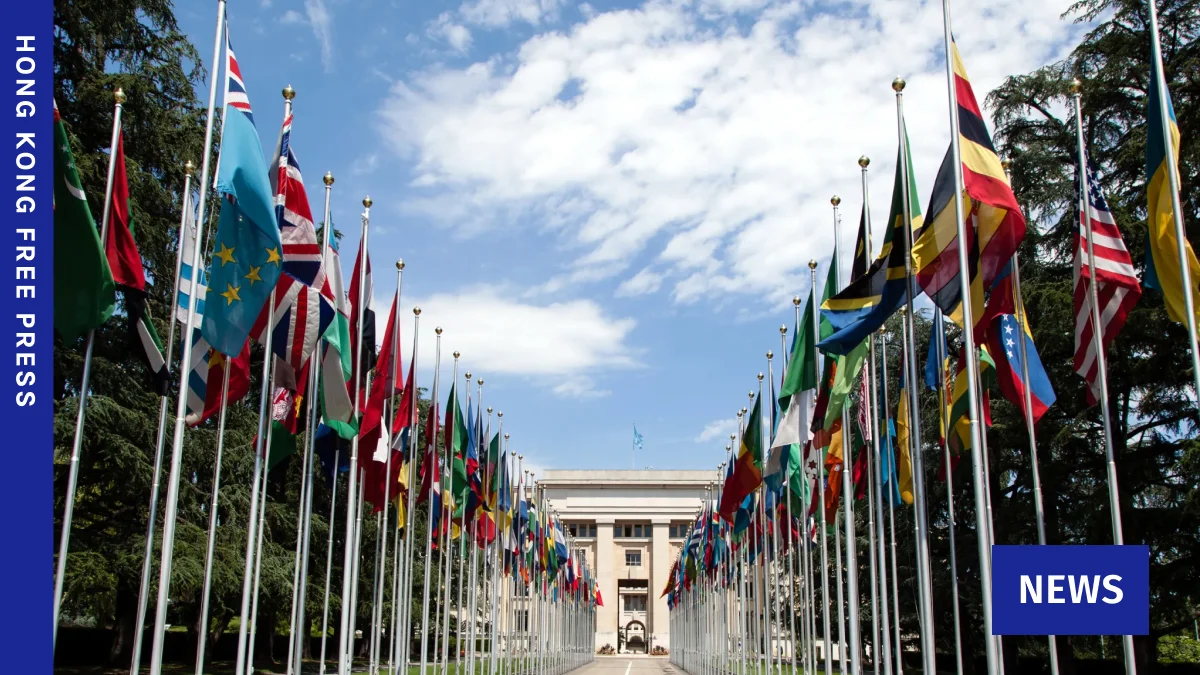
Geneva, Switzerland – In a powerful and urgent appeal at a United Nations meeting last week, representatives from Tibetan and Uyghur communities implored the international community to exert pressure on China, demanding the repeal of a contentious new law. This legislation, which came into effect on July 1, is widely viewed by minority groups and human rights advocates as a deliberate instrument designed to systematically erase distinct ethnic identities and accelerate forced assimilation across China.
The law, officially known as the Ethnic Unity and Progress Promotion Law, ostensibly aims to foster a "shared national identity" among China’s diverse ethnic groups and "strengthen cohesion." However, its impending implementation has ignited a firestorm of criticism, with human rights organizations and exiled minority leaders asserting that it provides Beijing with a potent legal framework to intensify long-standing policies of cultural and linguistic suppression, particularly targeting the Tibetan Buddhist and predominantly Muslim Uyghur populations. These policies, critics argue, are designed to consolidate the dominance of the Han Chinese majority.

The Genesis of Controversy: A Law for "Unity" or Assimilation?
The Ethnic Unity and Progress Promotion Law was passed by China’s legislative bodies following a period of increasing scrutiny over its treatment of ethnic minorities. While the Chinese government frames the law as a benign measure to promote harmony and national solidarity, its specific provisions have raised alarm bells globally. Among the most concerning aspects, the law criminalises activities deemed "violent terrorist activities, ethnic separatist activities, or religious extremist activities." Rights advocates contend that these broad and vaguely defined terms can be arbitrarily applied to suppress any expression of distinct cultural or religious identity that deviates from state-sanctioned narratives. This legal ambiguity, they argue, effectively transforms cultural practices, religious observances, and linguistic education into potential acts of subversion.
The historical context of China’s ethnic policies is crucial to understanding the profound apprehension surrounding this new law. For decades, Beijing has pursued policies in regions like Tibet and Xinjiang (home to the Uyghurs) that critics describe as coercive Sinicization. This includes mass surveillance, restrictions on religious freedom, the demolition of cultural sites, and aggressive campaigns to promote Mandarin Chinese over indigenous languages. The new law is perceived not as a departure from these policies but as their legislative culmination, providing enhanced legal justification and enforcement mechanisms for actions previously carried out under less formal pretexts. China officially recognizes 55 ethnic minorities, speaking hundreds of languages and dialects, but policies have increasingly pushed for Mandarin Chinese as the primary language of instruction and public life in many minority areas.

UN Voices Alarm: A Call for Repeal
The severity of the situation prompted a rare and direct intervention from high-ranking United Nations officials. Volker Turk, the UN High Commissioner for Human Rights, has publicly called for the law’s repeal. Speaking before the UN Human Rights Council in Geneva earlier this month, Turk issued a stark warning that the legislation risked "deepening restrictions on freedoms of language, education, practice of religion, culture, expression and assembly." His statement underscored the international community’s growing apprehension regarding China’s trajectory in human rights.
This concern was echoed and amplified during a side event held concurrently with the Human Rights Council session last Friday. Here, Tibetan and Uyghur representatives offered harrowing testimonies, detailing how their deeply cherished cultural, religious, and linguistic identities are now effectively being criminalised under the guise of promoting national unity. The event served as a critical platform for these communities to bring their urgent pleas directly to the attention of international diplomats and human rights observers.

First-Hand Accounts: The Threat of Cultural Genocide
Thinlay Chukki, the representative of His Holiness the Dalai Lama and the Central Tibetan Administration (CTA) for central and eastern Europe, delivered a particularly poignant address at the Geneva event. She warned of an impending "cultural genocide" in Tibet, asserting that with the new law, Tibetans "are no longer legally allowed to exist" as distinct people. Speaking to AFP, Chukki elaborated, stating that the law is "legislating the erasure of Tibetans as a Tibetan identity, as a Tibetan culture, as a Tibetan language." Her remarks highlighted the profound existential threat felt by a community striving to preserve its unique heritage in the face of state-imposed homogeneity.
Chukki specifically pointed to the pervasive system of residential boarding schools in Tibet, which she described as a key mechanism for forced assimilation. Tibetan children, often removed from their families at a young age, are "subjected forcibly to the Mandarin language, as well as the Han Chinese culture," she explained. These schools, critics argue, serve as ideological re-education centres, severing children from their linguistic and cultural roots and indoctrinating them into a Han-centric worldview. Estimates from various human rights groups suggest that hundreds of thousands of Tibetan children are currently enrolled in such institutions, a scale that underscores the systemic nature of the policy.

The echoes of these policies are grimly familiar in Xinjiang, where a similar boarding school system is believed to operate. Zumretay Arkin, the vice president of the World Uyghur Congress, shared a similarly dire outlook. She told AFP that Beijing’s objective is "to disrupt our entire identity, to disconnect generations." Arkin warned that the new law "will completely eradicate Uyghur identity, heritage, religion. It will coerce people into adopting Han Chinese identity." The UN itself has previously warned of possible "crimes against humanity" targeting the mostly Muslim Uyghur minority in Xinjiang, referencing credible reports of mass internment camps, forced labour, and coercive birth control measures. While China vehemently denies these allegations, presenting the camps as "vocational training centres" and its policies as counter-terrorism measures, the evidence compiled by international bodies and investigative journalists paints a starkly different picture.
Bhuchung Tsering, who heads the research and monitoring unit at the International Campaign for Tibet (ICT), decried what he termed a "sinister tactic to go after the youngest and to detach them from their culture." Prior to Friday’s event, Tsering recounted numerous anecdotal reports of Tibetan children returning from these schools unable to converse fluently with their parents in their native tongue – a chilling testament to the effectiveness of these assimilationist policies. He drew particular attention to two specific clauses within the new law: one mandating parents to "teach their children about this new identity," and another urging citizens to report non-compliance with the law. "If you read these two together," Tsering observed, "it’s virtually forcing children to report on their parents," creating an insidious environment of distrust and state surveillance within the family unit itself.
China’s Rebuttal and the Principle of "Transnational Oppression"

During the side event, a Chinese representative in the audience robustly defended the Ethnic Unity and Progress Promotion Law, dismissing the criticisms as politically motivated. The representative slammed "countries and organisations that consistently use human rights as a political tool to smear China," a common refrain from Beijing when confronted with international criticism of its human rights record. China consistently asserts that its internal affairs, including its ethnic policies, are sovereign matters and not subject to external interference. It portrays its actions in Xinjiang and Tibet as necessary for maintaining stability, combating extremism, and fostering economic development.
However, a particularly alarming aspect of the new legislation, highlighted by the Tibetan and Uyghur speakers, is a clause that purports to hold individuals and organizations overseas liable for violating the law. This extraterritorial reach has raised serious concerns about "transnational oppression." Arkin cautioned that this provision risked seeing "China increase use of transnational oppression against dissidents and activists and human rights defenders" living abroad. This could create a chilling effect, deterring individuals in the diaspora from speaking out against Beijing’s policies for fear of repercussions against themselves or their families back home.
China’s Vice Justice Minister Hu Weilie addressed this specific clause in a news briefing last week, asserting that it was "legitimate" and "conforms to international practice." He argued that many countries have laws with extraterritorial jurisdiction for certain offenses. While some international laws do allow for jurisdiction over crimes committed abroad (e.g., terrorism, war crimes), critics argue that applying a broadly defined "ethnic unity" law to speech or advocacy conducted by foreign citizens or residents on foreign soil represents a dangerous expansion of state power and a direct challenge to international norms of free expression and sovereignty. This move is seen as mirroring the controversial national security law imposed on Hong Kong, which also contains clauses with extraterritorial reach, targeting critics globally.

Broader Implications and the Path Forward
The implementation of the Ethnic Unity and Progress Promotion Law marks a significant and concerning escalation in China’s approach to its ethnic minorities. Its implications are far-reaching:
- For Minority Communities: The law formalizes and intensifies the systematic erosion of distinct cultural, linguistic, and religious identities. It threatens to accelerate the disappearance of unique traditions, languages, and spiritual practices, transforming vibrant ethnic groups into homogenized components of a Han-dominated national identity. The psychological and social impact on individuals forced to abandon their heritage is profound.
- For International Human Rights Advocacy: The law presents a formidable challenge to international human rights advocates and organizations. Its broad scope and extraterritorial clauses are designed to silence dissent both within China and abroad, making it harder to gather information, document abuses, and advocate for change. The threat of legal action against foreign individuals or entities for "violations" committed outside China’s borders sets a dangerous precedent for freedom of speech globally.
- For International Relations: The controversy surrounding this law further strains China’s relationships with Western democracies and international bodies committed to human rights. It is likely to fuel renewed calls for sanctions, diplomatic pressure, and greater scrutiny of China’s human rights record, particularly from countries like the United States, the European Union, and Canada, which have consistently expressed concerns about Xinjiang and Tibet. The perceived weaponization of law for political and cultural control undermines China’s efforts to portray itself as a responsible global power.
In conclusion, the urgent pleas from Tibetan and Uyghur representatives at the United Nations underscore a critical juncture for China’s ethnic minorities. The Ethnic Unity and Progress Promotion Law, effective July 1, is not merely a piece of domestic legislation; it is viewed by those it targets as a direct assault on their very existence as distinct peoples. The international community faces a moral imperative to address these warnings, considering the severe implications for human rights, cultural diversity, and the principles of free expression worldwide. The call for repeal, supported by the UN’s own human rights chief, signals a growing international consensus that China’s pursuit of "unity" must not come at the cost of cultural erasure and fundamental freedoms.

 Sagoh
Sagoh
 Asro
Asro