Reynand Wu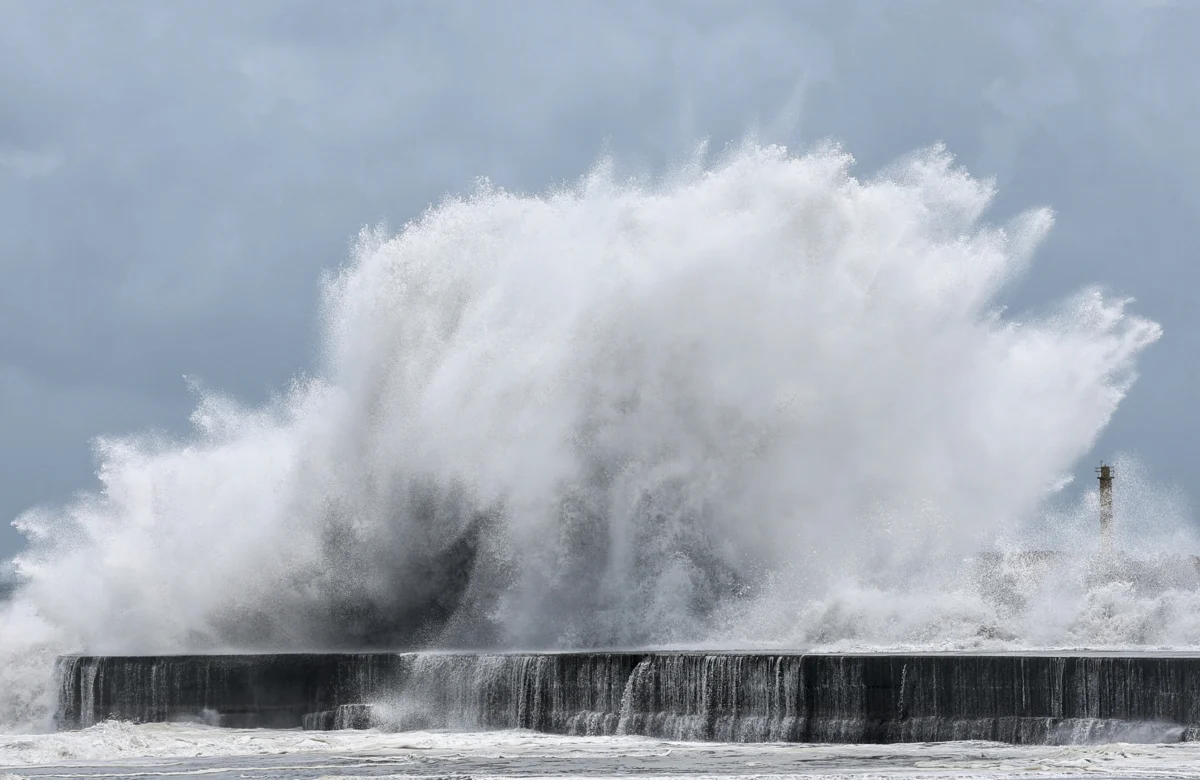
Typhoon Bavi was downgraded to a severe tropical storm on Sunday after making landfall in eastern China, prompting an unprecedented pre-emptive evacuation of nearly two million people across its path. The storm, which had previously wreaked havoc across northern Taiwan and Japan’s remote southwestern islands, touched down in Zhejiang province, bringing with it fierce winds and torrential rainfall, though initial reports indicated no immediate casualties or widespread structural damage, a testament to the extensive preparedness measures undertaken by Chinese authorities.
A Storm’s Trajectory: From Super Typhoon to Severe Tropical Storm

Typhoon Bavi’s formidable journey began earlier in the week as a Super Typhoon, lashing Guam and the Northern Mariana Islands on Monday with its immense power before tracking northwest across the Pacific Ocean. As it traversed the open waters, it gradually weakened, being downgraded to a typhoon before reaching the East Asian coast. However, its intensity remained significant enough to pose a grave threat to heavily populated coastal regions.
Before making its final approach to mainland China, Bavi delivered a powerful blow to the northern reaches of Taiwan and the southwestern islands of Japan. On July 10, 2026, strong waves, some reportedly reaching heights of up to 10 meters, battered the coastlines, particularly in areas like Yilan. In Taiwan, the storm necessitated the evacuation of over 14,000 residents, led to the cancellation of hundreds of flights, and plunged more than 170,000 households into darkness due to power outages. The Central Weather Administration (CWA) of Taiwan had issued warnings of "extremely torrential rain" and "dangerous waves" as Bavi skirted the island’s northern flank, its strong-wind radius having shrunk to 350 kilometers, averting what could have been the largest typhoon to hit Taiwan in over three decades. Similarly, Japan’s Okinawa prefecture and its surrounding islands, notably the Miyako region, experienced widespread power disruptions as Bavi’s outer bands swept through.
The storm’s impact was also felt severely in the Philippines, where heavy rains, intensified by Bavi, triggered landslides and other incidents. The death toll in the archipelago rose to 18, with most casualties reported on the southern island of Mindanao. Nearly 11,000 people were forced to flee their homes, and maritime activities were brought to a standstill, with dozens of ports closed and 313 vessels seeking shelter. This regional devastation underscored the widespread threat posed by Bavi even before its direct impact on China.

Landfall in China and Extensive Preparations
Typhoon Bavi made landfall in Zhejiang province at approximately 11:20 pm Saturday (1520 GMT), packing winds of 144 kilometers (90 miles) per hour. The provincial meteorological observatory, as quoted by the state Xinhua news agency, confirmed its arrival. The initial impact zone, particularly around the city of Yuhuan, experienced "fierce winds and heavy rain, with rapid runoff forming on the ground and roadside trees being uprooted," according to reports from the national television station CCTV.
In anticipation of Bavi’s arrival, Chinese authorities initiated one of the largest pre-emptive evacuation efforts in recent memory. By Saturday morning, an estimated 1.72 million people had been moved to designated safe zones across Zhejiang and neighboring provinces. This included over 130,000 people from Fujian province and approximately 34,000 residents from Shanghai’s coastal and high-risk areas. The scale of these evacuations reflected the gravity of the forecasts and the lessons learned from previous severe weather events.

Across Zhejiang province, a comprehensive halt to public life was enforced. Classes were suspended, non-essential work ceased, public transport services were curtailed, and all outdoor activities were cancelled. More than 400 flights and dozens of train services originating from or passing through the province were cancelled, severely impacting travel and logistics. Local governments emphasized the necessity of these stringent measures. The government in Wenzhou, a sprawling metropolis of nearly 10 million people in Zhejiang, issued a statement articulating its proactive stance: "The proactive, all-out mobilization, which is sparing no effort or cost, is undertaken entirely to guard against the (worst-case) scenario." Residents in coastal areas were seen reinforcing their homes and businesses, using planks to secure metal shutters and taping windows in preparation for the "exceptionally heavy rains" forecast for eastern Zhejiang and northeastern Fujian province, as depicted in CCTV footage.
Weakening and Continued Vigilance
By approximately 5:00 am on Sunday, the intensity of Bavi had weakened to severe tropical storm levels, a development reported by the China Weather Administration. The eye of the storm was then located near the major commercial hub of Yiwu, a city renowned for its vast wholesale markets. The storm was projected to continue its northwest trajectory, with warnings still in place for force 11 winds, approximately 108 kilometers per hour, and the potential for torrential rain, flash floods, transport disruptions, overflowing rivers, and inundated farmland in coastal regions.

The authorities maintained a high level of vigilance, underscoring the ongoing risks despite the downgrade. The existing environmental conditions in China heightened these concerns. In the preceding week, extreme weather had already caused widespread havoc across southern and central China, claiming at least 39 lives. This earlier wave of storms had led to dozens of rivers overflowing their banks and even caused a reservoir to burst, leaving vast areas vulnerable to further flooding. In a related development, torrential rain further north had prompted the evacuation of over 100,000 people from their homes in Beijing, with water discharge flows from the capital’s Miyun Reservoir significantly ramped up to manage potential floodwaters. The confluence of Bavi with these pre-existing flood challenges presented a complex and multi-faceted disaster management scenario for the nation.
Broader Context: Climate Change and El Niño
The intensification and unusual behavior of tropical storms like Bavi are increasingly being viewed through the lens of global climate change and natural climate phenomena. Scientists and meteorologists have highlighted the role of warmer oceans in fueling more powerful and moisture-laden tropical storms. Just last week, the European Union’s Copernicus Marine Service reported that oceans had experienced their hottest June on record, with expectations of further temperature increases in the coming months. Warmer ocean temperatures provide more energy for tropical cyclones, allowing them to intensify rapidly and carry greater amounts of moisture, which translates into heavier rainfall upon landfall.

Adding another layer of complexity is the return of El Niño this year. El Niño is a natural climate phenomenon characterized by the warming of Pacific Ocean surface temperatures, typically occurring every two to seven years. While its direct impact on specific typhoon tracks can vary, El Niño often influences global weather patterns, including the frequency and intensity of tropical cyclones in certain basins. The combination of long-term climate warming and cyclical phenomena like El Niño creates a conducive environment for more extreme weather events, challenging disaster preparedness and resilience efforts worldwide.
Disaster Preparedness and Future Implications
The response to Typhoon Bavi in China, characterized by large-scale evacuations and comprehensive suspensions of activity, exemplifies a robust, albeit costly, approach to disaster mitigation. The immediate lack of reported damage or casualties after landfall suggests the effectiveness of these proactive measures in safeguarding human lives and critical infrastructure. However, the economic implications of such widespread shutdowns, including disruptions to supply chains, commerce, and daily life, are substantial. Yiwu, being a major commercial hub, faces potential short-term economic setbacks from the storm’s proximity and the necessary suspensions.

The repeated battering by extreme weather events, from Bavi to the earlier floods in central and southern China, underscores a growing imperative for enhanced climate resilience. This involves not only effective emergency response mechanisms but also long-term strategies for urban planning, infrastructure development, and agricultural practices that can withstand more frequent and intense storms. As the global climate continues to shift, the lessons learned from managing Typhoon Bavi will be crucial in shaping future disaster preparedness policies and protecting vulnerable populations across the Asia-Pacific region. The swift and decisive actions taken by authorities in anticipating and responding to Bavi’s threat stand as a critical case study in the evolving challenges of a warming world.


 Asro
Asro
 Evan Lee Salim