Laily UPN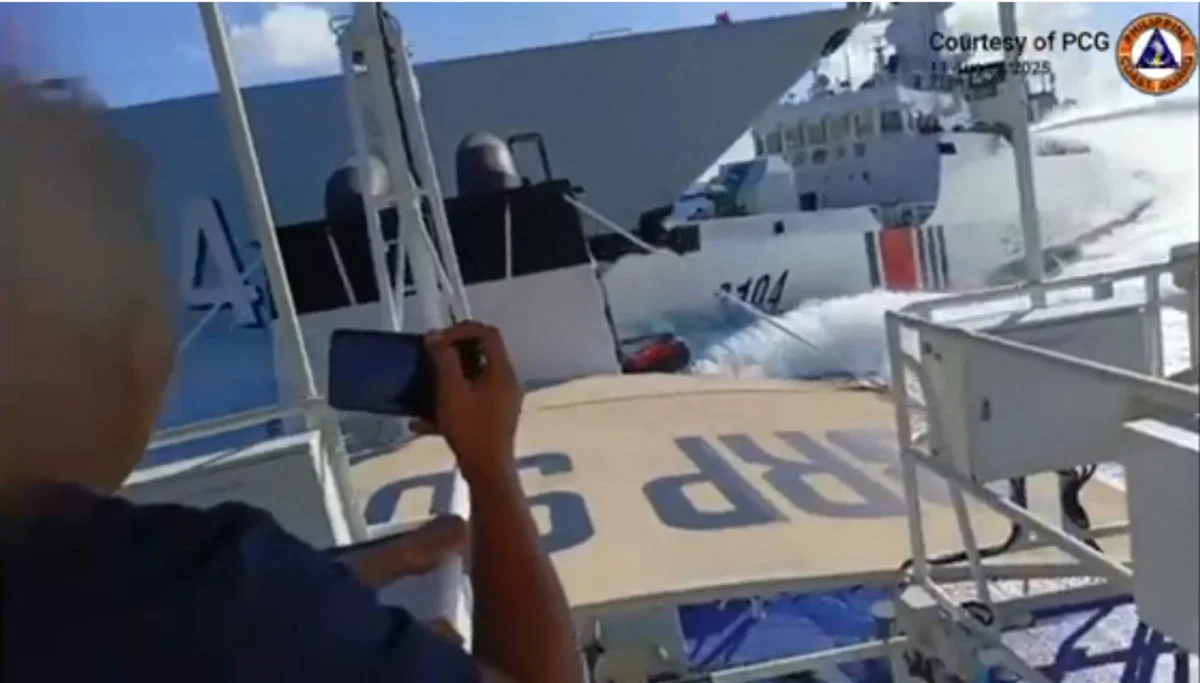
Beijing has, after nearly a year of silence, quietly confirmed the deaths of two Chinese sailors in a maritime collision that occurred in the contested waters of the South China Sea on August 11, 2025. The confirmation came through official government statements and posthumous awards, marking a rare acknowledgment of casualties in the increasingly tense territorial disputes that have seen China and the Philippines clash repeatedly. The incident involved a Chinese navy vessel and a Chinese Coast Guard ship colliding while in pursuit of a Philippine patrol boat near a disputed shoal, an event that was initially captured and disseminated through dramatic video footage released by Manila.
The August 2025 Incident: A Detailed Account

On August 11, 2025, the Scarborough Shoal (known as Bajo de Masinloc in the Philippines and Huangyan Dao in China), a flashpoint in the South China Sea, became the scene of a dangerous maritime confrontation. Philippine authorities had dispatched a patrol boat, believed to be part of a routine resupply mission or a sovereignty patrol, into the vicinity of the shoal. This action was met with an aggressive response from Chinese maritime forces, which consider the shoal to be integral to their territorial claims under the expansive "nine-dash line."
Video footage, released by the Philippine Coast Guard (PCG) shortly after the incident, depicted a harrowing sequence of events. The visuals showed two Chinese vessels—identified as a Chinese Navy vessel (reportedly PLA Navy 164) and a Chinese Coast Guard ship (reportedly China Coast Guard 3104)—engaging in what Manila described as dangerous maneuvers to block and harass the Philippine boat. During this high-stakes pursuit, the two Chinese vessels unexpectedly collided with each other. The impact appeared significant, raising immediate concerns about potential damage and casualties, though details remained scarce at the time.
At the time, a Chinese Coast Guard spokesperson acknowledged a "confrontation" had taken place in the area, but their public statements notably omitted any mention of a collision between their own vessels, nor did they report any injuries or fatalities among their personnel. This lack of transparency fueled speculation and criticism from the Philippines and international observers, who questioned Beijing’s commitment to maritime safety and adherence to international rules of navigation, such as the Convention on the International Regulations for Preventing Collisions at Sea (COLREGs). The Philippine Coast Guard consistently urged the Chinese government to respect these international maritime regulations and to handle such matters with greater professionalism to prevent escalation.

The Long-Delayed Revelation: China’s Posthumous Recognition
The quiet confirmation of the deaths emerged nearly a year later, through official channels within China. The People’s Armed Police Force announced on social media on a Wednesday (likely in July or August 2026, given the "nearly a year after" phrasing) that it had awarded four "martyrs" — including Coast Guard sailors Yi Xinyu and Cheng Long — a special title for their "steadfast political convictions, exemplary deeds and outstanding achievements." This posthumous honor is a significant recognition within China, typically reserved for individuals who have made ultimate sacrifices for the state, often in military or security operations.
Further details regarding Yi Xinyu and Cheng Long were subsequently found on the government’s "China Martyrs Network." Their profiles explicitly stated that both individuals died on August 11, 2025 — the precise date of the collision near Scarborough Shoal — during what was described as a "rights defense operation." Yi Xinyu, aged 21 at the time of his death, was noted to have "sacrificed his life… while participating in a frontline rights defense operation in the South China Sea." Similarly, Cheng Long, aged 25, was said to have "heroically sacrificed his life during a maritime rights defense operation." The "martyr" designation bestows considerable benefits upon their families, including special housing, medical support, and other forms of aid, underscoring the state’s appreciation for their sacrifice. It remains unclear when exactly the sailors were formally given this designation, but its public announcement nearly a year after the incident raises questions about the timing and motivations behind Beijing’s delayed transparency.

Background and Context of South China Sea Disputes
The South China Sea is one of the world’s most contested maritime regions, strategically vital for global trade, rich in fishing grounds, and believed to hold significant oil and natural gas reserves. China asserts sovereignty over nearly the entire sea, symbolized by its controversial "nine-dash line" claim, which encompasses territories also claimed by the Philippines, Vietnam, Malaysia, Brunei, and Taiwan. This expansive claim is largely dismissed by international law, including a landmark 2016 ruling by the Permanent Court of Arbitration in The Hague, which invalidated China’s historical claims under the UN Convention on the Law of the Sea (UNCLOS). China, however, has rejected this ruling, maintaining its historical rights and continuing to assert its presence through various means, including the construction of artificial islands and the deployment of its coast guard and maritime militia.
The Philippines, a treaty ally of the United States, asserts its sovereign rights over parts of the South China Sea, particularly within its Exclusive Economic Zone (EEZ) as defined by UNCLOS. Scarborough Shoal, where the collision occurred, lies well within the Philippines’ EEZ and has been a focal point of contention since China effectively seized control of it in 2012. Repeated attempts by the Philippines to access the shoal, particularly for its fishermen, have often been met with Chinese blockades and harassment, leading to frequent standoffs.

Timeline of Escalating Tensions and Incidents
The August 2025 collision was not an isolated incident but rather a dramatic illustration of the escalating "grey zone" tactics employed by China in the South China Sea. These tactics involve the use of ostensibly civilian vessels, such as coast guard ships and fishing militia, to assert sovereignty without directly engaging in military conflict, thereby operating below the threshold of conventional warfare.
- Prior to August 2025: Numerous reports documented Chinese Coast Guard vessels employing water cannons, dangerous maneuvers, and blocking tactics against Philippine boats around disputed features like Second Thomas Shoal (Ayungin Shoal), where the Philippines maintains a small military outpost on the BRP Sierra Madre. These incidents often resulted in damaged vessels and injuries to Filipino personnel.
- August 11, 2025: The confirmed collision between two Chinese vessels while chasing a Philippine patrol boat near Scarborough Shoal, resulting in the deaths of Yi Xinyu and Cheng Long. This incident marked a dangerous precedent due to the internal collision and the subsequent casualties.
- Post-August 2025 to July 2026: Tensions continued to simmer, with sporadic but intense confrontations. The region saw continued Chinese presence and challenges to Philippine maritime activities.
- July 2026 (Implied): Filipino and Chinese sailors clashed again in the disputed waters, described as their "first serious encounter in months" following the August 2025 incident. This confrontation led to both sides summoning each other’s ambassadors, indicating a significant diplomatic fallout and further exacerbation of bilateral relations. Details of this specific July clash, while not elaborated in the original article, would likely involve similar harassment tactics and mutual accusations.
Reactions and Broader Implications

The delayed confirmation of Chinese casualties carries significant implications for regional stability, diplomatic relations, and China’s international standing.
Official Responses:
- China: Beijing’s narrative, as evidenced by the "martyr" designations and "rights defense operation" descriptions, frames these incidents as legitimate actions to protect its sovereign territory. The delay in acknowledgment could be interpreted as an attempt to control the narrative, perhaps to avoid admitting to operational failures or to prevent domestic and international scrutiny of its aggressive tactics. The posthumous honors serve to reinforce nationalist sentiment and legitimize the sacrifices made in the pursuit of China’s territorial claims.
- Philippines: Manila is likely to reiterate its condemnation of dangerous Chinese maneuvers and demand adherence to international law, particularly UNCLOS and the 2016 arbitration ruling. The revelation of Chinese casualties, albeit delayed, might be used by the Philippines to highlight the inherent risks of China’s assertive actions and the potential for unintended escalation.
- International Community: Allies of the Philippines, particularly the United States, Japan, Australia, and European Union nations, have consistently expressed concerns over China’s destabilizing actions in the South China Sea. The confirmation of casualties underscores the tangible risks involved in these encounters. These nations are likely to renew calls for all parties to exercise restraint, de-escalate tensions, and adhere to a rules-based international order. The incident could also prompt increased military cooperation and joint patrols among allied nations to uphold freedom of navigation in the region.
Analysis of Implications:

- Transparency and Trust: China’s nearly year-long silence on the deaths raises serious questions about its transparency in maritime incidents. This lack of openness erodes trust and makes de-escalation efforts more challenging, as it hinders a full understanding of events and complicates accountability.
- Risk of Escalation: The collision itself, and now the confirmed deaths, highlight the perilous nature of the frequent confrontations. Each incident, whether intentional or accidental, carries the potential to spiral into a larger conflict, especially given the involvement of naval assets and the strategic importance of the region. The proximity of military and coast guard vessels, combined with aggressive maneuvers, creates a volatile environment where miscalculation is a constant threat.
- Domestic Impact in China: The recognition of Yi Xinyu and Cheng Long as martyrs serves to bolster nationalistic fervor and public support for the Communist Party’s strong stance on territorial integrity. It frames their deaths as heroic sacrifices for the nation, reinforcing the idea that China is a victim defending its legitimate rights against external encroachment.
- Regional Stability: The ongoing disputes continue to destabilize the Indo-Pacific region, diverting resources and attention from other critical issues. The confirmed casualties add another layer of complexity to the already strained diplomatic landscape, making a peaceful resolution more elusive.
- Maritime Law and Order: The constant challenges to international maritime law by China, coupled with incidents like this collision, undermine the global framework for ocean governance. The international community faces a persistent test in upholding the principles of freedom of navigation and the peaceful resolution of disputes.
- Naval Operations and Safety: The collision between two Chinese vessels also raises questions about operational coordination and safety protocols within China’s maritime forces during "rights defense operations." Such incidents could prompt internal reviews and potentially lead to adjustments in training or tactics, though this would likely remain opaque.
The belated acknowledgment of these deaths casts a stark light on the human cost of the South China Sea disputes. It underscores the urgent need for robust communication channels, adherence to international maritime safety standards, and a genuine commitment from all claimants to seek peaceful, rules-based resolutions to avoid further loss of life and prevent the simmering tensions from boiling over into a wider regional crisis.

 Nila Kartika Wati
 Muslim