Sagoh
Sagoh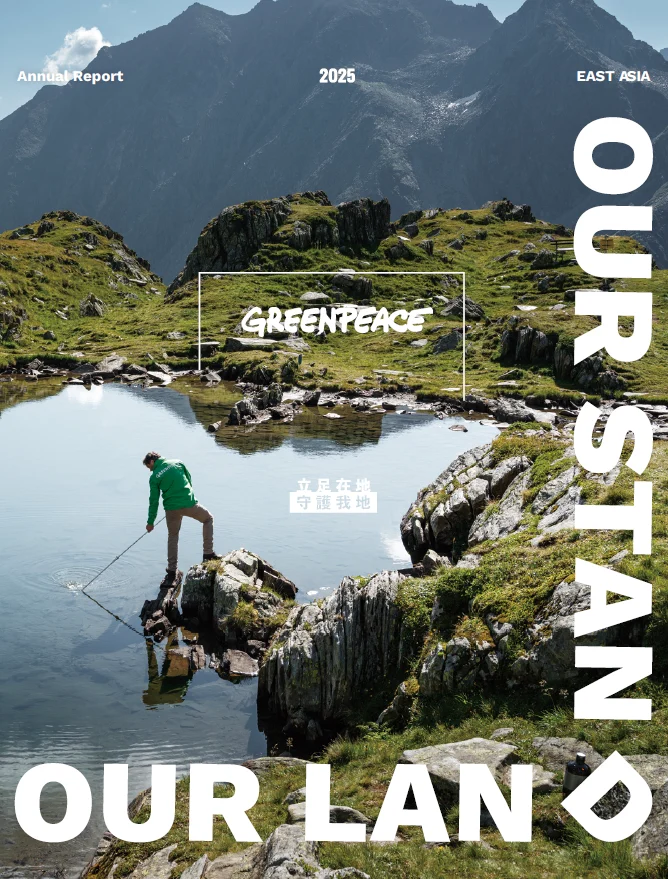
Nature’s stories are never just data. Our land, mountains, and oceans hold the shared memories of our coexistence with all living things. Environmental protection is ultimately about how we live in harmony with the Earth and remain connected to the generations that follow. Real change should not remain within academic debate alone – the challenges facing our land belong to all of us. With your generous support, Greenpeace East Asia remains 100% financially independent, free from political and corporate influence. This strength begins in Hong Kong, scales across East Asia, and echoes around the world. Thank you for turning your love for our land and seas into actions to protect the home we share. Download Greenpeace East Asia’s Annual Report 2025 to read more.
The release of Greenpeace East Asia’s Annual Report 2025 marks a significant milestone, not only for the organization but also for the broader environmental advocacy landscape in the region and globally. The report, available for download, details the organization’s achievements, operational strengths, and strategic direction, underscoring its unwavering commitment to environmental protection driven by independent funding. This independence, a cornerstone of Greenpeace’s operational philosophy, shields its advocacy from the undue influence of political agendas and corporate interests, allowing for uncompromised reporting and action on critical environmental issues.
The Foundation of Independence: Funding and Influence
Greenpeace East Asia’s declaration of 100% financial independence is a strategic imperative that underpins its credibility and effectiveness. In an era where environmental policy can be heavily influenced by lobbying from industries with vested interests, maintaining this autonomy is crucial. This model of funding, primarily sourced from individual donors and foundations, ensures that Greenpeace’s campaigns and research are guided solely by scientific evidence and the urgency of environmental threats, rather than by the financial contributions of potential polluters or governmental bodies.
The report highlights that this financial independence is not merely a matter of principle but a practical necessity for sustained and impactful advocacy. It allows the organization to:
- Conduct Unbiased Research: Greenpeace can commission and publish research on environmental issues without fear of reprisal or the need to appease funding partners. This is vital for exposing corporate malfeasance and holding governments accountable.
- Launch Bold Campaigns: Independent funding empowers Greenpeace to initiate and sustain challenging campaigns that might otherwise be deemed too controversial or costly by entities with external financial ties.
- Respond Swiftly to Crises: Environmental emergencies do not adhere to funding cycles. Financial independence allows for rapid deployment of resources and personnel to address emerging threats.
The report implicitly acknowledges that this model requires significant public trust and consistent donor engagement. The gratitude expressed towards supporters for transforming their "love for our land and seas into actions" points to a deep-seated connection with the communities they serve and a reliance on grassroots support.
A Regional Powerhouse with Global Reach
The report emphasizes that Greenpeace East Asia’s impact, while originating in Hong Kong, is not confined to its immediate locale. It signifies a strategic expansion and deepening of its influence across East Asia, a region facing some of the most pressing environmental challenges globally. This includes rapid industrialization, significant urban development, and the disproportionate impact of climate change on coastal communities and biodiversity.
The geographical scope of Greenpeace East Asia encompasses key nations and territories within the region. While specific campaign details are not provided in this excerpt, the report’s assertion of scaling "across East Asia" suggests ongoing work in areas such as:
- China: Addressing air and water pollution, promoting renewable energy, and protecting marine ecosystems.
- Japan: Advocating for nuclear disarmament and clean energy alternatives, as well as tackling marine plastic pollution.
- South Korea: Campaigning against fossil fuel expansion, promoting sustainable agriculture, and protecting vulnerable coastlines.
- Taiwan: Focusing on renewable energy transition, ocean conservation, and wildlife protection.
The report further states that this regional strength "echoes around the world." This implies that successful strategies, advocacy models, and research findings from East Asia are shared and leveraged by the broader Greenpeace global network, contributing to international environmental efforts. Conversely, global best practices and scientific understanding inform Greenpeace East Asia’s work.
The Philosophical Underpinning: Coexistence and Legacy
Beyond the operational and strategic aspects, the report articulates a profound philosophy of environmentalism. The opening statement, "Nature’s stories are never just data. Our land, mountains, and oceans hold the shared memories of our coexistence with all living things," moves beyond a purely scientific or economic framing of environmental issues. It positions environmental protection as an intrinsic part of human identity and a responsibility towards future generations.
This perspective highlights several key themes:
- Interconnectedness: The acknowledgement of "shared memories of our coexistence with all living things" underscores the ecological principle of interdependence. Human well-being is inextricably linked to the health of ecosystems.
- Stewardship and Legacy: The phrase "connected to the generations that follow" emphasizes a long-term vision of environmental stewardship. Current actions have lasting consequences, and responsible environmental management is a duty of care for posterity.
- Holistic Approach: The report implicitly rejects a siloed approach to environmentalism, suggesting that challenges to "our land" are universal and require collective responsibility. This contrasts with an academic or policy-maker-centric view that might exclude broader societal engagement.
The call for "real change" to move beyond "academic debate alone" is a direct appeal for greater public engagement and action. It suggests that while scientific understanding and policy frameworks are essential, they are insufficient without widespread public awareness, mobilization, and commitment.
Looking Ahead: The Annual Report as a Roadmap
The Annual Report 2025, as an official publication, serves as a transparent account of Greenpeace East Asia’s activities and achievements over the past year. While this introductory text provides a high-level overview, the full PDF document would likely contain detailed information on:
- Specific Campaign Outcomes: Successes in policy advocacy, corporate accountability, and public awareness initiatives.
- Financial Statements: A breakdown of income and expenditure, further demonstrating financial independence and responsible resource allocation.
- Programmatic Focus Areas: Details on the key environmental issues being addressed, such as climate change, biodiversity loss, plastic pollution, and sustainable forestry.
- Organizational Growth and Development: Information on staff, volunteers, partnerships, and strategic planning for the future.
- Challenges and Future Outlook: An honest assessment of ongoing environmental threats and Greenpeace East Asia’s plans to address them.
Supporting Data and Context (Inferred and Illustrative)
While the provided text does not include specific data, an annual report of this nature would typically be supported by factual evidence. For instance, in the context of East Asia’s environmental challenges, such data might include:
- Air Quality Indices: Statistics on particulate matter (PM2.5) and ozone levels in major East Asian cities, illustrating the pervasive issue of air pollution. For example, the World Health Organization (WHO) consistently reports that many of the world’s most polluted cities are located in Asia.
- Marine Plastic Pollution Rates: Data on the volume of plastic waste entering the oceans from the region, highlighting the critical need for waste management and reduction efforts. Reports from organizations like the United Nations Environment Programme (UNEP) often cite East Asia as a significant contributor to ocean plastic.
- Renewable Energy Adoption Rates: Figures on the growth of solar, wind, and other renewable energy sources in countries like China, which is a global leader in renewable energy investment, yet still heavily reliant on coal.
- Deforestation and Biodiversity Loss Statistics: Data on the extent of forest cover loss and the decline of endangered species in critical habitats within East Asia.
- Climate Change Impact Projections: Scientific projections on sea-level rise, increased frequency of extreme weather events (typhoons, heatwaves), and their implications for coastal communities and agricultural productivity in the region.
Timeline or Chronology (Illustrative)
An annual report would likely reflect a year of ongoing and evolving campaigns. A hypothetical timeline of Greenpeace East Asia’s work in 2025 might include:
- Q1 2025: Launch of a new campaign targeting single-use plastic packaging in major East Asian retail markets, supported by research exposing the volume of waste generated. Public awareness events and petitions initiated.
- Q2 2025: Release of a report detailing the environmental impact of specific industrial practices in a particular East Asian nation, leading to public outcry and calls for regulatory reform. Engagement with local communities affected by pollution.
- Q3 2025: Participation in international climate negotiations or regional environmental summits, presenting scientific findings and advocating for stronger climate commitments from East Asian governments. Mobilization of public pressure through online and offline actions.
- Q4 2025: A major advocacy win, such as a corporate commitment to reduce its carbon footprint or a government policy shift towards more sustainable practices, building on sustained pressure throughout the year. Publication of the Annual Report itself, summarizing these efforts.
Statements or Reactions from Related Parties (Inferred)
While the provided text focuses on Greenpeace’s internal perspective, a comprehensive news article would seek external commentary. Based on the nature of their work, reactions to Greenpeace East Asia’s activities might include:
- Environmental Scientists and Academics: They might commend Greenpeace for bringing critical issues to the public’s attention and for providing independent research, but might also offer nuanced perspectives on the feasibility of certain policy proposals or the complexities of scientific data.
- Government Officials: Depending on the specific campaign, responses could range from acknowledgment and promises of investigation to outright denial or criticism of Greenpeace’s methods. For example, a government might issue a statement regarding its commitment to environmental targets when faced with public pressure amplified by Greenpeace.
- Industry Representatives: Corporations targeted by Greenpeace campaigns would likely issue statements defending their practices, highlighting their own sustainability initiatives, or challenging the accuracy of Greenpeace’s findings. They might emphasize their economic contributions while downplaying environmental risks.
- Community Leaders and Affected Residents: Individuals living in areas impacted by environmental degradation would likely voice strong support for Greenpeace’s advocacy, sharing personal testimonies and urging for immediate action.
Brief Fact-Based Analysis of Implications
The sustained financial independence of Greenpeace East Asia has significant implications for environmental governance and advocacy in the region. It empowers a critical voice that can operate outside the often-constraining influences of national governments and multinational corporations. This allows for a more robust public discourse on environmental issues, pushing for stricter regulations and greater corporate accountability.
The organization’s strategy of scaling its impact from Hong Kong across East Asia and globally suggests a recognition of the interconnected nature of environmental problems. Pollution does not respect borders, and climate change is a global phenomenon. By building regional capacity and influencing international dialogues, Greenpeace East Asia contributes to a more coordinated and effective global response to the environmental crisis.
Furthermore, the emphasis on connecting with "generations that follow" and moving beyond "academic debate" signals an intent to foster a deeply embedded culture of environmental responsibility within society. This approach aims to transform public perception and behavior, creating a groundswell of support that can drive lasting systemic change. The success of such an organization, rooted in independent funding and a clear ethical framework, offers a model for other civil society groups seeking to effect meaningful environmental progress in a complex and challenging world. The Annual Report 2025, therefore, is not just a historical document but a testament to an ongoing, vital mission.

 Evan Lee Salim
 Laily UPN