Dwi Wanna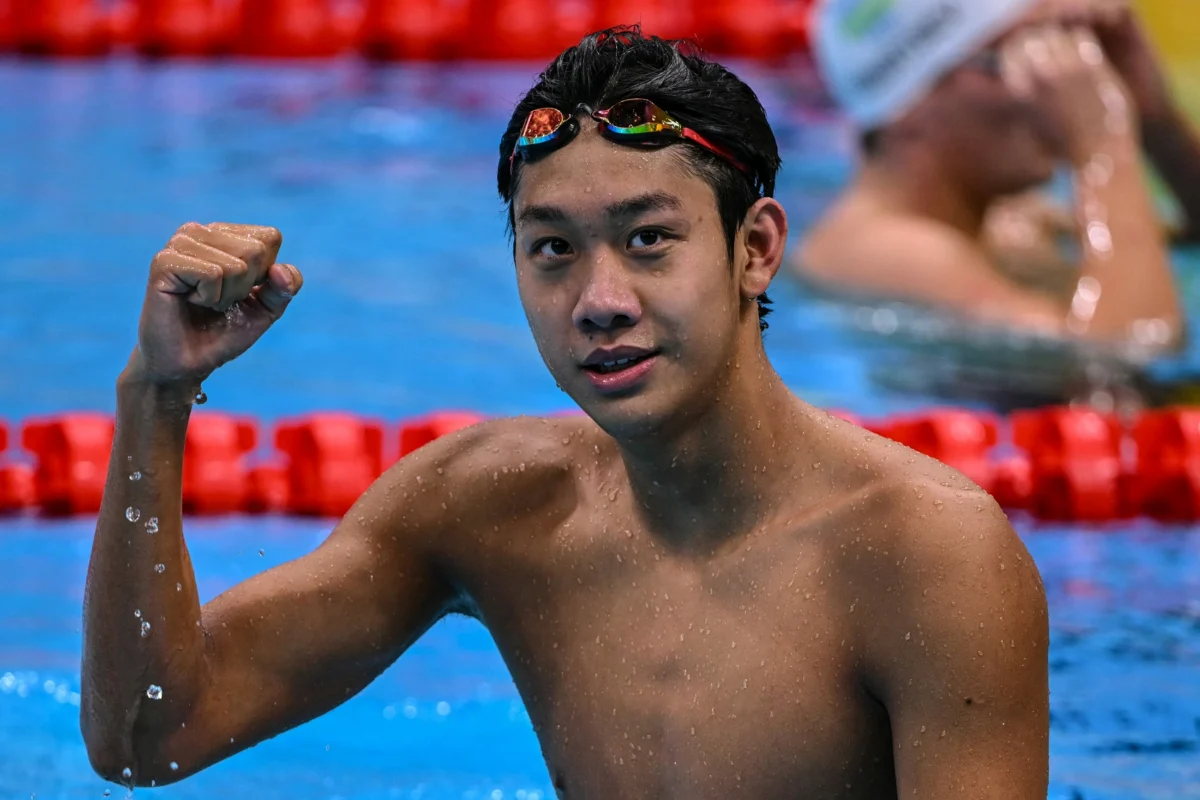
The 20th Asian Games, hosted across Tokyo and Japan’s Aichi prefecture, erupted with a spectacular display of athletic prowess on Friday, September 25, 2026, as China’s prodigious swimmer Zhang Zhanshuo carved his name into the annals of sporting history. The towering 19-year-old became the first athlete ever to secure an astonishing seven gold medals at a single edition of the Asian Games, dominating the aquatic centre with a performance that captivated fans and analysts alike. His unparalleled achievement underscored a day brimming with record-breaking feats, including scorching victories on the track by young sprinters from Thailand and China, and a formidable display of strength by North Korea’s weightlifters who shattered world records.
A Tidal Wave of Gold: Zhang Zhanshuo’s Unprecedented Dominance in the Pool
From the moment the swimming events commenced at the state-of-the-art Tokyo Aquatics Centre, Zhang Zhanshuo, standing at an imposing 198cm (6ft 6in), signaled his intent to redefine excellence. On Friday, he culminated his sensational campaign by claiming the men’s 400m freestyle title in a Games-record time of 3 minutes 41.28 seconds. Emerging from the water, the young Chinese star sat on the lane divider, a broad smile spreading across his face as he meticulously counted off his seven gold medals on his fingers, a moment of quiet triumph that quickly became one of the defining images of the Games.

Zhang’s extraordinary haul included individual golds in the grueling 200m, 800m, and 1,500m freestyle events, showcasing his versatility and endurance across the distance spectrum. Complementing these solo triumphs were three additional gold medals secured as a pivotal member of China’s relay teams, where his powerful strokes and strategic contributions proved instrumental. Reflecting on his "perfect week," Zhang maintained a grounded perspective, stating, "I think the most important thing is to stay grounded and focused, because the Asian Games are not my ultimate goal." His gaze is firmly set on the global stage, with the Los Angeles Olympics less than two years away, suggesting that his Tokyo performance is merely a prelude to even greater aspirations.
China’s swimming contingent showcased its formidable strength, seizing an overwhelming 30 of the 42 gold medals contested in the pool. This dominance was not solely attributed to Zhang; the nation also celebrated the emergence of 13-year-old phenomenon Yu Zidi, who captured three individual golds, each set in a new Games-record time. Yu’s precocious talent has drawn comparisons to past swimming legends, highlighting China’s deep pipeline of athletic talent. Not to be overshadowed, Japan’s 17-year-old Shin Ohashi delivered a historic performance on Thursday, shattering the men’s 200m breaststroke world record, an achievement that sent ripples of excitement through the swimming community and affirmed Asia’s rising prominence in aquatic sports on a global scale. The collective achievements in the pool underscore the region’s fierce competition and its potential to challenge traditional powerhouses in the lead-up to the 2028 Olympic Games.
Blazing the Track: New Sprint Kings and Queens Emerge
While the aquatic arena in Tokyo witnessed history, the main host city of Nagoya, within the wider Aichi prefecture, played host to the "blue riband" events of track and field: the men’s and women’s 100m sprints. Despite the high-stakes competition, rows of empty seats were noticeably visible, sparking discussions about spectator engagement and event promotion at the Games. Nevertheless, the athletes delivered electrifying performances that transcended the sparse attendance.

In the women’s 100m final, China’s 17-year-old Chen Yujie streaked to a comfortable victory, clocking a new Games-record time of 11.06 seconds. Her triumph was particularly poignant as she approaches her 18th birthday in December, a milestone she described as becoming an "adult" in China. "So this is the best present for my birthday, to be on the top of the Asian Games podium," Chen remarked, encapsulating the significance of her achievement. Her performance signals a promising future for Chinese women’s sprinting on the international stage.
The men’s 100m final delivered a thrilling spectacle, culminating in a historic victory for Thailand. 20-year-old Puripol Boonson, after setting a Games record earlier in the evening, burst out of the pack in the final quarter of the race to claim gold in an astonishing 9.90 seconds. This victory marked a monumental moment for Thai athletics, as it was the nation’s first men’s 100m gold medal since Suchart Jairsuraparp’s triumph on home soil at the 1978 Bangkok Games. Boonson’s record-breaking run and his nation’s long-awaited return to the top of Asian sprinting positions him as a rising star to watch in global athletics. The performances on the track, despite the crowd numbers, highlighted the immense talent pool within Asian sprinting, with young athletes poised to challenge established norms.
Gymnastics Glory and Basketball Battlegrounds
The final evening of gymnastics witnessed a triumphant conclusion for the Philippines’ Carlos Yulo, who secured his second gold medal of the Games in the men’s vault. The double Olympic champion had previously clinched gold in the floor exercise on Thursday, thereby completing his collection of major titles across various apparatus. Overwhelmed by emotion, Yulo expressed his disbelief and relief, stating, "I can’t believe it. In this whole Asian Games I felt really stressed, but at the same time I enjoyed what I did today. I really did my part. Today was really a miracle for me." His rigorous schedule, however, offers little time for celebration, with the demanding World Championships slated for next month, underscoring the relentless pace of elite gymnastics.

In a highly anticipated women’s basketball semi-final, South Korea edged out regional rival China with a narrow 85-80 victory, setting up a gold medal showdown against host nation Japan. The contest was dominated by the sheer presence of China’s 19-year-old center, Zhang Ziyu, who stands at an imposing 223cm (7ft 4in). Zhang scored 22 points, proving a formidable challenge for the South Korean defense. South Korea’s Kang Lee-seul acknowledged the difficulty, stating, "She was tough to guard. We couldn’t defend her, but we focused on fast breaks and shooting more three-pointers." This strategic adaptation, leveraging speed and perimeter shooting against China’s interior dominance, ultimately secured South Korea’s path to the final. The basketball semi-final highlighted contrasting styles and the strategic depth of Asian women’s basketball, promising an exciting gold medal match.
North Korea’s Weightlifting Powerhouse Shatters World Records
North Korea’s women’s weightlifting team continued its astonishing run of form, with Oh Kwang Ok delivering a sensational performance that saw her set three new world records en route to gold in the women’s 57kg bodyweight class. Oh lifted an incredible 104kg in the snatch, followed by a powerful 134kg in the clean and jerk, culminating in a staggering 238kg total – all unprecedented marks on the global stage. Her triumph added to North Korea’s already impressive medal haul, following two previous gold medals won by their women lifters in the 49kg and 53kg categories earlier in the week.
North Korea’s weightlifting program has consistently demonstrated remarkable strength, and their athletes in Nagoya are proving to be a dominant force, having secured four gold medals and two silvers across the six weightlifting events contested so far. This sustained excellence underscores the nation’s focused approach to developing world-class weightlifters, raising the bar for competition and inspiring awe with their displays of raw power and precision. The sheer number of world records being broken at the Asian Games weightlifting events is a testament to the exceptional caliber of athletes and the advancements in training methodologies within the continent.

The Broader Landscape: Medal Standings and Emerging Talent
As the 20th Asian Games reached its midpoint, the medal tally after day six painted a clear picture of China’s overwhelming dominance. The People’s Republic had amassed an impressive 98 gold medals, significantly outpacing its nearest competitors. Host nation Japan stood a distant second with 28 golds, while South Korea occupied the third spot with 13 golds. This substantial lead by China is indicative of its comprehensive national sports development strategy and its deep talent pool across a multitude of disciplines.
A recurring theme throughout these Games is the remarkable emergence of young talent. Athletes like Zhang Zhanshuo (19), Yu Zidi (13), Shin Ohashi (17), Chen Yujie (17), and Puripol Boonson (20) are not just participating; they are setting records and winning gold, often against more experienced competitors. This youth movement bodes exceptionally well for the future of Asian sports, positioning the continent as a formidable force on the global sporting landscape for years to come, especially with major international competitions like the World Championships and the Los Angeles 2028 Olympics on the horizon. The Asian Games continue to serve as a crucial proving ground, identifying and nurturing the next generation of Olympic and world champions.
Host Cities in Focus: Tokyo and Nagoya’s Dual Role

The 20th Asian Games adopted a unique dual-host city model, with the primary celebrations and many events centered in Nagoya and the wider Aichi prefecture. However, the prestige and infrastructure of Tokyo, a recent Olympic host, were leveraged for specific high-profile events. The Tokyo Aquatics Centre, a world-class facility from the 2020 (2021) Olympic Games, was the stage for swimming, diving, and equestrian events, allowing for seamless integration of top-tier venues. This distributed hosting strategy aimed to maximize existing facilities and spread the economic and cultural benefits of the Games across different regions of Japan. Despite the logistical complexities, the system has largely facilitated smooth operations, allowing athletes to perform at their peak in excellent environments, even if spectator turnout in some venues like Nagoya’s athletics stadium raised questions.
Looking Ahead: The Road to the Finish Line
With many sports still underway, the 20th Asian Games promises more thrilling moments and potential record-breaking performances. For athletes like Carlos Yulo, the immediate focus shifts to the World Championships, highlighting the packed schedule of elite sports. For others, the dazzling performances in Nagoya and Tokyo serve as crucial markers on their journey towards the Los Angeles 2028 Olympics. The unparalleled success of Zhang Zhanshuo, the historic sprint victories, the dominance in weightlifting, and the strategic battles in team sports have all contributed to a vibrant and competitive Games. These achievements will undoubtedly inspire future generations of Asian athletes and solidify the continent’s standing as a powerhouse in the world of sports, leaving a lasting legacy of excellence and determination.

 Iffa Jayyana
 Asep Darmawan