Sagoh
Sagoh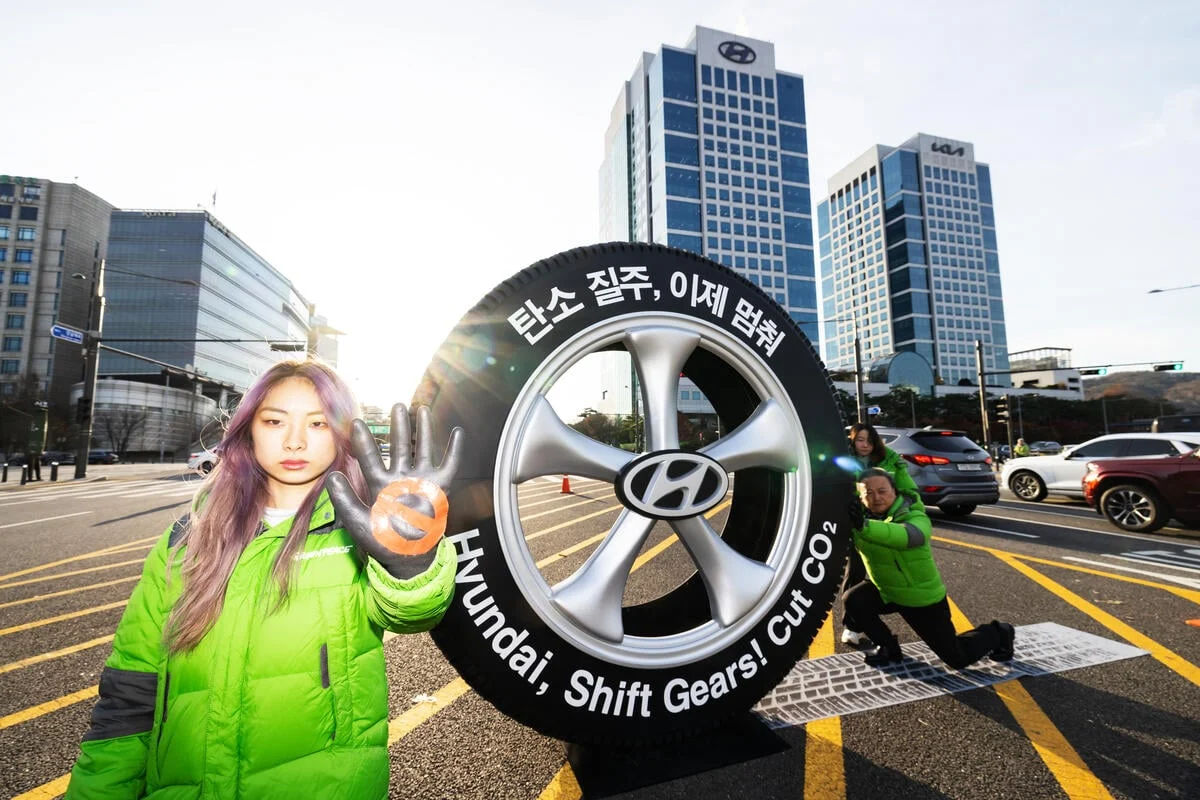
A coalition of global non-governmental organizations (NGOs) has issued a public appeal to Euisun Chung, Executive Chair of Hyundai Motor Group, urging the automotive giant to reconcile its ambitious climate commitments with its tangible business practices. The letter, representing a unified voice of concerned citizens, highlights a stark contrast between Hyundai’s "clean, green mobility" image and its ongoing reliance on fossil fuel vehicles and a supply chain marked by reported human rights and environmental concerns. The timing of this appeal is particularly salient, coinciding with Hyundai’s extensive partnership with FIFA and its prominent role as a sponsor for the upcoming FIFA World Cup, an event increasingly scrutinized for its environmental footprint.
Hyundai’s Global Ambitions and Environmental Scrutiny
For over two decades, Hyundai Motor Group has been a steadfast partner of the Fédération Internationale de Football Association (FIFA). Its sponsorship of the 2026 FIFA World Cup, reportedly valued at approximately $300 million, positions Hyundai as one of the most visible corporate faces of the global tournament. The company has leveraged this platform to project an image of "progress for humanity," showcasing its electric vehicles (EVs) and articulating a vision for a sustainable future. This marketing strategy, however, is facing increasing pressure from environmental and human rights advocates who argue that Hyundai’s actions do not align with its aspirational messaging.
The Carbon Footprint Discrepancy
Despite investments in EV technology and prominent displays at global sporting events, the scale of Hyundai and Kia’s combined annual emissions is significant. Reports indicate that their emissions are comparable to those of an entire nation like Spain, reaching approximately 250 million tonnes of CO2-equivalent each year. Furthermore, a critical analysis of their sales figures reveals that electric vehicles currently constitute only 7% of their overall global sales. This statistic underscores the reality that the vast majority of vehicles produced and sold by Hyundai and Kia still rely on internal combustion engines, perpetuating the use of fossil fuels.
Supply Chain Concerns and Human Rights Allegations
Beyond its direct emissions, Hyundai Motor Group faces serious allegations regarding its global supply chain. Reports from organizations such as the Fair Steel Coalition, Mighty Earth, and Jobs to Move America have detailed instances of severe human rights, labor, and environmental abuses. These reports link Hyundai to the documented use of child and prison labor, unsafe working conditions, and significant environmental degradation across various regions. The NGOs contend that Hyundai’s vision for "progress for humanity" must extend to actively preventing and rectifying these detrimental impacts within its supply chain, ensuring that workers and communities genuinely benefit from the company’s operations.
Failed Rebuttals and the Call for Transparency
Recent media coverage has highlighted protests in Guadalajara, where activists accused Hyundai of "sportswashing" – using the World Cup to enhance its image without substantive change. While Hyundai issued a response to these actions, the NGOs assert that the company’s statement was generic, failing to address the specific allegations and instead relying on references to existing, deemed inadequate, due diligence processes. This perceived lack of direct engagement with critical issues has fueled the NGOs’ determination to press for concrete commitments.
The FIFA World Cup: A "Carbon-Intensive" Spectacle
The upcoming FIFA World Cup is projected to be one of the most carbon-intensive tournaments in football history. This grim assessment, according to climate experts, is exacerbated by the involvement of some of the world’s most polluting corporate sponsors. The tournament itself is under scrutiny, with warnings that a significant portion of matches could be played in dangerously hot conditions due to global warming. This environmental context amplifies the NGOs’ concerns about Hyundai’s use of the global stage to promote a "green and humane" image that they argue is not substantiated by its operational practices.
A Three-Point Action Plan for Genuine Change
The coalition is not demanding perfection from Hyundai but rather a commitment to honesty and the alignment of its stated goals with its actual practices. They have outlined a clear, three-point action plan for Hyundai Motor Group:
-
Accelerated Transition to 100% Electric Vehicle Sales by 2030: The NGOs are calling for a public commitment to a clear, time-bound phase-out plan for internal combustion engine (ICE) vehicles in all global markets. The specific demand is for Hyundai to accelerate its transition to achieve 100% electric vehicle sales by the year 2030, a significantly more ambitious target than currently projected by many industry analysts. This move would represent a tangible shift away from fossil fuel dependency.
-
Comprehensive Supply Chain Overhaul: The second point focuses on rectifying abuses within Hyundai’s supply chain. This includes a commitment to upholding stringent human rights and environmental standards at every stage, from the sourcing of critical minerals to manufacturing processes. Particular emphasis is placed on addressing carbon-intensive materials such as steel and ensuring that benefits are equitably distributed to workers and affected communities, moving beyond mere compliance to proactive responsibility.
-
Genuine Climate Leadership, Not Greenwashing: The NGOs demand that Hyundai’s partnership with FIFA genuinely reflect climate leadership rather than mere "greenwashing." This requires the implementation of transparent, independently verified emissions targets and demonstrable, measurable progress towards achieving them. This would involve a shift from aspirational statements to quantifiable actions and accountability mechanisms.
Leveraging the US Market Opportunity
The year 2025 marked a significant milestone for Hyundai and Kia in the United States, with the automakers achieving a record combined market share of 11.3%. The 2026 FIFA World Cup presents an unparalleled opportunity for Hyundai to further solidify its presence and win over consumers in this crucial market. The NGOs are urging Hyundai to seize this moment not by marketing a clean and humane image superficially, but by actively earning that reputation through concrete commitments to truly clean vehicles and a just, ethical supply chain.
Background and Chronology of the Appeal
The NGOs’ appeal to Hyundai is not an isolated incident but the culmination of ongoing advocacy and research. Reports detailing supply chain issues have been published by organizations like Mighty Earth and Jobs to Move America over the past several years, providing a consistent stream of evidence highlighting alleged abuses. The Fair Steel Coalition’s recent report, "The Real Cost of Steel," specifically targets the materials used in vehicle manufacturing, an area where Hyundai’s sourcing practices have come under scrutiny.
The timing of this letter in relation to the 2026 FIFA World Cup is strategic. The tournament, scheduled to be held across the United States, Canada, and Mexico, is expected to attract a global audience. Environmental organizations have been increasingly vocal about the carbon footprint of major sporting events, with a recent report from NewWeather.org highlighting the significant environmental impact of past FIFA World Cups. The NGOs likely timed their public appeal to coincide with heightened media and public attention surrounding the World Cup and Hyundai’s role as a major sponsor.
The NGOs’ mention of protests in Guadalajara suggests a proactive, on-the-ground campaign alongside their corporate appeals. This indicates a multi-pronged strategy to exert pressure on Hyundai, utilizing both direct engagement with leadership and public demonstrations to raise awareness and demand accountability. The reported generic response from Hyundai to these protests further solidifies the NGOs’ stance that substantive action is needed beyond corporate public relations.
Analysis of Implications
The NGOs’ demand for a 100% EV sales commitment by 2030 is particularly ambitious. While many automakers have set EV targets, 2030 is an aggressive timeline that would require a significant acceleration of their current transition strategies. Failure to meet such a target could further damage Hyundai’s credibility.
The focus on supply chain integrity is also critical. For a global manufacturer like Hyundai, with complex and extensive supply networks, ensuring ethical sourcing and labor practices is a monumental task. However, with increasing consumer awareness and regulatory scrutiny around ESG (Environmental, Social, and Governance) factors, companies that fail to address these issues risk significant reputational damage and potential legal repercussions.
The call for transparency in climate reporting and verifiable progress is a direct challenge to the practice of "greenwashing." As climate change becomes a more pressing global concern, consumers and investors are increasingly looking for demonstrable action rather than mere pledges. Hyundai’s ability to provide credible, independently verified data on its emissions reduction efforts will be crucial in shaping its public image.
The association with the FIFA World Cup, while providing a significant marketing platform, also exposes Hyundai to intense public scrutiny. Any perceived disconnect between its environmental and social claims and its actual operations can be amplified by the global media attention surrounding the event. This creates a high-stakes environment where genuine commitment to sustainability and ethical practices is paramount for long-term brand integrity.
The coalition’s diverse membership, including organizations like Greenpeace, Sierra Club, and Public Citizen, lends significant weight to their appeal. These groups have established track records in environmental advocacy and corporate accountability, suggesting that their concerns are well-researched and deeply held. Their coordinated effort underscores a unified front demanding systemic change from one of the world’s leading automotive manufacturers.
Future Outlook and Potential Responses
The ball is now in Hyundai Motor Group’s court. The company’s response to this public appeal will be closely watched by environmental groups, consumers, investors, and the broader automotive industry. A substantive and actionable response that addresses the NGOs’ specific demands could significantly bolster Hyundai’s reputation. Conversely, a continuation of generic statements or a refusal to engage meaningfully could lead to intensified public campaigns and further reputational damage, particularly in the lead-up to and during the 2026 FIFA World Cup. The global stage of the tournament provides both an opportunity for Hyundai to showcase genuine progress and a platform for critics to highlight any shortcomings, making this a critical juncture for the company’s sustainability narrative.

 Asro
Asro
 Pevita Pearce