Nila Kartika Wati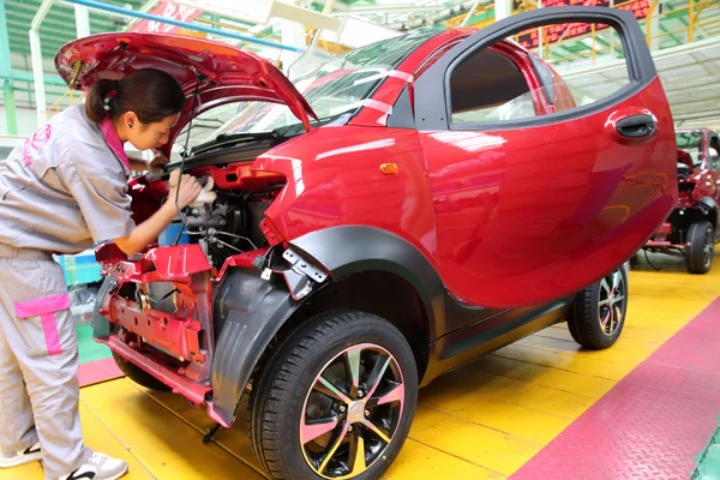
China’s vast automotive market experienced a notable deceleration in growth during November 2017, with vehicle sales posting a modest 0.7 percent year-on-year increase to 2.96 million units, according to data released by the China Association of Automobile Manufacturers (CAAM) on a Monday in December. This figure contributed to a cumulative total of 25.85 million units sold in the first 11 months of the year, representing a 3.6 percent growth from the previous year. While seemingly robust in a global context, this growth rate marked a significant slowdown, being 10.5 percentage points lower than the impressive year-on-year growth recorded for the January to November period of 2016. The sharp decline in momentum prompted Xu Haidong, an assistant to CAAM’s secretary-general, to revise the organization’s full-year sales forecast, predicting that overall growth for 2017 would "definitely fall to below 4 percent," thereby missing the initial estimate of 5 percent made at the start of the year.
The primary drivers behind this cooling of what has long been the world’s largest automotive market were multifaceted, encompassing the gradual erosion of a significant purchase tax discount and broader macroeconomic conditions within China. The temporary tax incentive, initially set at a 50 percent reduction on vehicle purchase tax when introduced in late 2015, had been instrumental in stimulating demand and bolstering sales figures, particularly in 2016. However, its effectiveness began to wane as the discount was halved to 25 percent from January 2017 and was slated to expire completely by the end of December 2017. This phased withdrawal created a "pull-forward" effect, where consumers accelerated purchases to take advantage of the disappearing benefit, leading to inflated sales in preceding periods and a subsequent softening of demand as the deadline approached. Xu Haidong explicitly stated, "The trend is clear. Growth will slow down even further next year," signaling a cautious outlook for 2018, though he refrained from providing specific estimates at the time.
The Fading Glow of Tax Incentives: A Chronology of Policy Impact
The purchase tax incentive was originally implemented by the Chinese government in October 2015, reducing the vehicle purchase tax from 10 percent to 5 percent for passenger cars with engines smaller than 1.6 liters. This policy was a strategic move designed to stimulate domestic consumption and support the automotive industry amidst a period of economic uncertainty and slowing growth in various sectors. The initial impact was immediate and substantial. In 2016, buoyed by the full 50 percent tax cut, China’s auto market witnessed a surge in sales, with annual growth rates reaching approximately 13.7 percent, significantly surpassing previous expectations and making it one of the strongest years for the industry.
However, the temporary nature of the policy meant that its eventual rollback would inevitably impact the market. As 2017 commenced, the tax discount was reduced from 50 percent to 25 percent, meaning the purchase tax for eligible vehicles rose from 5 percent to 7.5 percent. This adjustment was an early indicator of the government’s intention to gradually withdraw stimulus measures as the economy stabilized. The anticipation of the full expiration of the discount at the close of 2017 led to a complex interplay of consumer behavior. While some consumers rushed to make purchases in late 2017 to avail themselves of the remaining discount, others, anticipating a post-expiration price adjustment or simply not being able to afford new vehicles, held back, contributing to the overall market slowdown observed in November. This policy cycle demonstrates a classic example of demand-side stimulus and the subsequent market correction upon its withdrawal, highlighting the significant influence of government policy on consumer spending patterns in China’s automotive sector.
Broader Economic Headwinds and Consumer Sentiment
Beyond the direct impact of the tax incentive’s expiration, the overall economic conditions in China throughout 2017 also played a role in moderating vehicle sales growth. While China’s economy maintained a healthy growth trajectory, with GDP expanding steadily, consumer spending patterns can be influenced by a multitude of factors, including disposable income growth, housing market stability, and general confidence in future economic prospects. For instance, tightening regulations in the real estate sector in various major cities might have diverted consumer funds away from big-ticket purchases like automobiles, or at least encouraged a more cautious approach to discretionary spending.
Furthermore, the general push towards a "new normal" of more sustainable, quality-driven growth, rather than quantity-driven expansion, implied a certain acceptance of slower growth rates in various industries, including automotive. This overarching economic narrative suggests that while the auto market remains robust in absolute terms, the era of double-digit percentage growth, often fueled by aggressive stimulus, might be receding. Consumers, particularly those in higher-tier cities, were also becoming increasingly discerning, valuing factors like environmental performance, safety, and advanced technology over mere affordability, which further complicated the sales landscape for traditional internal combustion engine (ICE) vehicles.
Segmented Performance: Winners and Losers in a Shifting Landscape
The overall deceleration in the Chinese automotive market was not uniformly distributed across all vehicle segments; rather, it presented a nuanced picture of shifting consumer preferences and market dynamics.
Passenger Car Stagnation
Passenger cars, which consistently constitute the bulk of vehicle sales in China, experienced an even slower growth trajectory than the overall market. From January to November 2017, a total of 22 million passenger cars were sold, registering a meager 1.9 percent year-on-year growth. This subdued performance underscored the challenges faced by manufacturers relying heavily on traditional passenger car segments.
Within the passenger car category, a distinct divergence in performance was evident. The continued dominance and rapid expansion of Sports Utility Vehicles (SUVs) proved to be the primary, if not sole, engine of growth for the entire passenger car segment. SUV sales surged by an impressive 14.5 percent year-on-year, reaching 9.09 million units during the first 11 months of 2017. This robust growth reflected a sustained global trend towards SUVs, driven by consumer preferences for higher driving positions, perceived safety, versatility, and often more commanding road presence. Chinese consumers, in particular, have shown a strong affinity for SUVs, contributing significantly to their booming popularity across various price points and brands, both domestic and international.
In stark contrast to the SUV boom, other traditional passenger car segments suffered significant setbacks. Sedan sales, once the bedrock of the market, dipped by 2.3 percent. This decline indicated a shift away from conventional sedans as consumers opted for more versatile alternatives. The multi-purpose vehicle (MPV) segment experienced an even sharper contraction, with sales falling by 16.5 percent in the same period. Minivans, often associated with more utilitarian and commercial uses, witnessed the most substantial slump, plummeting by 20.1 percent. These figures highlight a clear market restructuring, where consumer demand is increasingly consolidating around SUVs and, as will be discussed, New Energy Vehicles (NEVs), leaving other segments struggling for relevance.
Commercial Vehicles: A Resilient Sector
While passenger car growth softened, the commercial vehicle segment, encompassing buses and trucks, reported a comparatively decent sales performance, demonstrating a resilience often tied to broader industrial and logistics activity. In November 2017 alone, 368,000 commercial vehicles were sold, marking a 7.3 percent rise from the same month last year. This strong monthly performance contributed to a cumulative sales total of 3.75 million units in the first 11 months of the year, representing an impressive nearly 15 percent year-on-year growth. This growth rate was notably higher than the industry’s overall average, exceeding it by a significant 11.2 percentage points. The robust demand for commercial vehicles likely reflected sustained infrastructure development, growth in logistics and transportation sectors, and possibly stricter emission standards driving fleet upgrades.
The Rise of New Energy Vehicles (NEVs): A Glimpse into the Future
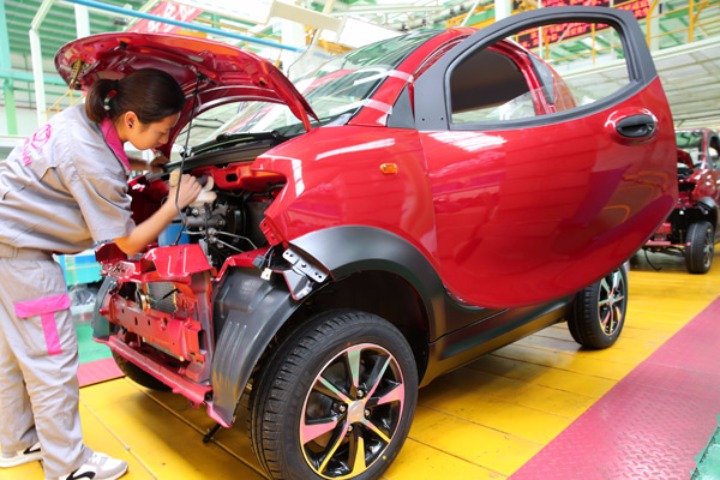
Amidst the general slowdown and segmented shifts, the New Energy Vehicle (NEV) market emerged as a phenomenal bright spot, showcasing exponential growth and signaling a fundamental transformation of China’s automotive industry. NEVs, comprising battery electric vehicles (BEVs), plug-in hybrid electric vehicles (PHEVs), and fuel-cell vehicles (FCVs), demonstrated unparalleled momentum.
Record-Breaking Growth and Strategic Imperative
November 2017 witnessed a record number of 119,000 NEV units sold, representing an astonishing 83 percent surge year-on-year. This remarkable monthly performance propelled year-to-date sales for the first 11 months to 609,000 units, a substantial 51.4 percent growth compared to the previous year. These figures confirmed that the development of NEVs was not only meeting but exceeding industry expectations. Xu Haidong expressed strong confidence, stating, "Their development is in line with our expectations. It is now almost certain that their sales this year would reach our whole-year estimate of 700,000 units." This upward trajectory solidified China’s position as the global leader in NEV production and sales.
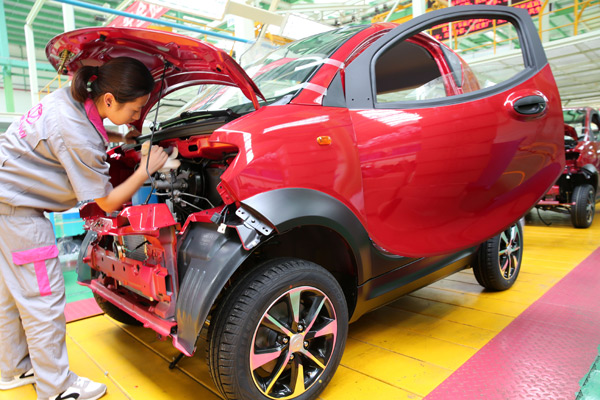
The explosive growth of NEVs is not merely a market phenomenon but a direct outcome of China’s strategic imperative to lead in advanced automotive technologies, address severe urban air pollution, and reduce reliance on imported fossil fuels. The government has implemented a comprehensive suite of policies designed to incentivize both the production and purchase of NEVs. These include substantial direct subsidies for buyers, preferential policies such as exemption from license plate lottery restrictions (a significant advantage in major cities like Beijing and Shanghai where conventional vehicle plates are scarce and expensive), and a robust "dual-credit" policy. The dual-credit policy, introduced around this period, mandates that automakers must meet certain targets for NEV production or purchase credits from other manufacturers, effectively forcing a shift in their manufacturing portfolios towards electrification. These multifaceted policies have created a highly supportive ecosystem for NEV adoption and innovation.
Infrastructure Expansion: Fueling the Future
Crucial to the long-term success and widespread adoption of NEVs is the development of a comprehensive and accessible charging infrastructure. Recognizing this, China has embarked on an ambitious program to build out its charging network rapidly. By the end of November 2017, a total of 431,800 charging poles had been installed across the country, according to data from the China Electric Vehicle Charging Infrastructure Promotion Alliance (EVCIPA). This massive infrastructure rollout, encompassing public, private, and workplace charging stations, is critical for alleviating range anxiety and making electric vehicle ownership a practical reality for a growing number of consumers. The continuous expansion of this network underpins the government’s long-term vision for electric mobility and ensures that the burgeoning NEV sales can be sustained.
Future Projections and Industry Confidence
Looking ahead, CAAM remained highly optimistic about the future of NEVs. Xu Haidong confidently projected that NEV sales would reach 1 million units in 2018, a testament to the strong policy support, growing consumer acceptance, and continuous technological advancements in battery efficiency and vehicle performance. This forecast underscores a fundamental shift in the industry’s focus, with traditional internal combustion engine vehicles facing increasing regulatory pressures and diminishing market share in favor of electric alternatives. China’s proactive approach in fostering its NEV industry positions it not only as the largest market but also as a key innovator and manufacturing hub for the global electric vehicle revolution.
Industry Reactions and Future Outlook: Adapting to a New Automotive Era
The significant shifts observed in China’s automotive market in late 2017 prompted varied reactions from industry stakeholders and pointed towards several key trends shaping the future.
Automakers Adapt to New Realities
For both domestic and international automakers operating in China, the market’s deceleration and the distinct segmentation performance necessitated strategic adjustments. Manufacturers with a strong SUV portfolio or those quickly ramping up NEV production were better positioned to navigate the changing landscape. Foreign brands, traditionally strong in sedans, began to accelerate their SUV offerings and dedicate substantial resources to their NEV strategies to remain competitive. Domestic brands, which had already carved out significant market share in the affordable SUV segment, continued to leverage this advantage while also investing heavily in their own NEV platforms, often with government backing. The impending expiration of the purchase tax cut forced all players to re-evaluate their sales targets and marketing strategies for 2018, with a greater emphasis on value propositions beyond temporary tax benefits. This included focusing on brand loyalty, advanced features, and comprehensive after-sales services.
Shifting Consumer Preferences and the Road Ahead
The evolving market conditions reflected a maturation of the Chinese automotive consumer. While price remained a factor, particularly in lower-tier cities, an increasing number of buyers were prioritizing vehicle type (SUVs), technological innovation (NEVs), and environmental considerations. The government’s consistent messaging on environmental protection and the push for "green" transportation solutions undoubtedly influenced public perception and adoption of NEVs.
The outlook for China’s automotive market in the years following 2017 pointed towards a period of more moderate, yet sustainable, growth, fundamentally driven by innovation and environmental mandates rather than broad stimulus. While the overall growth rate might not return to the double-digit figures seen in previous years, the sheer volume of the market ensures its global significance. The focus will increasingly shift from quantity to quality, from traditional powertrains to electrification, and from pure sales volume to integrated mobility solutions. China is not just witnessing a slowdown in its auto market; it is undergoing a profound structural transformation, cementing its role as a pivotal force in defining the future of global automotive industry.

 Evan Lee Salim
 Suro Senen