Asep Darmawan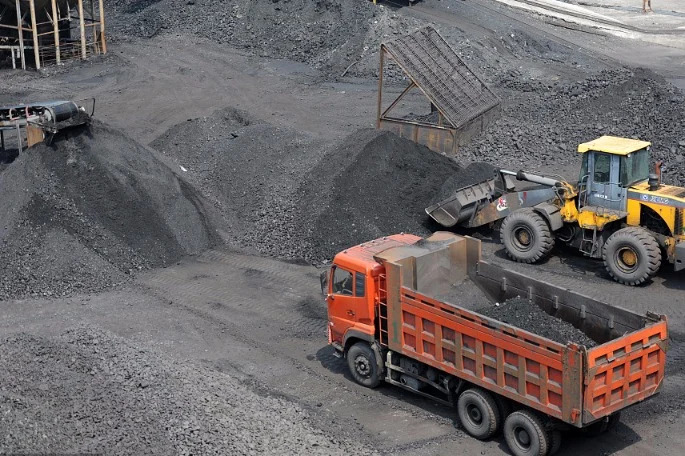
China is poised to achieve its ambitious goal of reducing coal capacity by 500 million metric tons significantly ahead of the initially planned three-to-five-year timeline, with officials indicating the target will be met by next year. This aggressive push, alongside substantial cuts in the steel sector, underscores Beijing’s unwavering commitment to supply-side structural reform, economic rebalancing, and environmental remediation. The accelerated pace of de-capacity measures reflects a strategic pivot away from resource-intensive, high-polluting industries towards a more sustainable and high-quality growth model.
The Strategic Imperative: Addressing Overcapacity and Pollution
The drive to cut industrial capacity is a cornerstone of China’s economic policy, particularly since the 18th National Congress of the Communist Party of China in 2012, which emphasized "ecological civilization." The problem of industrial overcapacity, particularly in sectors like steel and coal, became acute following the massive stimulus package implemented in response to the 2008 global financial crisis. This stimulus, heavily reliant on infrastructure and industrial investment, led to a surge in production capacity that far outstripped domestic demand, creating "zombie enterprises" – unprofitable firms kept afloat by local government support or bank loans – and exacerbating environmental degradation.
By the mid-2010s, China’s steel industry alone accounted for roughly half of global production, with significant portions of this capacity deemed inefficient, outdated, and environmentally damaging. Similarly, the coal sector faced issues of oversupply, low efficiency, and severe air pollution, especially in northern industrial heartlands. The "13th Five-Year Plan" (2016-2020) formally enshrined targets for capacity reduction in these key sectors, making it a national priority to tackle the twin challenges of industrial inefficiency and environmental blight. This reform initiative is also seen as a crucial step in alleviating trade tensions, particularly with countries that have accused China of dumping cheap steel on international markets.
Coal Sector Transformation: Exceeding Expectations
Jiang Zhimin, vice-president of the China National Coal Association, recently confirmed at a forum hosted by the China Metallurgical Industry Planning and Research Institute that the country is on track to meet its 500 million metric ton coal capacity reduction goal by 2018. This represents a remarkable acceleration, completing the five-year target in just three years. The rapid progress is a testament to the stringent enforcement of policies designed to shut down inefficient and unsafe mines while promoting consolidation within the industry.
A key aspect of this transformation is the drastic reduction in the number of operational coal mines. From approximately 10,800 mines in 2015, the figure is projected to drop to around 7,000 by the end of 2017. This consolidation strategy favors larger, more technologically advanced, and safer mining operations. Jiang highlighted that China now boasts over 1,200 coal mines with an annual production capacity exceeding 1.2 million tons, collectively accounting for more than 75 percent of the nation’s total coal capacity. This shift not only improves efficiency but also enhances safety standards and facilitates environmental compliance.
The timeline of cuts has been consistently ahead of schedule:
- 2016: China cut over 290 million tons of coal capacity, exceeding its initial annual target.
- 2017: The annual target was set at 150 million tons, which was successfully accomplished by November, according to data from the National Bureau of Statistics (NBS).
These reductions have profound implications for China’s energy mix, supporting the national agenda to decrease reliance on coal and increase the share of cleaner energy sources like natural gas, nuclear power, and renewables. While coal remains a dominant fuel, the government’s long-term strategy aims to cap coal consumption and promote cleaner coal technologies, including carbon capture and storage.
Steel Industry Overhaul: Eliminating Outdated Production
Parallel to the coal sector’s reforms, China has made significant strides in slashing its steel production capacity. Xu Wenli, head of the Iron and Steel Division at the Ministry of Industry and Information Technology (MIIT), reported that the country has already cut more than 115 million tons of steel capacity. This achievement brings China remarkably close to the upper limit of its capacity reduction target of 150 million tons for the steel sector during the 13th Five-Year Plan period (2016-2020).
A critical component of this initiative has been the decisive elimination of low-quality steel, often referred to as "rebar," produced from scrap metal in induction furnaces. This type of steel, known for its inferior quality and highly polluting production methods, was phased out completely by the end of June, with 140 million tons of such capacity removed from the market. This measure alone had a significant impact on both product quality and environmental standards within the industry.
The steel capacity reduction efforts have also followed an aggressive timeline:
- 2016: Over 65 million tons of steel production capacity were eliminated.
- 2017: The annual capacity reduction goal of 50 million tons was met by the end of August, well ahead of schedule.
Xu Wenli emphasized the ongoing commitment to "continue to cut outdated steel capacity and prevent shuttered or illegal steel mills from returning to the market." This highlights the challenge of ensuring that closed facilities do not clandestinely restart production, a phenomenon that has required robust inspection and enforcement mechanisms. The government has implemented severe penalties for non-compliance, including revoking business licenses and holding local officials accountable. This persistent oversight is crucial for the long-term success of the de-capacity campaign and for maintaining market discipline.
The Iron Ore Paradox: Rising Imports Amid Domestic Closures
An interesting consequence of China’s industrial cleanup is the projected increase in iron ore imports, even as domestic mining operations are scaled back. Lei Pingxi, chief engineer at the Metallurgical Mines Association of China, explained that this paradox stems from the government’s intensified efforts to improve air quality by closing small, polluting domestic iron ore mines. These smaller mines often operate with outdated technology, lax environmental controls, and contribute disproportionately to localized pollution.
Under a government-led crackdown on smog and outdated industrial capacity, more than 1,000 iron ore mining licenses are slated for cancellation. This move is expected to eliminate 15 to 20 percent of the country’s total iron ore capacity. While these closures directly address environmental concerns, they simultaneously reduce domestic supply, necessitating greater reliance on international markets.
Lei Pingxi provided specific projections for iron ore imports:
- 2017: Imports were expected to rise by 5.5 percent year-on-year to 1.08 billion tons.
- 2018: A further increase of 3 percent is anticipated, bringing imports to 1.12 billion tons.
This trend benefits major global iron ore exporters such as Australia and Brazil, which operate large-scale, highly efficient mines that can meet China’s demand for high-quality raw materials. The increased import volume also has implications for global shipping markets, driving demand for Capesize vessels.
Broader Economic and Environmental Implications
The aggressive capacity cuts in China’s heavy industries carry wide-ranging implications, both domestically and internationally.
Economic Rebalancing: The primary domestic driver is to foster a more sustainable economic model. By shedding inefficient, loss-making capacity, China aims to improve the overall quality of its GDP growth, reduce corporate debt, and free up resources for emerging industries, services, and technological innovation. This shift is crucial for transforming China’s economy from one driven by investment and manufacturing to one increasingly powered by domestic consumption and advanced technology. The capacity cuts are also expected to improve the profitability of remaining, more efficient enterprises, contributing to healthier balance sheets across the industrial sector.
Environmental Gains: The most immediate and tangible benefit is improved environmental quality. Reducing coal consumption and shuttering polluting steel and iron ore mines directly contributes to cleaner air and water. This is particularly critical in China’s major industrial regions, which frequently suffer from severe smog. These efforts align with China’s commitments under the Paris Agreement on climate change, as reduced coal consumption directly impacts carbon emissions. While full environmental recovery will take time, the visible improvements in urban air quality are a significant political and social achievement for the government.
Social Impact and Workforce Transition: The closure of thousands of mines and steel mills has inevitably led to job losses, potentially affecting millions of workers. Recognizing this challenge, the Chinese government has allocated substantial funds for worker resettlement, retraining programs, and social safety nets. These measures are critical to maintaining social stability and ensuring a just transition for communities heavily reliant on these industries. The success of these social programs is as important as the capacity cuts themselves in the long-term viability of the reform agenda.
Global Market Dynamics: China’s de-capacity campaign has had a significant impact on global commodity markets. Reduced oversupply from China has contributed to a recovery in international prices for steel, coal, and iron ore. This has provided some relief to producers worldwide, but also altered trade flows and competitive landscapes. For instance, the closure of low-quality steel production in China has reduced a source of cheap exports, potentially easing some of the anti-dumping pressures faced by Chinese steel producers in international markets. The increased demand for imported iron ore also solidifies the position of global mining giants.
Challenges and Future Outlook
Despite the impressive progress, challenges remain. The government must continue to guard against the resurgence of illegal capacity, particularly as commodity prices recover and the temptation to reopen dormant facilities grows. Ensuring the effective implementation of environmental regulations and preventing local protectionism are also ongoing battles. Furthermore, the long-term economic restructuring requires sustained investment in new growth drivers and robust social support systems.
Looking ahead, China is expected to maintain its commitment to supply-side reforms, albeit with a focus shifting from outright capacity cuts to optimizing industrial structures, promoting technological upgrading, and fostering innovation. The success of these early capacity reduction efforts provides a strong foundation for China’s ambition to transition to a greener, more efficient, and higher-value economy, reshaping both its domestic landscape and its role in global industries.

 Evan Lee Salim
 Suro Senen