Siti Muinah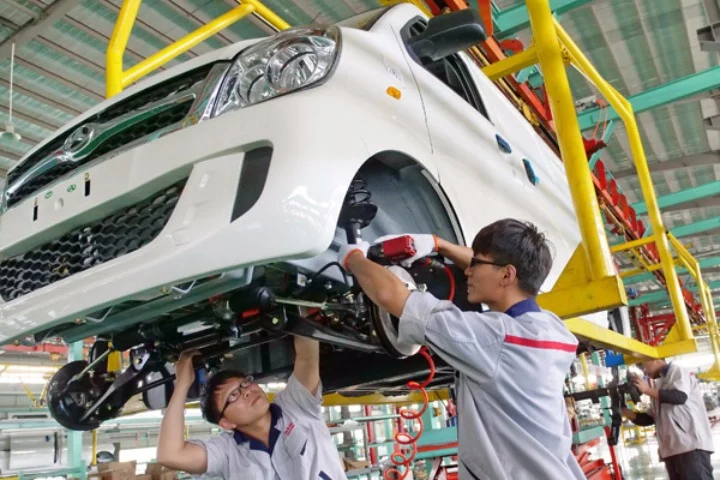
Beijing Automotive Group Co. (BAIC Group), one of China’s leading state-owned automotive manufacturers, has unveiled an ambitious strategic pivot towards new energy vehicles (NEVs), declaring its intent to entirely phase out the production and sale of conventional fuel-powered cars under its proprietary brands nationwide by 2025. This landmark decision, announced by BAIC Group Chairman Xu Heyi, signifies a profound commitment to sustainable mobility and aligns with China’s broader national strategy to lead the global NEV revolution. The initial phase of this transition targets the complete cessation of sales for self-developed conventional fuel vehicles within Beijing by 2020, setting a precedent for its nationwide rollout five years later.
This bold declaration was made during a significant weekend event commemorating the official opening of a cutting-edge new energy car technology and innovation center in Beijing. This collaborative initiative brings together BAIC’s new-energy vehicle arm, BJEV, alongside 14 other prominent institutions, including the esteemed Tsinghua University and the world-leading battery manufacturer CATL (Contemporary Amperex Technology Co. Ltd.). The establishment of this center underscores BAIC’s holistic approach to its green transition, emphasizing not just production shifts but also foundational technological advancement and industry-wide collaboration.
BAIC’s Strategic Imperative: A Phased Electrification Timeline
The core of BAIC’s transformative strategy revolves around a clear, two-stage timeline for phasing out internal combustion engine (ICE) vehicles. The first critical milestone, set for 2020, mandated that BAIC Group would no longer sell self-developed conventional fuel-powered cars within the capital city of Beijing. This localized ban served as a crucial proving ground, allowing the company to adapt its supply chains, manufacturing processes, and sales networks to an all-electric paradigm in a key market. The ultimate target, by 2025, extends this commitment nationwide, ensuring that all BAIC-branded vehicles produced and sold across China will be powered by new energy sources. It is important to note that this directive specifically applies to BAIC’s self-developed brands, distinguishing it from the group’s successful joint ventures with international automotive giants such as South Korea’s Hyundai Motor Company and Germany’s Daimler AG, the parent company of the luxury Mercedes-Benz brand. These joint ventures operate with their own strategic roadmaps, though they too are increasingly incorporating NEV models into their product portfolios to cater to the evolving Chinese market and regulatory landscape.
Chairman Xu Heyi’s pronouncement reflects a deep understanding of both market trends and governmental directives that are rapidly reshaping China’s automotive industry. The move positions BAIC as a vanguard in the domestic market, proactively embracing the future of mobility rather than reacting to regulatory pressures. This aggressive timeline demonstrates confidence in BAIC’s existing NEV capabilities and its vision for future technological breakthroughs.
The Nexus of Innovation: The New Energy Car Technology and Innovation Center
The inauguration of the new energy car technology and innovation center marks a pivotal step in BAIC’s comprehensive NEV strategy. Located in Beijing, this state-of-the-art facility is designed to serve as an open, collaborative platform, bringing together diverse expertise from across the automotive and technology sectors. Its mission is multifaceted: to mobilize global innovative resources, foster synergistic cooperation among companies, universities, research institutions, and even end-users, and ultimately accelerate the development and commercialization of next-generation NEV technologies.
The consortium behind this center is particularly noteworthy. BJEV, BAIC’s dedicated NEV subsidiary, brings practical industry experience and market insights. Tsinghua University, a globally renowned institution, contributes unparalleled academic research capabilities, driving fundamental scientific breakthroughs. CATL, a dominant force in the global battery market, provides critical expertise in advanced battery chemistry, energy density, safety, and lifespan—components vital to the success of any electric vehicle. The involvement of 14 distinct institutions signifies a broad ecosystem approach, aiming to tackle the complex challenges of NEV development from multiple angles, including materials science, artificial intelligence, autonomous driving, and intelligent manufacturing.
Xu Qiang, head of the Beijing Municipal Science and Technology Commission, lauded the establishment of the center as an "important and practical move to promote cooperation and improve innovative capabilities and core competitiveness in the field." This official endorsement highlights the center’s alignment with governmental priorities for technological self-sufficiency and leadership in strategic emerging industries. From the perspective of participating entities like CATL, such a partnership offers direct access to real-world application scenarios and feedback loops, allowing for faster iteration and optimization of battery technologies specifically tailored for BAIC’s future vehicle platforms. For academic partners like Tsinghua, it provides invaluable opportunities for applied research, student engagement, and the translation of theoretical knowledge into tangible industrial advancements, further solidifying China’s position as a hub for automotive innovation.
China’s Dominance in the Global NEV Landscape: A Conducive Environment
BAIC’s aggressive NEV strategy unfolds against the backdrop of China’s undisputed leadership in the global new energy vehicle market. The nation has consistently held the title of the world’s largest market for NEVs for several consecutive years, driven by a powerful combination of ambitious government policies, escalating consumer demand, and a rapidly expanding domestic manufacturing base. The statistics from 2017 vividly illustrate this momentum: from January to November of that year, China recorded sales of 609,000 new energy cars, representing a robust year-on-year growth of 51.4 percent. The China Association of Automobile Manufacturers (CAAM) projected that total sales for the category would reach an impressive 700,000 units by the end of 2017, underscoring the rapid adoption rate.
This remarkable growth is not accidental but rather a direct result of comprehensive and sustained government support. Key policies have played a pivotal role in shaping the NEV landscape:
- Subsidies: Significant financial incentives for both manufacturers and consumers have made NEVs more competitive in terms of initial purchase price. While these subsidies were gradually phased out in subsequent years to encourage market-driven development, they were instrumental in the early stages of market penetration.
- Dual-Credit Policy: Introduced in 2017, this policy mandated automakers to meet specific targets for fuel consumption and NEV production, effectively penalizing manufacturers of conventional fuel vehicles and incentivizing NEV output.
- License Plate Restrictions: In major metropolitan areas like Beijing, Shanghai, and Guangzhou, obtaining a license plate for a conventional fuel car can be an arduous and expensive lottery. NEVs, however, often qualify for free or expedited license plate registration, making them a highly attractive option for urban dwellers.
- Infrastructure Push: The government has heavily invested in expanding charging infrastructure, including public charging stations and supporting policies for residential charging installations.
This strategic policy framework has created a fertile ground for domestic NEV manufacturers to thrive, fostering a highly competitive environment that encourages innovation and rapid product development. Beyond BAIC, other major Chinese players such as BYD, SAIC, Geely, and emerging startups like NIO have also made significant strides in the NEV space, collectively cementing China’s position as a global leader in electric mobility.
BAIC’s Ascendancy in the NEV Sector: Performance and Future Trajectory
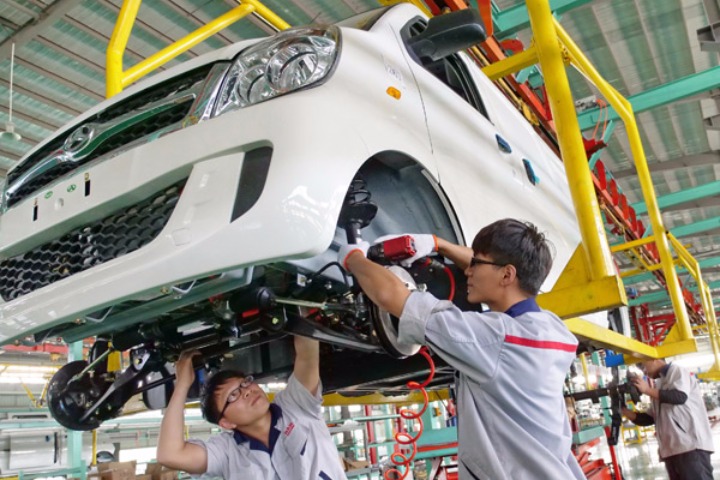
Within this dynamic market, BAIC Group, primarily through its BJEV subsidiary, has emerged as a frontrunner. Its performance figures in 2017 were indicative of its strong market position and aggressive growth strategy. In November 2017 alone, BJEV sold 21,598 cars, marking an astonishing 85 percent surge from the previous month. This impressive monthly performance contributed to cumulative sales of over 88,000 units in the first 11 months of that year, firmly establishing BJEV as one of the top NEV sellers in China. This sales momentum was a testament to BJEV’s expanding product line, competitive pricing, and effective market penetration strategies, particularly in the ride-sharing and taxi segments.
Looking ahead, BAIC’s future plans, articulated by BJEV Deputy General Manager Zhang Yong at the Guangzhou auto show, underscore an unwavering commitment to sustained growth and innovation. The company earmarked a substantial investment of approximately 10 billion yuan ($1.5 billion) for research and development over the subsequent three to five years. This significant capital injection is intended to fuel the continuous development of advanced NEV technologies, including battery systems, electric powertrains, intelligent connectivity, and autonomous driving features. The company also committed to launching two to three new NEV models annually, ensuring a fresh and diverse product portfolio to meet evolving consumer preferences.
Beyond private ownership, BAIC identified a massive opportunity in the fleet market. It announced ambitious plans to deploy 500,000 new energy cars specifically for the taxi and ride-sharing sectors across 1,000 cities by 2022. This strategy leverages the lower operating costs and environmental benefits of NEVs, making them ideal for high-mileage commercial applications. To address one of the primary concerns associated with electric vehicles—slow charging times—BAIC made a groundbreaking announcement earlier in 2017: a further investment of 10 billion yuan dedicated to building 3,000 solar-powered battery changing stations. This initiative represents a strategic shift towards battery swapping technology, offering a solution where depleted batteries can be quickly exchanged for fully charged ones, effectively eliminating range anxiety and minimizing downtime for commercial fleets and potentially private users. This innovative approach differentiates BAIC from many competitors who primarily focus on fixed charging infrastructure.
Analysis of Implications and Broader Impact
BAIC’s proactive pivot towards an all-NEV future carries profound implications, both domestically and globally.
Environmental Impact: The phase-out of conventional fuel vehicles by a major automaker like BAIC will significantly contribute to China’s efforts to combat air pollution and reduce carbon emissions. By shifting millions of vehicles from fossil fuels to electricity (increasingly generated from renewable sources), the initiative supports cleaner urban air quality and aligns with global climate change mitigation goals.
Economic and Technological Leadership: This strategy positions BAIC, and by extension China, at the forefront of the global automotive industry’s electrification trend. It fosters job creation in emerging NEV-related industries, from battery manufacturing and software development to charging infrastructure deployment. The intensive R&D investment aims to cultivate technological leadership, potentially leading to export opportunities for BAIC’s NEV platforms and components.
Challenges and Strategic Rationale: Despite the clear advantages, BAIC’s ambitious timeline is not without its challenges. These include:
- Technological Maturation: Ensuring battery technology continues to improve in terms of energy density, cost, and safety.
- Infrastructure Rollout: Rapidly deploying and maintaining thousands of battery swapping stations and supporting a robust charging network.
- Supply Chain Resilience: Securing a stable and ethical supply of critical raw materials for batteries (e.g., lithium, cobalt, nickel).
- Consumer Adoption: Overcoming lingering consumer concerns about range, resale value, and initial purchase price, even with incentives.
- Intense Competition: Navigating a highly competitive market with both established global players and agile domestic startups.
The strategic rationale for BAIC’s aggressive push is multi-faceted. It aligns with government mandates, seizes a significant market opportunity in a rapidly growing segment, allows for brand differentiation as an early mover, and future-proofs the company against increasingly stringent global emissions regulations. This move also positions BAIC to potentially influence its joint venture partners to accelerate their own electrification strategies within China, leveraging its domestic expertise and infrastructure.
Comparison to Global Trends: BAIC’s 2025 target for its proprietary brands places it among the most ambitious automakers globally. While many international manufacturers, such as Volvo, Ford, GM, and Volkswagen, have announced significant electrification plans, including targets for a large percentage of their sales to be electric by specific dates (often in the 2030s), a complete phase-out of ICE vehicles for core brands by 2025 is remarkably aggressive and demonstrates a strong strategic commitment. This early mover advantage in a market as crucial as China could provide BAIC with significant competitive leverage.
The Future of Joint Ventures: While BAIC’s phase-out commitment does not directly apply to its joint ventures with Hyundai and Daimler, these partnerships are undoubtedly influenced by the overarching market shift. Daimler, with its "EQ" brand for electric vehicles, and Hyundai, with its Ioniq and Kona EV models, have their own global electrification strategies. As the Chinese market continues its rapid transition, these joint ventures will inevitably face increasing pressure to accelerate their NEV offerings to remain competitive and compliant with local regulations. BAIC’s internal expertise and infrastructure in NEVs could potentially serve as a valuable resource or even a blueprint for these joint ventures in their China-specific NEV endeavors.
In conclusion, BAIC Group’s declaration to phase out conventional fuel cars under its own brand by 2025, coupled with its substantial investment in an innovation center and charging infrastructure, represents a pivotal moment in the global automotive industry. It underscores China’s decisive march towards electric mobility, driven by a powerful synergy of strategic government policies, robust market demand, and proactive corporate leadership. BAIC’s bold vision positions it not just as a participant, but as a key architect of the future of sustainable transportation.

 Evan Lee Salim
 Suro Senen