Lina Hope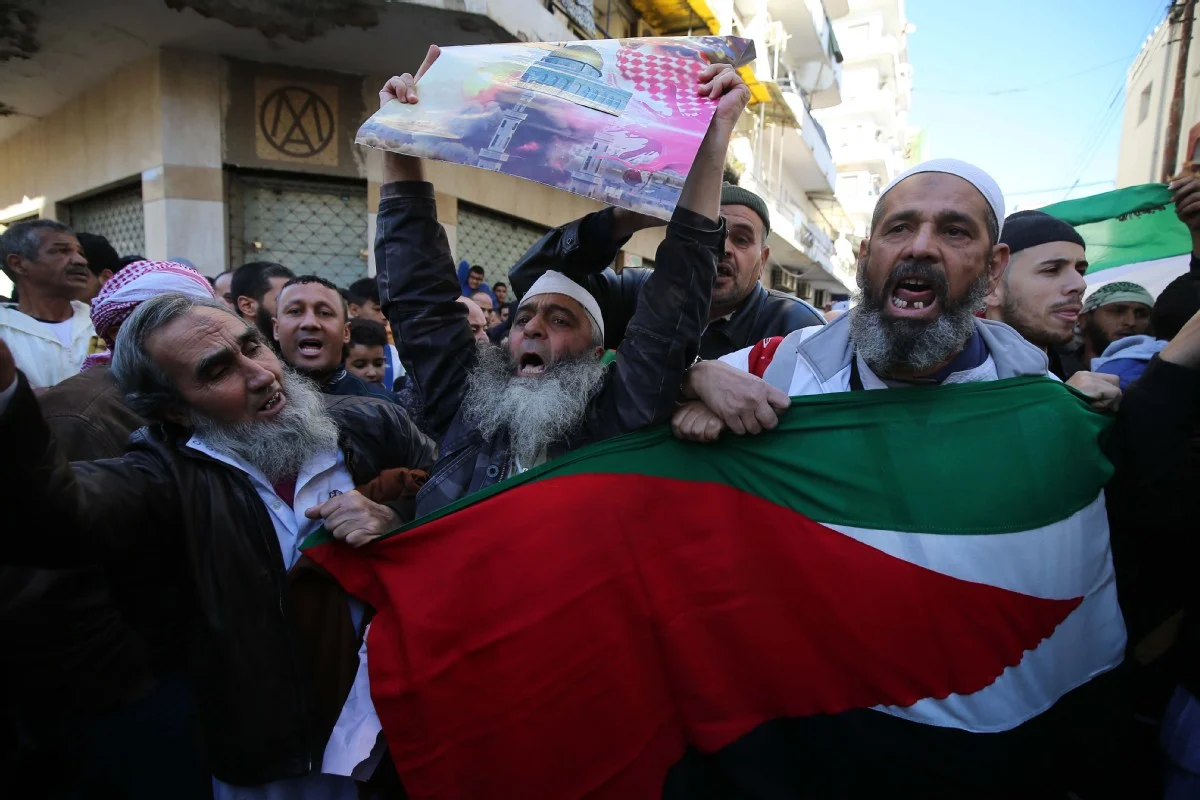
Arab foreign ministers convened in Cairo on Sunday, issuing a strong demand for the United States to reverse President Donald Trump’s decision to recognize Jerusalem as the capital of Israel. The ministers characterized the move as a "grave" development, asserting that it places Washington squarely alongside "occupation" and the contravention of international law. While the resolution adopted by the emergency meeting was rich in its condemnation, it lacked concrete punitive actions against the United States. The ministers also called for a UN Security Council resolution to condemn Trump’s decision, acknowledging, however, that a U.S. veto was highly probable. Should such a veto occur, Palestinian Foreign Minister Riyad Al-Maliki stated at a pre-dawn news conference that Arab nations would pursue a similar resolution in the UN General Assembly. The two-page resolution, finalized after an overnight emergency meeting that commenced Saturday, did not outline any retaliatory measures against the U.S., such as boycotting American products or downgrading diplomatic ties.
Background: The Enduring Dispute Over Jerusalem
The city of Jerusalem is a focal point of the Israeli-Palestinian conflict, revered by Jews, Christians, and Muslims alike. Its status has been a perennial obstacle to lasting peace in the region. For decades, the international community has largely adhered to the principle that Jerusalem’s final status should be determined through negotiations between Israelis and Palestinians. Israel occupied East Jerusalem during the 1967 Six-Day War and subsequently annexed it, a move not recognized by the vast majority of the international community. Israel considers the entire city its undivided capital, while Palestinians envision East Jerusalem as the capital of their future independent state. President Trump’s December 6 announcement, which also signaled an intention to relocate the U.S. Embassy from Tel Aviv to Jerusalem, broke with decades of U.S. policy and was met with widespread international denunciation, even from close U.S. allies. The announcement was perceived as a significant tilt in favor of Israel, potentially exacerbating tensions in an already volatile region. Past disputes, even minor ones, concerning the status of Jerusalem and its holy sites have historically ignited deadly violence.
The Emergency Meeting and Its Outcomes
The emergency meeting of Arab foreign ministers in Cairo was convened to formulate a unified Arab response to President Trump’s provocative declaration. The ministers engaged in extensive deliberations, seeking to balance political solidarity with the practical realities of international diplomacy. The resulting resolution, while vociferous in its condemnation, ultimately reflected a strategic decision to prioritize diplomatic avenues over immediate, potentially destabilizing, punitive measures.
Arab League chief Ahmed Aboul-Gheit, addressing the press conference, explained the rationale behind the resolution’s approach. "We have taken a political decision not meant to reflect (what is going on in) the streets. Political work is responsible work," he stated. He underscored the long-standing nature of the occupation, noting, "Jerusalem has been occupied for 50 years. This is an extended battle, a battle that will be escalated." This sentiment highlights the strategic patience and long-term perspective adopted by the Arab leadership in addressing the multifaceted challenges posed by the Jerusalem issue.
The resolution stipulated that the ministers would reconvene within a month, with the possibility of an emergency Arab summit being held in Jordan to further discuss the escalating situation concerning Jerusalem. This commitment to future engagement signals a sustained focus on the issue and an intent to explore further diplomatic and political strategies.
Diplomatic Maneuvers and Internal Debates
Discussions within the Arab League revealed differing opinions regarding the appropriate response. Arab diplomats indicated that some member states had advocated for a more hard-line stance, including the implementation of punitive actions against countries that might follow the U.S. example by recognizing Jerusalem as Israel’s capital. However, these more radical proposals were deemed too extreme by more moderate Arab nations and were ultimately excluded from the final resolution. This internal debate underscores the complex geopolitical landscape within the Arab world and the challenges of forging a completely unified front on highly sensitive issues.
Despite these differences in approach, Palestinian Foreign Minister Riyad Al-Maliki sought to project an image of complete unity among Arab nations. He acknowledged that "there were differences in assessment when we moved to specifying measures," but emphasized that "in the end we agreed on gradually escalating measures." This suggests a consensus on a phased approach, allowing for flexibility and adaptation based on future developments.
Commitment to the 2002 Arab Peace Initiative
Both Aboul-Gheit and Al-Maliki reiterated the Arab nations’ steadfast commitment to the 2002 Arab Peace Initiative. This landmark initiative offers a framework for comprehensive regional peace, proposing the normalization of relations with Israel in exchange for Israel’s withdrawal from territories occupied in the 1967 Middle East war. Al-Maliki emphasized the initiative’s enduring relevance, stating, "That plan is a key reference in the Middle East peace process." The reaffirmation of this initiative serves as a reminder of the Arab world’s long-standing vision for a just and lasting resolution to the Israeli-Palestinian conflict, one that is anchored in international law and established peace proposals.
International Law and the U.S. Decision
The Arab resolution unequivocally condemned President Trump’s decision, labeling it "illegal" and a "dangerous violation" of international law. The ministers articulated that the move constituted "a dangerous development that places the United States at a position of bias in favor of the occupation and the violation of international law and resolutions." This strong language reflects the deep concern within the Arab world regarding the erosion of established international legal frameworks and the perceived abandonment of a neutral stance by a key global power. The decision to recognize Jerusalem as Israel’s capital is seen as undermining the principles of international consensus on the city’s status and potentially legitimizing an occupation that has been a source of persistent conflict and instability.
The Reality of Protests on the Ground
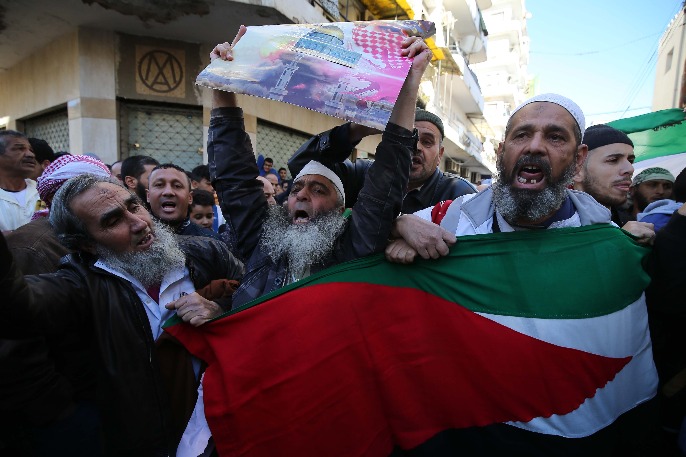
The diplomatic pronouncements from Cairo stood in contrast to the visceral anger and widespread protests erupting in the Palestinian territories. For three consecutive days, Palestinians in the Gaza Strip and the West Bank had engaged in violent demonstrations against Trump’s decision. These street-level protests highlighted the deep emotional and political significance of Jerusalem for Palestinians and underscored the potential for increased unrest following the U.S. announcement. The disparity between the measured political response and the passionate public outcry serves as a stark reminder of the complexities and the deep-seated grievances that underpin the Israeli-Palestinian conflict.
Broader Implications and Future Outlook
President Trump’s decision on Jerusalem carries significant implications beyond the immediate regional diplomatic sphere. It has the potential to further polarize international relations, challenge the efficacy of multilateral institutions like the United Nations, and reignite dormant conflicts. The move has been met with widespread criticism from international legal scholars, human rights organizations, and many governments, who argue that it contravenes established international law and resolutions passed by the UN Security Council and General Assembly concerning the status of Jerusalem.
The U.S. decision is seen by many as a gamble that could undermine efforts to achieve a two-state solution, a cornerstone of past peace negotiations. By openly aligning with Israel’s position on Jerusalem, the U.S. may have forfeited its role as an impartial mediator, a crucial element for any successful peace process. The subsequent calls for UN action, while predictable, also highlight the limitations of international bodies when faced with the unilateral actions of powerful member states. The anticipated U.S. veto at the Security Council underscores the ongoing challenges in achieving consensus on issues pertaining to the Israeli-Palestinian conflict within the current geopolitical landscape.
The commitment to a "gradually escalating measures" approach by the Arab League suggests a strategy of sustained diplomatic pressure and a willingness to adapt their response as the situation evolves. The upcoming meetings and potential summit in Jordan will be critical in determining the trajectory of these efforts. The international community will be closely watching to see if these diplomatic maneuvers can effectively address the deep-seated concerns and ultimately contribute to a more stable and peaceful future for the region. The situation remains fluid, with the potential for further escalation and unforeseen consequences, making the coming weeks and months pivotal in shaping the future of the Israeli-Palestinian conflict and the broader Middle East. The unresolved status of Jerusalem continues to be a potent symbol of the enduring conflict, and the recent U.S. decision has undoubtedly injected a new layer of complexity and urgency into the quest for peace.


 Nana Wu
 Suro Senen