Lina Hope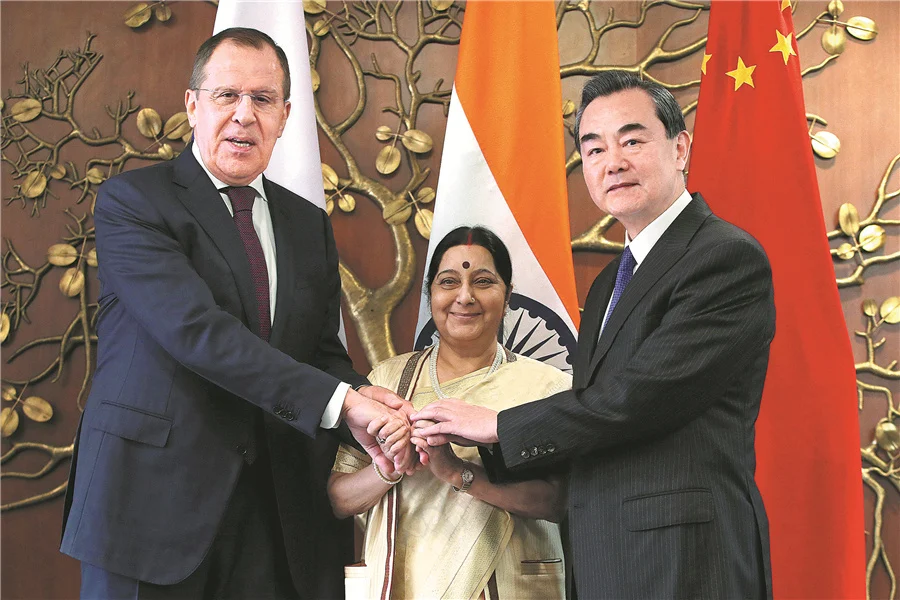
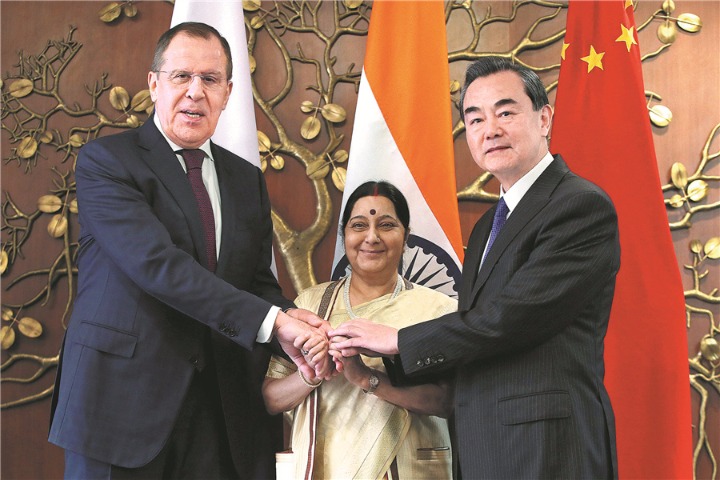
China, Russia and India have reaffirmed their commitment to a stable and prosperous Asia-Pacific region, agreeing to bolster their cooperation within existing regional architectures and multilateral platforms. The consensus emerged from the 15th trilateral meeting of the foreign ministers of the three nations, held in New Delhi on Monday, December 11, 2017. The meeting saw Chinese Foreign Minister Wang Yi, Russian Foreign Minister Sergey Lavrov, and Indian Minister of External Affairs Sushma Swaraj engage in extensive discussions covering a spectrum of global and regional issues of mutual concern.
Upholding Regional Security and Economic Architecture
A joint statement released following the meeting underscored the paramount importance of maintaining a regional security and economic framework that is "open, inclusive and based on multilateralism and universally recognized principles of international law." The ministers emphasized that such a framework is "imperative for lasting peace and stability in the region." This stance signals a shared vision among the three major powers to resist any unilateral attempts to reshape the regional order and to champion a rules-based international system.
The significance of this declaration cannot be overstated in the context of a dynamic Asia-Pacific, which is a crucial hub for global trade and security. The region has witnessed evolving geopolitical landscapes, and the unified voice of China, Russia, and India offers a strong signal of their collective intent to preserve stability and foster inclusive growth. Their commitment to multilateralism aligns with the principles that have underpinned international cooperation for decades, aiming to ensure that regional development benefits all stakeholders.
Strengthening Multilateral Platforms: BRICS and SCO
A key focus of the ministerial discussions was the reinforcement of cooperation within existing multilateral forums, specifically BRICS (Brazil, Russia, India, China, and South Africa) and the Shanghai Cooperation Organization (SCO). The three nations reiterated the high importance they place on their strategic partnership within BRICS.

The joint statement highlighted a commitment to "work together to implement all outcomes of BRICS summits to strengthen cooperation in economic, political, security and people-to-people fields, so as to usher in the second golden decade of BRICS cooperation." This sentiment followed the successful hosting of the Ninth BRICS Summit in Xiamen, China, in September 2017, which laid the groundwork for enhanced collaboration across various sectors. The aspiration to enter a "second golden decade" suggests a long-term vision for BRICS as a vital platform for global governance and economic partnership, moving beyond its initial objectives to address a wider array of contemporary challenges.
Furthermore, the ministers placed "special importance" on joint work within the Shanghai Cooperation Organization. They recognized the SCO as "an important instrument in promoting multilateral political, security, economic and people-to-people interaction in the region." The SCO, which has expanded its membership in recent years, plays a critical role in regional security, counter-terrorism, and economic integration. The trilateral commitment to strengthening SCO initiatives reflects a shared interest in a stable and secure Central Asia and beyond, addressing transnational threats and promoting sustainable development.

A Platform for Dialogue and Practical Cooperation
The Russia-India-China (RIC) trilateral format itself was described as a valuable platform for fostering closer dialogue and practical cooperation in identified areas among the three countries. The joint statement explicitly noted that this cooperation is "not directed against any other country." This assertion is significant, aiming to preempt any misinterpretations of the RIC dialogue as a bloc formation or a challenge to other regional powers. Instead, the emphasis is on constructive engagement and mutual understanding.
The ministers expressed a desire to "strengthen the trilateral dialogue for consultation and coordination on regional and global issues of mutual interest in the spirit of mutual understanding and trust." This underscores the role of the RIC mechanism as a forum for strategic coordination, allowing these influential nations to align their perspectives on complex international issues. Such coordinated approaches can be instrumental in navigating global challenges, from economic volatility to security threats, and in promoting a more balanced and equitable international order.

The statement concluded with a forward-looking perspective, asserting that "Our cooperation is conducive to maintaining international and regional peace and stability, and promoting global economic growth and prosperity." This encapsulates the overarching objective of the RIC engagement – to contribute positively to the global good through strengthened partnerships and coordinated actions.
Background and Context of the Meeting
The 15th RIC Foreign Ministers’ Meeting in New Delhi took place against a backdrop of significant geopolitical shifts and evolving economic dynamics. The year 2017 had been marked by ongoing discussions on global trade, the future of international institutions, and the rise of new security challenges. The meeting provided an opportunity for these three influential nations, each with a unique but increasingly interconnected role in global affairs, to synchronize their strategies and reaffirm their shared commitment to multilateralism and regional stability.

The RIC format itself emerged as a response to the need for a structured dialogue among these major Eurasian powers. Established in 2001, the RIC mechanism has evolved from a nascent consultative process into a significant platform for policy coordination. Its strategic importance has grown as China and India have ascended as major economic powers, and Russia has maintained its pivotal role in global security and energy markets.
The meeting in New Delhi was particularly noteworthy given the geographic proximity of the three nations and their shared interests in the Indian Ocean and Asia-Pacific regions. India, as the host, has consistently sought to leverage its relationships with both Russia and China to enhance its strategic autonomy and promote its economic interests. For Russia, the RIC partnership represents a crucial pillar of its "pivot to the East" foreign policy, seeking to strengthen ties with Asian partners. China, in turn, views RIC as a vital component of its broader foreign policy agenda, aimed at fostering a multipolar world order and promoting its Belt and Road Initiative.

Chronology of Key Engagements
The 15th RIC Foreign Ministers’ Meeting was the culmination of a series of engagements and discussions between the three countries throughout 2017. While the specific agenda items are detailed in the joint statement, the lead-up to the meeting likely involved extensive diplomatic exchanges at various levels.
- Early 2017: Diplomatic consultations likely began, outlining potential discussion points and areas of common interest. This would have included discussions on the outcomes of previous BRICS and SCO summits and ongoing regional security challenges.
- September 2017: China hosted the Ninth BRICS Summit in Xiamen. This summit served as a significant precursor, setting the tone for enhanced cooperation and likely featuring bilateral or trilateral discussions on the sidelines. The Xiamen Declaration emphasized themes of innovation, inclusive growth, and reform of global governance.
- Leading up to December 2017: Preparatory meetings and official visits between foreign ministry officials would have been crucial in finalizing the agenda and drafting the joint statement.
- December 11, 2017: The 15th trilateral meeting of the foreign ministers convened in New Delhi. The meeting, which lasted for a significant portion of the day, involved in-depth discussions and culminated in the issuance of a joint statement outlining their shared commitments and future course of action.
Supporting Data and Emerging Trends
The discussions at the RIC meeting are informed by several key trends and data points:

- Economic Interdependence: China, Russia, and India represent significant economic blocs. China’s GDP in 2017 was estimated to be around $12.24 trillion, Russia’s around $1.58 trillion, and India’s around $2.65 trillion. Their combined economic weight makes their cooperation crucial for global economic stability and growth. Trade between these nations has been steadily increasing, with significant energy trade between Russia and India, and growing trade ties with China across various sectors.
- Population and Workforce: Together, these three nations account for over 2.6 billion people, representing a substantial portion of the global population. This demographic advantage translates into a vast labor force and consumer market, making their cooperation in economic and people-to-people exchanges particularly impactful.
- Geopolitical Influence: As permanent members of the UN Security Council (China and Russia) and a rapidly growing global player (India), their coordinated approach on international issues carries significant weight. Their collective influence in multilateral forums like the UN, WTO, and G20 can shape global policy debates.
- Regional Security Dynamics: The Asia-Pacific region is a theatre of complex security challenges, including maritime security, counter-terrorism, and regional disputes. The RIC’s emphasis on maintaining a stable architecture acknowledges these challenges and signals a desire to address them collaboratively. For instance, the SCO’s efforts in combating terrorism and extremism in Central Asia are crucial for regional stability, a concern shared by all three nations.
Analysis of Implications and Broader Impact
The outcomes of the 15th RIC Foreign Ministers’ Meeting carry several significant implications:
- Reinforcement of Multilateralism: In an era where multilateral institutions have faced scrutiny and challenges, the strong endorsement of multilateralism by China, Russia, and India signals a collective commitment to upholding and strengthening the existing international order. This can provide a counter-balance to any tendencies towards unilateralism or protectionism.
- Strategic Coordination: The RIC mechanism provides a crucial platform for these three powers to coordinate their foreign policy stances on a range of global and regional issues. This can lead to more cohesive responses to international crises and a more predictable global landscape. Their agreement to strengthen dialogue on issues of mutual interest suggests a proactive approach to managing regional security and economic development.
- Economic Cooperation: The commitment to implementing BRICS outcomes, particularly in economic and people-to-people fields, holds the potential for increased trade, investment, and cultural exchange. This can foster greater economic integration and mutual prosperity among the member states and beyond. The "second golden decade of BRICS cooperation" implies a focus on innovation, sustainable development, and inclusive growth, aligning with global development agendas.
- Regional Stability: By emphasizing an "open, inclusive and based on multilateralism" regional architecture, the RIC countries are actively contributing to the stability and predictability of the Asia-Pacific. Their focus on cooperation within the SCO also directly addresses security concerns in Central Asia, a region critical to the broader Eurasian security landscape.
- Soft Power and Global Governance: The RIC dialogue, while not a formal alliance, represents a significant convergence of interests among three of the world’s most influential nations. This can enhance their collective soft power and influence in shaping global governance frameworks, promoting a multipolar world order that respects diverse national interests.
The meeting in New Delhi served as a vital reaffirmation of the strategic importance of the RIC partnership. By focusing on shared principles of multilateralism, regional stability, and enhanced cooperation within existing platforms, China, Russia, and India have demonstrated their collective intent to play a constructive role in shaping the future of the Asia-Pacific and the broader international system. Their unified stance underscores the growing significance of these Eurasian powers in addressing global challenges and promoting a more peaceful and prosperous world.


 Nana Wu
 Suro Senen