Dwi Wanna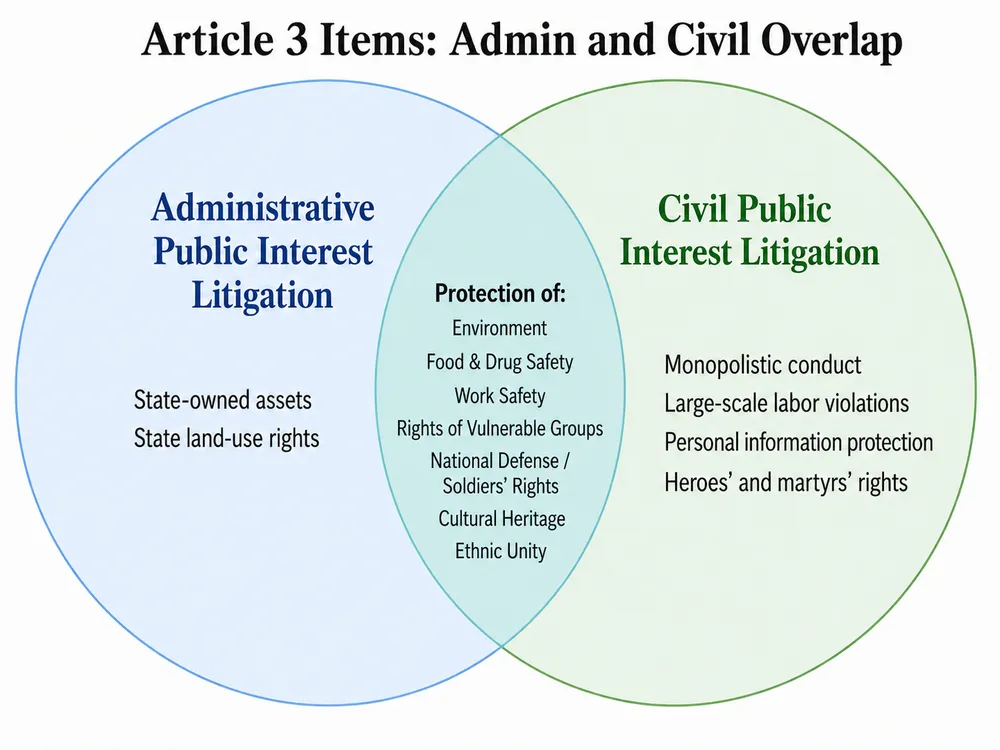
The National People’s Congress of the People’s Republic of China has officially released the second review draft of the Procuratorial Public Interest Litigation Law, marking a significant milestone in the country’s efforts to codify and expand the legal authority of the People’s Procuratorate. This legislative move aims to provide a comprehensive legal basis for protecting national interests and societal public interests, specifically targeting areas where administrative oversight may be lacking or where private entities have caused widespread social harm. By formalizing procedures that have evolved over nearly a decade of judicial experimentation, the draft law seeks to balance the power of the state with the protection of individual and corporate rights while ensuring that environmental, social, and economic assets are shielded from illegal infringement.
Context and Historical Evolution of Public Interest Litigation in China
The development of the Procuratorial Public Interest Litigation Law is the culmination of a systematic reform process that began in 2015. Following a decision by the Fourth Plenary Session of the 18th CPC Central Committee, China launched a two-year pilot program allowing procuratorates in 13 provincial-level regions to initiate public interest lawsuits. The success of this pilot led to the formal amendment of the Civil Procedure Law and the Administrative Litigation Law in 2017, which granted the procuratorate the legal standing to sue in specific categories, primarily environmental protection and food safety.
In the years following the 2017 amendments, the scope of these "legal anchors" has expanded rapidly. Legislators gradually added new domains, including the protection of heroes and martyrs, the safety of state-owned assets, and the security of personal information. However, despite the growing volume of cases, the legal framework remained fragmented across different procedural laws and judicial interpretations. The current draft law represents a transition from "scattered provisions" to a unified, specialized code that defines the jurisdiction, investigation powers, and trial procedures unique to procuratorial public interest litigation.
Expanding the Scope of Public Interest Protection
Article 3 of the draft law outlines a broad and ambitious scope for both administrative and civil public interest litigation. The draft identifies nine primary areas where the procuratorate is empowered to act if administrative organs fail to perform their regulatory duties. These include:
- Ecological and Resource Protection: This remains the cornerstone of public interest litigation, focusing on pollution control and the preservation of natural habitats.
- Food and Drug Safety: Addressing systemic risks in the supply chain that threaten public health.
- State-Owned Assets and Land Usage: Ensuring that public wealth and land rights are not misappropriated through administrative negligence or corruption.
- Production Safety: Targeting industrial negligence that could lead to mass-casualty incidents.
- Protection of Vulnerable Groups: Including the rights of minors, women, the elderly, and persons with disabilities.
- National Defense and Military Interests: Protecting the rights of soldiers and the integrity of defense infrastructure.
- Telecom Fraud and Cultural Heritage: Newer areas of focus reflecting modern societal challenges and the need to preserve historical identity.
- Ethnic Unity: Ensuring that administrative actions promote rather than hinder social cohesion.
In addition to administrative oversight, the law clarifies the grounds for civil public interest litigation against private individuals or organizations. Notably, the draft includes "monopolistic acts" by businesses and the "handling of personal information" involving a large number of persons as key triggers for procuratorial intervention. This signals an increasing focus on the digital economy and fair competition as matters of vital public interest.
Procedural Rigor and Investigation Powers
One of the most critical aspects of the draft law is the formalization of the procuratorate’s power to investigate and collect evidence. Article 16 through Article 20 grant procurators the authority to question witnesses, inspect sites, and reproduce relevant documents. However, the law maintains a strict boundary: procurators are expressly prohibited from employing compulsory measures such as physical detention or the freezing of assets during the investigation phase of a public interest case.
The draft also introduces a mandatory "pre-litigation" stage for administrative cases. Under Article 22, before filing a lawsuit against a government body, the procuratorate must issue a "procuratorial recommendation." This document serves as a formal warning, detailing the alleged illegality and providing a period for the administrative organ to self-correct. Data from the Supreme People’s Procuratorate (SPP) indicates that historically, over 90% of administrative public interest cases are resolved at this stage without ever reaching a courtroom. This mechanism is designed to promote administrative efficiency and reduce the burden on the judicial system.
Chronology of Case Handling and Litigation
The draft establishes a clear timeline for legal actions to ensure that public interests are protected promptly.

- Case Filing: Upon discovering a lead, the procuratorate must investigate. If the harm can be addressed by urging an administrative organ to act, the civil litigation path is deferred.
- Response Period: Administrative organs generally have a set period (often 15 to 30 days) to respond to procuratorial recommendations. Extensions are only granted under specific "objective reasons," such as the need for complex legal interpretations.
- Public Notice: In civil cases, the procuratorate must issue a 30-day public notice before filing a suit. This allows other legally prescribed organizations (such as environmental NGOs) to take the lead in litigation, with the procuratorate shifting to a "supporting" role.
- Trial and Appeals: Cases are heard by basic-level courts unless otherwise specified. The draft emphasizes a "comprehensive review" in second-instance trials, meaning appellate courts are not restricted by the original scope of the appeal, ensuring that the public interest is fully considered.
Supporting Data and Statistical Context
The necessity of this law is underscored by the sheer volume of public interest cases handled in China over the last few years. According to the 2023 Work Report of the Supreme People’s Procuratorate, Chinese procuratorates handled approximately 190,000 public interest litigation cases in a single year. Of these, administrative cases accounted for the vast majority, demonstrating the procuratorate’s role as a "supervisor of supervisors."
Environmental cases consistently make up about 50% of the total caseload, while cases involving food and drug safety account for roughly 15%. The remaining cases are distributed among the "new" areas like personal information protection and the safeguarding of state-owned assets. The draft law’s inclusion of "telecommunications fraud" and "monopoly acts" is expected to lead to a surge in litigation in these sectors as the legal framework becomes more robust.
Enforcement and Accountability
Chapter V of the draft law addresses the historical challenge of enforcing judgments against administrative organs. Article 46 allows courts to employ measures under the Administrative Litigation Law if a government body refuses to fulfill a judgment. Furthermore, the procuratorate can report non-compliance to higher-level administrative authorities, creating a dual system of judicial and bureaucratic pressure.
In civil cases, the draft introduces innovative enforcement methods. If a defendant refuses to issue a public apology or restore an environmental site, the court may hire a third-party professional institution to perform the task at the defendant’s expense. For intangible harms, such as damage to the reputation of "heroes and martyrs," the court can publish the judgment in mainstream media to "eliminate the negative impact," with the costs borne by the violator.
Broader Implications and International Reach
The draft law contains a notable provision in Article 51, which explicitly states that the procuratorate may initiate public interest litigation against foreign organizations or individuals who carry out unlawful acts infringing on China’s national interests. This extraterritorial reach aligns with China’s broader legislative trend of protecting "sovereign interests" in a globalized economy, particularly regarding data security and environmental standards.
For businesses operating in China, the law implies a higher standard of corporate social responsibility. With the procuratorate empowered to sue over labor rights violations and personal data breaches, companies can no longer view these as mere regulatory hurdles but must see them as potential litigation risks.
Expert Reactions and Analysis
Legal scholars have largely welcomed the second review draft, noting that it provides much-needed clarity on the "burden of proof." Article 36 clarifies that while the procuratorate must prove the illegality of an act, administrative organs and civil defendants are encouraged to provide evidence of their compliance or reduced responsibility. This "balanced burden" is seen as a way to prevent frivolous litigation while ensuring that those with the most information (the defendants) contribute to the factual record.
However, some analysts point out that the law’s effectiveness will depend on the "necessary prudence" mentioned in Article 5. There is a delicate balance between the procuratorate acting as a "guardian of the public interest" and it overstepping into the discretionary territory of administrative experts. The draft’s emphasis on communication and pre-litigation recommendations is a deliberate attempt to mitigate this risk.
As the draft moves toward final adoption, it stands as a testament to China’s evolving judicial philosophy—one that increasingly relies on procedural law to manage social contradictions and ensure that the "national interest" is not just a political concept, but a legally enforceable reality. The implementation of this law will likely redefine the relationship between the judiciary, the executive, and the public for decades to come.

 Reynand Wu
 Nila Kartika Wati