Reynand Wu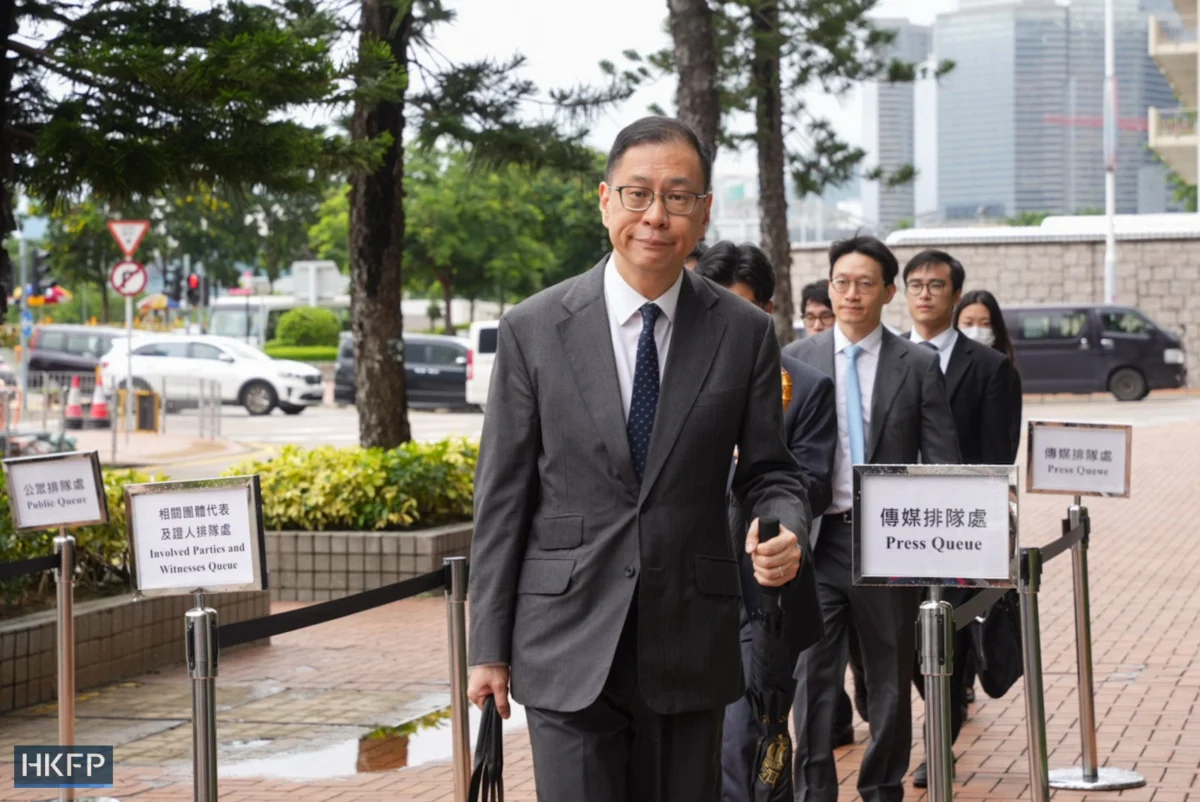
Two directors at the renovation firm Prestige Construction & Engineering Company, which oversaw works at Wang Fuk Court when a catastrophic fire erupted last November, have vehemently denied any knowledge of substandard, combustible materials being used at the estate. Their statements, made accessible to the public as part of the ongoing investigation, come as the probe into the tragedy that claimed 168 lives and displaced thousands nears its conclusion.
Gordon Ho, a director at Prestige, stated in a witness statement uploaded on Wednesday evening, "Prior to the incident, I had received no complaints indicating that materials in use were combustible. Accordingly, I was not aware that the scaffolding nets and foam boards used at Wang Fuk Court were combustible at all." Ho further asserted that Prestige operated above prevailing industry safety management standards, maintaining that he was "not aware at the time of any obvious deficiencies or shortcomings in our procedures."
The fire, which tore through seven of the estate’s eight buildings, has raised critical questions about building safety, contractor accountability, and regulatory oversight in Hong Kong. An independent committee was established to thoroughly investigate the cause and rapid spread of the blaze, with public hearings concluding earlier this month. The testimonies of key figures involved in the renovation project are now under intense scrutiny.

Beyond the material concerns, both Ho and Hau Wa-kin, Prestige’s other director, have also refuted allegations of bid-rigging and collusion with the project consultant, Will Power Architects, to secure the renovation contract for the Tai Po complex. The project was in progress when the deadly inferno broke out.
Neither Ho nor Hau testified before the probe committee in person, opting instead to submit written testimonies. Both individuals are currently in detention, having been arrested and charged last month, along with five others, in connection with the fatal fire. Ho, alongside two directors from Will Power Architects, faces charges including manslaughter, among other offenses.
Ho’s witness statement detailed the procurement of materials, attributing the acquisition of foam boards to a subcontractor identified as "New Nam Fong Construction Limited," described as a "subcontractor of good repute." Similarly, he stated that the scaffolding nets were procured by another firm, Gain Profit Shed Industry Limited. Investigations have consistently pointed to these materials as significant contributing factors to the fire’s rapid and devastating spread.
Ho claimed to have witnessed videos of the scaffolding nets and foam boards undergoing fire resistance tests. He asserted that these tests did not reveal any signs of flammability, stating that the results "gave no cause for alarm" and that it was "not foreseeable" to him that these materials themselves were the source of the fire.

Contradictions Emerge in Testimony
However, Ho’s assertion that he received no complaints regarding the combustibility of the materials appears to directly contradict earlier testimonies presented to the independent committee. Tony Tsui, who served as the chair of the management committee of the Wang Fuk Court owners’ corporation at the time of the tragedy, had previously informed the committee that the owners’ board had explicitly requested Prestige to refrain from using the flammable foam boards. Furthermore, the owners’ board had urged the contractor to implement a ban on smoking at the worksite. Despite these concerns, the owners’ board ultimately failed to exert sufficient pressure on the contractor to alter their practices.
Ho’s claim of unawareness also seems to be at odds with text messages submitted as evidence to the committee. A screenshot of a text message revealed a proposal from Gain Profit to use flame-retardant netting. In response, Ho allegedly instructed, "If I tell you to order, order. Don’t ask so many questions." This exchange suggests a potential disregard for or suppression of safety-related inquiries.
Adding another layer to the investigation, the deactivated fire alarm systems at the estate were identified by Victor Dawes, the committee’s lead counsel, as one of the primary "human factors" that exacerbated the fire’s rapid spread. Ho, however, stated that he received no reports indicating that the fire systems were non-operational. He explained that Prestige had engaged two fire safety inspection contractors for checks, and crucially, that the estate’s fire pump room was under the control of the estate’s management office and "out of the control of our employees."
Allegations of Bid-Rigging and Collusion
Hau Wa-kin, in his own witness statement, also denied the allegations of bid-rigging. He expressed his belief that "no such manipulation has ever occurred in this matter." Addressing the inquiry’s findings regarding Prestige’s connections with several other contractors during the bidding process, Hau characterized these relationships as "purely commercial and competitive in nature."

The inquiry had previously heard that Prestige had links to at least five competing contractors, while Will Power Architects was found to have connections with at least three other bidders. The consultancy firm’s bidding price was noted to be "materially lower than average," a tactic often employed to secure initial project access. This practice has been identified as a common strategy in the renovation industry, potentially leading to compromised project quality and safety.
The devastating Wang Fuk Court fire brought to light what has been described as a "bid-rigging epidemic in Hong Kong’s renovation industry." Last month, when the directors were arrested, an investigator from Hong Kong’s anti-graft watchdog remarked, "We suspect that this tragedy was fuelled entirely by individual greed." This statement underscores the potential for systemic corruption to have played a significant role in the events leading up to the fire.
Background and Timeline of the Investigation
The Wang Fuk Court fire occurred on November 27, 2025, originating on the 28th floor of Block D. The blaze rapidly spread due to a confluence of factors, including the extensive use of highly flammable renovation materials, particularly foam boards and scaffolding nets, and the failure of critical fire safety systems, including deactivated fire alarms and a non-operational fire pump. The inferno resulted in a tragic loss of life, with 168 fatalities and over 3,000 residents displaced.
In the aftermath, the Hong Kong government established an independent committee of inquiry to investigate the causes of the fire. The committee’s mandate included examining the circumstances of the renovation project, the procurement and use of materials, the functionality of fire safety systems, and the roles and responsibilities of all parties involved, including the property management, the renovation contractor (Prestige Construction & Engineering Company), and the project consultant (Will Power Architects).

The committee commenced public hearings in early 2026, hearing testimony from a wide range of witnesses, including residents, firefighters, government officials, and representatives from the involved companies. The hearings focused on reconstructing the events leading up to the fire, identifying systemic failures, and determining accountability.
The investigation has highlighted several key areas of concern:
- Material Safety: The widespread use of non-fire-retardant foam boards and scaffolding nets, which are highly combustible and contribute to rapid fire spread, has been a central focus. Evidence suggests that the materials used did not meet necessary safety standards.
- Fire Safety Systems: The discovery that fire alarms were deactivated and that the fire pump system was not functioning has been identified as a critical failure that prevented effective early firefighting efforts.
- Procurement and Oversight: Questions have been raised about the procurement processes for renovation materials and the effectiveness of oversight mechanisms to ensure compliance with safety regulations.
- Contractor and Consultant Practices: Allegations of bid-rigging, collusion, and potential negligence on the part of the renovation contractor and project consultant are being thoroughly investigated.
The arrests of directors from Prestige Construction & Engineering Company and Will Power Architects in March 2026 marked a significant development in the criminal investigation, indicating that authorities believe there is sufficient evidence to pursue charges related to the fire.
Broader Implications for Hong Kong’s Building Safety
The Wang Fuk Court tragedy has served as a stark reminder of the vulnerabilities within Hong Kong’s aging building stock and the critical importance of stringent building safety regulations and their rigorous enforcement. The revelations of potential bid-rigging and the use of substandard materials point to systemic issues that extend beyond this single incident.

The fire has intensified calls for a comprehensive review and overhaul of existing building safety codes, particularly for older residential buildings undergoing renovation. Experts and community groups have advocated for:
- Stricter Material Standards: Implementing and enforcing more rigorous fire safety standards for all construction and renovation materials used in residential buildings.
- Enhanced Regulatory Oversight: Strengthening the capacity and authority of regulatory bodies to conduct more frequent and thorough inspections of renovation projects and to penalize non-compliance effectively.
- Improved Contractor and Consultant Accountability: Establishing clearer lines of responsibility and accountability for contractors and consultants, with severe penalties for negligence or fraudulent practices.
- Empowerment of Owners’ Corporations: Providing owners’ corporations with greater resources and legal standing to oversee renovation works and to challenge substandard practices.
- Addressing Bid-Rigging: Continued efforts by anti-corruption agencies to combat bid-rigging and collusion within the construction and renovation industries.
The findings and recommendations of the independent committee of inquiry are expected to be crucial in shaping future policy and legislation aimed at preventing similar tragedies. The pursuit of justice for the victims and their families hinges on a thorough and transparent investigation that holds all responsible parties accountable and leads to tangible improvements in building safety standards across Hong Kong. The ongoing legal proceedings against the arrested directors represent a critical step in this process, aiming to deter future negligence and corruption that could endanger public safety.

 Jia Lissa
 Lina Hope