Muslim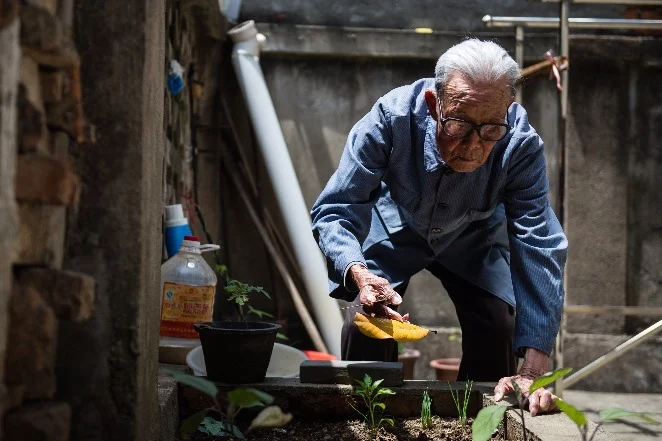
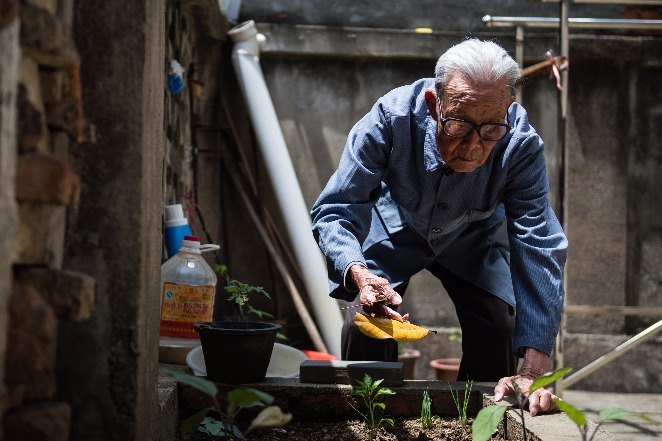
The somber announcement on Monday from the Memorial Hall of the Victims in the Nanjing Massacre confirmed the passing of Guan Guangjing at the age of 100. His death, just three days before the National Memorial Day for Nanjing Massacre Victims, serves as a poignant reminder of the dwindling number of direct witnesses to one of the 20th century’s most brutal atrocities. With Guan’s passing, the cohort of verified survivors now stands at fewer than 100, underscoring the urgency of preserving their testimonies and ensuring that the historical truth endures for future generations.
A Century of Life, Decades of Bearing Witness
Guan Guangjing lived a century, a significant portion of which was dedicated to quietly bearing the indelible scars of the Nanjing Massacre. He died at his home from multiple organ failure after being bedridden for six months due to heart disease, according to his 76-year-old son-in-law, who wished to be identified only by his surname, Liu. His final days coincided with the national preparations for commemorating the 80th anniversary of the massacre, an event that continues to shape China’s national memory and its relationship with Japan.
Born an orphan before 1937, Guan Guangjing led a life marked by resilience. He worked as a barrel maker in Lishui county, living a frugal existence but earning immense respect within his community for his willingness to help others. His personal artifacts, including a paper fan, a watch, and a teapot, have been donated by his family to the Memorial Hall, transforming everyday objects into poignant symbols of a life touched by unimaginable horror and dedicated to quiet remembrance. The Memorial Hall’s announcement of his death on Sina Weibo prompted an outpouring of mourning from internet users across China, reflecting the deep national reverence for the survivors.
Guan’s invaluable oral testimony was formally documented in "Irrefutable Evidences, A Memoir of the Lishui Bombing Caused by Japanese Invaders," a significant publication by Nanjing Press in November 2016. This book compiles 31 survivors’ firsthand accounts of the bombing in Nanjing’s Lishui county on November 29, 1937, an event that claimed more than 1,200 lives as part of the broader Japanese invasion. In his testimony, Guan recounted the harrowing experience of hiding under a large rock during the aerial assault, witnessing his neighbors, including four generations of a family surnamed Sun, being mercilessly killed. He later managed to survive the ensuing massacre by continuously finding refuge wherever possible. Officials from the Memorial Hall corroborated his consistent narration of witnessing Japanese invaders killing people on multiple occasions, adding to the vast body of evidence detailing the atrocities.
The Nanjing Massacre: A Historical Context and Unfolding Horror
The death of Guan Guangjing casts a renewed spotlight on the Nanjing Massacre, an event of profound historical significance that occurred during the Second Sino-Japanese War. The conflict escalated dramatically following the Marco Polo Bridge Incident in July 1937, leading to a full-scale invasion of China by Imperial Japanese forces. After fierce battles, including the grueling three-month Battle of Shanghai, the Japanese army advanced rapidly towards Nanjing, then the capital of the Republic of China.
On December 13, 1937, Japanese forces captured Nanjing. What followed was a six-week period of unparalleled brutality and widespread atrocities. Japanese soldiers engaged in systematic mass killings, widespread rape, looting, and arson. Estimates from the International Military Tribunal for the Far East (Tokyo Trials) and Chinese sources indicate that more than 300,000 Chinese civilians and unarmed soldiers were killed. The methods of killing were often horrific, including bayoneting, beheading, burning, and live burial. An estimated 20,000 to 80,000 women were raped, many of whom were subsequently murdered. Homes and businesses were systematically looted, and large parts of the city were set ablaze, leaving Nanjing in ruins.
International observers, including foreign missionaries and businessmen who established the Nanjing Safety Zone, provided crucial eyewitness accounts and photographs that later became irrefutable evidence of the atrocities. Figures like John Rabe, a German Nazi Party member who saved thousands of Chinese lives, and Minnie Vautrin, an American missionary, kept detailed diaries that painted a grim picture of the unfolding horror. Their efforts, often at great personal risk, helped to mitigate some of the suffering and provided critical documentation of the events.
The historical truth of the Nanjing Massacre has been extensively documented through survivor testimonies, historical records, and the judgments of post-war tribunals, yet it remains a point of contention and occasional denial by some elements within Japan. The Chinese government, academics, and international human rights organizations consistently uphold the established historical facts, emphasizing the importance of remembrance not only for the victims but also for global peace and human dignity.
The Dwindling Voices: Preserving a Vanishing Legacy
Guan Guangjing’s passing underscores the critical juncture in historical memory, as the generation of direct witnesses to the Nanjing Massacre rapidly diminishes. With fewer than 100 survivors remaining, many of whom are now well into their late 80s and 90s, the challenge of preserving their stories becomes ever more urgent. Zhang Sheng, a history professor at Nanjing University, highlighted this difficulty, noting that only about half of the remaining survivors can express themselves clearly due to advanced age and health conditions.
The oral accounts of these survivors are not merely historical records; they are profound human testaments to resilience, suffering, and the enduring quest for justice. Wu Lisong, a history lecturer at Nanjing University who leads a project collecting oral accounts from survivors since September 2016, emphasized the lasting psychological toll. "The public used to believe that the survivor’s pain would pass but have come to realize that it lasts a lifetime," Wu stated. He described how some survivors are still "stricken with fright when people wearing Japanese military uniforms appear on the TV screen," while others "become irritable whenever people mention those years to them." These reactions vividly illustrate that the trauma is not confined to the past but continues to manifest in their daily lives, decades later.
The collective memory of these survivors forms a crucial bulwark against historical revisionism and denial. Their detailed, often agonizing, recollections provide human faces to the staggering statistics of the massacre. Initiatives like Wu Lisong’s project are vital in meticulously documenting these narratives, ensuring that future generations have access to these authentic voices. This process involves not only recording their experiences but also providing support and understanding to individuals who have carried immense burdens for most of their lives.
National Memorial Day and Official Commemoration
The National Memorial Day for Nanjing Massacre Victims, observed annually on December 13, holds profound significance for China. This year, the observance will be particularly poignant as it marks the 80th anniversary of the atrocity. The solemn occasion serves as a national day of remembrance for the more than 300,000 Chinese lives lost.
In a strong demonstration of national resolve and remembrance, state leaders are expected to attend a public memorial ceremony at the Memorial Hall of the Victims in the Nanjing Massacre by Japanese Invaders on Wednesday. Their presence underscores the Chinese government’s unwavering commitment to remembering the victims, upholding historical truth, and educating its citizens and the world about the horrific events of 1937. This official participation reinforces the message that the massacre is not merely a historical event but a deeply ingrained part of China’s national consciousness, informing its pursuit of peace and its stance on international justice.
The Memorial Hall itself stands as a powerful symbol of remembrance and a repository of evidence. It houses artifacts, documents, photographs, and testimonies, serving as a permanent reminder of the atrocities and a center for historical research and education. The annual ceremony there includes a moment of silence, the ringing of a peace bell, and speeches that reiterate the importance of learning from history to prevent such tragedies from recurring.
Broader Implications: Reconciliation and Historical Truth
The Nanjing Massacre remains a sensitive and complex issue in Sino-Japanese relations. While China consistently calls for Japan to acknowledge its wartime past fully and sincerely apologize for its atrocities, some Japanese political figures and historians continue to downplay or deny the scale of the massacre. This disparity in historical understanding continues to be a significant impediment to genuine reconciliation between the two East Asian powers.
The passing of survivors like Guan Guangjing intensifies the global call for historical accountability. Their testimonies are invaluable not just for China but for humanity as a whole, serving as stark warnings against the dangers of war, ultranationalism, and unchecked military aggression. The international community largely recognizes the Nanjing Massacre as a historical fact, and efforts by organizations like UNESCO, which inscribed the "Documents of Nanjing Massacre" on its Memory of the World Register in 2015, further solidify its place in global historical memory.
Wu Lisong’s concluding reflection on the nature of reconciliation resonates deeply: "Neither an apology nor compensation can reverse the traumas to the victims and survivors, but we still must make clear the history, which may be a starting point of reconciliation." This statement encapsulates the profound challenge and necessity of confronting historical truths. True reconciliation, it suggests, must be built upon a foundation of shared understanding and acknowledgment of past wrongs, rather than through mere gestures or material compensation alone.
The legacy of Guan Guangjing and the other survivors extends beyond their individual stories. They represent a generation that endured unimaginable suffering, yet persisted in ensuring that the world would not forget. As their numbers dwindle, the responsibility to safeguard their memory and to continue advocating for historical truth passes to subsequent generations. Their lives, marked by both profound tragedy and enduring strength, serve as eternal beacons for peace and justice, reminding humanity of the devastating consequences of war and the imperative to remember, learn, and prevent.


 Jia Lissa
 Azzam Bilal Chamdy