Neng Nana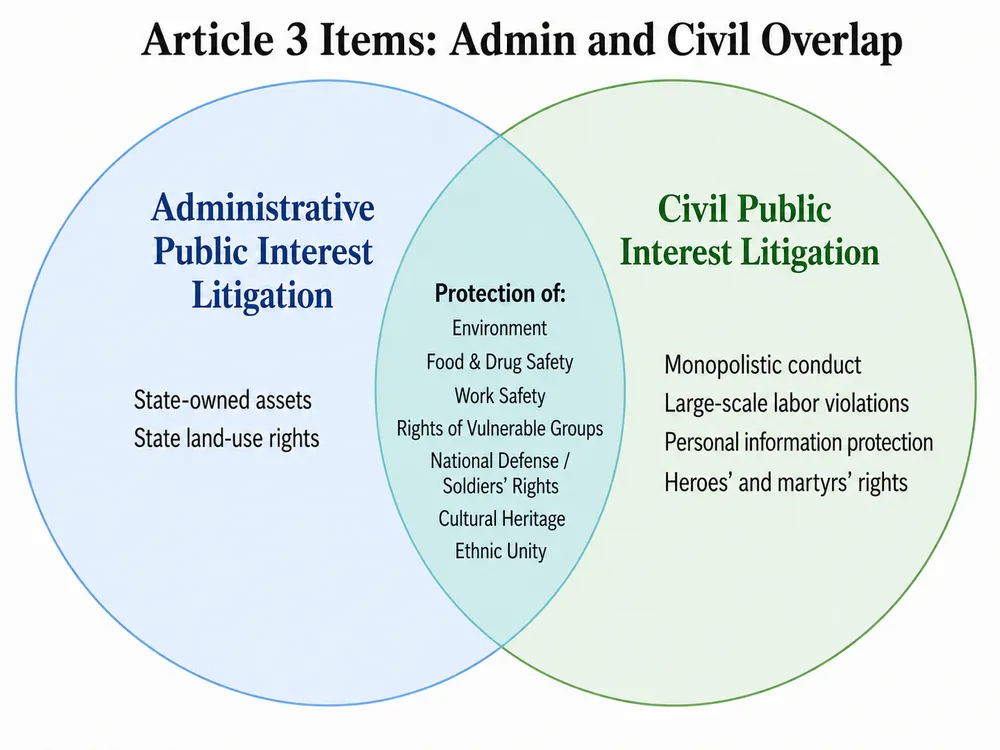
The National People’s Congress of the People’s Republic of China has released the second review draft of the Procuratorial Public Interest Litigation Law, marking a pivotal milestone in the country’s judicial evolution. This legislative advancement seeks to formalize and consolidate the powers of the People’s Procuratorate to initiate legal action in defense of national and societal interests. By providing a comprehensive statutory framework, the law moves beyond the experimental pilot phases that began nearly a decade ago, establishing a permanent, specialized procedural system for addressing systemic harms in areas ranging from environmental protection to data privacy and national defense.
A New Statutory Foundation for Public Interest Governance
The draft law, comprising six chapters and fifty-two articles, is rooted in the Constitution of the People’s Republic of China. Its primary objective is to regulate the activities of procuratorates in public interest litigation (PIL) while ensuring the protection of the lawful rights of all litigation participants. Article 1 emphasizes that the law is designed to "protect the national interest and the societal public interests," signaling a shift toward more robust judicial oversight of both administrative failures and private sector misconduct.
Under the new framework, the law will serve as the primary authority for procuratorial PIL cases. In instances where the draft law is silent, the Civil Procedure Law and the Administrative Litigation Law of the P.R.C. will continue to apply. This dual-layered approach ensures that the specialized nature of public interest cases is recognized without creating a vacuum in general procedural standards.
Expanding the Scope of Legal Protection
One of the most significant aspects of the second review draft is the exhaustive list of areas subject to procuratorial intervention. Article 3 delineates nine specific categories where administrative organs can be sued for failing to perform their regulatory duties or for exercising authority unlawfully. These include:
- Ecological Environment and Resource Protection: This remains the cornerstone of Chinese PIL, targeting pollution and the mismanagement of natural resources.
- Food and Drug Safety: Ensuring the integrity of the supply chain and public health.
- State-Owned Assets and Land Use Rights: Protecting the economic interests of the state.
- Production Safety: Addressing systemic risks in industrial and workplace environments.
- Protection of Vulnerable Groups: Explicitly mentioning the rights of minors, women, the elderly, and persons with disabilities.
- National Defense and Military Interests: Protecting the rights of soldiers and the strategic interests of the state.
- Telecom Fraud: A modern addition reflecting the rise of digital crime.
- Cultural Heritage: Safeguarding relics and historical sites.
- Ethnic Unity: Promoting social harmony and progress.
Furthermore, the law extends to civil public interest litigation against natural persons, legal persons, and unincorporated organizations. New frontiers in civil PIL include actions against business monopolies, the infringement of labor rights affecting large groups of workers, violations of personal information by data handlers, and acts that defame the honor of "heroes and martyrs."
Procedural Rigor and Investigative Powers
The draft law grants the People’s Procuratorate significant investigative authority to ensure that cases are built on objective and complete evidence. According to Article 17, procurators may question individuals, inspect sites, conduct evaluations, and reproduce relevant documents. However, the law maintains a balance of power by prohibiting "compulsory measures" such as the restriction of physical liberty or the summary seizing of assets during the investigative phase—actions that remain the purview of criminal proceedings or specific court orders.
Article 19 mandates that units and individuals must cooperate with these investigations. Obstruction through violence or threats can lead to administrative penalties or criminal charges. To ensure transparency, Article 20 encourages the use of public hearings for "major, difficult, or complex" cases, allowing stakeholders to voice opinions before litigation is formally initiated.
The Pre-Litigation Mechanism: Prioritizing Correction over Conflict
A unique feature of the Chinese PIL system, formalized in Chapter III, Section 2, is the emphasis on pre-litigation "procuratorial recommendations." Article 22 stipulates that if a procuratorate finds an administrative organ in violation of its duties, it must first issue a formal recommendation for correction.
The administrative organ is generally given a specific period to respond and rectify the situation. In urgent cases involving ongoing harm, this response time is shortened to 15 days. Litigation in the People’s Courts is considered a last resort, triggered only if the administrative organ fails to adopt corrective measures or refuses to fulfill its duties after the recommendation period has expired. This "supervision-first" approach is designed to improve administrative efficiency and resolve public interest issues without burdening the court system unnecessarily.

Judicial Trial and the Burden of Proof
When cases do reach the trial stage, the law outlines specific jurisdictional rules. Administrative PIL cases are generally handled by the basic-level people’s court where the defendant organ is located. Civil cases are handled where the violation occurred or where the defendant resides.
The burden of proof rests heavily on the procuratorate. In administrative cases, they must prove the illegality of the government act and the resulting harm to the public interest. In civil cases, they must prove the illegal conduct of the individual or corporation. Notably, Article 37 provides a safeguard for defendants, allowing them to request that the court collect evidence that the procuratorate may have gathered during its investigation but did not present because it was beneficial to the defense.
Enforcement and Accountability
Chapter V addresses the chronic issue of "judgment execution." Article 45 mandates that all parties must fulfill effective judgments and mediation documents. If an administrative organ refuses to comply, the court can employ measures under the Administrative Litigation Law, and the procuratorate may report the failure to higher-level authorities.
In civil cases, the law allows for innovative enforcement measures. If a defendant refuses to apologize or restore a reputation as ordered, the court may publish the judgment in the media at the defendant’s expense. Furthermore, Article 48 allows the court to appoint a third party to carry out environmental restoration or other remedial actions, with the costs borne by the non-compliant defendant.
Background and Evolution of the Law
The drafting of this law comes after years of judicial practice. In 2015, the Standing Committee of the National People’s Congress (NPC) authorized a two-year pilot program for procuratorial PIL in 13 provincial-level regions. Following the success of the pilot, the Civil Procedure Law and Administrative Litigation Law were amended in 2017 to provide a basic legal basis for these actions.
Since then, the volume of cases has grown exponentially. Statistics from the Supreme People’s Procuratorate (SPP) indicate that between 2017 and 2023, procuratorial organs nationwide filed over 900,000 public interest litigation cases. Environmental protection accounted for approximately 50% of these cases, followed by food and drug safety. The high success rate—with over 90% of administrative cases resolved at the pre-litigation stage—demonstrates the efficacy of the procuratorial recommendation system.
Implications for Governance and Rule of Law
The formalization of this law has profound implications for China’s legal landscape. Legal analysts suggest that the law serves several critical functions:
- Checks and Balances: It provides a mechanism for the judicial branch to oversee the executive branch, ensuring that local governments do not ignore environmental or safety regulations in favor of economic growth.
- Closing the "Standing" Gap: In many jurisdictions, it is difficult for individuals to sue over broad societal harms (like air pollution) because they cannot prove "special damages." This law empowers the procuratorate to act as the "public’s lawyer," bridging the gap where individual standing is absent.
- Extraterritorial Reach: Article 51 explicitly allows for litigation against foreign organizations or individuals who harm China’s national interests, providing a legal tool for addressing cross-border environmental damage or data breaches.
Critics and observers will be watching closely to see how the law balances its broad mandates with the need to prevent "procuratorial overreach." Article 5 of the draft specifically warns that procuratorates must not "interfere with or replace" the lawful performance of administrative duties, a clause intended to maintain the separation of powers between the prosecution and government agencies.
Conclusion and Timeline
The second review draft is currently undergoing public consultation and further deliberation by the NPC Standing Committee. Once enacted, it will replace the patchwork of judicial interpretations and pilot guidelines that currently govern the field. The law is expected to take effect in late 2025 or early 2026, marking a new era of "governance by law" where the protection of the public interest is backed by the full weight of the state’s prosecutorial and judicial machinery.
As China continues to grapple with the complexities of rapid industrialization and digital transformation, the Procuratorial Public Interest Litigation Law represents a strategic effort to institutionalize social responsibility and administrative accountability. By codifying these procedures, the state aims to provide a predictable, transparent, and effective means of resolving the tensions between private interests and the common good.


 Muslim
 Lina Irawan