Sagoh
Sagoh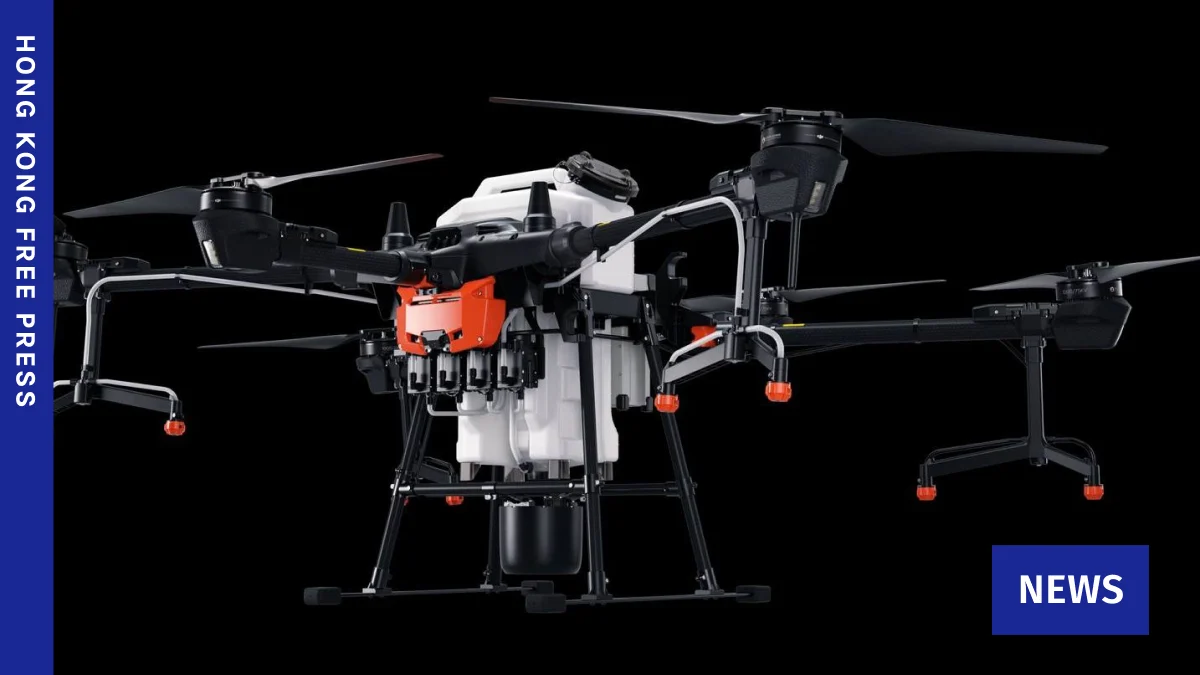
Beijing, China – China announced stringent restrictions on the export of drones and related components to the United States and blacklisted six American companies on Wednesday, a direct and calculated response to a series of trade sanctions imposed by Washington. These retaliatory measures by the Chinese Ministry of Commerce underscore a significant escalation in the ongoing economic and geopolitical friction between the world’s two largest economies, rooted in disputes over alleged forced labor practices in Xinjiang and broader national security concerns.
The move comes mere days after the United States implemented new tariffs on goods from China and 59 other countries, adding to a growing list of punitive trade actions. A spokesperson for China’s commerce ministry articulated Beijing’s position, stating that the US actions "seriously harm China’s legitimate rights and interests," necessitating "necessary countermeasures" including "strengthening export controls on drones, and their key components and technology to the US." This latest salvo signals a deepening tit-for-tat dynamic that threatens to unravel any semblance of a trade truce achieved in recent years.
A Deepening Rift: The Genesis of Modern US-China Trade Frictions

The current trade hostilities between the United States and China are not a sudden development but rather the latest chapter in a protracted saga of economic and strategic competition. The roots of this tension can be traced back to the Trump administration, which initiated a full-blown trade war in 2018. At the heart of the US grievances were allegations of unfair trade practices, including massive trade deficits, intellectual property theft, forced technology transfers, and state-subsidized industries that distorted global markets. Washington argued that these practices disadvantaged American businesses and workers, leading to the imposition of tariffs on hundreds of billions of dollars’ worth of Chinese imports.
China vehemently denied these accusations, viewing the US actions as an attempt to contain its economic rise and technological advancement. Beijing responded with its own tariffs on American goods, creating a cycle of escalation that impacted global supply chains, market stability, and business confidence worldwide. While a "Phase One" trade deal was signed in January 2020, offering a temporary truce, it largely failed to address the fundamental structural issues and left many tariffs in place. The underlying tensions, particularly concerning technology dominance and human rights, continued to simmer and have since intensified under successive US administrations.
Xinjiang: A Flashpoint for Human Rights and Trade Sanctions
One of the most contentious issues fueling US sanctions against China is the treatment of the Uyghur Muslim minority in the Xinjiang Uyghur Autonomous Region. The United States, along with several other Western nations and international human rights organizations, has accused China of committing severe human rights abuses, including mass arbitrary detention, forced labor, political indoctrination, and cultural suppression targeting Uyghurs and other Turkic minorities. The United Nations itself has warned of "possible crimes against humanity" in the region, citing credible reports of widespread abuses. China, for its part, vehemently denies these allegations, characterizing the facilities as vocational training centers designed to combat extremism and poverty.

These accusations have prompted strong legislative and executive actions from Washington. The Uyghur Forced Labor Prevention Act (UFLPA), signed into law in December 2021, prohibits the import of goods into the US made wholly or in part in Xinjiang, unless importers can prove that the goods were not produced with forced labor. This law, which carries a "rebuttable presumption" of forced labor, has significant implications for global supply chains, particularly in sectors like solar panels, textiles, and agricultural products where Xinjiang plays a key role. It is precisely in response to these "illegal US sanctions related to Xinjiang" that China has now targeted specific American entities.
National Security: The Digital Frontier of Competition
Beyond human rights, national security concerns form another critical pillar of Washington’s strategy to limit China’s technological advancement. The US government has repeatedly expressed apprehension that Chinese technology, particularly from companies with ties to the Chinese state, could pose risks to American data security, critical infrastructure, and even military capabilities. Concerns range from potential backdoors in hardware and software that could facilitate espionage, to the use of advanced Chinese technology in surveillance and military applications.
This broader concern has led to a series of actions aimed at restricting Chinese access to advanced technologies and limiting the market presence of Chinese tech giants. High-profile examples include the blacklisting of Huawei, a telecommunications giant, and restrictions on companies like DJI, the world’s largest drone manufacturer (though not directly named in these new Chinese sanctions, DJI has faced scrutiny in the US). The US rationale often centers on preventing sensitive data from falling into the hands of the Chinese government and maintaining a technological edge in critical areas. China views these actions as a concerted effort to "suppress" its technological development and hinder its economic progress. The recent US ban on imports of humanoid and quadruped robots manufactured abroad, which China explicitly accused Washington of using to "suppress" its companies, further illustrates this ongoing battle for technological supremacy.

China’s Counter-Offensive: Drone Export Controls and Corporate Blacklisting
In a carefully calibrated response, Beijing’s countermeasures target areas of strategic importance and economic leverage. The centerpiece of China’s retaliation is the strengthening of export controls on drones and their key components and technology destined for the United States. While the specific technical parameters of these controls were not immediately detailed, they are expected to focus on high-performance, long-range drones, as well as those equipped with advanced sensors, artificial intelligence capabilities, and components crucial for their operation. The stated intent is to safeguard China’s national security and legitimate interests, and to prevent the misuse of these technologies.
The impact of these drone export restrictions could be significant for US industries that rely on Chinese drone technology, whether for commercial applications like agriculture, logistics, mapping, and photography, or for more specialized uses in infrastructure inspection and security. China, particularly through companies like DJI, has dominated the global commercial drone market, offering cost-effective and technologically advanced solutions. Any disruption to this supply could force US companies to seek alternative, potentially more expensive or less advanced, suppliers, or accelerate domestic production efforts. It also raises questions about the future of drone innovation and market competition if the two largest economies effectively wall off their technological ecosystems.
Parallel to the drone restrictions, China also imposed sanctions on six US businesses. The Ministry of Commerce explicitly named biotech company Applied DNA Sciences and geoscience research firm Stratum Reservoir, while the identities of the other four entities were not immediately disclosed. According to the ministry, these six entities "have assisted and supported illegal US sanctions related to Xinjiang; the nature of their actions is egregious." This blacklisting means that organizations and individuals within China are barred from "engaging in relevant transactions, cooperation, or other activities with them."

For the blacklisted companies, this represents a severe blow to their operations and market access in China, a critical market for many global businesses. Applied DNA Sciences, for instance, specializes in DNA-based supply chain security solutions, which could be seen as aiding in compliance with forced labor regulations. Stratum Reservoir, involved in geoscience research, might have data or services that could be deemed supportive of US efforts to map or verify supply chains linked to Xinjiang. The sanctions effectively sever these companies from the vast Chinese market and ecosystem, impacting their revenues, partnerships, and potentially their global competitiveness.
Beyond drones and specific companies, Beijing’s measures extend to other seemingly disparate areas, underscoring a broad-based strategy of economic retaliation. These include suspending factory follow-up inspections by Chinese certification bodies and blacklisting US compliance testing companies. Such actions could create significant hurdles for American companies seeking to meet Chinese regulatory standards or verify product quality, adding layers of bureaucracy and uncertainty to trade. Furthermore, China announced national security investigations into imports of office printers and copiers. While seemingly mundane, office equipment can be crucial for data handling and national infrastructure, hinting at China’s intent to scrutinize and potentially restrict imports of foreign technology deemed critical or sensitive.
Official Reactions and The Global Stage
The immediate reactions from both sides underscore the severity of the situation. A Chinese commerce ministry spokesperson reiterated that the US actions "seriously harm China’s legitimate rights and interests" and that China’s countermeasures are "necessary." High-level diplomatic engagement also took place, with China’s top trade official, He Lifeng, conveying "serious concern" to US Trade Representative Jamieson Greer in a recent call, as reported by state news agency Xinhua. These statements highlight China’s consistent narrative that it is acting defensively in response to what it perceives as aggressive and unjustifiable US policies.

While the original article does not provide direct US reactions to these latest Chinese countermeasures, Washington’s consistent stance has been to defend its sanctions as essential for upholding human rights and protecting national security. US officials would likely frame China’s retaliation as an attempt to deflect criticism from its own practices, particularly in Xinjiang, and as a continuation of its efforts to maintain an unfair advantage in global trade. The US Commerce Department or State Department would likely issue statements reaffirming their commitment to human rights and national security, while potentially condemning China’s actions as further evidence of its disregard for international norms and fair competition.
Globally, these escalating tensions are watched with apprehension. International bodies, businesses, and allied nations are increasingly caught in the crossfire of this economic rivalry. The UN’s warnings about Xinjiang continue to put pressure on China, even as China dismisses them as interference in its internal affairs. The broader international community faces the difficult task of navigating a fractured global economic landscape, where geopolitical considerations increasingly dictate trade and technological exchange.
Broader Implications: Decoupling and a Divided Global Economy
The latest exchange of sanctions marks a significant intensification of the US-China economic rivalry, pushing both nations further down a path of decoupling, particularly in critical technological sectors. For the United States, China’s drone export controls will likely accelerate efforts to diversify supply chains away from China, foster domestic production capabilities, and seek alternative partners for advanced technology components. This strategic imperative, often termed "reshoring" or "friend-shoring," aims to reduce reliance on potential adversaries for essential goods and technologies, even if it entails higher costs or slower innovation in the short term.

Conversely, China’s actions reflect its commitment to developing indigenous technological capabilities and reducing its own vulnerability to foreign sanctions. By controlling exports of critical technologies like drones, Beijing asserts its leverage and signals its determination to protect its industrial base and national security interests. The national security investigations into office printers and copiers, for example, suggest a broader strategic review of reliance on foreign technology in various sectors. This reciprocal decoupling creates a more bifurcated global economy, where technological standards, supply chains, and market access are increasingly determined by geopolitical alliances rather than purely economic efficiencies.
The long-term implications are far-reaching. Businesses operating globally face heightened uncertainty and compliance burdens, necessitating complex risk assessments of their supply chains, partnerships, and market access strategies. The cost of goods could increase as efficiencies gained from globalized production are sacrificed for security and resilience. Moreover, this technological rivalry could stifle global innovation if the free flow of ideas, components, and research collaboration is curtailed. The escalating trade war threatens to undermine the multilateral trading system and reshape the global economic order, ushering in an era where strategic competition dictates economic policy more than ever before. The "truce" once hoped for now seems a distant memory, replaced by a persistent and deepening economic confrontation.

 Ali Ikhwan
 Raul Delapena Setiawan