Raul Delapena Setiawan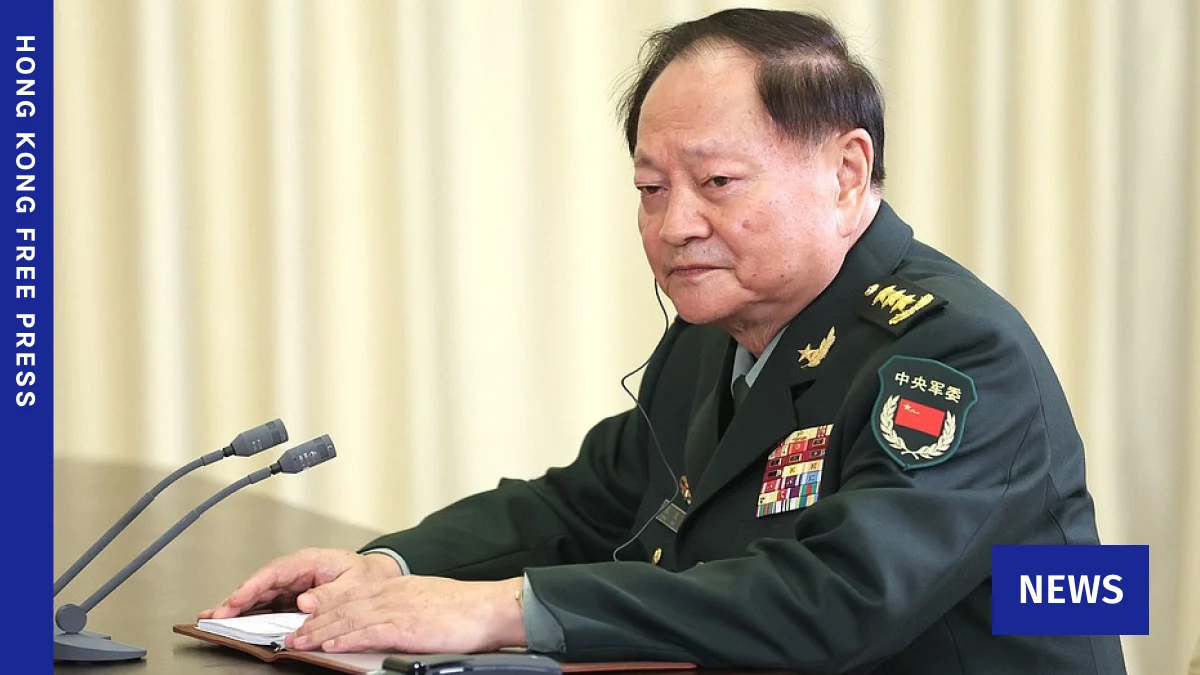
China has recently undertaken a significant purge within its military ranks, expelling two high-ranking officers, including a pivotal figure in its defense apparatus, from the ruling Communist Party. This decisive action, announced by state media on Monday, follows months of investigation into "serious violations of the law" and underscores President Xi Jinping’s relentless anti-graft campaign, which continues to reshape the nation’s political and military landscape. The officers, identified as Zhang Youxia and Liu Zhenli, face prosecution by military legal organs, with state news agency Xinhua reporting that their cases involve "exceptionally large sums of money" and accusations of "disloyalty to the Party."
Zhang Youxia, who held the exceptionally influential position of the more senior of two vice chairmen on the Central Military Commission (CMC), was considered China’s highest-ranked general. His sudden downfall has particularly stunned observers, given his perceived close relationship with President Xi Jinping and his long-standing career within the military elite. The other officer, Liu Zhenli, was also a prominent figure within the military hierarchy, although his specific role was not detailed beyond being the "second officer" implicated alongside Zhang. The Ministry of Defence had previously announced in January that both Zhang and Liu were under investigation for "serious violations of discipline and the law," a common euphemism employed in China to denote corruption charges.
The expulsion of such high-ranking military officials, especially one holding a position as critical as Zhang Youxia’s, signifies a profound moment in China’s ongoing efforts to consolidate power and enforce discipline within the People’s Liberation Army (PLA). It reaffirms the Party’s unwavering commitment to its anti-corruption drive, a hallmark of Xi Jinping’s leadership since he assumed power in 2012.

The Deepening Anti-Graft Campaign and its Military Focus
President Xi Jinping launched his sweeping anti-corruption campaign almost immediately upon taking office, vowing to target both "tigers" (high-ranking officials) and "flies" (lower-level bureaucrats). This campaign has been instrumental in consolidating his authority, eliminating potential rivals, and bolstering public confidence in the Party’s governance. While it has touched every sector of Chinese society, the military has consistently been a key focus, seen by Beijing as essential for maintaining national security and the Party’s absolute control.
The Central Military Commission (CMC) stands at the apex of China’s military command structure, directly overseeing the PLA. Xi Jinping chairs the CMC, ensuring his direct command over the armed forces. The vice chairmen of the CMC are the most powerful uniformed officers in China, responsible for the day-to-day operations and strategic direction of the PLA. The removal of a senior vice chairman like Zhang Youxia is therefore an extraordinary event, signaling a willingness by Xi to purge even those considered deeply loyal or long-standing allies if they are found to have crossed Party "red lines."
Previous high-profile military purges have included former CMC vice chairmen Guo Boxiong and Xu Caihou, both of whom were investigated and subsequently expelled for corruption earlier in Xi’s tenure. More recently, in late 2023, former Defence Minister Li Shangfu and former Foreign Minister Qin Gang were removed from their posts without immediate public explanation, later confirmed to be linked to "serious violations of discipline and the law." Several top leaders of the PLA Rocket Force, including its commander Li Yuchao and his deputies, were also removed around the same time. These successive purges highlight the systemic nature of corruption within the military and the Party’s resolve to address it, even at the cost of public transparency regarding the specifics of each case.

Details of the Charges: Disloyalty and Financial Misconduct
The official investigation, as reported by Xinhua, revealed that Zhang and Liu had "become disloyal to the Party" and "crossed red lines." These charges are not merely about financial impropriety but also carry significant political weight within the Chinese system. "Disloyalty to the Party" is a grave accusation, often implying a challenge to the Party’s authority or Xi Jinping’s leadership.
The specific offenses listed included:
- Forming cliques: This charge points to factionalism and the creation of personal networks within the military, which the Party views as a direct threat to its centralized command and unity. Such activities can undermine the meritocratic promotion system and foster an environment of personal allegiance over Party loyalty.
- Accepting huge sums of money for personal gain: This is the core corruption charge, indicating the illicit accumulation of wealth through their positions. Xinhua emphasized that the sums involved were "exceptionally large," suggesting a significant scale of financial misconduct.
- Using their positions to help others in matters such as job promotion: This highlights abuses of power related to personnel appointments, a common form of corruption in hierarchical systems. Such practices not only generate illicit income but also compromise the integrity and competence of leadership across the military, potentially weakening its operational capabilities.
The decision to expel the two men from the Communist Party and transfer their cases to military legal organs for "review and prosecution" was made by top officials meeting in Beijing. This process is a standard procedure for high-profile corruption cases, where Party discipline is enforced first, followed by legal proceedings under military law. The expulsions are still subject to ratification at a plenary session of the Party’s Central Committee, a formality that typically confirms decisions already made by the leadership.

Timeline of Events
- January (unspecified year, inferred recent past): The Ministry of Defence announced that Zhang Youxia and Liu Zhenli were under investigation for "serious violations of discipline and the law." This marked the public commencement of their legal troubles, although internal investigations would have been underway for some time prior.
- Last month (unspecified, prior to Monday’s announcement): Zhang and Liu were stripped of their positions in the state Central Military Commission. This administrative removal typically precedes formal Party expulsion and criminal charges, effectively sidelining them from their official duties.
- Monday (recent): State media reported their expulsion from the Communist Party, following the conclusion of the internal Party investigation. Their cases were simultaneously transferred to military legal organs for formal prosecution.
Broader Implications and Analysis
The expulsion of Zhang Youxia and Liu Zhenli carries significant implications for the PLA, Xi Jinping’s leadership, and China’s domestic and international standing.
1. Consolidation of Xi Jinping’s Power: This latest purge further solidifies Xi Jinping’s absolute authority over the military. By removing a senior CMC vice chairman and another high-ranking officer, Xi sends an unequivocal message that no one, regardless of rank, perceived loyalty, or historical ties, is immune to the anti-corruption drive if they are deemed to have violated Party discipline. This reinforces his control and ensures that the military remains subservient to the Party, and by extension, to him.

2. Impact on PLA Modernization and Readiness: The repeated purges within the military, particularly among senior leadership, raise questions about the potential impact on the PLA’s modernization efforts and operational readiness. While the Party frames these actions as necessary to root out incompetence and corruption, a constant churn in leadership, especially at the strategic level, could disrupt long-term planning, create instability, and foster an environment of caution rather than innovation among officers. The loss of experienced commanders, even if corrupt, can have short-term consequences.
3. Emphasis on Loyalty and Political Reliability: The charge of "disloyalty to the Party" underscores the paramount importance of political reliability in Xi’s military. Beyond mere financial integrity, officers are expected to demonstrate unwavering fealty to the Party’s leadership and its core ideology. This move suggests a heightened scrutiny on factionalism and personal networks, reinforcing a command structure where loyalty flows directly upwards to Xi.
4. Transparency and Opacity: While state media reports the expulsions and general charges, the details surrounding the investigations and specific evidence remain largely opaque. This lack of transparency is characteristic of China’s political system, where internal Party discipline takes precedence, and public information is carefully managed. This opacity can fuel speculation and make it difficult for external observers to fully gauge the extent of the problem or the political motivations behind certain purges.
5. Message to the Military Ranks: Xinhua’s statement that the decision "reaffirms the firm position that… there is absolutely no place for corrupt elements to hide within the military" serves as a stern warning to all military personnel. It reiterates that the anti-graft campaign is not a temporary measure but an ongoing, fundamental aspect of Party governance. This constant pressure aims to deter corruption and ensure adherence to Party lines across all levels of the PLA.

6. International Perception: For the international community, these purges highlight the internal dynamics of Chinese politics and the challenges Beijing faces in maintaining internal stability. While some may view the anti-corruption drive as a positive step towards better governance, others might see it as a tool for political maneuvering and consolidating autocratic power, particularly when it involves figures as significant as a CMC vice chairman. The stability and integrity of China’s military leadership are matters of global strategic interest, given China’s growing military might and its assertive foreign policy.
In conclusion, the expulsion of Zhang Youxia and Liu Zhenli from the Communist Party marks another significant chapter in President Xi Jinping’s enduring anti-corruption campaign. It demonstrates the Party’s resolve to cleanse its ranks, especially within the powerful military, and to ensure absolute loyalty to its leadership. While the long-term effects on the PLA’s operational capabilities and the internal political landscape remain to be fully seen, this event unequivocally underscores Xi Jinping’s firm grip on power and his unwavering commitment to shaping a disciplined, loyal, and ideologically pure military.

 Asro
Asro
 Nana Muazin