Ali Ikhwan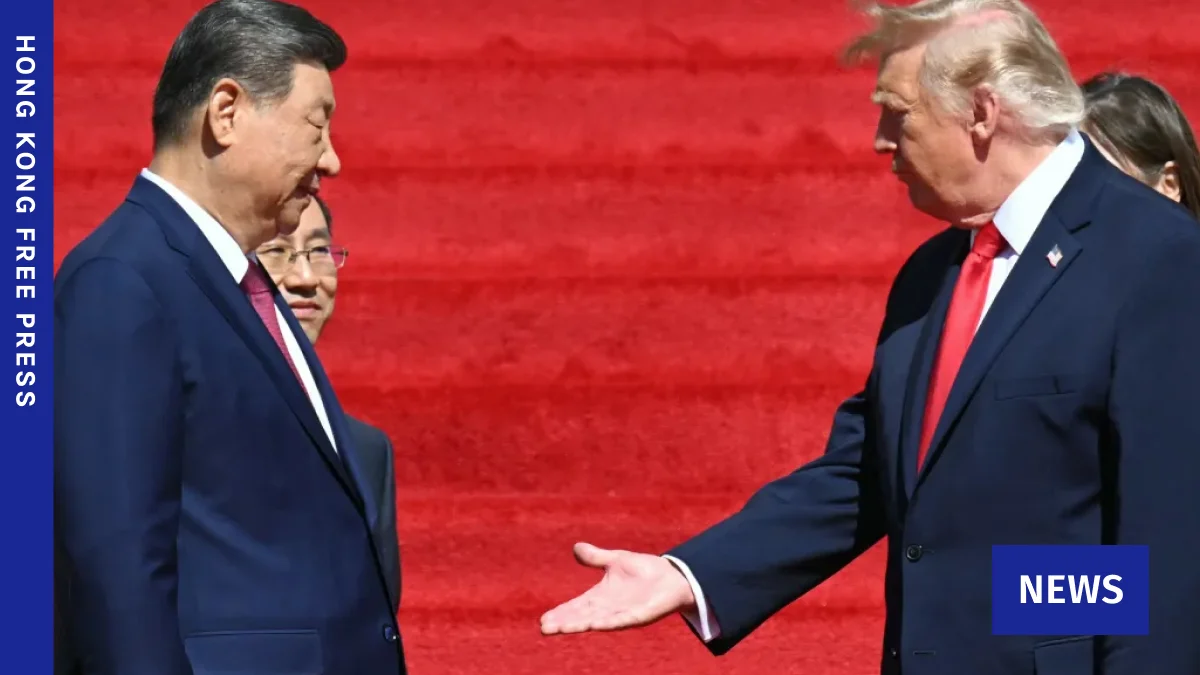
United States Ambassador to China David Perdue revealed in a Sunday Fox News interview that President Donald Trump proposed selling arms to Chinese President Xi Jinping in a move to address Beijing’s concerns over American weapons sales to Taiwan. This surprising offer, made during a period of heightened geopolitical sensitivity surrounding the self-ruled island, underscores the complex and often transactional nature of the US-China relationship under the Trump administration. The disclosure sheds new light on the direct and unconventional diplomatic tactics employed by President Trump in his engagements with his Chinese counterpart.
The delicate issue of U.S. arms sales to Taiwan has long been a significant point of contention between Washington and Beijing. China considers Taiwan a renegade province that must be reunified with the mainland, by force if necessary, and views any foreign military support for the island as a direct challenge to its sovereignty. The United States, however, is legally obligated under the Taiwan Relations Act of 1979 to provide Taiwan with the means to defend itself, a commitment that has led to periodic, substantial arms transfers.

According to Ambassador Perdue, the subject of Taiwan and its defense capabilities was raised during President Xi Jinping’s recent visit to the United States. In the interview, Perdue stated, "President Trump continues to say, ‘Hey, we sell arms to other people around the world.’ He actually asked President Xi — would he like to buy some? — at one point." This assertion suggests a willingness on Trump’s part to leverage the arms sales issue as a bargaining chip, potentially seeking concessions from China on other trade or geopolitical matters.
Perdue further elaborated that these discussions are ongoing. "There are continuing conversations about other sales, (Trump) and President Xi talk about that every time they get together," he noted, while emphasizing that the official U.S. stance on Taiwan’s defense needs has not wavered. The White House, when contacted by Agence France-Presse (AFP), did not immediately offer a comment on the ambassador’s remarks.
U.S. Denies Plans to Sell Arms to China
Despite Ambassador Perdue’s account of President Trump’s direct offer, White House officials have reportedly indicated that the U.S. has no intention of selling arms to China. Reports from The New York Times and The Wall Street Journal suggest that such a move would contradict established U.S. policy. The State Department, in a statement provided to The New York Times, explicitly stated, "U.S. law prohibits arms sales to China and there is no offer or plan to sell arms to China." This official denial creates a significant divergence between the reported direct engagement by the President and the broader administration’s stated policy.

The Chinese Ministry of Foreign Affairs, when pressed for a response on Monday, did not directly address the specific comments made by Ambassador Perdue. Instead, a spokesperson reiterated China’s commitment to strengthening its national defense capabilities based on its own requirements and its dedication to maintaining global peace and stability. This measured response sidesteps direct engagement with the arm-sale offer while reaffirming China’s strategic posture.
Beijing has consistently warned Taiwan against pursuing independence, particularly through reliance on the United States or military means. In June, the Chinese mainland issued a stern message stating that such attempts "is a dead end." This rhetoric underscores the seriousness with which Beijing views any perceived movement towards formal independence by Taiwan.
A "Very Good Negotiating Chip": The Context of Taiwan Arms Sales
The U.S. has historically been a crucial supplier of advanced weaponry to Taiwan. In December of the previous year, Washington approved an $11.1 billion arms sale to the island. Ambassador Perdue highlighted the significance of this sale, stating it represented "more arms to Taiwan than any other president since 1979." This indicates a consistent policy of supporting Taiwan’s defense, even as diplomatic overtures like the one reportedly made by President Trump introduce a new layer of complexity.

Adding to the intrigue, the U.S. reportedly paused a $14 billion weapons purchase by Taiwan in May. At the time, President Trump reportedly referred to this pause as a "very good negotiating chip" in dealings with China. This comment fueled concerns among some observers and policymakers that Taiwan’s security could potentially be compromised or traded away in broader negotiations with Beijing, particularly concerning trade disputes.
During President Xi Jinping’s visit to Washington, he reportedly urged President Trump to exercise "prudence" regarding Taiwan. Furthermore, Xi is said to have pressed the United States to explicitly oppose Taiwan’s independence. These exchanges highlight the persistent pressure China exerts on the U.S. regarding Taiwan’s status and its defense.
Diplomatic Engagements and Future Meetings
The relationship between President Trump and President Xi Jinping has been characterized by both intense competition and moments of personal diplomacy. The two leaders are scheduled to meet again at the Asia-Pacific Economic Cooperation (APEC) summit in Shenzhen, China, in November. Following that, they are expected to convene at the G20 forum, which will be held at Trump’s Doral resort in Miami in December. These upcoming meetings will likely see continued discussions on a range of bilateral and global issues, with Taiwan remaining a perennial flashpoint.

The U.S. policy towards Taiwan, governed by the Taiwan Relations Act, requires the U.S. to maintain a robust capacity to resist any resort to force or other forms of coercion that would jeopardize the security, or the social or economic system, of the people on Taiwan. This legislation mandates that the U.S. make available to Taiwan such defense articles and defense services in such quantity as may be necessary to enable Taiwan to maintain a sufficient self-defense capability. The U.S. also maintains a policy of "strategic ambiguity" regarding whether it would intervene militarily in the event of a Chinese attack on Taiwan, a policy that itself has been a subject of debate and re-evaluation in recent years.
The reported offer by President Trump to sell arms to China, while officially denied as a concrete plan by the administration, speaks to his distinctive negotiation style. This approach often involves bold, unconventional proposals aimed at disrupting established diplomatic norms and potentially creating leverage. The implications of such overtures, particularly concerning a highly sensitive issue like Taiwan, are significant. They can create uncertainty for allies, embolden adversaries, and complicate the delicate balance of power in the Indo-Pacific region.
Broader Geopolitical Implications
The U.S.-China relationship is multifaceted, encompassing trade, technology, security, and human rights. Taiwan represents a critical nexus of these issues, with profound implications for regional stability and global security. China’s growing military prowess and assertive posture in the South China Sea and towards Taiwan have raised alarms across the international community.

The U.S. arms sales to Taiwan are not merely about equipping the island for self-defense; they are also a powerful signal of American commitment to regional security and a deterrent against potential Chinese aggression. Any perceived wavering in this commitment, or the introduction of transactional elements into defense aid, could be interpreted by Beijing as an opportunity to advance its strategic objectives.
The divergence between President Trump’s reported personal diplomacy and the formal policy of his administration highlights the challenges in interpreting and predicting U.S. foreign policy under his leadership. While official statements from the State Department and White House emphasize adherence to existing laws and policies, the President’s direct involvement in high-stakes negotiations can introduce an element of unpredictability that keeps allies and adversaries alike on edge.
The continued strategic importance of Taiwan to both the United States and China ensures that this issue will remain a central element of their bilateral relationship. The economic interdependence between the two global powers, coupled with their strategic rivalry, creates a dynamic environment where issues like arms sales and territorial integrity are constantly negotiated, often through unconventional channels. The revelations surrounding President Trump’s offer to sell arms to China serve as a stark reminder of the complex and often unpredictable nature of contemporary international diplomacy.


 Reynand Wu
 Neng Nana