Nila Kartika Wati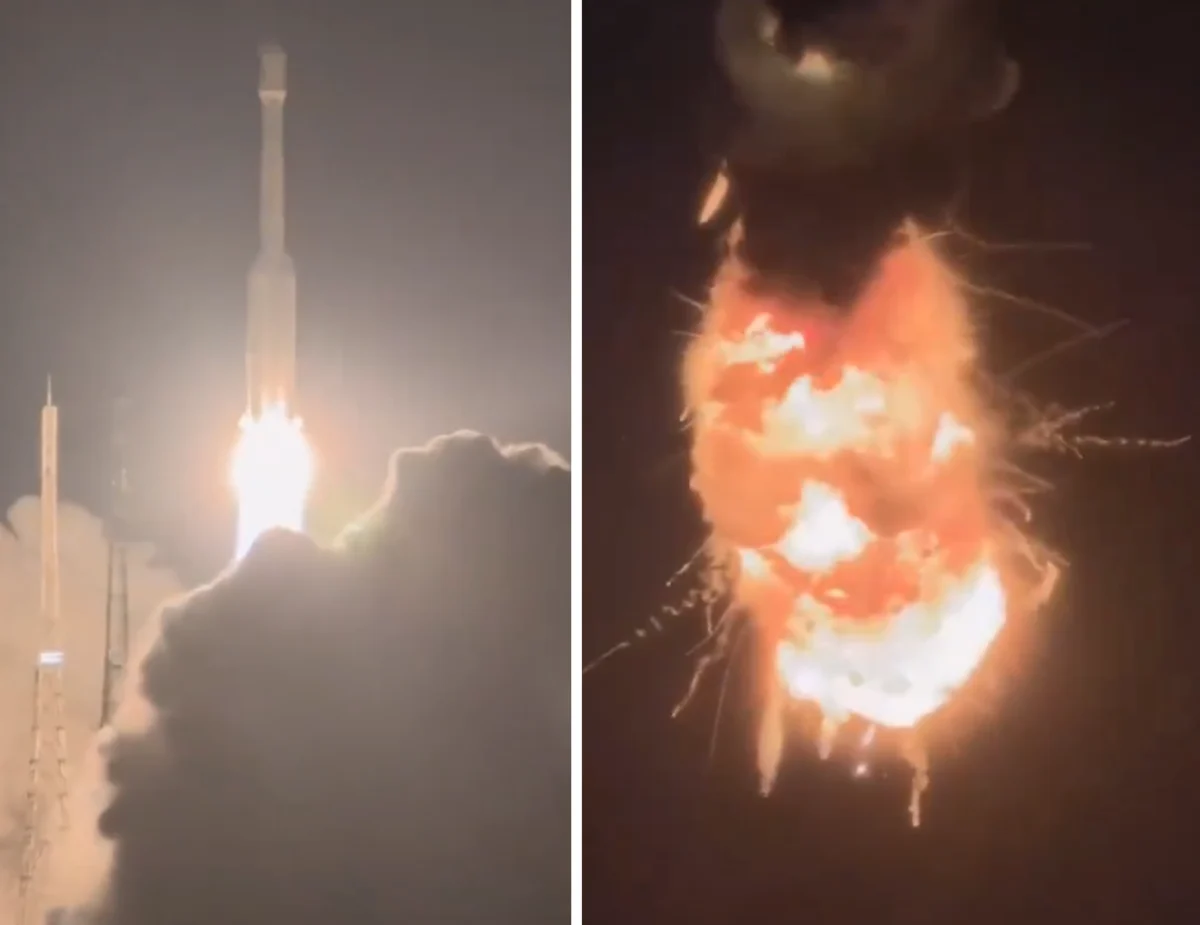
A Long March 7A carrier rocket, transporting the Zhongxing-4B communications satellite, suffered a catastrophic failure shortly after lift-off on Monday, August 10, 2026. State media attributed the incident to a "flight anomaly," while widespread reports and dramatic video footage circulating on social media strongly suggested the spacecraft had exploded in mid-air, casting a fiery spectacle across the night sky. This significant setback occurred as China vigorously pursues its ambitious "space dream," investing billions into a rapidly advancing space program.
Details of the Catastrophic Incident
The ill-fated launch commenced at 8:02 pm local time (1202 GMT) from the Wenchang Space Launch Site, situated in China’s southernmost province of Hainan. The Long March 7A, a medium-lift launch vehicle crucial to China’s space infrastructure, was carrying the Zhongxing-4B, a geostationary communications satellite intended to bolster the nation’s telecommunications capabilities. Xinhua, China’s official state news agency, reported that an "anomaly" developed during the rocket’s ascent, leading to the mission’s failure. The precise nature and cause of this anomaly were immediately placed under investigation.

Eyewitness accounts and visual evidence, however, painted a more vivid and alarming picture. Singapore-based broadcaster Channel NewsAsia, among other outlets, shared an Instagram post claiming the rocket had exploded. Accompanying footage, reportedly from the scene, depicted crowds gazing upwards at a rapidly expanding, fiery ball in the night sky. One particularly compelling video, uploaded just hours after the launch by a social media profile located in Hainan, showed the rocket erupting into flames approximately 85 seconds after its launch. The explosion left a vast cloud of grey smoke trailing in its wake as debris reportedly began to fall back towards the ground, raising immediate concerns about public safety and environmental impact. Such a visible and dramatic failure, especially involving a relatively new generation of carrier rockets, represents a considerable blow to China’s meticulously managed public image regarding its space endeavors.
The Long March 7A and its Critical Mission
The Long March 7A is an extended version of the Long March 7, designed to launch heavier payloads, particularly communications satellites, into geostationary transfer orbit (GTO). Its development was a strategic move to provide China with more versatile and powerful launch capabilities, reducing reliance on older, less efficient rockets for certain types of missions. The Zhongxing-4B satellite, as a communications payload, would have been integral to expanding China’s domestic and potentially regional telecommunications networks, supporting everything from broadband internet access to secure governmental communications. Failures in such missions not only represent a loss of the rocket itself but also the high-value satellite, leading to substantial financial implications and delays in the provision of critical services.
The Wenchang Space Launch Site, from which the Long March 7A lifted off, is China’s newest and southernmost spaceport. Its coastal location offers advantages for launching heavy rockets, including the ability to transport large components by sea and the benefit of Earth’s rotational speed for increased payload capacity. It is also designed to minimize the risk of falling debris over populated areas, with rocket stages typically dropping into the ocean. However, a mid-air explosion so close to the launch site necessitates a thorough review of safety protocols and potential debris trajectories, especially given the public videos showing the incident unfolding.

China’s Ambitious "Space Dream"
This launch failure occurs against the backdrop of China’s aggressive and well-funded push to become a dominant force in space exploration and utilization. President Xi Jinping has frequently invoked the "space dream," articulating a vision for China to establish itself as a preeminent space power, on par with or even surpassing the United States and Russia. This ambition is not merely symbolic; it encompasses strategic, economic, and military dimensions.
In recent years, Beijing has channeled billions of dollars into its space program, resulting in remarkable achievements. These include the establishment of the Tiangong space station, which has been continuously crewed, successful lunar sample return missions (Chang’e-5), and the deployment of rovers on Mars (Tianwen-1) and the far side of the Moon (Chang’e-4). The program also includes the rapid expansion of its BeiDou satellite navigation system, a direct competitor to the U.S. GPS, and the development of extensive Earth observation and reconnaissance capabilities.
A key objective within this "space dream" is to land Chinese astronauts on the Moon before 2030, a direct challenge to NASA’s Artemis program, which aims to return American astronauts to the lunar surface. Furthermore, China is heavily investing in technologies to reduce launch costs and enhance reusability, a critical area for future space economy. Just months prior to this failure, in July, China successfully landed a reusable rocket for the first time, a milestone that was hailed as a major step forward in its long-term space ambitions. This success underscored the nation’s rapid technological advancement and its commitment to developing capabilities that are both cost-effective and sustainable for frequent space access.

A History of Challenges: The Long March Series
Despite its impressive overall success rate, China’s Long March rocket series, like any complex launch system, has encountered failures. The Long March 7A, in particular, has a checkered history. Its maiden flight in 2020 was also unsuccessful, with Xinhua reporting at the time that a "malfunction occurred." This means that two of the Long March 7A’s initial launches have ended in failure, raising questions about the rocket’s reliability and design robustness.
Globally, rocket launches inherently carry a degree of risk, and failures are not uncommon across all spacefaring nations and commercial entities. Even highly successful programs, such as those of SpaceX or NASA, have experienced setbacks and catastrophic failures during their development and operational phases. For instance, SpaceX CEO Elon Musk, upon learning of China’s failed launch, commented on X (formerly Twitter) that "rockets are insanely hard" and expressed hope for a "speedy recovery." This sentiment reflects a shared understanding within the space industry of the immense technical challenges involved in rocketry. Just recently, a four-tonne piece of a SpaceX rocket was believed to have unintentionally crashed into the Moon, demonstrating the unpredictable nature of objects in space.
The Long March series, which began in 1970, has performed hundreds of launches with an overall success rate exceeding 90%. However, individual variants sometimes experience teething problems. The repeated failure of the Long March 7A specifically will necessitate an in-depth review, potentially leading to design modifications, more rigorous testing, and delays in future missions utilizing this particular vehicle.

Broader Impact and Implications
The failure of the Long March 7A carries several significant implications for China’s space program and its global standing:
- Financial Loss: The direct financial cost includes the loss of the Long March 7A rocket itself, estimated to be in the tens of millions of dollars, and the high-value Zhongxing-4B communications satellite, which could be worth hundreds of millions. This represents a substantial financial hit that will need to be absorbed.
- Mission Delays: The loss of Zhongxing-4B will inevitably delay the deployment of new communications services, impacting users who were relying on its capabilities. More broadly, the investigation into the Long March 7A’s failure will likely ground other rockets of the same variant, causing a ripple effect on China’s launch schedule for other satellites and potentially even components for its space station or lunar missions, if the root cause is systemic.
- Reputational Setback: While launch failures are a known risk, a visible mid-air explosion, especially for a nation aiming for global space leadership, can dent public confidence and international perception. China has generally maintained a highly controlled narrative around its space program, emphasizing successes. This incident, captured and shared widely, represents a challenge to that narrative.
- Technical Scrutiny: The repeated failure of the Long March 7A will trigger intense technical scrutiny within China’s aerospace industry. Engineers will need to identify the exact cause of the "anomaly," which could range from engine malfunction, structural failure, guidance system error, or issues with the payload fairing. The findings will be crucial for ensuring the reliability of future missions across China’s diverse rocket fleet.
- Impact on the Space Race: While one failure does not derail an entire program, it adds complexity to China’s aggressive timelines, particularly its goal of landing astronauts on the Moon by 2030. Any significant redesign or testing phase for the Long March 7A or related technologies could absorb resources and time that might otherwise be dedicated to lunar or other deep-space objectives.
Investigation and Future Outlook
The Chinese authorities have promptly initiated an investigation into the cause of the failure. Such investigations are typically exhaustive, involving detailed analysis of telemetry data, recovered debris (if any), and ground observations. The findings, though often not fully disclosed publicly in intricate detail, are vital for preventing future occurrences and ensuring the safety and reliability of subsequent launches.

Despite this setback, it is highly improbable that this incident will fundamentally deter China from its long-term space ambitions. The nation has consistently demonstrated resilience and a long-term strategic vision in its space program. Past failures, both within China and other spacefaring nations, have often served as crucial learning experiences, leading to improved designs, processes, and a stronger foundation for future successes. The "space dream" remains a cornerstone of China’s national strategy, driven by both technological aspirations and geopolitical imperatives. The focus will now shift to understanding the failure, implementing corrective measures, and demonstrating the program’s ability to overcome such challenges as it continues its determined ascent towards space leadership.


 Nana Wu
 Iffa Jayyana