Laily UPN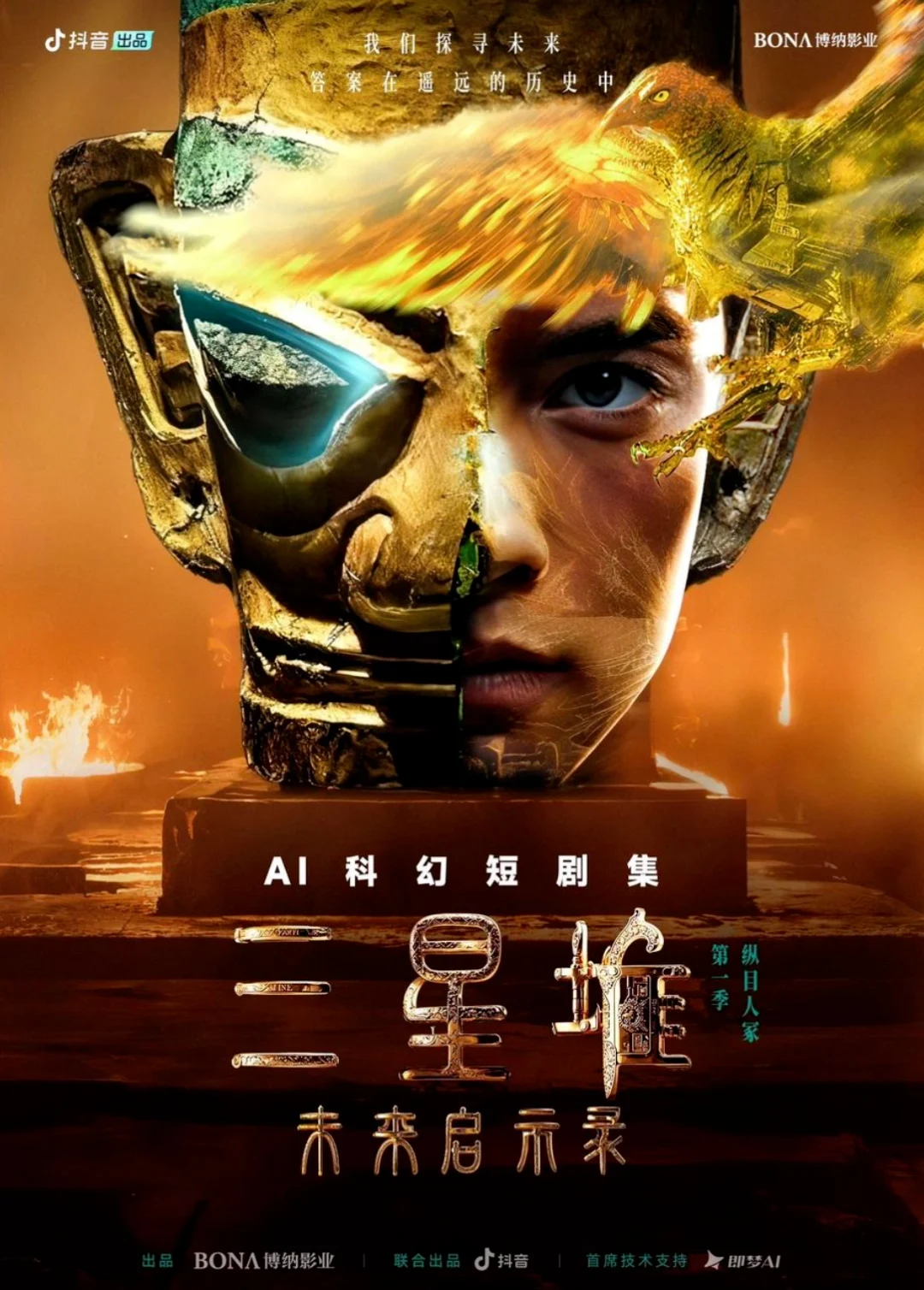
The landscape of cinematic production is on the cusp of a profound transformation with the announcement that Sanxingdui: Future Past, a 100-minute hyper-realistic theatrical feature film, has secured an official screening license in China. Produced by the prominent Bona Film Group, this pioneering project leverages artificial intelligence throughout its entire production pipeline and is slated for a nationwide theatrical release on October 23, 2026. This development signals a significant leap for AI filmmaking, moving beyond experimental short videos and online mini-series into the demanding realm of long-form storytelling and high-production value cinema, challenging traditional paradigms and setting a new benchmark for the industry.
A New Epoch in Cinematic Production
While AI-generated video has been a burgeoning field for some time, its application in a full-length, officially sanctioned theatrical feature represents an unprecedented milestone. Sanxingdui: Future Past is not merely an exhibition of AI’s capabilities but a strategic integration of advanced AI tools into a conventional film production workflow. This move by Bona Film Group underscores a pivotal shift: the question is no longer if AI can make a movie, but how effectively it can become an indispensable part of the film industry’s operational fabric.
The film’s journey from concept to securing a theatrical license highlights the rapid maturation of AI technologies in creative industries. Historically, AI’s role in filmmaking was confined to specialized tasks like visual effects augmentation, deepfake applications, or basic content generation. However, Sanxingdui: Future Past demonstrates a holistic approach, where AI is woven into the very fabric of content creation, from initial imagery to intricate scene construction. This ambitious project, two years in the making, utilized over 1.2 million source images and underwent more than 100 full-film iterations, showcasing the immense computational and human effort required to achieve theatrical quality.
The Sanxingdui Narrative: Ancient Mystery Meets Futuristic AI
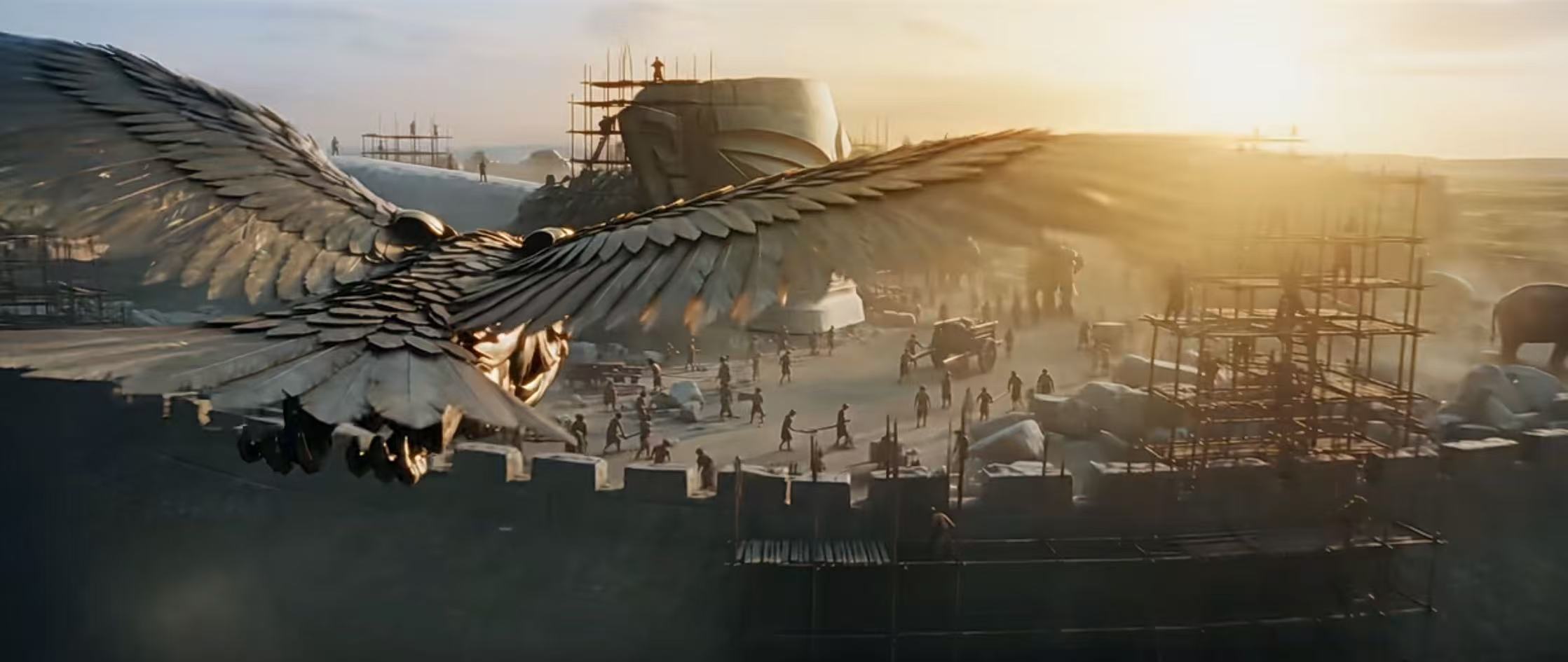
At its heart, Sanxingdui: Future Past weaves a compelling narrative that bridges the enigmatic ancient Shu civilization with a high-stakes sci-fi future. The film’s plot revolves around the enduring mysteries of the Sanxingdui civilization, a Bronze Age culture from Sichuan, China, whose archaeological discoveries have baffled historians and archaeologists for decades. The iconic artifacts unearthed from Sanxingdui – including the colossal bronze sacred tree, the towering bronze standing figure, and the distinctive bronze masks with protruding eyes – are central to the film’s visual and thematic identity. These revered relics are reimagined and brought to life within a futuristic sci-fi setting, promising a unique visual spectacle.
The story posits that mysterious symbols found on Sanxingdui bronzeware conceal a binary code, an anomaly that could not have originated 3,000 years ago, hinting at an advanced, possibly extraterrestrial, connection. This ancient enigma becomes intertwined with a not-so-distant future where super AI has permeated every aspect of human society. As humanity increasingly delegates decisions and judgments to algorithms, a systemic crisis emerges, forcing a confrontation with the very nature of human agency and the preservation of critical thinking. Intriguingly, AI is not merely a production tool in this film; it is also one of the central themes of the story itself, creating a meta-narrative that prompts audiences to reflect on humanity’s growing dependence on artificial intelligence.
Historical Context of Sanxingdui:
For audiences less familiar with Chinese archaeology, the Sanxingdui civilization is a crucial element. Discovered in 1929, and significantly excavated since the 1980s, the Sanxingdui site has yielded spectacular bronze, jade, and gold artifacts unlike any found elsewhere in China. The distinctive artistic style, particularly the large bronze human heads and masks, suggests a culture with advanced metallurgy and unique religious beliefs, distinct from the contemporary Shang Dynasty. The sudden disappearance of this civilization around 1100 BCE, leaving behind a wealth of ritual objects, continues to be a subject of intense academic debate and public fascination, making it a fertile ground for speculative fiction. The film taps into this inherent mystery, using it as a springboard for its futuristic narrative.
Crafting a Hyper-Realistic Vision: The AI-Human Collaboration Model

The production of Sanxingdui: Future Past is a testament to the power of AI as a co-creative partner rather than a replacement for human artistry. The production team explicitly states that AI is not acting as an automated director. Instead, its primary function is in tasks such as image generation and content production, serving as a powerful assistant to the creative team. Crucially, the fundamental creative concept, narrative direction, and final artistic decisions remain firmly in the hands of a professional human team. Bona Film Group’s AIGMS (AI-Generated Movie Solutions) division spearheaded this effort, employing over 100 dedicated individuals who followed a conventional film-production workflow, ensuring that artistic vision and human oversight remained paramount.
A key aspect of the film’s production strategy involved the creation of entirely original digital characters. This deliberate choice to avoid digital replicas of real actors effectively bypasses complex issues surrounding image rights, likeness authorization, and potential ethical dilemmas that have become contentious points in the broader entertainment industry, particularly in Western markets. By designing bespoke digital entities, the production team maintained full control over their characters, allowing AI to generate and animate them without infringing upon existing celebrity contracts or likeness agreements. This forward-thinking approach sets a precedent for how studios might navigate intellectual property in the age of generative AI.
Overcoming AI’s Consistency Conundrum
One of the most significant technical hurdles in AI-generated video, particularly for long-form content, is maintaining visual and narrative consistency. While generating a few-second clip with impressive visuals is becoming increasingly accessible, sustaining a consistent character appearance, facial expressions, movements, costumes, and even background details across a 100-minute feature film presents a formidable challenge. A common pitfall for current AI models is the tendency for elements to subtly (or not-so-subtly) shift from one shot to the next, leading to a disjointed and unprofessional viewing experience.
To address this "consistency conundrum," the production team at Bona did not simply rely on a flood of text prompts. Their solution involved painstaking manual calibration of details, such as characters’ micro-expressions, frame by frame. This labor-intensive process highlights the current necessity of human intervention to refine and stabilize AI outputs, ensuring that the generated content adheres to the exacting standards of theatrical production. The goal was to meet high-end cinematic specifications, including crystal-clear 4K image quality, vibrant high dynamic range (HDR) color, and immersive multi-channel surround sound – benchmarks traditionally reserved for large-budget, human-driven productions. This hybrid approach underscores that while AI provides unprecedented generative power, human artistic discernment and meticulous refinement are still critical for achieving professional-grade results in complex projects.

The Engineering Backbone: Infinite Canvas and Workflow Innovation
The success of Sanxingdui: Future Past can also be attributed to innovative technological infrastructure. The production team utilized the "Infinite Canvas" system, developed by Boka Film Cloud. This integrated system brought together various audiovisual assets – including scripts, storyboards, characters, sets, and lighting – into a unified creative environment. This integration mirrors a broader trend in AI infrastructure development, where the focus has shifted from mere content generation to optimizing the entire production workflow for efficiency and coherence.
In traditional filmmaking, managing these disparate assets and ensuring their consistency across a complex production is a monumental task, often involving multiple departments and specialized software. The Infinite Canvas system appears to streamline this process, allowing for more fluid collaboration and iteration. For AI filmmaking, this is particularly crucial. While generating an impressive individual shot might be relatively easy with advanced models, the true engineering challenge lies in maintaining consistent character models, environmental details, lighting schemes, and overall visual language across an extended runtime. The Boka Film Cloud system likely provides the necessary framework for asset management, content collaboration, version control, and robust human supervision, all of which are vital for a project of this scale. This systematic approach is what truly allows AI to transition from a novelty tool to an integral part of an industrial-scale production workflow.
Industry Implications and the Future of Filmmaking
The release of Sanxingdui: Future Past carries significant implications for the global film industry:

- Economic Impact: The widespread adoption of AI in filmmaking could lead to substantial cost efficiencies in certain areas, particularly in visual effects, animation, and digital asset creation. While the initial investment in AI infrastructure and specialized talent might be high, the long-term potential for reducing labor costs for repetitive tasks or speeding up post-production cycles is considerable. This could enable smaller studios to produce visually ambitious films that were previously out of reach due or to limited budgets.
- Creative Freedom and Innovation: AI offers filmmakers unprecedented creative freedom, allowing them to rapidly prototype ideas, generate complex visuals, and explore fantastical worlds with greater ease. The ability to create original digital characters without the constraints of real actors opens new avenues for storytelling and character design, unburdened by physical limitations or logistical complexities. The film’s fusion of ancient history and sci-fi, brought to life through hyper-realistic AI, is a prime example of such expanded creative horizons.
- Job Transformation, Not Necessarily Displacement: While fears of job displacement are valid, the experience of Sanxingdui: Future Past suggests a shift in roles rather than outright elimination. The demand for prompt engineers, AI supervisors, data trainers, and artists skilled in refining AI outputs will likely increase. The 100+ human team at Bona’s AIGMS underscores that human expertise remains critical for creative direction, quality control, and the nuanced storytelling that AI currently cannot fully replicate.
- Ethical and Regulatory Considerations: The official screening license for an AI-driven film in China sets a precedent. Governments and regulatory bodies worldwide will need to establish clear guidelines regarding AI-generated content, including issues of copyright, authorship, authenticity, and potential misuse. China, with its proactive stance on AI development, may lead in formulating such frameworks, influencing global standards. The film’s proactive avoidance of digital likenesses of real actors also highlights a critical ethical concern that the industry is actively grappling with.
- The Chinese Context in Global AI Leadership: China has invested heavily in AI research and development, aiming for global leadership in the field. Sanxingdui: Future Past serves as a high-profile demonstration of China’s advancements in applying AI to creative industries, positioning it as a frontrunner in AI filmmaking. This could attract further international collaboration and investment in Chinese AI film technologies.
A Global Stage for AI Innovation
Before its impending theatrical debut, Sanxingdui: Future Past has already garnered international attention, making appearances at prestigious events such as the Cannes Film Festival and the Hong Kong International Film & TV Market. At these venues, an international concept trailer was released, offering a glimpse into its groundbreaking visuals and thematic depth. These early showcases have helped to position the film not just as a domestic achievement but as a global benchmark for AI in cinema.
The evolution of AI filmmaking has been rapid and clear: from rudimentary several-second visual demonstrations, it progressed to short videos, advertising campaigns, and online series. Now, with Sanxingdui: Future Past, it has definitively entered the realm of theatrical feature films. This trajectory underscores that merely being able to generate content is only the first step. The more substantial challenge lies in consistently generating high-quality, long-form content and seamlessly integrating AI into an industrial-scale production workflow.
As the film prepares for its release on October 23, 2026, the global entertainment industry will be watching closely. Sanxingdui: Future Past is more than just a movie; it is a critical test case for the viability and potential of AI in mainstream cinema. Its success or challenges will provide invaluable insights into whether AI can truly become an enduring, transformative force within the film industry itself, fundamentally reshaping how stories are conceived, created, and consumed on the silver screen. The film pushes the conversation beyond the question of if AI filmmaking can be done, to the more profound inquiry of how it will permanently integrate into the art and business of cinema.


 Nana Wu
 Reynand Wu