 Pevita Pearce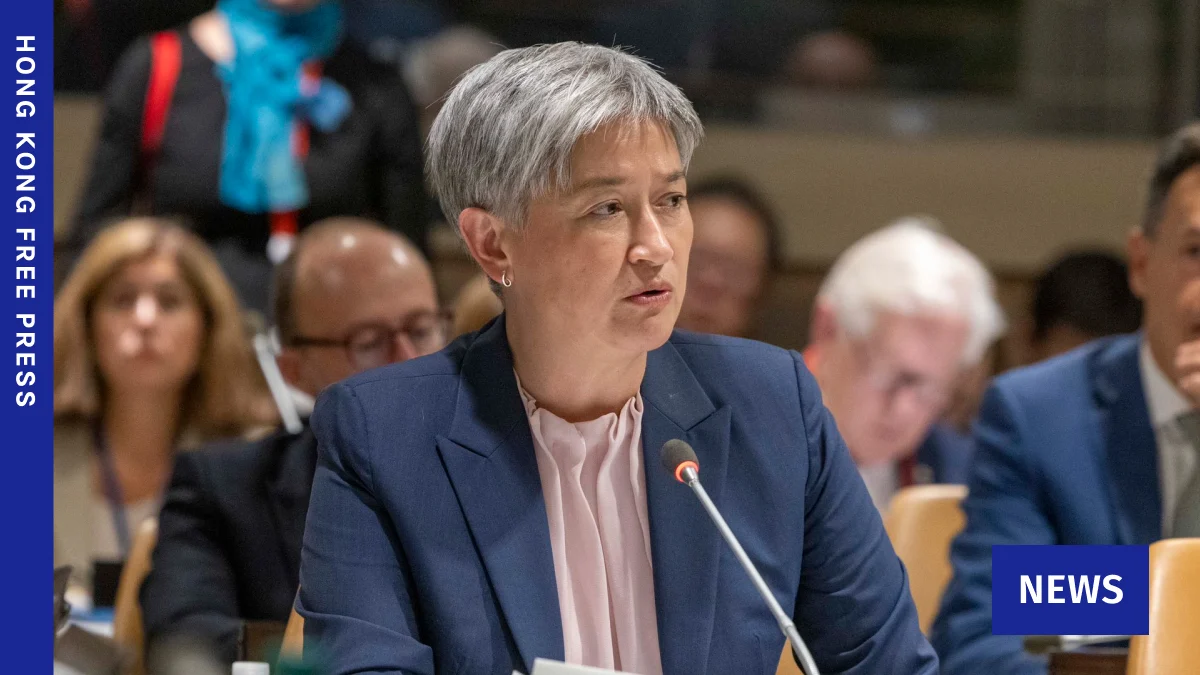
Australian Foreign Minister Penny Wong on Wednesday voiced grave concerns over Beijing’s recent test of a nuclear-capable missile in the South Pacific, characterising the launch as “destabilising” during a high-stakes meeting with her Chinese counterpart in Manila. This stern diplomatic rebuke underscores the escalating anxieties within the Indo-Pacific region concerning China’s expanding military capabilities and assertive posture, coming just a day after Wong also condemned China’s “dangerous conduct” following a contentious maritime clash between Philippine and Chinese vessels in the disputed South China Sea.
The precise details of the missile test, which involved a Chinese submarine firing a ballistic missile fitted with a dummy warhead earlier this month, indicate its trajectory extended deep into the vast expanse of the Pacific Ocean. Speaking to reporters on the sidelines of a gathering of Southeast Asian ministers in the Philippines, Minister Wong articulated Australia’s unequivocal position. “We have made clear publicly and directly to China that we regard the missile test as destabilising, and we put that directly to Foreign Minister Wang Yi in my discussions yesterday,” she stated, highlighting the directness of Australia’s communication. She further elaborated on Australia’s strategic vision for the region, asserting, “We want a region which is peaceful, stable and prosperous. We want a region where countries, all powers, including great powers, observe international law and, in particular, the law of the sea.” This statement firmly anchors Australia’s concerns within the framework of established international norms and legal principles, particularly the United Nations Convention on the Law of the Sea (UNCLOS), which governs maritime activities.
Details of the Missile Test and Regional Repercussions

The missile test itself represents a significant advancement in China’s naval projection capabilities and raises serious questions about its long-term strategic intentions. While China frequently conducts military exercises, a nuclear-capable ballistic missile launch into the South Pacific carries distinct geopolitical weight. Ballistic missiles, by their very nature, are designed for long-range strikes and, when paired with nuclear capability, are instruments of strategic deterrence or, conversely, coercion. The use of a dummy warhead in this instance does not diminish the underlying message of power projection.
Australia had previously stated that it did not receive sufficient advance notification of the missile test, a lapse in communication that exacerbates regional distrust and could potentially pose hazards to civilian air and maritime traffic. This lack of transparency is a recurring point of contention in China’s military activities, often seen by other nations as contributing to uncertainty and miscalculation. Furthermore, a dozen Pacific Island countries have collectively denounced the test, asserting that it violates the region’s deeply held aspiration to remain free of nuclear weapons testing. This sentiment reflects a historical sensitivity in the Pacific, a region that has endured the devastating legacy of nuclear testing by various powers in the 20th century. The monitors tracking the missile’s trajectory reported that the rocket appeared to impact an oceanic area situated between the Solomon Islands, Nauru, and Tuvalu—nations that are not only geographically proximate to Australia but also critical partners in its regional diplomacy and security strategy. The specific choice of this location for the test further amplifies concerns about China’s growing influence and military reach within a strategically vital zone for Australia and its allies.
The Second Thomas Shoal Incident: A Parallel Escalation
Adding to the complexity of the regional security landscape, Minister Wong’s strong statements regarding the missile test came in the immediate aftermath of another concerning incident in the South China Sea. On Monday, a Philippine sailor was allegedly struck on the head with a baton during a confrontation at Second Thomas Shoal, a disputed feature in the Spratly Islands. This incident, which reportedly involved Chinese Coast Guard vessels attempting to block a resupply mission to the BRP Sierra Madre, a grounded Philippine naval vessel serving as an outpost, highlights the persistent flashpoints in the South China Sea.

When questioned about the Second Thomas Shoal incident, Minister Wong reiterated Australia’s “real concerns about behaviour that is destabilising and risky.” Her comments underscore a broader pattern of what many nations perceive as increasingly aggressive tactics by China in asserting its expansive claims in the South China Sea, claims that largely disregard the 2016 Permanent Court of Arbitration ruling that invalidated China’s “nine-dash line.” The incident at Second Thomas Shoal is part of a series of confrontations involving water cannoning, ramming, and dangerous maneuvers by Chinese vessels, which have led to injuries and damage to Philippine boats. These actions are viewed by Australia and its allies as direct challenges to freedom of navigation and the peaceful resolution of maritime disputes, principles that are foundational to regional stability.
Australia’s Diplomatic Response and Strategic Partnerships
Australia’s robust diplomatic stance reflects its growing alarm over the erosion of international norms in the Indo-Pacific. The confluence of a nuclear-capable missile test in the South Pacific and aggressive actions in the South China Sea paints a picture of a region under increasing strategic pressure. Australia, as a middle power with significant strategic interests in both maritime domains, finds itself navigating a delicate balance. While seeking to stabilise its economic relationship with China, its largest trading partner, Australia is also committed to upholding a rules-based international order and protecting its security interests, often aligning with the United States and other like-minded democracies.
In a tangible demonstration of its commitment to regional security and its partners, Minister Wong, during a visit to a Philippine coast guard vessel on Tuesday, announced a significant donation: 413 million pesos (approximately $6.7 million USD) worth of cutting-edge drone technology and operator training to the Philippine Coast Guard. This strategic assistance is not merely an act of goodwill; it is a clear signal of Australia’s support for the Philippines’ maritime security capabilities, particularly in the face of ongoing challenges in the South China Sea. The provision of drone technology will enhance the Philippines’ domain awareness, surveillance, and reconnaissance capabilities, enabling it to better monitor its maritime territories and respond to incidents. This initiative aligns with Australia’s broader strategy of strengthening regional partnerships and building collective capacity to uphold maritime security and international law.
Broader Implications for Regional Security and International Law
The events discussed by Minister Wong have far-reaching implications for regional security architecture and the future of international law in the Indo-Pacific. China’s missile test in the South Pacific can be interpreted as a demonstration of its anti-access/area-denial (A2/AD) capabilities, potentially aimed at deterring foreign naval operations in critical areas. Such tests contribute to a regional arms race and heighten the risk of miscalculation, particularly in an environment already fraught with geopolitical tensions.
From the perspective of international law, the lack of sufficient notification for the missile test raises questions about compliance with customary international law concerning military activities in international waters. While states have the right to conduct military exercises, transparency and adherence to safety protocols are crucial to prevent accidents and maintain regional trust. The Pacific Island nations’ collective denunciation of the test underscores the principle of a nuclear-weapon-free zone, a concept enshrined in treaties like the Treaty of Rarotonga, which Australia is a signatory to. Any activity perceived as undermining this principle is met with strong regional opposition.
The ongoing incidents in the South China Sea, particularly at Second Thomas Shoal, continue to challenge the very foundation of UNCLOS. China’s consistent refusal to acknowledge the arbitral ruling and its persistent aggressive actions put immense strain on the international legal framework designed to manage maritime disputes peacefully. Australia, alongside other nations like the United States, Japan, and European powers, consistently calls for adherence to UNCLOS and freedom of navigation, viewing these principles as vital for global trade and security. The donation of drone technology to the Philippine Coast Guard is a pragmatic step to bolster a key regional partner’s ability to assert its sovereign rights and monitor its maritime domain, thereby contributing to the collective security of the region.

The Future of Australia-China Relations and Indo-Pacific Stability
The latest diplomatic exchanges highlight the enduring complexities and challenges in Australia-China relations. While both nations have recently sought to stabilise their bilateral ties after a period of significant strain, incidents such as the missile test and the South China Sea confrontation inevitably test the limits of this détente. Australia’s foreign policy under Minister Wong has been characterised by a commitment to “strategic equilibrium” – balancing its economic interdependence with China against its security concerns and its alliances with Western partners. This approach necessitates direct and frank communication, even on contentious issues.
The Indo-Pacific is rapidly becoming the epicentre of global geopolitical competition. The actions of major powers like China have a ripple effect across the region, influencing the strategic calculations of every nation, from the smallest island states to the largest economic blocs. Australia’s firm stance, supported by its enhanced defence capabilities and strengthened alliances (including AUKUS with the US and UK, and the Quad with the US, Japan, and India), signals its resolve to contribute to a stable and rules-based order. However, the path to such stability remains precarious, marked by persistent military modernisation, territorial disputes, and the constant need for vigilant diplomacy. The challenge for Australia and its regional partners will be to continue advocating for international law and peaceful resolution while simultaneously building credible deterrence and resilience in the face of an increasingly assertive China. The events unfolding in Manila serve as a stark reminder of the fragile balance of power and the imperative for sustained diplomatic engagement to avert further escalation in a region critical to global peace and prosperity.


 Jia Lissa