 Ali Ikhwan
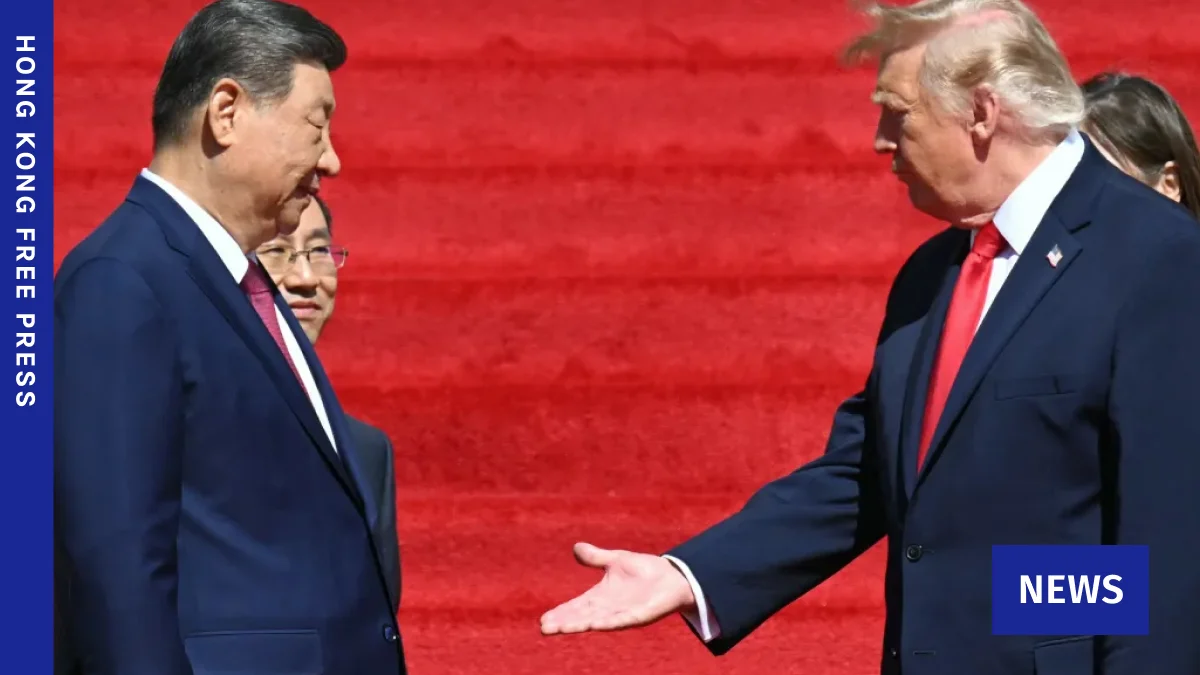
Beijing officially confirmed on Monday that Chinese President Xi Jinping will undertake a state visit to the United States this week, engaging in crucial discussions with President Donald Trump. The high-level meeting, scheduled from Wednesday to Friday, is anticipated to address a complex array of bilateral and global issues, with China expressing a hope that the talks will bolster "strategic stability" between the world’s two preeminent economic powers. Washington had previously signaled the impending summit, emphasizing a broad agenda encompassing persistent trade disputes, the rapidly accelerating race in artificial intelligence (AI) development, and broader strategic concerns, notably including President Trump’s ongoing military engagement in the Middle East.
High-Stakes Agenda Amidst Global Uncertainty

The upcoming summit between the leaders of the United States and China carries immense geopolitical weight, occurring at a juncture marked by multifaceted challenges and intense competition. President Trump is expected to personally extend a welcome to President Xi at Joint Base Andrews on Wednesday, preceding their formal meetings slated for the following day. This gesture of welcome holds symbolic significance, particularly given that President Trump was greeted by China’s Vice President during his own state visit to Beijing in May, underscoring the diplomatic gravitas accorded to this reciprocal visit. Speaking aboard Air Force One on Sunday, President Trump conveyed the extensive scope of the anticipated discussions, stating, "I’ll be discussing almost everything with him."
Chinese Foreign Ministry spokesman Guo Jiakun elaborated on Beijing’s objectives for the visit, indicating that the two leaders would "have an in-depth exchange of views on major issues concerning China-US relations and world peace and development." He further articulated China’s commitment to "work with the US to enrich the substance of the relationship of constructive strategic stability between China and the US… (and) properly manage differences," a diplomatic phrasing that acknowledges underlying tensions while emphasizing the desire for cooperative resolution. The outcomes of these talks could significantly shape global economic trajectories, technological landscapes, and international security paradigms for years to come.
The Thorny Path of Trade Relations

At the forefront of the agenda lies the simmering trade war that has cast a long shadow over US-China relations for several years. While a fragile tariff truce has largely held for nearly a year, a comprehensive and lasting agreement remains elusive. The trade conflict, ignited in 2018 under the Trump administration, saw both nations impose punitive tariffs on hundreds of billions of dollars worth of each other’s goods, disrupting global supply chains and causing economic uncertainty. The US, citing unfair trade practices, intellectual property theft, and forced technology transfers, had sought to rebalance the trade relationship, which in 2025 saw the US trade deficit with China reach approximately $350 billion, down from a peak of over $400 billion but still substantial.
China’s top trade negotiator, Vice Premier He Lifeng, is already in the United States, engaging in preparatory meetings with Treasury Secretary Scott Bessent. These preliminary discussions are crucial for laying the groundwork for any potential breakthroughs or further de-escalation measures during the presidential summit. Analysts suggest that while a grand bargain is unlikely, both sides may seek to reaffirm their commitment to the tariff truce and explore pathways for incremental progress on contentious issues. The global economy, still navigating the aftermath of various disruptions, is keenly watching for signals of stability or renewed friction in this critical economic relationship. Business communities in both countries, particularly those reliant on complex international supply chains, are eager for concrete steps towards predictable trade policies.
Navigating the AI Frontier: A New Cold War?

Beyond traditional trade, the strategic competition in artificial intelligence has rapidly emerged as a defining feature of US-China relations, presenting both unprecedented opportunities and profound risks. Warnings of an "AI apocalypse" and the potential for autonomous weapons systems have lent an urgent, almost existential, tone to discussions around AI governance and cooperation. Both countries are locked in an intense race for technological supremacy, investing colossal sums in research and development, talent acquisition, and infrastructure. In 2025, China’s AI sector attracted an estimated $40 billion in investment, closely trailing the US, which saw approximately $55 billion, highlighting the neck-and-neck nature of this technological contest.
The criticality of AI has led to calls for establishing communication channels to manage potential crises. Treasury Secretary Bessent confirmed that the US has proposed a "notification mechanism" between the two countries. Such a mechanism would be designed for "potential incidents," or situations "that rises up to a national security level from AI," indicating a recognition of the inherent dangers in uncoordinated or unchecked AI development and deployment. During their meeting on Sunday, Vice Premier He Lifeng and Secretary Bessent discussed creating this vital communication channel, a step that, if formalized, could represent a significant de-escalation measure in a highly sensitive domain. The implications of AI extend far beyond military applications, touching upon economic productivity, surveillance capabilities, and ethical frameworks, making international cooperation, however challenging, increasingly imperative.
Shadows of the Middle East Conflict

President Trump’s ongoing "war in the Middle East," now in its seventh month, casts a long and complex shadow over the US-China summit. While the specific details of this conflict were not explicitly elaborated in the initial reports, it is widely understood to refer to heightened US military actions or interventions in the region, likely targeting Iran or its proxies. China, a significant global player and one of Iran’s top economic partners and diplomatic backers, finds itself in a precarious position. Beijing relies heavily on Iranian oil output to fuel its vast economy, making it particularly vulnerable to US sanctions against countries dealing with Tehran. China has consistently sought to mediate in regional conflicts, advocating for diplomatic solutions and maintaining a degree of neutrality, while simultaneously protecting its economic interests.
The US has historically pressured its allies and trading partners to adhere to its sanctions regimes against Iran, creating friction with countries like China that have substantial energy and trade ties with the Islamic Republic. Any discussion on the Middle East will undoubtedly involve US demands for China to curtail its dealings with Tehran, especially regarding oil imports, and potentially to align more closely with US regional security objectives. This presents a significant diplomatic tightrope walk for President Xi, who must balance China’s strategic energy needs and its long-standing foreign policy principles of non-interference with the imperative to avoid direct confrontation or punitive measures from Washington. The humanitarian impact of the prolonged conflict and the broader implications for regional stability will also likely feature in the discussions, even if indirectly.
Taiwan: A Persistent Flashpoint

Another enduring and potentially explosive point of contention is Taiwan, the self-ruled democratic island that Beijing considers an inseparable part of its territory, to be reunified with the mainland, by force if necessary. The threat of military confrontation over Taiwan looms large, fueled by increasing Chinese military assertiveness in the Taiwan Strait and sustained US support for Taipei’s defense capabilities. Taiwan relies heavily on Washington’s backing to counter growing diplomatic, economic, and military pressure from Beijing.
In July, China’s top diplomat, Wang Yi, delivered a stern warning about Taiwan to US Secretary of State Marco Rubio, emphasizing that improving ties between their two countries "requires action." This statement underscored Beijing’s view that US actions concerning Taiwan are a critical barometer of the overall health of bilateral relations. Just a month prior, in June, Secretary Rubio had indicated that a massive $14 billion arms sale package to Taiwan was "under review." President Trump subsequently characterized this potential sale as a "very good negotiating chip" in dealings with China, a remark that likely drew sharp condemnation from Beijing, which views US arms sales to Taiwan as a direct interference in its internal affairs and a violation of the "One China" principle. The upcoming summit offers a platform, albeit a fraught one, for both leaders to reiterate their positions and, perhaps, seek to manage the risks of escalation in this highly sensitive area.
Diplomatic Expectations and Geopolitical Implications

Despite the ambitious agenda, analysts largely caution that expectations for the Trump-Xi summit should remain low, particularly regarding immediate, sweeping breakthroughs. Kurt Campbell, former US Deputy Secretary of State, told AFP that "one of the only things we can hope for in the short term is a truce, and that this will likely continue through the remainder of this year." This sentiment reflects a pragmatic assessment of the deep-seated structural rivalries and fundamental differences that characterize the US-China relationship.
Beyond the immediate issues, China’s negotiating arsenal includes its dominance in the global supply of rare earths—critical materials essential for a vast array of high-tech products, from smartphones and electric vehicles to advanced military equipment, making them vital to US manufacturers. Beijing demonstrated its leverage last year when it successfully pressured Washington to back down from some of its sky-high tariffs after imposing stringent controls on rare earth exports. This strategic resource remains a potent economic and geopolitical tool for China.
The summit’s broader implications extend to the global order itself. A stable, if competitive, relationship between the US and China is crucial for addressing global challenges such as climate change, pandemics, and nuclear proliferation. Conversely, any significant deterioration could have cascading effects, destabilizing international markets, fueling regional conflicts, and further fragmenting the multilateral system. The world will be watching closely as President Xi Jinping and President Donald Trump convene this week, hoping for signals of de-escalation and constructive engagement, even amidst their profound strategic differences. The pathway to "constructive strategic stability" is fraught with obstacles, but the necessity of open dialogue between these two global giants remains paramount.

 Raul Delapena Setiawan
 Asro
Asro